KEIR SRARMER has warned that the ongoing conflict involving the United States, Israel and Iran could eventually affect the UK economy if the crisis continues.
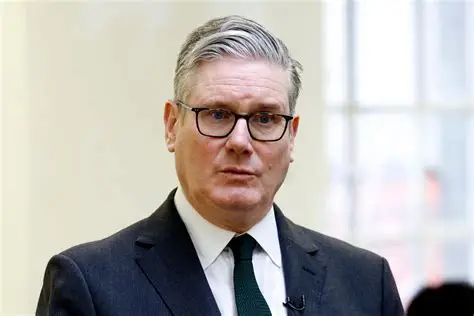
Speaking at a community centre in London, the UK prime minister said his government is closely monitoring the situation and working with international partners to limit the impact on households and businesses.
“I understand people feel anxious,” Starmer said. “We are assessing the risks and working with our partners to reduce the impact on people here.”
Rising energy prices raise concerns
Global oil prices have surged due to fears of disruption to energy supplies. The increase followed escalating tensions in the Middle East.
Because of the situation, the Group of Seven (G7) recently held an emergency meeting to discuss the possible economic consequences.
Despite the concerns, Starmer said the UK economy is better prepared than it was in 2022 when the Russian invasion of Ukraine triggered a major energy price shock.
Gas prices increase sharply
Benchmark UK gas prices recently rose to about 158 pence per therm. Two weeks earlier, the price was around 80 pence.
However, the level remains far below the peak during the Ukraine crisis when prices exceeded 600 pence per therm.
At that time, the UK government introduced support schemes worth around £44 billion to help households manage energy bills.
Energy price cap may limit immediate impact
The current government has not announced a similar support package. Instead, officials say the energy price cap will protect many households in the short term.
The cap, set by Ofgem, limits how much suppliers can charge customers on variable tariffs.
Last month, Ofgem announced the cap would fall by around 7% from April. The reduction will apply to households in England, Wales and Scotland.
Under current rules, most customers will not see higher energy bills until at least July when the next price cap review takes place.
Heating oil and petrol prices could rise
Some households could still face immediate increases. Heating oil prices, which many rural homes and households in Northern Ireland rely on, react quickly to global oil prices.
The Consumer Council for Northern Ireland said the average price of heating oil has already risen by 81% within a week.
Experts also warn that petrol prices could rise soon. Higher fuel costs may create broader inflation pressures across sectors such as food and industrial chemicals.
Political pressure on government
Opposition parties have urged the government to act quickly if prices continue rising.
Kemi Badenoch, leader of the Conservative Party, said she fears the government could react too slowly to the cost-of-living pressures.
She called on ministers to cut fuel duty before a planned increase in September.
Meanwhile, Stephen Flynn, the Westminster leader of the Scottish National Party, urged the government to introduce emergency financial support for families.
UK monitoring conflict closely
Starmer said the government is closely tracking developments in the Middle East. He stressed that the longer the conflict continues, the higher the risk of economic consequences.
“Our job is to look ahead, assess the risks and work with others to reduce them,” he said.