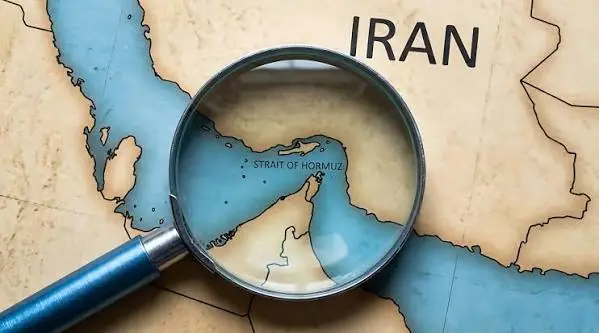
Strait of Hormuz Crisis Deepens as US-Iran Talks Collapse: What Happens Next?
The Strait of Hormuz crisis entered a more dangerous phase on August 18, 2026, after U.S. President Donald Trump said there were no talks taking place with Iran and none were scheduled. His statement came one day after the 60-day negotiating period created by the June 17 U.S.-Iran memorandum expired without a broader peace agreement. Tehran, meanwhile, said it remained open to dialogue but would not reopen the waterway until Washington met conditions including easing the blockade of Iranian ports, lifting oil sanctions, releasing frozen Iranian assets and ending military threats and operations.
That combination makes the latest Strait of Hormuz crisis more serious than another temporary diplomatic setback. Washington says the strait is open and that naval mines have been cleared. Iran says the route remains shut under its terms. Actual commercial traffic is still severely depressed. Preliminary Kpler data showed only six commodity vessels crossing on Monday, August 17, compared with a 10-day average of 11, and no very large crude carriers or LNG tankers were recorded.
The security picture in the Strait of Hormuz crisis also worsened on August 18. The United Kingdom Maritime Trade Operations reported that a vessel was hit by an unknown projectile while leaving the strait, damaging its engine room and causing a crew casualty. Reuters identified the ship through maritime-security sources as the Liberia-flagged bulk carrier Minoan Dignity. Responsibility had not been established at the time of reporting.
The next stage of the Strait of Hormuz crisis therefore depends on three things: whether intermediaries can restart meaningful negotiations, whether shipping can recover despite opposing U.S. and Iranian claims, and whether the confrontation remains coercive or returns to direct military escalation.
Strait of Hormuz Crisis: Where Things Stand Now
| Issue | Latest position |
|---|---|
| U.S.-Iran talks | Trump says none are taking place or scheduled |
| June negotiating deadline | Expired August 17 |
| U.S. position on Hormuz | Trump says it is open and mines have been cleared |
| Iranian position | Strait remains shut until U.S. meets June-deal conditions |
| Monday commodity crossings | 6 |
| 10-day average | 11 |
| VLCC/LNG tanker crossings Monday | None recorded |
| Security incident | Minoan Dignity hit by unknown projectile; crew casualty reported |
| Brent crude | Settled just above $91 per barrel on August 18 |
| Normal strategic exposure | Nearly 20 million barrels/day of oil and 19% of global LNG trade |
The numbers above combine the latest Reuters shipping and market reporting with the International Energy Agency’s 2025 trade data.
This is why The News Ink’s previous report on the Strait of Hormuz crisis remains important background. Iran’s August 17 warning that it was moving toward a more offensive posture has now been followed by expiry of the diplomatic window and an explicit U.S. statement that no new talks are scheduled.
1. The June Deal Has Reached the End of Its 60-Day Road
The diplomatic architecture behind the Strait of Hormuz crisis was supposed to work very differently.
A memorandum signed on June 17 created a 60-day period for Washington and Tehran to move from an interim cessation of hostilities toward a broader settlement covering Iran’s nuclear program, U.S. sanctions and the regional conflict. The agreement also contemplated reopening Hormuz and easing the U.S. blockade of Iranian ports.
Instead, the arrangement unraveled quickly.
The Associated Press account of the failed negotiating window says Iran began firing on vessels using a route near Oman around a week after the agreement was signed. The United States responded with strikes on Iran, Iran retaliated against countries hosting U.S. forces, Washington restored restrictions on Iranian oil exports and the blockade of Iranian ports returned. Each side accused the other of violating the agreement.
By August 17, the 60 days had expired without a permanent settlement. On August 18, Trump said there were no talks or conversations underway or scheduled.
For weeks, officials and mediators had suggested that messages were still moving indirectly even without formal negotiations. Trump’s latest statement removes the expectation of an imminent negotiating round, at least publicly. Iran has not completely closed the diplomatic door: adviser Mohammad Mokhber said Tehran remains open to dialogue but does not regard negotiations as surrender.
The collapse is particularly significant because the June agreement was once presented as a possible route out of a conflict that began after U.S. and Israeli strikes on Iran on February 28. Reuters says thousands of people have since been killed across the wider conflict, primarily in Iran and Lebanon.
The News Ink previously examined the more hopeful phase when two ceasefires opened a path toward U.S.-Iran talks. The latest developments show how quickly a diplomatic opening can disappear when the parties disagree over the meaning of the interim terms.
2. Washington and Tehran Cannot Even Agree on Whether Hormuz Is Open
The most unusual feature of the Strait of Hormuz crisis is that the two sides now disagree over the basic status of the waterway.
Trump said on August 18 that the Strait of Hormuz was open and operating and that mines had been removed or detonated. At the same time, he said the U.S. naval blockade of Iran remained in force.
Iranian negotiator Mohammad Baqer Qalibaf said the opposite: the strait would remain shut until Washington fulfilled what Tehran sees as obligations under the June agreement.
Qalibaf listed several conditions, including lifting the blockade of Iranian ports, removing oil sanctions, releasing frozen Iranian assets and ending military threats and operations.
Commercial behavior matters more than the competing labels. Reuters’ latest Hormuz traffic data showed six commodity ships crossing on Monday, with no VLCCs or LNG tankers recorded. Reuters separately reported that vessel traffic before the war exceeded 130 ships per day across vessel categories. Some ships may travel with transponders switched off, but the decline is still extraordinary.
The Strait of Hormuz crisis can therefore continue even if Washington declares the route open. Tanker owners, insurers, charterers, cargo buyers and crews must also believe passage is sufficiently safe.
A strategically important waterway can be physically passable while remaining commercially dysfunctional.
3. The Minoan Dignity Incident Raises the Risk Premium Again
The August 18 incident involving a commercial vessel adds a new layer to the Strait of Hormuz crisis.
According to Reuters’ report on the maritime incident, UKMTO received a report that a ship was struck by an unknown projectile during an outbound transit. The incident caused engine-room damage and a crew casualty, while the Omani Coast Guard assisted the remaining crew. Maritime-security sources identified the vessel as the Liberia-flagged Minoan Dignity.
Responsibility had not been established. That distinction is critical. The incident should not be attributed to Iran, the United States or any other actor without evidence.
Commercial consequences can emerge before attribution does. Insurers price uncertainty, shipowners can delay voyages and crews may avoid an active conflict zone. A few unexplained incidents can therefore deepen the Strait of Hormuz crisis far beyond the vessels directly affected.
This is also why focusing only on a formal Iranian declaration of closure can be misleading. Commercial traffic can collapse through accumulated risk even if no government successfully seals the route.
The News Ink has already examined how Hormuz disruption can raise the cost of food, medicines and electronics. Those effects begin with transport and energy but can eventually move through manufacturing, fertilizer and consumer supply chains. The IEA confirms that significant volumes of fertilizers and other industrial commodities also depend on the route.
4. Oil Markets Are Pricing a Longer Standoff, Not a Total Shutdown
Oil prices rose for a third consecutive session on August 18 as hopes for a U.S.-Iran settlement faded. Reuters reported Brent crude trading around $91.46 during the session and later settling just above $91 a barrel.
That remains below the roughly $126 wartime peak Reuters recorded earlier in the conflict, but traders are still attaching a significant geopolitical premium to supply. Some crude is moving, including limited Saudi loadings, yet the Strait of Hormuz crisis leaves the market vulnerable because normal dependence on the route is enormous.
The International Energy Agency’s Hormuz data show why. Nearly 20 million barrels per day of crude oil and petroleum products passed through Hormuz in 2025, representing around 25% of world seaborne oil trade. Roughly 80% of those flows were destined for Asia.
Only Saudi Arabia and the UAE have major operational pipeline systems capable of bypassing Hormuz. The IEA estimates roughly 3.5 million to 5.5 million barrels per day of available capacity that could potentially redirect crude away from the strait.
That mismatch is the economic core of the Strait of Hormuz crisis. Alternative routes can soften a disruption. They cannot replace normal flows.
The IEA additionally warns that a prolonged closure could remove access to much of the world’s spare oil production capacity because a large share of that spare capacity is itself located in Gulf states dependent on the strait for exports.
The News Ink previously tracked how oil prices responded to U.S.-Iran peace talks. With the negotiating window now expired, the market is shifting again from optimism about reopening toward the cost of prolonged uncertainty.
5. LNG May Become the Harder Problem if the Deadlock Lasts
Oil dominates most discussion of the Strait of Hormuz crisis, but liquefied natural gas could be the more difficult commodity to replace.
The IEA says more than 110 billion cubic metres of LNG passed through Hormuz in 2025, representing around 19% of global LNG trade. Around 93% of Qatar’s LNG exports and 96% of the UAE’s LNG exports used the route.
Unlike crude oil, those LNG volumes do not have large alternative pipeline routes that can simply move cargoes to export terminals outside Hormuz. The IEA says there are no alternative routes capable of bringing equivalent Gulf LNG volumes to the global market.
That makes prolonged disruption especially significant for Asia. Around 90% of LNG exported through Hormuz in 2025 went to Asian buyers.
The consequences extend beyond gas bills. The IEA says more than 30% of global urea trade and about 20% of ammonia and phosphate trade also move through Hormuz. Large volumes of aluminium and sulphur are exposed as well.
A prolonged Strait of Hormuz crisis can therefore create a chain running from military tension to LNG scarcity, fertilizer costs, electricity prices, industrial production and eventually food inflation.
This is what makes Hormuz different from an ordinary regional shipping disruption. The trade concentrated in this narrow passage feeds into several layers of the global economy at once.
6. Iran’s “Fully Offensive” Warning Raises the Risk of Miscalculation
The Strait of Hormuz crisis was already tense when a senior Iranian official told Reuters on August 17 that Tehran was moving toward a “fully offensive” military posture because of the diplomatic stalemate.
No major new exchange of U.S.-Iran strikes had been reported on August 18, so rhetoric should not be confused with action. Reuters specifically noted that there were no reports of fresh strikes by either side on Tuesday.
Still, a declared offensive posture can change behavior around commercial ships, military bases and regional infrastructure.
The Strait of Hormuz crisis is especially vulnerable to miscalculation because incidents can be ambiguous. A projectile can hit a ship before responsibility is known, while a naval maneuver, interception or warning shot can be interpreted as preparation for a much larger attack.
That does not mean full regional war is inevitable.
It means the margin for error becomes smaller when formal diplomacy weakens while militaries continue operating in close proximity.
Both sides also have reasons to avoid uncontrolled escalation. Iran’s economy has already been badly affected by war, sanctions and isolation, while a deeper conflict could raise U.S. fuel prices and impose greater military costs on Washington.
Those pressures can encourage compromise, but they can also encourage each side to believe the other will eventually give way first.
7. Oman and Pakistan May Be the Most Important Diplomatic Channels Left
Direct U.S.-Iran negotiations may be absent, but the diplomatic map surrounding the Strait of Hormuz crisis still contains intermediaries.
Pakistan played a significant role in brokering the June agreement and has continued urging both sides back to the negotiating table. AP reported that Pakistan’s Foreign Ministry said it was making “all-out efforts” to restart dialogue.
Oman is even more important to the immediate Hormuz question.
Iran has been discussing a separate arrangement with Oman over management of the waterway. Reuters reported that Tehran says the two sides are close to a deal, although the proposal has become another point of tension with Washington.
The most realistic diplomatic route may therefore be incremental rather than comprehensive.
Instead of immediately solving Iran’s nuclear program, U.S. sanctions, war-related claims and regional security disputes in one agreement, mediators could first try to establish practical rules for commercial passage, reduce the risk of maritime incidents and restore larger tanker flows.
A functioning shipping arrangement would not amount to a peace treaty.
But it could reduce one of the largest economic dangers while giving negotiators more time.
What Happens Next? Five Realistic Scenarios
| Scenario | What it could mean |
|---|---|
| Indirect diplomacy restarts | Pakistan, Oman or another mediator begins moving messages between Washington and Tehran even without formal talks. |
| Limited shipping returns | Both sides tolerate more commercial traffic while continuing to disagree publicly over control of Hormuz. |
| Low-flow standoff continues | Oil moves in restricted volumes, LNG remains constrained and insurance costs stay high for weeks. |
| Another vessel attack triggers retaliation | A clearly attributed attack causing serious casualties could lead to direct U.S. or Iranian military action. |
| A broader settlement starts with Hormuz | An operational shipping agreement creates momentum for sanctions and nuclear negotiations later. |
These are scenarios, not predictions. The current evidence supports substantial uncertainty rather than a single inevitable outcome.
The Strait of Hormuz crisis stays especially dangerous in the third scenario because partial trade continues while global markets never regain confidence that flows are secure.
Why a Complete Closure Is Not the Only Risk That Matters
Discussion of the Strait of Hormuz crisis often becomes trapped in one question: can Iran completely close the strait?
That is not the most useful test.
The route can remain technically navigable while normal commerce stays far below capacity. Monday’s six recorded commodity crossings, with no LNG tanker or VLCC, demonstrate that point.
The economic impact of the Strait of Hormuz crisis depends on throughput, not political labels. Nearly 20 million barrels of oil per day normally use a route with only a fraction of that volume available through bypass pipelines.
If commercial confidence returns and large tankers resume regular passage, the Strait of Hormuz crisis could ease even without a perfect political settlement.
If tanker traffic remains minimal, the crisis can continue even without a formal declaration of closure.
That is why actual vessel movement may now be a better indicator of progress than statements from Washington or Tehran.
What This Means for Global Markets
The Strait of Hormuz crisis now intersects directly with inflation, borrowing costs and economic growth.
Higher oil prices feed transport and production expenses. Higher LNG prices affect electricity and industry. More expensive fertilizer can eventually raise food-production costs. Shipping insurance and rerouting add another layer of expense. The IEA’s commodity data demonstrate how many globally traded products are exposed to the waterway.
The Strait of Hormuz crisis is already feeding into broader finance. The News Ink has reported on global market volatility from the Iran conflict. Reuters reported on August 18 that stock markets weakened and borrowing costs in major economies rose as investors considered the inflationary and fiscal consequences of the conflict.
If energy prices remain elevated, central banks can face a difficult combination: weaker growth alongside persistent inflation.
In a prolonged Strait of Hormuz crisis, governments feel the political consequences through fuel and utility bills. Businesses experience them through transport, electricity and raw-material costs. Households ultimately see them in petrol, food and imported goods.
That is how a narrow waterway in the Gulf can become a global economic problem.
Frequently Asked Questions
Have U.S.-Iran talks officially ended?
Trump said on August 18 that no talks or conversations with Iran were taking place or scheduled. The 60-day negotiating period created by the June memorandum expired on August 17 without a broader agreement. Iran nevertheless says it remains open to dialogue, so diplomacy is stalled rather than permanently impossible.
Is the Strait of Hormuz open or closed?
The United States says it is open and operating. Iran says it remains shut until Washington meets Tehran’s conditions. Commercial shipping remains severely disrupted, with six commodity vessels recorded on Monday and no VLCCs or LNG tankers.
What does Iran want before reopening Hormuz?
Iranian negotiator Mohammad Baqer Qalibaf said Tehran wants the U.S. blockade of Iranian ports lifted, oil sanctions removed, frozen assets released and military threats and operations ended.
How much oil normally goes through the Strait of Hormuz?
The IEA estimates nearly 20 million barrels per day of crude and petroleum products transited Hormuz in 2025, about 25% of global seaborne oil trade.
Could pipelines replace Hormuz?
Only partly. The IEA estimates roughly 3.5 million to 5.5 million barrels per day of available bypass capacity through Saudi Arabia and the UAE, far below normal Hormuz oil flows.
Conclusion
The Strait of Hormuz crisis has crossed an important threshold.
The June diplomatic timetable has expired. Trump says no talks are taking place or scheduled. Iran says it remains open to negotiation but will keep Hormuz shut until Washington meets conditions the United States has so far rejected. Commercial shipping remains dramatically below normal levels, oil prices are rising again and a commercial vessel has now been struck by an unknown projectile during an outbound transit.
None of that guarantees another major round of war.
Intermediaries remain active. Iran has not renounced dialogue. Some oil is still moving. The United States and Iran both face powerful economic and political costs if the conflict expands.
But the Strait of Hormuz crisis is now operating without the 60-day diplomatic framework that had at least provided a deadline and structure for a broader agreement.
What happens next may depend less on dramatic summit diplomacy than on smaller decisions: whether another tanker sails, whether insurers return, whether Oman can build a workable shipping arrangement, whether Pakistan can restore communication and whether the next maritime incident is contained rather than answered with force.
For the global economy, the stakes remain extraordinary. The IEA says roughly a quarter of seaborne oil trade and almost one-fifth of global LNG trade relied on Hormuz in 2025. A prolonged disruption would therefore reach far beyond the Gulf.
The most important sign of improvement will not be another optimistic statement from either capital. It will be sustained commercial traffic through the waterway alongside a credible return to negotiations.
Until both happen, the Strait of Hormuz crisis remains one of the most dangerous links between geopolitics and the global economy.
Follow The News Ink
Stay connected with The News Ink for world news, geopolitics, business, technology, health and sports coverage.
Follow us on X, Instagram, Threads, TikTok, Bluesky and Mastodon.
For longer-form reporting and analysis, follow The News Ink on Medium, Substack and Quora, or discover visual stories on Pinterest.