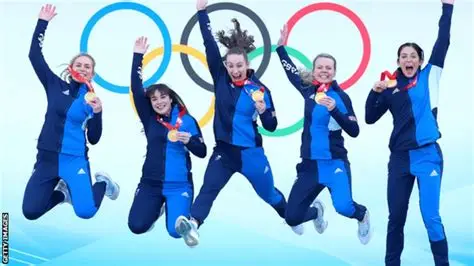
Team GB Curlers: How a Painful Olympic Silver Lifted Their Sport
The Team GB curlers left the Cortina Olympic Stadium with silver medals and the kind of disappointment that does not disappear when the podium ceremony ends. Bruce Mouat, Grant Hardie, Bobby Lammie and Hammy McMillan Jr had spent four years trying to turn the pain of Beijing 2022 into gold at Milano Cortina 2026. Instead, Canada defeated Great Britain 9-6 in the men’s final and extended a British wait for Olympic men’s curling gold that now stretches back more than a century.
Yet the Team GB curlers also achieved something that cannot be measured only by the colour of their medals. They turned curling into appointment viewing. They gave casual fans a reason to understand the tension of an end, the importance of the hammer and the brutal consequences of a missed takeout. They made a sport sometimes reduced to jokes about brooms and ice look exactly as demanding as elite curling really is: tactical, physical and emotionally unforgiving.
The final was painful because gold felt close. Great Britain led 6-5 after eight ends. Canada then scored three in the ninth and stole one in the tenth. Brad Jacobs and his teammates took the title. The Team GB curlers were left with a second consecutive Olympic silver, but their influence reached beyond one result.
Editor’s update — June 2026: This article has been expanded after the Milano Cortina 2026 Winter Olympics to explain the final, the rise of Team Mouat and why Britain’s latest curling silver mattered beyond the medal table.
How the Team GB Curlers Lost a Tense 9-6 Olympic Final
The men’s curling final took place on 21 February 2026 at the Cortina Olympic Stadium. Team Canada’s report records a 9-6 victory for Brad Jacobs, Marc Kennedy, Brett Gallant and Ben Hebert over the Team GB curlers. The match remained close for eight ends before Canada changed the direction of the contest in the ninth.
Great Britain entered the eighth end with an opportunity to protect control of the game. The Team GB curlers scored one to move 6-5 ahead. That left Canada with the hammer in the ninth. The British approach was understandable: try to limit risk and reach the tenth end in a manageable position. Curling often rewards patience, but it punishes small errors quickly.
Canada’s report says four consecutive missed doubles by Great Britain created the opening. Jacobs eventually had the chance to score four, although his shooter rolled out and Canada settled for three. The score moved from 6-5 to 8-6. In the tenth, Canada placed stones in strong positions, removed British options and stole another point.
The scoreline was 9-6. The emotional distance between victory and defeat was far smaller.
| Detail | Confirmed information |
|---|---|
| Event | Milano Cortina 2026 men’s curling final |
| Date | 21 February 2026 |
| Venue | Cortina Olympic Stadium |
| Result | Canada 9-6 Great Britain |
| Decisive end | Canada scored three in the ninth |
| Team GB result | Second consecutive Olympic silver |
| Historical context | Britain’s previous Olympic men’s curling gold came in 1924 |
The Team GB curlers did not collapse across the entire final. They were competitive for most of it. That is one reason the loss felt so severe. The opportunity remained visible until Canada seized it.
Why a Second Silver Hurt More Than the First
The Team GB curlers had already lived through this feeling. At Beijing 2022, Mouat, Hardie, Lammie and McMillan reached the men’s final and lost to Sweden. That silver medal was a major achievement, but it also became the motivation for another four-year cycle.
By the time Milano Cortina arrived, the Team GB curlers were not outsiders hoping to produce a surprise. Reuters described them as favourites after an outstanding 2024–25 season in which they became the first rink to win four Grand Slam events in one campaign and captured the 2025 world championship. They entered the Olympic tournament carrying expectations built through sustained excellence.
The pressure mattered because Great Britain’s history mattered. Curling appeared at the first Winter Olympics in Chamonix in 1924, where Britain won men’s gold. After the sport returned to the Olympic programme in 1998, no British men’s rink had repeated that achievement.
The Team GB curlers reached the 2026 final knowing they had a chance to end a 102-year wait. They also knew that a second silver would be interpreted differently from the first. Beijing had been the start of a new era. Milano Cortina felt like the moment that era was supposed to receive its defining Olympic reward.
Team GB’s report captured the pain. McMillan said it had taken him four years to get over the first silver and suggested the second would take longer. The reaction was not disrespectful to the medal. It reflected the work behind it.
The Team GB Curlers Who Reached Another Olympic Final
The Team GB curlers represented Britain at the Olympics, but their identity is deeply Scottish. Mouat is the skip, responsible for major tactical decisions and delivering the final two stones in each end. Hardie plays third and supports the strategic conversation. Lammie and McMillan bring precision, sweeping power and the ability to influence the movement of stones after release. Kyle Waddell served as the alternate.
| Player | Olympic role | Why the role matters |
|---|---|---|
| Bruce Mouat | Skip | Directs tactics and usually delivers the most pressured final stones |
| Grant Hardie | Third | Supports decision-making and delivers important late-end stones |
| Bobby Lammie | Second | Contributes delivery consistency and powerful sweeping |
| Hammy McMillan Jr | Lead | Sets up ends early and performs demanding sweeping work |
| Kyle Waddell | Alternate | Provides squad depth and competition support |
A curling team succeeds through interdependence. One spectacular shot can dominate a highlight reel, but the Team GB curlers reached two Olympic finals because their work is cumulative. A lead stone can shape an end several minutes before the crowd understands its importance. A well-timed sweep can turn an average delivery into a useful stone. A tactical conversation can prevent a difficult position from becoming a disastrous one.
World Curling’s introduction to curling explains the basic structure: two teams slide granite stones towards a target known as the house. That description is accurate, but elite curling becomes compelling when viewers begin to see the layers underneath it.
Team Mouat Had Already Become a Benchmark
The Team GB curlers did not suddenly become important because they reached another Olympic final. Their reputation had been built over years of results.
Before the Games, Reuters reported that the rink had held the world number one position for more than a year. The Team GB curlers had won the 2025 world championship after a season in which they became the first team to collect four Grand Slam victories in one campaign. They then added two more Grand Slam wins in the build-up to Milano Cortina.
The Guardian later described their record across the four-year Olympic cycle as two world championships, two European championships and four Grand Slam events. The exact way a reader counts achievements depends on the period being discussed, but the larger point is clear: this was a sustained era of elite performance.
That context matters when analysing the final. A weaker rink could treat Olympic silver as an unexpected peak. The Team GB curlers viewed it through the standards they had set for themselves. They had repeatedly shown that they could beat the best teams in the world. They had developed the consistency required to enter major events as favourites. Olympic gold remained the missing prize.
There is a temptation to describe that absence as failure. That would be too simplistic. Gold is the medal the Team GB curlers wanted, but a team can shape a sport without possessing every trophy it pursued.
The Semi-Final Shot That Made Gold Feel Possible
The Team GB curlers reached the final only after a dramatic semi-final against Switzerland. Yannick Schwaller’s Swiss rink had been unbeaten, while Great Britain had not dominated the round robin in the way many expected. Even qualification for the semi-finals had required other results to fall into place.
Then Mouat produced one of the tournament’s defining shots.
In the seventh end, facing three Swiss stones in scoring positions, Mouat played a run-back triple takeout. The shot required geometry, touch and nerve. One stone struck another and removed a cluster of danger. Great Britain moved towards an 8-5 victory and a place in the final.
The Olympic report on the semi-final described the shot as a superb runback triple. The Guardian called it an improbable feat of geometry. For new viewers, it became a perfect explanation of why curling works on television. The stone moved slowly enough for the tension to build, but the consequences were immediate.
The Team GB curlers had gone from uncertainty to a gold-medal match. Scottish supporters brought songs, bagpipes and noise to the arena. By the time Britain faced Canada, belief no longer felt unreasonable.
Why Sweeping Makes Curling More Physical Than It Looks
Curling is strategic, but the Team GB curlers have also helped challenge the idea that the sport is gentle. Sweeping is not decorative. It influences the path and distance of a stone after delivery. USA Curling’s introductory explanation notes that sweeping can affect how far a stone travels and how much it curls.
At elite level, that work demands repeated bursts of effort, balance, communication and judgement. Sweep too little and a stone may stop short. Sweep too aggressively or misread the line and an intended guard, draw or takeout can leave the opposition an opening. The Team GB curlers have made this athletic side easier for new audiences to notice.
Modern preparation matters too. Curlers need technical repetition, tactical review, conditioning and recovery. The News Ink’s sports training guide explains how elite athletes increasingly use structured workload management, video analysis and recovery planning to improve performance. Our article on sports technology explores the wider role of analytics, biomechanics and recovery systems across competition.
Those links do not mean every training method used in another sport applies directly to curling. They illustrate a broader reality. Elite performance is built through detail. The Team GB curlers have helped viewers see that curling belongs inside the same conversation as other high-performance sports.
Curling Became Prime-Time Sport for British Viewers
The Team GB curlers did more than collect another medal. They drew attention towards a sport that often receives its largest British audience during the Winter Olympics.
The final had the ingredients broadcasters value: an easy-to-understand score, visible tactical tension, a historic British target and a decisive swing late in the contest. Curling allows new viewers to learn while watching. The stones move slowly enough for the problem to become clear. The outcome remains uncertain long enough for the tension to build.
Published reports citing BBC figures said the men’s curling final attracted 5.5 million viewers. The number supports the wider pattern: the Team GB curlers made people stop and watch. The result also followed a tournament filled with storylines, from the bagpipes in the stands to debates about technique and rules.
Readers who want a fuller explanation of the sport can explore The News Ink’s curling final analysis, which breaks down the 2026 match, the role of sweeping and the reasons the contest became such compelling television.
The Team GB curlers benefited from the Olympic stage, but they also justified the attention. Audiences do not remain invested merely because a British team is present. They stay because the competition creates tension and the athletes make the outcome matter.
Silver Can Still Change a Sport
Gold medals create the clearest headlines. Silver medals can create a different kind of legacy.
The Team GB curlers wanted to win. It would be wrong to soften the final into a comforting story too quickly. The players were visibly devastated because they understood the size of the chance they had lost. For them, pride would come later.
For British curling, however, the second silver still has value. It keeps the sport visible. It introduces new viewers to the rules. It gives clubs, coaches and local programmes a recognisable team to discuss with beginners. It reminds sports fans that Britain can compete with curling nations that possess deeper traditions and broader infrastructures.
The Team GB curlers also showed how a niche sport can grow through personality without becoming superficial. Mouat’s calm under pressure, Hardie’s tactical role and the sweeping work of Lammie and McMillan gave viewers different details to notice. The quartet did not need manufactured drama. The sport produced enough drama on its own.
This matters because Olympic exposure is brief. Curling cannot rely entirely on one fortnight every four years. The challenge is to turn attention into participation, repeat viewing and stronger domestic interest after the medals have been awarded.
What Comes Next for the Team GB Curlers?
The future is not fully settled. After the final, Mouat said he intended to continue towards the next Winter Olympics in France. The Guardian reported that he wanted to keep playing with his teammates but acknowledged that the four still needed to discuss their plans individually.
That uncertainty is understandable. The Team GB curlers have spent years organising their lives around major championships, travel, training and Olympic cycles. Another attempt would demand more work and another willingness to live with pressure.
Yet the competitive story remains unfinished. Mouat has reached Olympic medal matches in both the men’s event and mixed doubles without winning one. The Team GB curlers have already demonstrated that they can sustain world-class performance across seasons. The question is whether the same lineup chooses to make another run.
Even if the team changes, its impact will remain. The Team GB curlers have raised expectations. British curling will now be judged against the level they established, not against the idea that reaching an Olympic final is a rare surprise.
Why This Silver Will Be Remembered
The simplest version of the story is that Canada won and Great Britain finished second. That version is correct, but incomplete.
Canada deserved its gold. Jacobs and his teammates remained close, punished British errors in the ninth end and finished the match with control. The Team GB curlers came agonisingly near the result they wanted and then had to accept the hardest truth in elite sport: being excellent does not guarantee the ending.
Their legacy is larger than one line in a medal table. The Team GB curlers made strategy accessible to new audiences. They showed the athletic demands behind sweeping. They turned a British 102-year wait into a story viewers could feel. They created another Olympic moment that may encourage people to try the sport for the first time.
Silver will not feel like gold to the players. It should not. Their disappointment is part of what made the final matter.
But when the pain settles, the medal will represent more than another near miss. The Team GB curlers lifted their sport because they made people care about every stone, every sweep and every inch of ice.
For more sports analysis and major-event coverage, follow The News Ink on X.