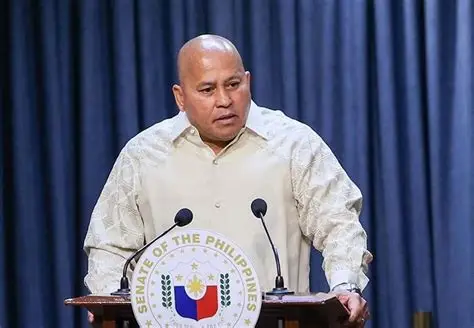
The Ronald Dela Rosa ICC arrest Philippines 2026 standoff descended into chaos on Wednesday evening when gunshots rang out inside the Philippine parliament building in Manila, as the senator and former top drug war enforcer attempted to evade an International Criminal Court arrest warrant by taking refuge inside the legislative complex. The extraordinary scenes — broadcast live on Philippine television — showed journalists and bystanders fleeing in panic as loud bangs echoed through the building’s second floor.
Dela Rosa, who served as the chief enforcer of former President Rodrigo Duterte’s bloody war on drugs, had been hiding inside the Senate building for two nights before fleeing the complex following the shooting incident. Senate President Alan Peter Cayetano confirmed Thursday afternoon that Dela Rosa had left the building — his escape confirmed both by the sergeant-at-arms and by a text message from Dela Rosa’s wife to the Senate speaker.
The dramatic standoff marks one of the most extraordinary political and legal confrontations in recent Philippine history — and adds yet another volatile chapter to the ongoing international accountability process surrounding the Duterte-era drug war that left thousands dead.
Ronald Dela Rosa ICC Arrest Philippines 2026: What Happened Inside Parliament
The Ronald Dela Rosa ICC arrest Philippines 2026 confrontation reached its most dramatic point on Wednesday evening when dozens of journalists gathered on the second floor of the Senate building — filming and broadcasting live as the standoff continued — suddenly heard loud bangs that sent the assembled press corps into immediate panic.
The chaos captured on live television showed reporters and camera operators fleeing rapidly from the area as the source of the gunfire remained unclear in the immediate aftermath. Windows on the second floor of the building were subsequently found riddled with bullet holes — at least a dozen visible in one windowpane alone — providing physical evidence of the severity of what had occurred inside one of the Philippines’ most significant governmental buildings.
Forensic investigators arrived at the scene hours later once it was secured, beginning the process of gathering evidence about what exactly had transpired and who was responsible for the shots fired.
What happened inside the Philippine parliament — confirmed facts:
Gunshots were fired on the second floor of the Senate building in Manila on Wednesday evening
Dozens of journalists were present and broadcasting live when the shots were heard
Immediate panic spread through the building as the sound of gunfire rang out
At least one windowpane was found with a dozen or more bullet holes
Forensic investigators arrived hours later once the scene was secured
One man has been arrested on suspicion of involvement in the shooting incident
Philippine National Police confirmed the arrest and stated investigations are ongoing
The source of the gunfire remained unclear in video footage captured at the scene
The interior secretary provided an account of events on Wednesday night, stating that unidentified armed men attempted to enter the Senate’s second floor but were stopped by a member of the Office of the Sergeant-at-Arms. According to the interior secretary, the sergeant-at-arms officer fired an initial warning shot, after which the armed men retreated and fired shots into the air as they withdrew.
Ronald Dela Rosa ICC Arrest Philippines 2026: Who Is Ronald Dela Rosa?
Understanding the full weight of the Ronald Dela Rosa ICC arrest Philippines 2026 situation requires context about who Dela Rosa is, what role he played during the Duterte administration, and why the International Criminal Court has issued a warrant for his arrest.
Ronald Dela Rosa served as the Chief of the Philippine National Police during Rodrigo Duterte’s presidency — a period defined above all by the administration’s aggressive and lethal war on drugs. Dela Rosa was Duterte’s primary instrument for implementing that policy, overseeing a campaign that human rights organisations documented as resulting in thousands of extrajudicial killings of suspected drug users and dealers.
The ICC arrest warrant against Dela Rosa relates to allegations of crimes against humanity — a charge connected to his role in overseeing the drug war operations during which those killings occurred. The warrant places him in legal jeopardy that extends beyond the Philippines’ domestic legal system and into the jurisdiction of international criminal law.
Who Ronald Dela Rosa is:
Former Chief of the Philippine National Police under President Rodrigo Duterte
Known as Duterte’s top enforcer of the war on drugs policy
Currently serving as a senator in the Philippine Senate
Subject to an International Criminal Court arrest warrant for alleged crimes against humanity
His role in the drug war connected him directly to operations that resulted in thousands of deaths
He is a central figure in the ICC’s broader investigation into the Philippine drug war
His resistance to arrest represents a direct confrontation between Philippine political immunity claims and international criminal accountability
The ICC warrant against Dela Rosa follows a similar warrant issued against Duterte himself — who currently awaits trial at the ICC’s headquarters in The Hague, Netherlands. The parallel situations of the former president and his former police chief illustrate the breadth of the international accountability process targeting the Duterte-era drug war.
Ronald Dela Rosa ICC Arrest Philippines 2026: The Two-Night Senate Standoff
The Ronald Dela Rosa ICC arrest Philippines 2026 situation did not begin with Wednesday’s shooting. Dela Rosa had been sheltering inside the Philippine Senate building for two consecutive nights before the gunfire incident — using the legislative complex as a refuge from the ICC warrant that authorities were attempting to execute.
The use of the Senate building as a place of refuge reflects the extraordinary political dimensions of the situation. As a sitting senator, Dela Rosa occupies a position within the Philippine legislative branch that carries specific legal protections and immunities — protections his supporters have argued should shield him from the ICC warrant. His presence inside the Senate building complicated the legal and practical questions surrounding how and whether authorities could execute the warrant against him.
Senate President Alan Peter Cayetano addressed the situation at a Thursday afternoon press conference, confirming that Dela Rosa had ultimately fled the building following Wednesday’s shooting incident.
The Senate standoff — key timeline:
Dela Rosa took refuge inside the Philippine Senate building to resist the ICC arrest warrant
He remained inside the legislative complex for two consecutive nights
Dozens of journalists gathered to film and broadcast the unfolding standoff live
Gunshots were fired on the second floor of the building on Wednesday evening
The shooting incident precipitated Dela Rosa’s decision to flee the complex
Senate President Cayetano confirmed Thursday that Dela Rosa was no longer in the building
Dela Rosa’s wife sent a text message to the Senate speaker confirming his departure
His current whereabouts following his escape from the Senate building have not been confirmed
The two-night refuge inside the Senate and the subsequent escape leave Dela Rosa’s legal status deeply uncertain. He has fled the immediate threat of arrest but has not resolved the underlying ICC warrant — which remains active and continues to create legal jeopardy wherever he goes.
Ronald Dela Rosa ICC Arrest Philippines 2026: The ICC Context
The Ronald Dela Rosa ICC arrest Philippines 2026 situation exists within the broader context of the International Criminal Court’s investigation into the Philippine drug war — one of the most significant international criminal accountability processes currently underway anywhere in the world.
The ICC began investigating the Philippine drug war following the large-scale extrajudicial killings that occurred during Duterte’s presidency. Human rights organisations documented thousands of deaths — conservative estimates put the figure at several thousand, while other sources suggest the toll was significantly higher — in operations that critics argued constituted state-sanctioned murder rather than legitimate law enforcement.
The Philippines under Duterte withdrew from the ICC’s founding treaty — the Rome Statute — in 2019, arguing that the court had no jurisdiction over Philippine affairs. The ICC rejected that argument, ruling that it retained jurisdiction over events that occurred while the Philippines was still a member state. That ruling opened the door to the arrest warrants now being pursued against Duterte and Dela Rosa.
The ICC investigation — key context:
The ICC began investigating the Philippine drug war following documented mass killings
Thousands of people died during Duterte’s war on drugs — exact figures remain disputed
Human rights organisations documented systematic extrajudicial killings during the campaign
The Philippines withdrew from the Rome Statute in 2019 under Duterte
The ICC ruled it retained jurisdiction over events that occurred during Philippines’ membership
Rodrigo Duterte himself is currently in ICC custody in The Hague awaiting trial
Dela Rosa faces a separate ICC arrest warrant for alleged crimes against humanity
The warrants represent the most significant international accountability effort targeting the drug war
Duterte’s presence in The Hague — already in ICC custody — demonstrates that the court’s reach extends even to former heads of state. Dela Rosa’s arrest warrant signals that the accountability process now extends to those who implemented the policies Duterte directed.
Ronald Dela Rosa ICC Arrest Philippines 2026: Political Implications
The Ronald Dela Rosa ICC arrest Philippines 2026 standoff carries significant political implications for the Philippines — a country navigating a complex and often volatile relationship between its domestic political structures and international legal obligations.
The use of the Senate building as a refuge from an ICC warrant raises fundamental questions about the relationship between legislative immunity and international criminal law. Can a sitting senator use parliamentary privilege as a shield against an internationally issued arrest warrant for alleged crimes against humanity? That question does not have a simple answer — and the standoff has forced Philippine legal and political institutions to confront it publicly and urgently.
Political implications of the standoff:
The situation forces the Philippines to publicly navigate the tension between legislative immunity and international criminal accountability
Senate leadership faces pressure to either protect or surrender a sitting member facing ICC charges
The ICC warrants against both Duterte and Dela Rosa signal that the court will pursue cases regardless of political status
The shooting inside the parliament building raises serious security and rule of law concerns
Philippine law enforcement faces questions about how they handle politically sensitive arrest situations
The standoff draws international attention to the Philippines’ compliance with ICC processes
Dela Rosa’s escape from the Senate building does not resolve the underlying warrant — it merely delays its execution
Senate President Cayetano’s confirmation that Dela Rosa had left the building — delivered in a measured tone at a Thursday press conference — reflected the delicate position in which Senate leadership found itself throughout the standoff. The legislature is neither a law enforcement body nor a sanctuary from international criminal warrants — but navigating that reality while one of its members shelters inside the building proved enormously complicated.
Ronald Dela Rosa ICC Arrest Philippines 2026: What Happens Next
The Ronald Dela Rosa ICC arrest Philippines 2026 situation remains unresolved. Dela Rosa has fled the Senate building but has not been taken into custody. The ICC arrest warrant against him remains active. The shooting incident inside parliament is the subject of an ongoing criminal investigation. And the broader question of how the Philippines will handle its obligations to the ICC — particularly with Duterte already in The Hague — remains deeply contested.
What comes next in the Dela Rosa situation:
Dela Rosa’s current whereabouts following his escape from the Senate are unconfirmed
The ICC arrest warrant against him remains fully active and enforceable
Philippine authorities must decide how aggressively to pursue his arrest
The shooting investigation will determine whether the armed men who entered the Senate had connections to Dela Rosa or to efforts to protect or apprehend him
One man already arrested in connection with the shooting faces questioning by investigators
The international community — particularly ICC member states — will watch Philippine compliance closely
Dela Rosa could potentially attempt to flee the country to avoid arrest — a scenario that would trigger international legal mechanisms
His eventual capture and extradition to The Hague remains a live possibility
The parallel with Duterte — already in ICC custody — suggests that the court’s long reach does eventually catch up with those it pursues. Whether Dela Rosa’s escape from the Senate building represents a temporary delay or the beginning of a more sustained evasion of justice remains to be seen.
Final Word on Ronald Dela Rosa ICC Arrest Philippines 2026
The Ronald Dela Rosa ICC arrest Philippines 2026 standoff — with its gunshots inside parliament, its live television drama, its bullet-riddled windows and fleeing journalists — is a story about accountability, impunity, and the distance between justice and its execution.
Thousands of Filipinos died during the drug war that Dela Rosa implemented on Duterte’s orders. Their families deserve answers, accountability, and justice. The ICC warrant that Dela Rosa fled represents the international community’s attempt to provide exactly that — imperfect, slow, and contested as that process inevitably is.
He has left the building. The warrant has not.