Real Madrid Coach: Dramatic 2026 Warning From Arbeloa’s Short Reign
Real Madrid coach became one of the most unstable jobs in European football during a chaotic 2026 cycle that began with Xabi Alonso’s exit, moved through Álvaro Arbeloa’s emotional promotion, and ended with José Mourinho returning to the Bernabéu.
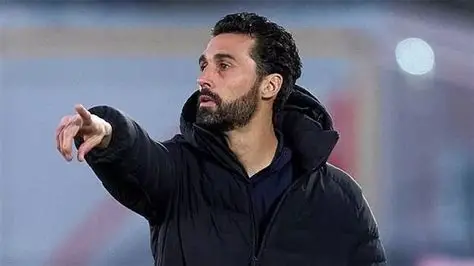
The original story was simple: Real Madrid replaced Alonso with Arbeloa after a Spanish Super Cup final defeat to Barcelona. That remains the starting point, but it is no longer the full story. Real Madrid confirmed Alonso’s departure by mutual agreement on 12 January. On the same day, the club announced Arbeloa as the new first-team coach, promoting a former defender who had worked through the academy and Castilla system.
By July, however, the article needs a sharper update. Arbeloa’s time as Real Madrid coach had already ended. Reuters reported that Madrid parted ways with him in June after he guided the team to second in La Liga and exited the Champions League at the quarter-final stage. Real Madrid then appointed Mourinho for a second spell until 2029, while Arbeloa moved to Fulham on a contract until 2029.
That timeline turns this Real Madrid coach article from a routine appointment report into something more useful: a case study in Real Madrid’s unforgiving standards, the risks of promoting from within during a crisis, and the difference between club identity and elite first-team authority.
For wider context on how modern football management is judged by results, pressure and tactical clarity, The News Ink’s football guide gives readers a useful foundation.
Why the Real Madrid coach change happened so quickly
Real Madrid coach changes are rarely treated as normal staff decisions. They are interpreted as statements about power, standards and direction. That was especially true when Alonso left less than eight months after taking over with a contract that had been expected to run until 2028.
The immediate trigger was the Spanish Super Cup final. Barcelona beat Real Madrid 3-2 in Jeddah, with Raphinha scoring twice in a match that deepened the pressure on Alonso. The result was damaging because it came against Madrid’s greatest rival, in a final, at a time when the team was already searching for consistency.
Madrid’s official statement was respectful. It described Alonso as a club legend, thanked him and his staff for their work, and said Real Madrid would always be his home. That language mattered. The club did not frame the departure as a public rupture. It presented the decision as a mutual end to a project that had not developed quickly enough.
But football rarely reads only official language. A Real Madrid coach is judged by performances, dressing-room control and the ability to win while managing a squad full of global stars. Alonso arrived with huge tactical credibility after his Bayer Leverkusen success, but the Bernabéu environment is different from almost anywhere else.
At Real Madrid, long-term ideas still need short-term results. A Real Madrid coach may talk about development, but the scoreboard always speaks louder.
The appointment that looked familiar but carried risk
Arbeloa’s promotion made emotional sense. He was a former Real Madrid player, a decorated Spain international and a coach who knew the club’s academy structure. Madrid’s official announcement highlighted that he had coached Castilla since June 2025 and had worked in the youth academy since 2020. It also listed his success with the Under-19s, including a treble in 2022/23 and a league title in 2024/25.
As a player, Arbeloa had credibility inside the Madrid story. He made 238 official appearances between 2009 and 2016 and won eight trophies, including two European Cups, one La Liga title and two Copa del Rey trophies. With Spain, he won the 2010 World Cup and the European Championships in 2008 and 2012.
That history made his appointment easy to understand. A club under pressure turned to someone who knew the badge, understood the dressing-room culture and could speak the language of Madridismo without needing a translation.
Still, the appointment carried risk. Being trusted by the academy is not the same as commanding a senior squad built around Kylian Mbappé, Vinícius Júnior, Jude Bellingham, Rodrygo, Federico Valverde and other elite players. A Real Madrid coach must manage tactics and hierarchy at the same time. That is the challenge that makes the role so rare. The Real Madrid coach must be tactician, diplomat and crisis manager at the same time.
Arbeloa’s message was clear: Madrid only accepts winning
In his first press conference, Arbeloa sounded like someone who understood the size of the job. He said he had spent 20 years at the club and understood the responsibility. He also used language that every Madrid supporter would recognise: “This club is about winning, winning, and winning again.”
That line was powerful because it captured the job description. Real Madrid do not appoint managers mainly to build narratives. They appoint them to win trophies. Style matters, youth development matters and continuity matters, but only if they sit inside a winning structure.
The problem for any Real Madrid coach is that the words are easier than the results. Arbeloa could speak naturally about Madrid values because he had lived them as a player and youth coach. The question was whether he could turn those values into first-team consistency.
That is where the appointment became complicated. Madrid had not simply promoted an academy coach into a calm environment. They had promoted him into a season already marked by a painful Clásico final defeat, pressure in La Liga and questions about dressing-room stability.
A timeline of Madrid’s 2026 coaching turbulence
| Date | Event | Why it mattered |
|---|---|---|
| 11 January 2026 | Barcelona beat Real Madrid 3-2 in the Spanish Super Cup final | Alonso’s pressure intensified after a high-profile Clásico loss |
| 12 January 2026 | Real Madrid and Xabi Alonso parted ways by mutual agreement | Madrid ended the project less than eight months after it began |
| 12 January 2026 | Álvaro Arbeloa was appointed first-team coach | The club turned to a familiar former player and academy coach |
| 13 January 2026 | Arbeloa gave his first press conference | He stressed responsibility, Madrid values and the demand to win |
| 9 June 2026 | Madrid parted ways with Arbeloa | The short experiment ended after a trophyless league-and-Europe finish |
| 11 June 2026 | José Mourinho was appointed until 2029 | Madrid chose experience and confrontation over internal continuity |
| 8 July 2026 | Fulham appointed Arbeloa until 2029 | Arbeloa’s next chapter began in the Premier League |
This timeline shows why the article cannot be left as a January appointment report. The Real Madrid coach story moved quickly, and the ending changed the meaning of the beginning.
Why the Arbeloa experiment did not last
The hard truth is that Arbeloa’s appointment did not deliver enough stability. Reuters reported that Madrid finished second in La Liga behind Barcelona and went out of the Champions League in the quarter-finals against Bayern Munich. For many clubs, that would still count as a strong season. For Madrid, it was not enough.
That is the standard. A Real Madrid coach can be respected, popular and loyal, yet still leave if the trophies do not arrive. The club’s public tribute to Arbeloa stressed loyalty, commitment and professionalism, but professionalism alone does not protect a manager at the Bernabéu.
The appointment also exposed the limits of familiarity. Knowing the club helps. It does not automatically solve tactical imbalance, injuries, star-player management or the pressure of chasing Barcelona in La Liga. Madrid’s dressing room is not a youth team with a shared development target. It is a collection of elite careers, commercial power and immediate expectations.
A Real Madrid coach needs authority from day one. Arbeloa had institutional credibility, but his first-team managerial résumé was still short. That gap mattered once results became uneven. A Real Madrid coach without a long senior record has almost no margin once momentum turns.
Mourinho’s return changed the interpretation
When Mourinho returned, Madrid’s message changed. The club was no longer leaning primarily on academy continuity or former-player familiarity. It was choosing experience, personality and a manager who already understood the politics of the Bernabéu.
Real Madrid announced on 11 June that Mourinho had been appointed for the next three seasons, until 30 June 2029, and would join the team when pre-season began on 13 July. That official confirmation closed the Arbeloa chapter and reset the coaching conversation again.
Mourinho’s return also added context to Arbeloa’s short reign. Madrid had tried the internal route after Alonso. When that failed to produce enough control, they went back to one of the biggest personalities in modern coaching.
The News Ink has already examined the broader Mourinho-Madrid conversation in its article on Mourinho, Real Madrid and Vinícius Jr. That link matters because any modern Madrid manager must answer one of the club’s biggest tactical questions: how to build a balanced team around world-class attacking talent without leaving the midfield and defensive structure exposed.
What this says about Alonso’s failed Madrid spell
Alonso’s exit remains one of the most important parts of the story because expectations around him were so high. He had transformed Bayer Leverkusen, built a modern tactical identity and arrived at Madrid as one of the most exciting young coaches in Europe.
Yet the Real Madrid job is not only about tactical intelligence. It is about timing, politics, squad chemistry and emotional command. Alonso had the ideas. The question was whether he had the right environment and enough time to impose them.
A Real Madrid coach does not always get the luxury of a full rebuild. The squad is expensive. The brand is global. Supporters expect titles immediately. Every Clásico becomes a referendum. Every player dispute becomes news. Every lost final can accelerate a crisis.
That does not make Alonso a poor coach. It shows that even strong coaches can struggle when the club’s immediate expectations and the squad’s internal dynamics do not align.
For readers interested in tactical systems and how coaches shape elite teams, The News Ink’s analysis of how tactics helped Arsenal win the Champions League gives useful context on why structure, roles and buy-in often matter more than star names alone.
Why promoting from within can work — and why it can fail
Real Madrid’s decision to appoint Arbeloa followed a familiar football logic: when a club is unstable, choose someone who understands the institution. That can work. Former players often bring emotional authority, supporter goodwill and knowledge of internal standards.
But internal promotion can also become a shortcut. It can hide the fact that the job requires experience the candidate has not yet had. Academy success is valuable, but first-team football brings different pressures. Senior players do not always respond to the same methods as teenagers. Media scrutiny is harsher. Every substitution is debated. Every training-ground issue can become a headline.
The Real Madrid coach role magnifies those pressures. It is not enough to know what the club represents. The manager must make world-class players accept roles, rotations and tactical sacrifices. He must also keep the president, supporters and dressing room aligned long enough to survive difficult weeks.
Arbeloa may still become an excellent senior manager. His Fulham move suggests his reputation remains strong enough to earn a Premier League opportunity. But Madrid may simply have been too extreme as a first major test.
Why Fulham is now the next test for Arbeloa
Arbeloa’s move to Fulham gives this story a second life. Reuters reported that Fulham appointed him on a contract until 2029, replacing Marco Silva after the Portuguese coach left for Benfica. Arbeloa described the move as an honour and said he was looking forward to working at Craven Cottage.
Fulham will test him differently. The expectations are lower than Madrid’s, but the Premier League is brutal in other ways. Fulham need structure, recruitment clarity and tactical identity while competing against clubs with deeper budgets and stronger squads.
For Arbeloa, that may actually be healthier. Instead of being judged every week against the Champions League and La Liga title, he can build a team more patiently. He can show whether his academy coaching, Madrid experience and playing career translate into a sustained senior project.
The move also changes how Madrid supporters may remember him. If he succeeds in England, his short spell as Real Madrid coach may be seen less as failure and more as a premature promotion into an impossible moment.
The News Ink’s coverage of Liverpool appointing Andoni Iraola offers a useful comparison of how modern clubs assess coaching profiles, tactical fit and risk when choosing a manager for a high-pressure environment.
The dressing-room question cannot be ignored
The original article referred to reports of tension inside the dressing room, including disagreement with Vinícius Júnior. Those claims should be handled carefully because dressing-room stories often mix fact, interpretation and anonymous briefing.
What can be said safely is that Madrid’s season was widely described as unsettled, and Reuters later reported that Arbeloa also struggled to steady a fractured dressing room. That phrase matters. It suggests the issue outlasted Alonso and was not solved merely by changing the face on the touchline.
A Real Madrid coach must manage elite egos without weakening the team. That is one of the reasons Mourinho’s return is so fascinating. His career has been built on authority, conflict, clarity and emotional intensity. Those traits can create winning momentum, but they can also create tension if results dip.
Madrid’s choice suggests the club wanted a manager with enough force to impose order quickly. Whether that becomes a brilliant reset or another combustible cycle will define the next phase. The Real Madrid coach conversation will now follow Mourinho’s ability to turn authority into trophies.
What Madrid must fix after two short coaching cycles
The Real Madrid coach changes are symptoms of deeper questions. Madrid have world-class attackers, huge commercial power and a squad with extraordinary individual quality. But elite football is won through balance. The best teams defend together, press with timing, control transitions and give their stars a platform rather than asking them to solve every match alone.
The next Real Madrid coach challenge is therefore not only motivational. Mourinho must answer practical questions. How does Madrid protect space behind attacking full-backs? How does it balance Vinícius, Mbappé, Rodrygo and Bellingham in the same system? Who controls tempo in difficult away games? How does the team avoid becoming too open in transition?
Those questions matter because Madrid’s rivals have become more organised. Barcelona’s Super Cup win and La Liga title showed that emotional superiority alone is not enough. Bayern’s Champions League win over Madrid showed that European pedigree does not protect a team from structural flaws.
Real Madrid need more than a famous manager. They need a coherent plan that survives pressure. The Real Madrid coach position will keep exposing any gap between talent and structure.
Why the appointment still mattered despite its short life
It may be tempting to dismiss Arbeloa’s appointment because it ended quickly. That would be too simple. The decision revealed how Madrid think in moments of crisis. The club first reached for identity, loyalty and internal knowledge. When that did not bring the desired correction, it returned to proven elite authority.
That sequence tells us something important about the modern Real Madrid coach position. The club wants connection, but it values winning more. It wants continuity, but not at the cost of trophies. It respects legends, but it will still move on from them quickly.
That is harsh, but it is also part of Madrid’s competitive identity. The same intolerance that makes the job unstable is also what keeps the club at the centre of European football. The standards are exhausting because they are real. A Real Madrid coach is never judged only against rivals; he is judged against the club’s own mythology.
The News Ink’s world cup legends ranked feature offers a broader reminder that football legacy is often shaped by what players and coaches do under the heaviest pressure. At Madrid, that pressure never disappears.
The final lesson from Arbeloa’s brief Madrid spell
The Arbeloa appointment was not irrational. It was understandable, emotional and rooted in club logic. A former player with academy success stepped forward after a failed high-profile coaching project. He spoke well, understood the badge and accepted the demand.
But the Real Madrid coach job gives very little protection to learning curves. Arbeloa needed time, authority and results as Real Madrid coach. Madrid needed immediate control. Those needs did not fully meet. The Real Madrid coach experiment with Arbeloa showed how quickly promise can become pressure.
Now the club has Mourinho, Arbeloa has Fulham, and Alonso’s brief Madrid spell has become part of a wider Real Madrid coach argument about how elite clubs choose managers. Should they prioritise tactical innovation, institutional identity, dressing-room authority or proven trophies? Madrid tried two answers in one season and then chose a third.
That is why this story still matters even after Arbeloa’s exit. The Real Madrid coach role remains one of the clearest tests of elite authority in the game. It is not only about who replaced Alonso in January. It is about what Madrid’s 2026 coaching turbulence revealed about the Real Madrid coach role: at the Bernabéu, history opens the door, but only winning keeps it open.
For more football analysis and sports features from The News Ink, follow The News Ink on X.