



The MV Hondius hantavirus outbreak 2026 has claimed three lives and triggered an international public health response after the Andes virus spread among passengers aboard the Dutch expedition cruise ship. The outbreak began after the vessel departed Ushuaia, Argentina on April 1, 2026, and has since involved health authorities across multiple continents — including the World Health Organization, the United States Centers for Disease Control and Prevention, and national health agencies across Europe, Africa, and South America.
As of May 9, 2026, the WHO has confirmed six cases of Andes virus infection, with eight suspected cases in total. Three passengers have died. The ship is currently making its way to Tenerife, Spain, carrying 147 individuals on board along with additional medical resources, where passengers will be evacuated to their respective home countries.
MV Hondius Hantavirus Outbreak 2026: A Full Timeline of Events
The MV Hondius hantavirus outbreak 2026 unfolded across several weeks and multiple locations, involving difficult decisions about where the ship could dock and how infected passengers could receive treatment.
Full timeline of the MV Hondius hantavirus outbreak:
- April 1, 2026: MV Hondius departs Ushuaia, Argentina, beginning its voyage
- April 11, 2026: A passenger dies on board from Andes virus infection — the first confirmed death
- April 24, 2026: The body of the deceased passenger is removed from the vessel at Saint Helena, thirteen days after death. His wife also disembarks at Saint Helena
- April 26, 2026: The passenger’s wife dies in a hospital in Johannesburg, South Africa — the second confirmed death
- Late April 2026: A British passenger is transferred to Johannesburg for treatment in critical but stable condition
- Around this period: A third passenger dies on board the vessel
- Early May 2026: The ship docks at Praia, Cape Verde, during its voyage
- May 6, 2026: The ship departs for Tenerife after the Spanish Ministry of Health approves its arrival
- May 8, 2026: Passengers remain hospitalised across South Africa, the Netherlands, Germany, Saint Helena, Spain, and Switzerland
- May 9, 2026: WHO confirms six confirmed cases and eight suspected cases. Three deaths recorded in total
The geographic spread of this timeline — from Argentina to Saint Helena, South Africa, Cape Verde, and now Spain — illustrates the complex international dimensions of managing a disease outbreak aboard a vessel crossing multiple jurisdictions.
MV Hondius Hantavirus Outbreak 2026: The Andes Virus Explained
Understanding the MV Hondius hantavirus outbreak 2026 requires a clear explanation of the pathogen at its centre — the Andes virus — and why it represents a particularly unusual and concerning form of hantavirus infection.
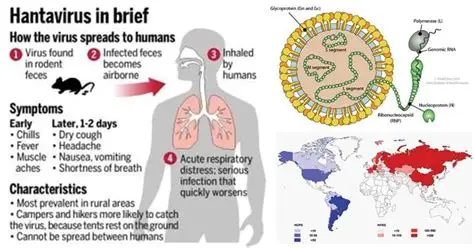
Hantaviruses are a family of more than fifty virus types that primarily infect rodents. In rodent populations, hantavirus infections typically persist without causing visible symptoms. Infected rodents spread the virus to other animals and occasionally to humans through aerosols or droplets from their faeces, urine, saliva, and blood, through consumption of contaminated food, or from virus particles shed from skin or fur.
In humans, hantavirus infection can cause serious and potentially fatal illness. The Andes virus specifically causes Hantavirus Pulmonary Syndrome — a severe condition that attacks the heart and respiratory system, causing progressive difficulty breathing and, in serious cases, cardiovascular collapse.
What makes the Andes virus uniquely dangerous:
- It is the only known hantavirus capable of spreading directly between humans
- All other hantavirus strains spread exclusively from animals — typically rodents — to humans
- Human-to-human transmission, while rare, has been documented in previous outbreaks
- Transmission typically occurs through close and often sustained contact with an infected person
- The virus causes Hantavirus Pulmonary Syndrome — a severe illness affecting the heart and lungs
- There is no specific approved antiviral treatment for Andes virus infection
- The disease can progress rapidly from initial symptoms to life-threatening respiratory failure
The human-to-human transmission capability of the Andes virus is what makes the MV Hondius outbreak particularly significant from a public health perspective. On a cruise ship — a confined environment with shared spaces, recirculated air, and sustained close contact among passengers — the conditions for transmission between people are more present than in most land-based settings.
MV Hondius Hantavirus Outbreak 2026: International Health Response
The MV Hondius hantavirus outbreak 2026 triggered responses from health authorities at national and international level, reflecting the seriousness with which public health officials have treated the situation.
The United States Centers for Disease Control and Prevention classified the outbreak as a level 3 emergency response — the highest level of CDC alert, indicating a significant public health threat requiring active and coordinated response measures.
The Dutch National Institute for Public Health and the Environment classified the outbreak as a level A2 infectious disease — a classification reserved for serious infectious diseases requiring enhanced surveillance, reporting, and public health intervention.
The World Health Organization has been actively monitoring the situation and providing guidance throughout the outbreak. Critically, the WHO has sought to balance appropriate concern with factual reassurance about the actual risk level to the broader public.
International health authority responses:
- WHO: Active monitoring, emphasis that epidemic risk remains low due to rarity of human-to-human transmission
- US CDC: Level 3 emergency response classification — highest alert level
- Dutch RIVM: Level A2 infectious disease classification
- UK Health Security Agency: Contact tracing of all 30 passengers who disembarked at Saint Helena
- Spanish Ministry of Health: Approved MV Hondius arrival in Tenerife after review
- Multiple national health services: Managing hospitalised patients across six countries
The UK Health Security Agency’s contact tracing operation at Saint Helena deserves particular attention. When the ship docked there in late April, 30 passengers disembarked. Each of those individuals has since been tracked and monitored by UKSHA — a careful and methodical public health response designed to identify any secondary cases that might have developed following potential exposure on the vessel.
MV Hondius Hantavirus Outbreak 2026: The Tenerife Controversy
The journey of the MV Hondius hantavirus outbreak 2026 vessel toward its current destination was not straightforward. The ship’s planned arrival in the Canary Islands generated significant political and public health controversy before the Spanish Ministry of Health ultimately approved its docking in Tenerife.
Fernando Clavijo, the president of the Canary Islands, publicly objected to the ship’s arrival, citing concerns about the safety of island residents. His objection reflected understandable anxiety among local populations about receiving a vessel associated with a deadly and unusual viral outbreak — even with reassurances from health authorities about the low risk of broader transmission.
The Spanish Ministry of Health’s decision to approve the ship’s arrival in Tenerife was made after careful review of the public health evidence and the WHO’s assessment that the risk of wider epidemic spread remains low. The approval was granted on the condition that appropriate medical resources accompany the vessel and that passengers are evacuated directly to their home countries upon arrival.
Key points about the Tenerife arrival:
- Canary Islands president Fernando Clavijo publicly objected to the ship’s arrival
- His concern centred on the safety of local island residents
- The Spanish Ministry of Health reviewed the situation and approved arrival
- WHO guidance on low epidemic risk informed the approval decision
- The ship carries additional medical resources for the final leg of the journey
- 147 individuals remain on board as the vessel makes its way to Tenerife
- Passengers will be evacuated to their respective home countries upon arrival
MV Hondius Hantavirus Outbreak 2026: Current Status of Patients
As of the most recent confirmed information on May 8 and 9, 2026, the MV Hondius hantavirus outbreak 2026 has resulted in patients being hospitalised across six countries simultaneously — a remarkable and sobering illustration of how far the consequences of this outbreak have spread geographically.
Current patient status by country:
- South Africa: Patients hospitalised, including those transferred via Saint Helena
- Netherlands: Patients hospitalised — the flag state of the MV Hondius
- Germany: Patients receiving hospital treatment
- Saint Helena: Patients receiving treatment on the island
- Spain: Patients hospitalised
- Switzerland: Patients receiving hospital treatment
The WHO confirmed on May 9 that there are currently eight suspected cases in total, of which six have been confirmed as Andes virus infections. Three passengers have died. Two of those three deaths have been confirmed as caused directly by Andes virus infection. The third death is under investigation.
MV Hondius Hantavirus Outbreak 2026: Public Health Risk Assessment
One of the most important aspects of the MV Hondius hantavirus outbreak 2026 response has been the careful and consistent communication from the WHO and other health authorities about the actual level of risk to the general public.
The WHO has emphasised throughout the outbreak that the risk of a wider epidemic remains low. This assessment rests on several established facts about Andes virus transmission patterns and the history of previous outbreaks.
Why WHO assesses the wider epidemic risk as low:
- Human-to-human transmission of Andes virus, while documented, is rare
- Previous outbreaks have shown only limited spread among close contacts
- Transmission requires close and typically sustained contact with an infected person
- The virus does not spread through casual contact or general proximity
- Health authorities have rapidly identified and contact traced exposed individuals
- Hospitalised patients are being managed under appropriate infection control protocols
- No evidence of significant secondary spread beyond the original vessel has emerged
These facts do not minimise the tragedy of three deaths or the serious illness affecting confirmed cases. But they do provide an evidence-based foundation for the WHO’s position that this outbreak, while serious and unusual, does not currently represent a threat of epidemic or pandemic spread.
What Is Hantavirus Pulmonary Syndrome?
The MV Hondius hantavirus outbreak 2026 has brought significant public attention to Hantavirus Pulmonary Syndrome — a condition that many people outside the medical community have not previously encountered. Understanding its symptoms and progression helps explain why the deaths on board the MV Hondius occurred and why early identification and treatment are so critical.
Hantavirus Pulmonary Syndrome — key facts:
- Caused by Andes virus infection in humans
- Initial symptoms resemble influenza — fever, fatigue, muscle aches, and headache
- Symptoms typically begin one to eight weeks after exposure to the virus
- The disease can progress rapidly to severe respiratory difficulty
- Fluid accumulates in the lungs, causing progressive breathing failure
- The heart can also be affected, causing cardiovascular complications
- There is no specific approved antiviral treatment — care is primarily supportive
- Severe cases require intensive care including mechanical ventilation
- Mortality rates in confirmed cases can be significant without intensive medical support
The rapid progression from flu-like symptoms to life-threatening respiratory failure is what makes Hantavirus Pulmonary Syndrome so dangerous. In a cruise ship environment, access to the level of intensive care required for severe cases is limited — a factor that likely contributed to the deaths that occurred on board before patients could be transferred to land-based hospitals.
Final Word on the MV Hondius Hantavirus Outbreak 2026
The MV Hondius hantavirus outbreak 2026 represents one of the most unusual and medically significant cruise ship health emergencies in recent history. Three people have lost their lives. Six confirmed cases and eight suspected cases have been identified across multiple countries. Health authorities on four continents have mobilised resources to respond.
The outbreak has also demonstrated how seriously international health organisations treat even rare and contained infectious disease events — and rightly so. The Andes virus’s unique ability to transmit between humans, however rarely, demands careful surveillance and a thorough public health response every time it appears.
As the MV Hondius makes its final journey to Tenerife and its remaining passengers prepare to return home, the priority must be the health and welfare of everyone affected — and the careful monitoring of all those who may have been exposed during this extraordinary and deeply sad sequence of events.