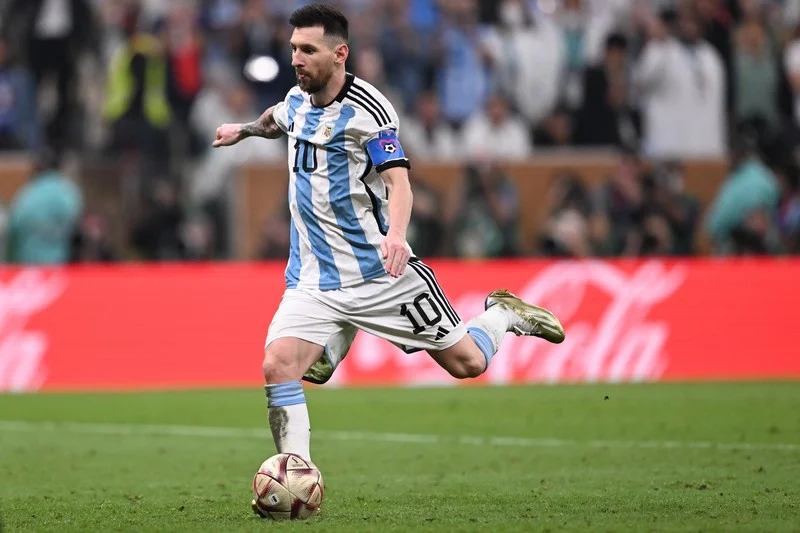
The Messi injury scare World Cup 2026 alarm bells rang across the football world on Sunday when Lionel Messi requested to be substituted during Inter Miami’s Major League Soccer game against the Philadelphia Union — clutching the back of his left leg before heading straight down the tunnel in the 73rd minute. With the World Cup beginning on June 11, the incident sent immediate shockwaves through Argentina’s fanbase and triggered urgent questions about whether the 38-year-old will be fit to represent the defending champions on the tournament’s biggest stage.
Inter Miami coach Guillermo Hoyos moved quickly to calm fears, suggesting the substitution was precautionary rather than the result of a significant injury. “He was tired; the pitch was heavy and when in doubt, the standard approach is always to ensure you don’t take any risks,” Hoyos said after the game — reassuring words delivered with the caveat that no formal medical report had yet been received.
Messi appeared to walk normally as he left the field — a detail that gave observers some reassurance — but the sight of the eight-time Ballon d’Or winner clutching his leg with the World Cup just weeks away was enough to dominate football headlines around the world within minutes of the incident occurring.
Messi Injury Scare World Cup 2026: What Happened on the Pitch
The Messi injury scare World Cup 2026 moment occurred in the 73rd minute of Inter Miami’s MLS clash against the Philadelphia Union — a game played on a wet Miami pitch that Hoyos later cited as a contributing factor in the decision to withdraw his star player.
Messi had been on the field for 73 minutes of what appears to have been a physically demanding game on a heavy surface. The moment that triggered global concern came when the Argentine appeared to feel something in the back of his left leg — an area of the body that has been a recurring source of concern throughout his career, with hamstring issues having sidelined him during previous spells at Inter Miami since his arrival in 2023.
He clutched the area, made the signal to be substituted, and walked — apparently normally — directly down the tunnel without lingering on the touchline or pitch. That immediate departure, bypassing the usual post-substitution seat on the bench, added to the anxiety of those watching.
What happened during the substitution:
- Messi requested substitution in the 73rd minute of the Miami vs Philadelphia Union MLS game
- He clutched the back of his left leg — an area with previous injury history
- He appeared to walk normally as he left the field — offering some reassurance
- He headed straight down the tunnel rather than taking a seat on the bench
- The game was played on a wet, heavy Miami pitch — cited by the coach as a contributing factor
- No formal medical report had been received by the time Hoyos addressed the media
- Hoyos confirmed Messi was fatigued and that the substitution was precautionary
Hoyos’s language — “fatigued,” “heavy pitch,” “when in doubt” — was carefully chosen to minimise alarm without making medical claims he could not yet substantiate. The phrase “as far as I know, we don’t have a report on that yet” underlines that the full picture remained unclear even to the coaching staff immediately after the game.
Messi Injury Scare World Cup 2026: The Coach’s Assessment
The Messi injury scare World Cup 2026 response from Inter Miami coach Guillermo Hoyos was measured but revealing. His post-match comments addressed the substitution directly and placed it within a framework of precautionary management rather than medical emergency — though he was careful not to make definitive claims about Messi’s physical condition in the absence of a formal medical assessment.
“As far as I know, we don’t have a report on that yet, but he really was fatigued,” Hoyos said when asked directly about Messi’s condition after the game.
“He was tired; the pitch was heavy and when in doubt, the standard approach is always to ensure you don’t take any risks.”
That final phrase — “ensure you don’t take any risks” — is the key statement in Hoyos’s assessment. It frames the substitution not as a response to a specific injury but as a standard precautionary protocol applied to a 38-year-old player of Messi’s value and importance with a World Cup weeks away. The logic is straightforward — if there is any doubt about a player’s physical condition in these circumstances, the risk-reward calculation strongly favours caution.
Key elements of Hoyos’s post-match comments:
- Confirmed no formal medical report had been received at the time of speaking
- Described Messi as genuinely fatigued — not merely resting
- Cited the heavy, wet pitch as a contributing factor to the decision
- Framed the substitution as precautionary — standard protocol when in doubt
- Used the phrase “ensure you don’t take any risks” — signalling World Cup fitness considerations
- Did not confirm or deny any specific muscular or hamstring issue
- His language was carefully calibrated to inform without alarming
The absence of a formal medical report in Hoyos’s comments was itself informative. Had the substitution been prompted by a confirmed significant injury, the team’s medical staff would typically have communicated that immediately to the coaching staff. The fact that no report existed suggests the issue — whatever its precise nature — had not triggered a formal medical response by the time Hoyos spoke.
Messi Injury Scare World Cup 2026: The Stakes for Argentina
The Messi injury scare World Cup 2026 carries extraordinary stakes for Argentina — the defending World Cup champions who have built their entire international football identity around their greatest ever player for more than fifteen years. Messi’s presence at the 2026 tournament is not merely desirable for Argentina — it is considered essential to their realistic prospects of defending the trophy they won in Qatar in 2022.
Argentina’s opening game of the 2026 World Cup is scheduled for June 16 against Algeria — giving Messi and his teammates just five weeks from Sunday’s incident to prepare for their tournament opener. The squad announcement is expected next week, which will confirm whether Messi has been selected and — implicitly — whether Argentina’s medical staff have cleared him to participate.
Messi has not formally confirmed his intention to play at the World Cup. However, he is universally expected to return for what would be a record-equalling sixth World Cup appearance — joining a select group of players who have competed in six editions of the tournament. At 38, this is widely assumed to be his final opportunity to compete at the World Cup level.
Argentina’s World Cup 2026 stakes:
- Argentina are the defending World Cup champions — winners in Qatar 2022
- Their opening game is June 16 against Algeria — five weeks from Sunday’s incident
- The squad announcement is expected next week
- Messi has not formally confirmed participation but is universally expected to play
- A sixth World Cup appearance would equal the all-time record for World Cup appearances
- At 38 years old, this is widely considered Messi’s final World Cup
- Argentina’s title defence and Messi’s legacy are inextricably linked in the 2026 narrative
- The tournament is co-hosted by the United States, Canada, and Mexico — beginning June 11
The record-equalling sixth World Cup appearance adds a layer of historical significance to Messi’s participation that extends beyond Argentina’s competitive ambitions. It would place him alongside the sport’s most enduring competitors and provide a final chapter to a World Cup story that includes the 2022 triumph in Qatar — the moment that completed his collection of every major honour the game offers.
Messi Injury Scare World Cup 2026: His History of Hamstring Problems
The Messi injury scare World Cup 2026 resonates particularly strongly given Messi’s documented history of hamstring and leg muscle issues since his arrival at Inter Miami in 2023. The club he joined with such fanfare has been the setting for multiple periods on the sideline — injury absences that have become a recurring pattern in the MLS chapter of his extraordinary career.
Since moving to Miami in the summer of 2023, the eight-time Ballon d’Or winner has carefully managed his workload — a reflection both of his age and of the accumulated physical demands of a career spanning more than two decades at the very highest level of the sport. That careful management has involved missing games that a younger player might have been expected to play through, prioritising recovery over availability, and applying precautionary protocols exactly as Hoyos described on Sunday.
Messi’s injury history at Inter Miami:
- Multiple hamstring-related issues since arriving at Inter Miami in 2023
- Has spent spells on the sideline during his MLS tenure
- Workload carefully managed given his age — 38 years old
- Previous history of hamstring problems across his career predating the Miami move
- The left leg — the area he clutched on Sunday — has been a recurring area of concern
- His physical management at club level directly shapes his availability for international duty
- Argentina’s medical staff will have full access to Miami’s assessments when preparing the World Cup squad
The pattern of careful workload management at club level is a deliberate strategy — one that accepts short-term absence from MLS games in exchange for preserving the physical condition required to perform at international tournament level. Sunday’s substitution may be the latest application of that strategy rather than evidence of a new or significant injury.
Messi Injury Scare World Cup 2026: Historical Context of His World Cup Journey
The Messi injury scare World Cup 2026 takes on additional meaning when placed against the full sweep of Messi’s World Cup history — a journey that has traced the arc from heartbreaking near-misses to ultimate triumph and now into a final act that could see him add to that defining achievement.
Messi made his World Cup debut in Germany in 2006, when he was a teenager announcing himself to the world. He carried Argentina to the final in Brazil in 2014 — winning the Golden Ball as the tournament’s best player despite Argentina losing the final to Germany. He endured the agonising defeat in Russia in 2018 before his story reached its perfect conclusion in Qatar in 2022 — a tournament whose final against France produced arguably the greatest single game in World Cup history and ended with Messi lifting the trophy he had spent his entire career pursuing.
Messi’s World Cup record:
- 2006 Germany — debut tournament as a teenager
- 2010 South Africa — group stage exit
- 2014 Brazil — finalist, Golden Ball winner
- 2018 Russia — round of 16 exit
- 2022 Qatar — World Cup winner, Golden Ball winner
- 2026 USA/Canada/Mexico — expected sixth appearance, record-equalling
A sixth appearance would place him level with the record for most World Cup participations — a statistical milestone that adds to the historical weight of what 2026 represents for Messi personally.
Final Word on Messi Injury Scare World Cup 2026
The Messi injury scare World Cup 2026 moment will be forgotten quickly if — as Hoyos suggested — Sunday’s substitution was purely precautionary and Messi emerges from assessment fit and available for Argentina’s squad announcement next week.
But it will not be forgotten by anyone who watched it. Because in 2026, every time Messi clutches any part of his body and walks toward the touchline, the world holds its breath. Not merely because Argentina need him. But because football — in its entirety — is a diminished thing when Lionel Messi is not playing in it.
The World Cup begins June 11. Argentina play Algeria on June 16. And somewhere in a medical suite in Miami, the most important fitness assessment in world football is underway.
Get well, Leo. The game needs you.
MORE NEWS ON THE NEWS INK SPORTS.