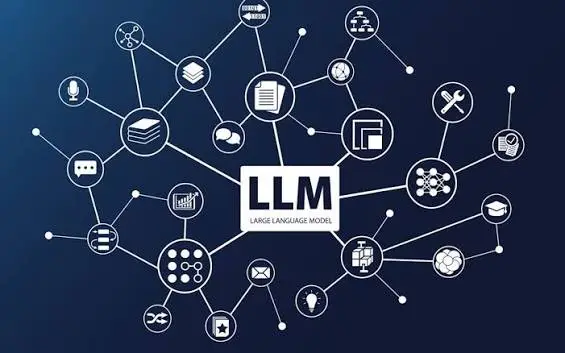
Large Language Models Explained: How LLMs Work, Training, Tokens, Uses and Risks
Large Language Models have become one of the most important technologies behind the modern artificial intelligence boom. They power conversational assistants, coding tools, search experiences, document analysis, translation, customer-support systems and a growing number of AI agents. Yet an LLM is not simply a chatbot, a search engine or a database of memorized answers. It is a trained statistical model that learns complex patterns across enormous amounts of language and uses those patterns to process and generate sequences of information.
Understanding Large Language Models matters because they now sit underneath many products people casually call “AI.” The same broad class of technology can summarize a contract, explain software code, draft an email, answer questions about a document, translate languages or help create a research plan.
It can also hallucinate facts, reproduce bias, expose sensitive information or produce a highly confident answer that is wrong.
That combination of extraordinary usefulness and important limitations is what makes LLMs worth understanding properly.
This guide explains what Large Language Models are, how transformers and attention made them possible, what tokens and parameters mean, how pretraining and post-training work, why context windows matter, how retrieval-augmented generation and fine-tuning improve them, where LLMs are useful, where they fail and how the technology is evolving in 2026.
For the wider technological picture, begin with The News Ink’s complete Artificial Intelligence guide. Large Language Models are one major part of that much broader AI ecosystem.
What Are Large Language Models?
Large Language Models, usually shortened to LLMs, are machine-learning models trained at large scale to process, represent and generate language.
The word “large” can describe several dimensions at once:
- the number of parameters in the model;
- the amount of training data;
- the computing power required for training;
- the breadth of tasks the system can perform.
There is no universally agreed parameter threshold at which a language model officially becomes “large.”
At a basic level, an LLM learns statistical relationships among pieces of language.
During training, many language models repeatedly predict missing or next tokens and adjust internal parameters when those predictions are poor.
Repeated across enormous datasets, this process allows a model to learn patterns involving:
- grammar;
- spelling;
- style;
- code;
- facts and associations;
- relationships among concepts;
- common document structures;
- patterns of reasoning expressed in language.
That does not mean a model stores and understands information exactly as a human does.
It means the system develops a complex mathematical representation from which useful outputs can be generated when new inputs are provided.
LLMs vs AI, Machine Learning and Generative AI
These terms are often mixed together.
They are related, but they are not interchangeable.
| Technology | What It Means | Typical Example |
|---|---|---|
| Artificial intelligence | Broad field of machines performing tasks associated with intelligence | Prediction or planning |
| Machine learning | Systems learning patterns from data | Fraud detection |
| Deep learning | Machine learning built around multilayer neural networks | Vision and speech |
| Generative AI | AI capable of creating synthetic content | Text, images, audio or video |
| Large Language Models | Models focused heavily on language and related information | AI assistants |
| Multimodal AI | Models that work across several types of information | Text plus images or audio |
| AI agents | Systems using models and tools to pursue goals | Multi-step digital workflows |
Artificial intelligence is the broadest category.
Machine learning sits within AI.
Deep learning is one major machine-learning approach.
Generative AI produces new content.
Large Language Models are one of the most important model families used for generative language tasks.
This distinction is especially important because not every generative AI system is an LLM. Image, music and video generation can rely on other model architectures.
For the larger content-generation category, see The News Ink’s Generative AI explained guide.
The Transformer Breakthrough Changed Language AI
Modern Large Language Models were made possible by many years of neural-network research, but one development became particularly important.
In 2017, researchers published “Attention Is All You Need,” introducing the Transformer architecture.
The researchers proposed a system based heavily on attention mechanisms rather than the recurrent architectures widely used for sequence processing at the time. Transformers proved highly parallelizable and became the architectural foundation for many later language-model families.
Why does attention matter?
Language contains relationships that can stretch across long sentences or documents.
Consider:
The scientist who published the results after years of experiments said she was surprised.
To interpret “she,” the system needs to understand that it refers to “scientist,” even though several words appear between them.
Attention allows the model to calculate which parts of an input are most relevant to other parts.
Transformers apply this repeatedly across many layers and attention heads.
That ability helped researchers train models on much larger datasets and made the architecture central to modern language AI.
What Is a Token?
Large Language Models do not necessarily read text as whole words.
They process tokens.
A token can represent:
- an entire word;
- part of a word;
- punctuation;
- a number;
- another small text unit.
A common word may fit inside one token.
A rarer or longer word may be divided into several.
Different model families also use different tokenization systems, so the same sentence can produce different token counts depending on the tokenizer.
This matters for three reasons.
First, model context limits are normally expressed in tokens.
Second, many AI APIs charge according to input and output tokens.
Third, processing a long book, software repository or conversation can consume far more context than a short question.
A user prompt consumes input tokens.
Previous messages consume tokens.
Retrieved documents consume tokens.
The response consumes output tokens.
Understanding tokens therefore helps explain both the technical and economic limits of LLM applications.
What Are Parameters?
Parameters are numerical values inside a neural network that are learned or adjusted during training.
They help determine how the network transforms an input into an output.
Public discussion once treated parameter count almost like an AI horsepower figure:
More parameters = better model.
Research showed why that assumption is incomplete.
DeepMind’s influential Chinchilla research studied more than 400 language models and found that model size and the amount of training data should be balanced under a fixed computing budget. Its 70-billion-parameter Chinchilla model outperformed several much larger models by being trained on substantially more data.
That means the quality of Large Language Models depends on much more than parameter count.
Important factors include:
- model architecture;
- training data;
- data quality;
- training compute;
- post-training;
- inference techniques;
- retrieval;
- tool use;
- reasoning methods;
- evaluation quality.
A giant poorly trained model can be less useful than a smaller, better-trained one.
The parameter race is also becoming harder to measure.
Stanford’s 2026 AI Index reports that several frontier developers no longer disclose parameter counts, training-data sizes, training duration or other important details for their most resource-intensive models. Industry produced more than 90% of notable AI models in 2025, but transparency around leading systems declined.
How Large Language Models Are Trained
Training a modern LLM is not one single process.
It is better understood as a pipeline.
| Stage | Main Purpose |
|---|---|
| Data preparation | Build and clean the training corpus |
| Pretraining | Learn broad language patterns |
| Instruction tuning | Teach the model to follow instructions |
| Preference/safety training | Improve desirable responses and behavior |
| Evaluation | Test capabilities and risks |
| Inference | Use the trained model in real applications |
1. Data Collection and Preparation
The process begins with data.
Depending on the system, training material may include:
- websites;
- books;
- articles;
- reference material;
- computer code;
- academic writing;
- licensed datasets;
- human-created examples;
- synthetic data.
The raw material then has to be cleaned and processed.
Developers may remove:
- duplicates;
- spam;
- malformed content;
- low-quality material;
- unwanted personal information;
- some categories of unsafe content.
Data quality matters enormously.
A model does not become better merely because more information is added.
Low-quality, duplicated, biased or misleading information can weaken the system.
Stanford’s 2026 AI Index highlights how important data curation has become. It points to examples where pruning, deduplication and improved data selection helped much smaller models achieve results comparable to systems with far larger parameter counts on selected benchmarks.
2. Pretraining
Pretraining is where Large Language Models learn broad statistical patterns from enormous datasets.
For many autoregressive LLMs, the central objective is next-token prediction.
Imagine:
The capital of France is ___
The model predicts the next token.
During training, the prediction is compared with the expected continuation.
The internal parameters are adjusted.
The model then repeats this process across huge quantities of data.
The objective appears simple, but predicting language well requires learning a tremendous amount of structure.
A sufficiently capable model can acquire useful representations involving:
- syntax;
- semantics;
- common knowledge;
- programming patterns;
- document structure;
- translation;
- associations between concepts.
This does not guarantee factual understanding.
It creates the statistical foundation from which later abilities can emerge.
Why GPT-3 Was an Important Step
The 2020 GPT-3 paper became an important milestone because it demonstrated how increasing model scale could dramatically improve few-shot learning.
GPT-3 had 175 billion parameters and could perform many tasks using instructions and examples provided in the prompt rather than requiring separate model training for every task.
That helped change the way researchers thought about language systems.
Instead of creating one model for translation, another for summarization and another for question answering, a sufficiently broad pretrained model could perform many tasks through a common text interface.
This generality is central to why Large Language Models became commercially important.
3. Instruction Tuning
A raw pretrained model is not automatically a good assistant.
Pretraining teaches a model to predict language.
It does not necessarily teach the system to follow a user’s request helpfully, safely or truthfully.
Instruction tuning uses examples of desired responses to make the model better at following directions.
The difference is important.
A base model receiving:
Explain photosynthesis to a 10-year-old.
might simply continue the text statistically.
An instruction-tuned system is trained to interpret that sentence as a request and respond accordingly.
4. Human Feedback and Post-Training
Another major development was training language models using feedback about which responses humans prefer.
The InstructGPT research showed how supervised instruction tuning followed by reinforcement learning from human feedback, or RLHF, could improve helpfulness and alignment with user intent.
In human evaluations, outputs from a 1.3-billion-parameter InstructGPT model were preferred over those from the original 175-billion-parameter GPT-3 on the researchers’ prompt distribution.
This result demonstrated something fundamental:
Model size is not the only thing that determines usefulness.
Post-training can dramatically change behavior.
Modern systems use a variety of methods, including:
- supervised fine-tuning;
- reinforcement learning from feedback;
- AI-generated feedback;
- preference optimization;
- safety training.
One influential later approach, Direct Preference Optimization, showed that preference learning could be simplified without the full reward-model-plus-reinforcement-learning pipeline traditionally associated with RLHF.
5. Inference: What Happens When You Use an LLM
Training creates the model.
Inference is what happens when someone actually uses it.
The system receives input tokens, processes the context and generates output.
Inference is where several practical factors become important:
- latency;
- token cost;
- hardware requirements;
- context size;
- response length;
- model efficiency.
The economics have changed dramatically.
Stanford’s 2025 AI Index found that the inference cost for a model performing around GPT-3.5 level on the MMLU benchmark fell from approximately $20 per million tokens in November 2022 to $0.07 by October 2024, a decline of more than 280 times.
Falling inference costs are one reason Large Language Models can now be embedded into far more software products and workflows.
Why Can One LLM Perform So Many Tasks?
One of the most important characteristics of Large Language Models is generality.
The same base model may be able to:
- summarize;
- translate;
- classify;
- rewrite;
- extract information;
- generate code;
- answer questions;
- explain concepts;
- brainstorm;
- compare arguments;
- structure unorganized text.
This does not mean it is equally good at everything.
It means language provides a remarkably flexible interface.
Many tasks that appear different at first can be represented as sequences of information and instructions.
That allows one powerful model to be reused across many applications rather than requiring a completely separate system for every task.
What Is a Context Window?
A context window is the amount of tokenized information a model can consider during an interaction.
The context may contain:
- the user’s latest prompt;
- earlier conversation;
- system instructions;
- uploaded documents;
- retrieved information;
- tool results;
- generated output.
Longer context windows make Large Language Models more useful for large documents, extended conversations and software repositories.
But a large context window should not be confused with perfect memory.
A model may technically accept a very long document while still:
- overlooking details;
- giving too much weight to certain passages;
- missing relationships;
- becoming distracted by irrelevant material.
Context size therefore describes capacity.
It does not guarantee perfect comprehension.
What Is Retrieval-Augmented Generation?
Retrieval-Augmented Generation, usually shortened to RAG, connects a language model with external information.
Instead of forcing the model to rely only on what was encoded during training, a retrieval system searches for relevant information and provides it in the model’s context.
A simplified workflow looks like this:
User question → Search knowledge base → Retrieve relevant passages → Give passages to LLM → Generate answer
The original RAG research addressed an important limitation of language models: knowledge stored inside parameters can be difficult to update, inspect and attribute to a source.
RAG can help an LLM work with:
- current documentation;
- company policies;
- legal records;
- product manuals;
- research libraries;
- customer information;
- private organizational knowledge.
RAG is especially useful when knowledge changes frequently.
Imagine a company changes its refund policy today.
Retraining an entire language model would make little sense.
Updating a document in the retrieval system is far easier.
However, RAG does not eliminate hallucinations.
The retriever can choose the wrong document.
The model can misunderstand the retrieved text.
The source itself may be inaccurate.
RAG improves grounding, but verification still matters.
Prompting vs RAG vs Fine-Tuning
These approaches solve different problems.
| Method | What Changes? | Best Use |
|---|---|---|
| Prompting | Instructions in the current request | Simple task control |
| Few-shot prompting | Examples are added to the prompt | Showing desired format |
| RAG | External knowledge is added to context | Current or private information |
| Fine-tuning | Model weights are changed | Specialized behavior |
| Tool use | Model receives access to external software | Search, calculation and actions |
If a model needs access to today’s company policies, use retrieval.
If it needs to produce a highly specialized style consistently, fine-tuning may help.
If the task is straightforward, improving the prompt may be sufficient.
More complicated is not automatically better.
Large Language Models Are Becoming Multimodal
The phrase Large Language Models can make modern AI sound text-only.
That is increasingly misleading.
Many frontier systems now work across combinations of:
- text;
- images;
- audio;
- video;
- computer code;
- tool outputs.
Language may remain the primary interface, but the underlying system can reason over more than written words.
A user might upload a photograph and ask what it contains.
A developer might provide code plus an error log.
A worker might upload a spreadsheet and request an explanation.
A student might ask questions about a diagram.
This convergence is pushing traditional LLMs toward broader multimodal foundation models.
Large Language Models vs AI Agents
Large Language Models generate, transform and analyze information.
AI agents extend these capabilities into multi-step action.
An LLM might explain how someone could research competitors.
An agent might:
- identify likely competitors;
- search available sources;
- collect information;
- compare products;
- produce a report;
- revise it when new information arrives.
The LLM can provide the language, planning or reasoning layer.
External tools provide the ability to search, calculate, write files or interact with software.
For the next layer of this AI cluster, see The News Ink’s AI Agents Explained.
Where Large Language Models Are Used
Search and Knowledge Work
LLMs can summarize documents, answer questions about supplied material and organize information.
They are increasingly being integrated into:
- enterprise search;
- productivity suites;
- browsers;
- research software;
- internal knowledge systems.
The model does not have to replace search.
Often, the most useful architecture combines retrieval with language generation.
Software Development
Programming has become one of the most important LLM applications.
Large Language Models can:
- generate code;
- explain code;
- create tests;
- suggest fixes;
- debug errors;
- produce documentation;
- translate between programming languages.
The News Ink’s guide to AI-powered software development tools looks more closely at that ecosystem.
Generated code still requires review.
A model can produce code that looks professional while containing logical errors, outdated libraries or security weaknesses.
Customer Support
LLMs can:
- answer routine questions;
- classify requests;
- summarize previous conversations;
- draft replies;
- search knowledge bases.
That can reduce repetitive work.
But complex complaints, negotiations, emotionally sensitive situations and unusual cases often require human judgement.
Education
Language models can act as:
- tutors;
- explanation tools;
- language partners;
- writing assistants;
- programming helpers;
- study aids.
Whether this improves learning depends on how the technology is used.
An LLM that explains why an answer is wrong can be useful.
An LLM that completes every assignment for a student can reduce learning instead.
Research
Large Language Models can help researchers:
- organize literature;
- summarize papers;
- classify text;
- extract information;
- generate code;
- compare arguments.
But generated citations should always be checked.
A model can invent a convincing academic reference that does not exist.
Writing and Communication
Businesses use LLMs to assist with:
- first drafts;
- emails;
- reports;
- translations;
- summaries;
- proposals;
- marketing variations.
A reliable workflow is usually:
Human objective → LLM assistance → human editing → verification
The model accelerates production.
The human remains responsible for the final result.
Major Benefits of Large Language Models
One Model, Many Tasks
The greatest advantage is generality.
One interface can support many kinds of language-based work.
Natural-Language Computing
People no longer need programming knowledge to access sophisticated computational systems.
They can describe what they want in normal language.
Speed
Documents that take a person an hour to summarize can often be processed much faster.
Accessibility
Large Language Models can help with:
- translation;
- simplified explanations;
- text rewriting;
- language assistance;
- speech and accessibility tools when combined with multimodal systems.
Software Productivity
Developers can automate repetitive coding tasks while focusing more attention on architecture and difficult problems.
Customization
Prompting, RAG, fine-tuning and tools allow organizations to adapt general-purpose models to specialized workflows.
The Biggest Risks and Limitations of Large Language Models
The impressive fluency of LLMs can hide important weaknesses.
Hallucinations
An LLM can produce a statement that sounds completely credible and is completely false.
It may invent:
- a scientific study;
- a quotation;
- a statistic;
- a court decision;
- a URL;
- a product feature.
The reliability problem remains significant even among frontier systems.
Stanford’s 2026 AI Index reports that on one benchmark examining whether models can distinguish knowledge from belief, hallucination rates across 26 leading models ranged from 22% to 94%.
That is why fluency should never be confused with factual certainty.
Jagged Intelligence
Large Language Models can perform very difficult tasks and still fail on surprisingly simple ones.
Stanford describes this pattern as jagged intelligence.
Its 2026 report notes that an AI system achieved gold-medal-level performance at the 2025 International Mathematical Olympiad, yet the strongest model evaluated on ClockBench correctly read analog clocks only 50.6% of the time, compared with 90.1% for humans.
Capability is not uniform.
A model performing brilliantly on mathematics does not guarantee that it will handle every everyday task correctly.
Bias and Language Gaps
Models learn from human-created information.
That information contains biases.
Large Language Models can therefore reproduce or amplify social, cultural or historical patterns contained in training data or introduced through system design.
Language performance is also uneven.
Stanford’s 2026 responsible-AI analysis found that strong performance in standardized languages can hide much weaker results in less represented languages and regional dialects.
Privacy
Users may paste highly sensitive information into AI services without thinking about the consequences.
That information can include:
- company documents;
- personal records;
- customer information;
- legal material;
- unreleased business plans.
Organizations need clear rules explaining what employees can and cannot send to external AI systems.
Prompt Injection and Security
An LLM connected to external documents or tools can face prompt-injection attacks.
A malicious instruction might be hidden inside:
- a webpage;
- an email;
- a document;
- retrieved data.
If an AI system treats that hidden text as an instruction, its intended behavior may be manipulated.
This becomes much more serious when LLMs are connected to agents with permission to take actions.
Copyright and Training Data
Large Language Models also raise unresolved legal questions about copyrighted material used in training and the status of generated outputs.
Rules differ between jurisdictions, and litigation and regulation continue to develop.
Businesses should therefore avoid assuming that generated material is automatically free of copyright or licensing concerns.
Benchmark Problems
A benchmark score can create a false sense of precision.
Stanford’s 2026 AI Index reports invalid-question rates ranging from 2% to 42% across several commonly used benchmarks and warns that contamination, saturation and optimization for particular leaderboards can make evaluation difficult.
That matters because businesses should not select a model based only on a leaderboard.
The best model for a particular company is the one that performs reliably on that company’s real tasks.
Open-Weight vs Closed LLMs
Another important distinction is whether model weights are available.
Closed Models
Closed models are typically accessed through:
- consumer applications;
- enterprise products;
- APIs.
The developer keeps the model weights and much of the training process proprietary.
Open-Weight Models
Open-weight models make trained model weights available under a specified license.
Developers may be able to:
- run them locally;
- fine-tune them;
- study them;
- build private deployments.
Open-weight does not necessarily mean fully open source.
Training data, code or other elements may still remain unavailable.
Neither approach is automatically superior.
The choice depends on:
- performance;
- price;
- control;
- security;
- privacy;
- infrastructure;
- licensing.
Stanford reported that the gap between its top closed and top open model had widened to about 3.3% by March 2026, after narrowing substantially in 2024.
Bigger Is No Longer the Whole Story
The early era of Large Language Models was often described as a race to build the biggest possible model.
Scale still matters.
But it is no longer the whole story.
Modern progress comes from multiple directions:
- better datasets;
- improved data filtering;
- better post-training;
- reasoning techniques;
- mixture-of-experts architectures;
- RAG;
- tool use;
- inference-time computation;
- specialized smaller models.
Stanford’s 2026 report says reported frontier parameter counts have remained around the trillion scale for several years while disclosure has declined, even as training compute continues to increase.
The industry is therefore shifting from a simple question:
How big is the model?
toward a more useful question:
How efficiently and reliably does the model solve the task?
Where Large Language Models Stand in 2026
The frontier model market has become intensely competitive.
According to Stanford’s 2026 AI Index, as of March 2026, models from Anthropic, xAI, Google and OpenAI were separated by only 25 Elo points on the Arena leaderboard, with Alibaba and DeepSeek also occupying the broader top tier.
That convergence changes what matters.
When several systems perform similarly on broad evaluations, users increasingly compare:
- reliability;
- price;
- speed;
- coding;
- context handling;
- multimodality;
- tool integration;
- privacy;
- deployment options.
The News Ink’s OpenAI vs Google Gemini comparison is useful for understanding why the surrounding ecosystem now matters almost as much as headline benchmark results.
Capability is still advancing quickly.
Stanford reports that frontier systems improved by roughly 30 percentage points in one year on Humanity’s Last Exam, a benchmark designed to remain difficult for advanced AI.
But benchmarking itself is becoming more difficult as tests saturate.
At the same time, transparency is declining.
The result is an unusual situation:
Large Language Models are becoming more capable while becoming harder for outsiders to evaluate completely.
How to Use Large Language Models Responsibly
The safest way to use an LLM is to match the strength of verification to the consequences of being wrong.
For brainstorming, a wrong suggestion may matter very little.
For medicine, journalism, legal work, finance or cybersecurity, a wrong answer can cause serious harm.
A practical checklist is:
- Verify important facts. Check primary sources.
- Verify citations. Never assume a generated reference actually exists.
- Protect confidential data. Know how the chosen system handles information.
- Review generated code. AI-written software can contain errors or vulnerabilities.
- Use RAG for changing knowledge. Do not rely only on model memory for current facts.
- Keep human approval for consequential decisions.
- Evaluate the actual workflow. Benchmark scores are not enough.
- Retest after changes. A new model, prompt or system configuration can change results.
NIST’s Generative AI Profile recommends managing risks throughout the AI lifecycle through governance, measurement and active risk-management processes rather than assuming model capability equals trustworthiness.
Frequently Asked Questions About Large Language Models
What is an LLM in simple terms?
An LLM is a machine-learning model trained on very large amounts of language data so that it can process, analyze and generate text and related information.
Is ChatGPT a large language model?
ChatGPT is an application built around language models and additional product features. The application and the underlying model are not exactly the same thing.
Is Gemini an LLM?
Gemini refers to Google’s family of AI models and related products. Modern Gemini models are multimodal, so their capabilities extend beyond language alone.
Why are LLMs called large?
Large Language Models are called large because they operate at substantial scale in parameters, training data and computing. There is no universal minimum parameter count that officially defines an LLM.
Do Large Language Models understand what they say?
They can represent complex relationships and solve sophisticated tasks, but whether that should be described as human-like understanding is a deeper scientific and philosophical question. Fluent language alone is not proof of consciousness or human cognition.
Why do LLMs hallucinate?
They generate outputs from statistical patterns learned during training and from the context they receive. They do not automatically verify every sentence against an authoritative database before producing it.
What is the difference between RAG and fine-tuning?
RAG adds external information to the model’s context during use. Fine-tuning performs additional training that changes model weights and behavior.
Can an LLM automatically browse the internet?
Not necessarily. A base language model does not automatically have live web access. An application may provide search, browsing, retrieval or other tools.
Are smaller language models becoming more important?
Yes. Smaller models can be cheaper, faster and easier to deploy locally. Better training data and post-training are also making some smaller systems much more capable than parameter count alone would suggest.
What comes after Large Language Models?
The next phase is likely to combine Large Language Models with multimodal perception, stronger reasoning, retrieval systems, persistent memory, software tools and AI agents capable of completing longer workflows.
Large Language Models Are Becoming a New Computing Layer
Large Language Models began as systems designed to predict and generate language.
They are becoming something much broader.
Natural language is increasingly becoming an interface between people and software.
One model can write, translate, summarize, classify and code.
RAG can connect the model to private or current knowledge.
Multimodal capabilities connect language to images, audio and video.
Tools connect models to outside software.
Agents connect models to actions.
But none of these developments make LLMs infallible.
They can hallucinate.
They can misunderstand context.
They can reproduce bias.
They can mishandle private information if deployed carelessly.
And they can perform brilliantly on one problem while failing unexpectedly on another.
The most accurate way to understand Large Language Models is therefore neither as magical artificial minds nor as simple autocomplete.
They are powerful statistical learning systems whose abilities emerge from architecture, training data, computing power, post-training and inference techniques.
Their capabilities are advancing quickly, but reliability, evaluation, transparency and human oversight remain central challenges.
As Large Language Models become embedded inside search engines, software, workplaces, education and AI agents, understanding how they actually work will become an increasingly important part of understanding artificial intelligence itself.
Follow The News Ink
Stay connected with The News Ink for artificial intelligence, technology, business, world news and emerging trends.
Follow us on X, Instagram, Threads, TikTok, Bluesky and Mastodon.
Read longer analysis on Medium, Substack and Quora, and follow visual stories on Pinterest.