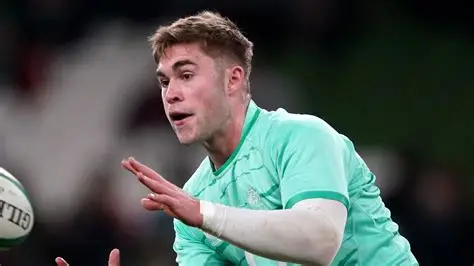
Jack Crowley Ireland Fly-Half Comeback Shows Calm No 10 Still Matters
Jack Crowley Ireland fly-half debate turned sharply in his favour after a composed return against England, when he helped Ireland win 42-21 at Twickenham and reminded everyone that the No 10 shirt is about control as much as flair.
Crowley had been under pressure. Sam Prendergast had started earlier in the Six Nations, Ireland had been searching for rhythm after a difficult opening defeat in France, and the national conversation around fly-half had become loud. Every selection was examined. Every kick was judged. Every mistake became part of a wider argument about Ireland’s post-Johnny Sexton future.
Then Andy Farrell restored Crowley against England. Jamison Gibson-Park returned at scrum-half. Ireland’s 2024 title-winning half-back partnership was reunited, and the effect was immediate. Ireland played with shape, tempo and authority. Crowley kicked 17 points, managed territory and helped his side produce their biggest away score against England.
Jack Crowley Ireland fly-half comeback did not end with one Twickenham performance. He stayed in the side for Wales, where Ireland were made to work for a 27-17 win, and then helped Ireland finish the Championship strongly with a 43-21 victory over Scotland that secured the Triple Crown. Ireland did not win the title — France edged them out — but Crowley’s return helped rescue the campaign from uncertainty.
For more rugby context, The News Ink has also covered England rugby’s pressure under Steve Borthwick and the wider calendar in major sports tournaments in 2026.
Why Jack Crowley Ireland fly-half debate mattered
Jack Crowley Ireland fly-half debate mattered because Ireland’s No 10 role has carried unusual weight since Sexton retired. The position is not simply about kicking goals or throwing passes. It is about deciding how Ireland play, when they speed up, when they kick, when they attack the edge and when they squeeze opponents through territory.
Sexton gave Ireland years of clarity. After him, the succession question became unavoidable. Crowley was trusted during Ireland’s 2024 Six Nations success, but Prendergast’s emergence changed the conversation. Farrell wanted to test options. Supporters wanted certainty. Media debate grew louder.
That is the environment Crowley returned to before England.
He could have treated the match as a personal trial. Instead, he framed it as process. He spoke about simplifying the game, doing the right thing and making the right call in front of him. That language may sound plain, but it is exactly what Ireland needed.
Jack Crowley Ireland fly-half role is not about winning social media arguments. It is about winning phases, territory and Test matches. At Twickenham, Crowley did that.
What changed against England
Ireland’s 42-21 win over England was not only a result. It was a reset.
Crowley’s return gave Ireland a calmer attacking structure. Gibson-Park’s speed at scrum-half helped Ireland control rhythm. The forwards, strengthened by returning experience, gave the half-backs cleaner ball. Ireland then punished England’s poor discipline, lineout problems and defensive gaps.
Jack Crowley Ireland fly-half comeback was built on small decisions rather than one spectacular moment. He kicked points when they were available. He moved Ireland into good areas. He avoided forcing the game. He allowed Gibson-Park and the strike runners around him to carry the attacking edge.
That is often what elite fly-halves do best. They make the team look connected without making every play look like a personal highlight.
Ireland raced into control and finished with tries from Jamison Gibson-Park, Robert Baloucoune, Tommy O’Brien, Dan Sheehan and Jamie Osborne. Crowley’s 17 points from the tee gave the scoreboard constant pressure.
England had moments, but Ireland looked like the team with a plan.
Key facts at a glance
| Detail | Information |
|---|---|
| Player | Jack Crowley |
| Country | Ireland |
| Province | Munster |
| Position | Fly-half |
| Main selection rival | Sam Prendergast |
| Key return match | England 21-42 Ireland |
| Venue | Twickenham / Allianz Stadium |
| Crowley points vs England | 17 |
| Half-back partner | Jamison Gibson-Park |
| Wales result after article preview | Ireland 27-17 Wales |
| Final Ireland result | Ireland 43-21 Scotland |
| Tournament outcome | Ireland won Triple Crown, finished second behind France |
This table shows why the Jack Crowley Ireland fly-half story is bigger than one match. His return helped shape Ireland’s whole second half of the Championship.
Crowley’s 17 points changed the scoreboard pressure
Crowley’s kicking was essential against England. In Test rugby, scoreboard pressure alters everything. A team that keeps adding threes and conversions forces the opponent to chase, take risks and defend under emotional strain.
Jack Crowley Ireland fly-half performance at Twickenham was valuable because he kept Ireland moving ahead. His 17 points were not only a personal haul. They were a tactical tool. Each kick made England’s mistakes more expensive. Each successful conversion reinforced Ireland’s control.
The best goal-kickers make pressure feel routine. That is not easy in a noisy away ground, especially when the national debate has turned the fly-half position into a public contest. Crowley’s response was to narrow the task: breath, technique, process, next kick.
That is why his comments afterward mattered. He was not trying to sound dramatic. He was explaining how elite players survive scrutiny. They reduce the moment to controllable actions.
Crowley did not need to prove he was Ireland’s most exciting option. He needed to prove he could run the game. Against England, he did.
The Gibson-Park partnership mattered
Crowley and Gibson-Park already had evidence together. They had been Ireland’s half-back pair during the 2024 Six Nations-winning campaign, and their reunion against England restored a familiar rhythm.
Gibson-Park is one of the best tempo scrum-halves in world rugby. He makes quick decisions, attacks lazy defenders and keeps Ireland’s phase game moving. A fly-half benefits from that because the defence is rarely settled. Crowley received the ball with more time, better angles and more options.
Jack Crowley Ireland fly-half success is therefore not only about Crowley alone. No 10s are shaped by their No 9, forwards and strike runners. Against England, the pieces around him helped.
That does not reduce his credit. It explains the performance properly. Fly-half is a relationship position. Crowley’s job was to connect Ireland’s system, and Gibson-Park gave him the tempo to do it.
This is why Farrell’s selection looked so significant. Restoring both players together was not just a personnel change. It was a tactical decision to return to a trusted axis.
Prendergast’s rise made Crowley better
Sam Prendergast’s emergence has been framed as a threat to Crowley, but it may also be useful for him.
Great teams need competition. Crowley cannot assume the shirt is his forever. Prendergast has talent, range and the kind of attacking imagination that excites coaches. Ciaran Frawley and others also remain part of the wider conversation. That means Crowley must keep improving.
Jack Crowley Ireland fly-half debate should not be seen as a fight that needs one permanent winner immediately. Ireland need depth. They need different options for different opponents. They need players who can handle pressure and still support each other.
Crowley has spoken about not engaging with online noise and focusing on good habits. That is the right approach. If he treats competition as a personal attack, it becomes a burden. If he treats it as a standard, it can sharpen him.
Ireland’s best outcome is not Crowley versus Prendergast. It is Crowley and Prendergast pushing each other so the national team has two high-level No 10s.
Mental habits became the story
Crowley’s most revealing comments were about process, social media and breath work. He said he tries not to engage with online debate, because players have a choice about what they consume. He also spoke about controlling what is in his power and maintaining robust technique under pressure.
That matters because modern international players face constant noise. Supporters analyse selections instantly. Former players give opinions. Podcasts debate form. Social media amplifies criticism. A fly-half, because of the visibility of the role, receives more attention than most.
Jack Crowley Ireland fly-half challenge is partly mental. One poor kick can create a wave of reaction. One missed touch-finder can become a national talking point. One selection change can be interpreted as a verdict on a player’s future.
Crowley’s response is mature. Put away the noise. Build habits. Focus on process. Breathe. Make the next decision.
That mindset is not glamorous, but it is sustainable.
Why breath work matters for kickers
Crowley’s reference to breath work may sound minor, but it is central to pressure performance. Kicking at Test level is a technical act performed under emotional pressure. The body naturally tightens. Heart rate rises. The mind jumps ahead to the consequence.
Breath work brings the player back to the present. It slows the moment. It gives the kicker a repeatable entry point into technique.
Jack Crowley Ireland fly-half role requires that calm repeatedly. It is not only goal-kicking. Breath and routine matter when calling a move near the opposition line, clearing from inside the 22 or deciding whether to kick behind a rushing defence.
In rugby, the No 10 often becomes the emotional thermostat. If he looks rushed, the team can look rushed. If he looks composed, the team often settles.
Crowley’s calm approach helped Ireland after an unsettled start to the Championship. It gave the side a more controlled voice.
Wales showed the job was not finished
The original article looked ahead to Ireland’s match against Wales. That match has now been played, and it was not the easy bonus-point procession many expected.
Ireland won 27-17 in Dublin, but Wales were much improved. They defended with intensity, stayed close, scored through Rhys Carré and James Botham, and forced Ireland to work until late. Reuters reported that a late Crowley penalty helped seal the win.
Jack Crowley Ireland fly-half performance against Wales was not as smooth as Twickenham. The Guardian described him as wobbly at times, including a missed conversion that kept Wales within reach. But that is part of the point. International rugby does not give players perfect weeks in sequence.
The value of Crowley’s return was that Ireland still found a way to win when the game became awkward. A fly-half must manage not only the days when rhythm is flowing, but also the nights when the opponent drags the contest into discomfort.
Ireland stayed alive in the title race. That mattered.
Scotland completed Ireland’s recovery
Ireland finished their Six Nations with a 43-21 win over Scotland at the Aviva Stadium. The victory secured the Triple Crown and completed a strong recovery after their opening defeat to France.
Sky Sports reported that Ireland were denied the Championship despite the Scotland win, because France went on to claim the title. The Six Nations’ own report said Ireland’s win was clinical and kept their title hopes alive until the final match. The Guardian described Ireland as finishing second after a strong final performance.
Jack Crowley Ireland fly-half story therefore sits inside a near-miss tournament. Ireland did not win the title, but they recovered enough to finish with silverware, pride and renewed structure.
That is important. After losing heavily in France and struggling for rhythm, Ireland could have drifted. Instead, Farrell made changes, Crowley returned, Gibson-Park sharpened the tempo, and the team finished strongly.
A Triple Crown is not the Championship, but it is not nothing. It showed Ireland’s standards still matter.
Ireland’s 2026 Six Nations path
| Round / match | Result | Why it mattered |
|---|---|---|
| France vs Ireland | France 36-14 Ireland | Heavy opening defeat created pressure |
| Ireland vs Italy | Ireland 20-13 Italy | Narrow win kept campaign alive |
| England vs Ireland | England 21-42 Ireland | Crowley returned and Ireland reset |
| Ireland vs Wales | Ireland 27-17 Wales | Tough win kept title hopes alive |
| Ireland vs Scotland | Ireland 43-21 Scotland | Ireland secured Triple Crown |
| Final outcome | France champions, Ireland second | Recovery fell just short of title |
This route explains why Jack Crowley Ireland fly-half comeback was so important. Ireland needed stability after a difficult start, and Crowley helped provide it.
The Twickenham win was bigger than England’s problems
England were poor at Twickenham. Their lineout malfunctioned. Discipline hurt them. Henry Pollock was sin-binned. Steve Borthwick’s tactical choices came under scrutiny. England eventually finished a historically bad campaign in fifth.
But Ireland’s win should not be dismissed as only English failure. Ireland still had to execute. They still had to punish mistakes, finish chances and maintain control in a hostile stadium.
Jack Crowley Ireland fly-half performance belonged in that context. A lesser No 10 might have forced too much against a vulnerable England side. Crowley did not. He let Ireland build. He kicked goals. He trusted the structure. He allowed the pack and backline to turn pressure into points.
That is often the difference between a team that wins comfortably and a team that lets a wounded opponent back into the game.
Ireland gave England almost nothing emotionally. Crowley was central to that.
What Crowley offers that Ireland need
Crowley’s best qualities are not always spectacular, but they fit Ireland’s system.
He offers defensive toughness. He is not afraid of contact. He can kick goals. He can play flat enough to hold defenders. He understands Munster-style pressure rugby but has developed enough attacking range to fit Ireland’s wider system. He also appears comfortable working with strong personalities around him.
Jack Crowley Ireland fly-half value is based on balance. He may not always produce the most eye-catching attacking highlights, but he gives Ireland a stable platform. That is especially important when the team’s forwards and scrum-half create rhythm through repeated phases.
Ireland need a No 10 who can play the next right option, not chase the next viral moment.
Crowley’s challenge is to keep adding creative sharpness without losing that reliability. The best modern fly-halves can do both: control territory and open defences. That is the standard he must chase.
What he still has to improve
Crowley’s return was strong, but the debate is not over. He still needs more consistency in attack, especially against elite defensive lines. He must keep sharpening his kicking from hand, attacking variety and ability to unlock tight games when Ireland are not dominant up front.
Jack Crowley Ireland fly-half future will depend on whether he can become not only a safe option but an attacking difference-maker. Prendergast’s rise matters because he brings a different kind of creative threat. Crowley must answer by growing his own range.
That does not mean abandoning his strengths. It means expanding them.
He must keep developing:
- better variation in attacking kicks;
- sharper playmaking under blitz pressure;
- more disguise near the gainline;
- stronger connection with inside runners;
- faster adaptation when momentum turns;
- consistent goal-kicking under fatigue;
- calm leadership when Ireland trail late.
The England performance proved he can reclaim the shirt. The next step is proving he can own it over time.
What Farrell’s selection says
Farrell’s decision to restore Crowley against England showed that Ireland’s coaching staff value experience, cohesion and training response. Prendergast had been given opportunity. Crowley had impressed off the bench against Italy. The England match demanded control, and Farrell chose the player he trusted for that specific job.
Jack Crowley Ireland fly-half selection was therefore not only a reaction to Prendergast’s struggles. It was a statement about what Ireland needed at Twickenham.
Coaches often speak about competition, but real competition only exists when selection changes are possible. Farrell showed that form and fit matter. That should keep every No 10 alert.
The decision also showed Ireland’s maturity. Instead of committing stubbornly to one narrative, they adjusted. They brought back Crowley, paired him with Gibson-Park and restored elements of a proven combination.
That flexibility helped Ireland recover.
The Sexton shadow is still there
Every Ireland fly-half after Sexton plays under a shadow. That is unavoidable. Sexton was not only a great player. He was a tactical voice, emotional leader and competitive standard-setter. Replacing him was never going to be clean.
Crowley has already lived through part of that transition. Prendergast is living through it too. Frawley has had moments. Ireland’s challenge is not to find a clone. It is to build a new post-Sexton identity.
Jack Crowley Ireland fly-half role should be judged on that basis. He does not need to be Sexton. He needs to give Ireland enough control, accuracy and authority to keep winning Test matches while the next generation develops.
That may sound modest, but it is a huge job.
The England performance showed Crowley can handle the shirt when the pressure rises. The Wales game showed he still has rough edges. The Scotland finish showed Ireland can build around him. That is a realistic picture.
Why the online debate will continue
The fly-half debate will not disappear because Ireland now have several credible options. That is the nature of elite rugby. Supporters will compare skill sets, provincial loyalties, age profiles and selection patterns. Every performance will feed the argument.
Jack Crowley Ireland fly-half discussion may become even louder before the 2027 Rugby World Cup cycle peaks. Farrell will want depth. Ireland will need different tactical plans. Injuries will happen. Form will change. Prendergast will keep pushing. Crowley will need to keep answering.
The best thing Crowley can do is exactly what he described: choose not to engage with the noise.
That does not mean ignoring criticism completely. Players should review performance honestly with coaches. But online reaction is not analysis. It is emotion. Crowley’s ability to separate the two may become one of his most valuable strengths.
A No 10 needs a clear head. He seems to understand that.
Crowley’s comeback lessons
| Lesson | Why it matters |
|---|---|
| Process beats noise | Crowley focused on controllable actions rather than debate |
| Partnerships matter | Gibson-Park’s return helped restore Ireland’s tempo |
| Kicking pressure counts | His 17 points at Twickenham shaped the scoreboard |
| Competition can help | Prendergast’s rise sharpened the No 10 battle |
| One game is not enough | Wales showed consistency remains the next challenge |
| Recovery matters | Ireland rebounded from a poor start to win the Triple Crown |
| Calm is a skill | Breath work and routine helped Crowley handle pressure |
These lessons explain why the Jack Crowley Ireland fly-half comeback deserves attention beyond the box score.
What comes next for Crowley
Crowley now has to carry the momentum beyond one Six Nations. Ireland are already into the Nations Championship cycle, with Farrell trying to balance established leaders and new options. The 2027 Rugby World Cup is close enough to shape every selection but far enough away that Ireland still need experimentation.
Jack Crowley Ireland fly-half future will depend on club form with Munster, Ireland training standards and how he performs when opponents target him directly. Test teams will not simply let him run Ireland’s shape. They will pressure his kicking, rush his passing lanes and test his defence.
That is the next stage. Returning to the shirt is one achievement. Holding it through pressure is another.
Crowley has shown enough to remain central to the conversation. He has not ended the debate completely, but he has changed it. Before England, the question was whether he had been overtaken. After England, the question became how high his ceiling can go.
That is a better debate for him.
FAQ: Jack Crowley Ireland fly-half
Why did Jack Crowley return as Ireland fly-half?
Jack Crowley Ireland fly-half return came after Sam Prendergast struggled earlier in the Six Nations and Crowley impressed off the bench against Italy. Andy Farrell restored him for the England match at Twickenham.
How did Jack Crowley play against England?
Crowley kicked 17 points and helped Ireland control the match as they beat England 42-21, their biggest away score against England.
Did Ireland beat Wales after Crowley’s return?
Yes. Ireland beat Wales 27-17 in Dublin, although they were made to work hard by an improved Welsh side.
Did Ireland win the 2026 Six Nations?
No. Ireland won the Triple Crown after beating Scotland 43-21 but finished second as France won the Six Nations title.
Is Jack Crowley now Ireland’s first-choice fly-half?
Crowley strengthened his case strongly, but competition remains. Sam Prendergast, Ciaran Frawley and other options mean Ireland’s No 10 debate will continue.
The bottom line
Jack Crowley Ireland fly-half comeback was not built on noise, hype or one spectacular attacking clip. It was built on control.
He returned against England when the pressure around Ireland’s No 10 shirt was intense. He reunited with Gibson-Park, kicked 17 points, helped Ireland dominate Twickenham and restored calm to a campaign that had started badly. He then stayed involved as Ireland beat Wales, defeated Scotland and secured the Triple Crown.
Ireland did not win the Championship. France took the title. Crowley did not play perfectly every week. The Wales match showed there is still work ahead. Prendergast remains a major talent, and the selection debate will continue.
But Crowley changed the tone. He showed Ireland could still rely on him. He showed that calm decision-making matters in the biggest fixtures. He showed that ignoring online noise and trusting process can be more powerful than trying to answer every critic.
The Ireland No 10 shirt will never be easy after Sexton. Crowley knows that. His Twickenham comeback proved he is still ready to carry it.
For more rugby, Six Nations and global sports coverage, follow The News Ink on Threads.