Iranian Cities Shaken by Attacks as Residents Face Fear and Power Cuts
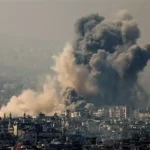
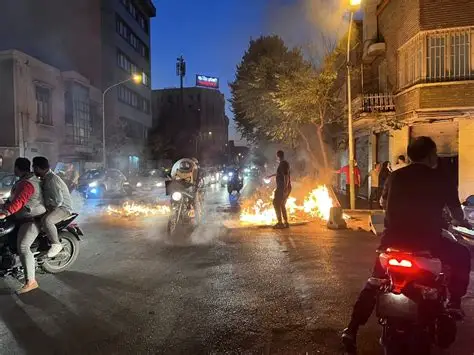
Iranian cities entered another night of fear as explosions, power cuts and repeated waves of airstrikes left residents in Tehran and Karaj struggling to sleep, communicate and understand what might be hit next.
The accounts from inside Iran describe a form of exhaustion that goes beyond the moment of impact. People were not only frightened by the sound of missiles or the force of nearby blasts. They were living through hours of waiting between attacks, checking walls for cracks, sitting in dark homes and trying to decide whether staying indoors was safer than attempting to leave.
Nearly 10 days into the conflict that began on 28 February 2026, Iranian cities had become places where ordinary routines were organised around bombardment. Electricity could disappear without warning. Mobile and internet connections were unreliable. Parents tried to calm children without knowing whether another strike was minutes away. Workers, shopkeepers and students found that concentration, motivation and sleep were becoming harder to maintain.
Israel said its strikes were aimed at military and weapons-related infrastructure, including an underground complex associated with the Islamic Revolutionary Guard Corps. Yet the lived experience reported from Iranian cities was not limited to military sites. Shockwaves travelled through residential streets, power failures darkened neighbourhoods and the constant uncertainty affected people far beyond the stated targets.
A Night of Explosions and Darkness
One Tehran resident in his 30s described being left in complete darkness when the electricity suddenly failed. Powerful explosions followed, and he later noticed cracks in the walls of his home. Another man in his 20s said missiles struck a nearby street and reduced his wish for the future to something painfully ordinary: he wanted to sleep peacefully.
Such accounts explain why the attacks cannot be understood only through target lists and military statements. A strike may be directed at a defence facility, but the fear radiates outward. Windows shake. Children wake. Families rush to interior rooms. Neighbours message one another when networks work and wait in silence when they do not.
Residents across Iranian cities, including Karaj around 30 kilometres west of Tehran, reported flashes of blue light in the sky and explosions close enough to make buildings tremble. A restaurant owner said a strike landed near her neighbourhood and left her fearing for her life. Her business, like many others, had become secondary to the question of whether the next attack would come closer.
Iranian cities were already under pressure from sanctions, inflation and political unrest before the war. The air campaign added a new layer of insecurity: even the home, normally the last place of refuge, no longer felt reliably safe.
The News Ink’s earlier reporting on life in Tehran under fire showed how residents were adapting to checkpoints, shortages and repeated attacks. The latest accounts suggest that adaptation was turning into fatigue. Reuters also documented fear, empty streets, security patrols and electricity and water interruptions during the first days of the campaign.
Why Power Cuts Make Iranian Cities More Dangerous
Power cuts may appear secondary beside missile strikes, but across Iranian cities they magnify fear. Darkness removes information and control. Elevators stop. Heating or cooling systems fail. Phone batteries run down. Water pumps in some buildings may become unreliable. Families cannot easily confirm whether relatives are safe.
For residents of high-rise buildings in Iranian cities, a blackout can make evacuation harder. Older people and those with disabilities may be trapped on upper floors. Parents must choose whether to take children into stairwells during an attack or remain inside apartments where windows and external walls may be vulnerable.
Electricity loss also changes how people experience sound. In a dark and silent home, every aircraft, interception and explosion becomes more intense. Without television, reliable internet or official alerts, residents are left to interpret flashes, smoke and rumours.
Reports from Iranian cities, especially Tehran, described rolling blackouts and wider communications disruption during the heaviest bombardment. Residents also reported falling pollution and dark rain after strikes on fuel and energy infrastructure, leading to health warnings about air quality.
In this sense, the crisis in Iranian cities was not simply a bombing campaign. It was a disruption of the systems that make urban life possible.
The Military Targets Named by Israel
The Israel Defense Forces said one major wave of attacks in Tehran targeted an underground route inside a weapons research and development complex used by the IRGC. According to the IDF, the site was linked to experiments and testing connected to ballistic-missile development and production.
The Israeli military said the complex was located within the IRGC’s Imam Hussein military university and served as an emergency asset and operational gathering site. Other strikes during the campaign were described as targeting Quds Force assets, air-defence systems, weapons-production facilities and ballistic-missile components.
Those claims provide the military rationale presented by Israel. They do not independently establish that every target was used exactly as described, nor do they settle whether the risk to nearby civilians was proportionate. Information from Iranian authorities is also difficult to verify independently, and both sides have strong incentives to shape public understanding of the attacks.
For Iranian cities, the crucial distinction is between a stated military target and the total effect of striking it. Military, government, industrial and residential facilities can exist close together. Even when a weapon lands on the intended compound, blast pressure, debris, fire and power disruption can affect surrounding neighbourhoods.
That is why military precision does not automatically equal civilian safety.
Tehran and Karaj Carry Strategic Importance
Among Iranian cities, Tehran is not only the capital and largest urban centre. It is also the centre of national government, military command, finance, communications and industry. Karaj forms part of the capital’s wider urban and industrial region and has also been associated with strategically sensitive infrastructure.
Across Iranian cities, that concentration creates a large number of potential targets for military planners. For civilians, it means millions of people live near sites that an opposing force may classify as strategically important.
The same geography that supports the Iranian state also increases the danger across Iranian cities. A research complex may sit near homes. A communications facility may serve both state and civilian functions. A defence-production site may be surrounded by workers, shops and apartment blocks.
Iranian cities therefore face a difficult reality: strategic importance can turn ordinary neighbourhoods into spaces of military risk without the people living there having any control over target placement or attack decisions.
International humanitarian law requires parties to distinguish between military objectives and civilian objects. Even when a military objective is present, attacks remain subject to proportionality and feasible precautions intended to reduce civilian injury and damage.
A Conflict That Began on 28 February
The war reshaping Iranian cities began on 28 February 2026, when the United States and Israel launched a major joint campaign against Iran. Reuters reported that the opening attacks struck hundreds of targets and killed Supreme Leader Ali Khamenei along with senior military figures.
Washington described the operation as an effort to eliminate what it called imminent threats from the Iranian government. Israel said the strikes were intended to weaken Iran’s military and strategic capabilities. Iranian officials called the attacks unlawful and responded with missiles and drones directed at Israel and locations across the Middle East associated with US forces.
The conflict quickly spread beyond one bilateral confrontation. Airspace closed. Airlines cancelled routes. Gulf states intercepted drones and missiles. Oil prices rose, and governments prepared for disruption around the Strait of Hormuz.
For people inside Iranian cities, however, the geopolitical explanation offered little immediate relief. The war was experienced as a pattern of sound and interruption: explosions, sirens, darkness, rumours and brief periods of uneasy quiet.
The News Ink has followed the conflict from the opening US and Israeli strikes to its effects on global markets and international travel.
The Civilian Toll and the Limits of Verification
The reported civilian toll across Iranian cities and other parts of Iran rose rapidly. Human Rights Activists in Iran said on the tenth day of the war that at least 1,761 people had been killed.
Its breakdown included 1,245 civilians, at least 194 of them children, as well as 189 military personnel and 327 people whose status had not yet been classified.
These figures were widely reported but remained difficult to verify independently. Foreign journalists had limited access inside Iran, domestic reporting operated under restrictions and national internet services were heavily disrupted. Casualty totals from the Iranian government, humanitarian organisations and independent monitors also varied.
That uncertainty should not be used to dismiss the scale of suffering. It should be stated honestly. In fast-moving wars, figures change as victims are identified, hospitals report deaths and investigators distinguish civilians from military personnel.
The most responsible conclusion is that the death toll was already severe and that civilians formed a large share of those reported killed. The bombing of a primary school in Minab, where large numbers of children were reported dead, had already intensified fear that the campaign was reaching places far removed from the public image of isolated military targets.
The News Ink’s investigation into the Minab school strike details how subsequent video and satellite analysis pointed towards a US Tomahawk missile striking an IRGC-linked site close to the school.
Internet Restrictions Deepen Isolation
The communications blackout across Iranian cities made the crisis harder to document and more frightening to live through. Internet restrictions limited access to independent information, interrupted family contact and created an environment where rumours travelled faster than verified updates.
Residents continued to communicate through secure channels, virtual private networks and intermittent connections, but doing so could carry risk. Iranian authorities had already used internet shutdowns during earlier protests, while wartime security measures increased concerns about surveillance and information control.
For families outside the country, the loss of contact created its own form of distress. A relative abroad might see reports of explosions in Tehran but be unable to reach parents or siblings for hours. A missed message could mean a dead battery, a network failure, an airstrike or nothing at all.
Inside Iranian cities, digital isolation also made practical decisions harder. People needed information about which roads were open, where strikes had landed, whether hospitals were functioning and whether fuel or food remained available. Without trustworthy channels, every decision involved uncertainty.
The News Ink’s analysis of cyber warfare in the conflict explains how communications and information systems became part of the confrontation rather than merely collateral effects.
Sleep Becomes a Measure of Safety
Across Iranian cities, the repeated wish to sleep is one of the most revealing details in residents’ accounts. Sleep is normally treated as private and routine. During bombardment, it becomes a measure of safety.
People may avoid sleeping because they fear missing an alert. Others sleep in clothes so they can move quickly. Families place documents, medication, water and shoes near the door. Children may wake at every distant sound. Adults may remain alert long after the explosions stop.
After several nights, sleep loss begins to affect judgement and emotional control. People become irritable, anxious and physically exhausted. Work becomes harder. Driving becomes more dangerous. Parents struggle to reassure children while managing their own fear.
One Tehran resident said the attacks had destroyed his daily routine and drained his motivation. That reaction is understandable. Humans can respond to a single emergency with intense focus, but repeated and unpredictable danger wears down the mind.
The residents of Iranian cities were not simply waiting for peace negotiations. Many were waiting for one uninterrupted night.
Staying, Leaving or Enduring
In Iranian cities, war creates decisions that have no safe answer. Some residents considered leaving major population centres, but roads could be dangerous, fuel uncertain and destinations no more secure. Others stayed because of elderly relatives, jobs, financial limitations or the belief that their neighbourhood would not be targeted.
People who left Tehran during the first days sometimes found that smaller cities were also struck. Those who stayed risked further bombardment and shortages. Many residents said they did not know where they could shelter safely or whether the roads out would remain open.
The choice was also political for some. Residents who had opposed the government or participated in earlier protests could still reject foreign bombing. Others hoped attacks on security institutions might weaken the political system. Some were willing to endure danger in the hope of change, while others feared the war would produce only greater repression and national destruction.
The News Ink previously documented these conflicting feelings in mixed emotions across Iran. The latest testimony suggests that whatever people believed politically, prolonged bombardment was reducing complex hopes to basic needs: electricity, safety, food, contact and sleep.
What Daily Survival Looked Like
Across Iranian cities, families reportedly adjusted their routines in small but important ways:
- charging phones and power banks whenever electricity returned;
- filling bottles and containers in case water supplies failed;
- moving beds away from windows and external walls;
- keeping identity documents, medication and cash ready;
- checking on elderly neighbours after major explosions;
- limiting travel because of damaged roads and uncertain fuel;
- using secure messaging tools when internet access briefly returned;
- following unofficial local networks when formal warnings were unclear.
These actions do not remove danger. They show how civilians create a sense of control when institutions and infrastructure become unreliable.
The habits also carry a hidden cost. A family that is constantly preparing for the next strike cannot fully work, rest or care for children. Emergency readiness becomes a full-time condition.
The Emotional Divide Inside Iran
The war did not erase political divisions inside Iranian cities. Some residents blamed the government’s regional and nuclear policies for exposing the country to attack. Others blamed the United States and Israel for choosing military force and killing civilians. Many blamed all sides.
This divide is essential to understanding Iranian cities. Public anger at the government does not automatically translate into support for foreign strikes. Opposition to foreign bombing does not automatically mean support for the Islamic Republic.
A person can want political change and still fear that an air campaign will destroy the country before reform becomes possible. Another can despise the government yet feel national anger when Iranian territory is attacked. A third may focus only on protecting family and have little energy left for ideology.
Reports during the first days found no clear evidence of the mass uprising US and Israeli leaders had suggested might follow the strikes. Instead, fear, security checkpoints and communications restrictions dominated the capital.
War often simplifies populations into supporters and opponents. The reality inside Iranian cities was far less tidy.
Civilian Infrastructure Is Part of the Battlefield
The blackouts across Iranian cities also raise a broader question about civilian infrastructure. Electricity networks, telecommunications, roads and water systems can be damaged directly, disrupted by nearby strikes or deliberately targeted when they support military operations.
International humanitarian law does not give every dual-use facility automatic protection. However, attackers must establish that an object qualifies as a military objective and must consider whether expected civilian harm would be excessive in relation to the anticipated military advantage.
Striking or disabling a power facility that supports a military site can still leave hospitals, homes and water systems without electricity. Even when the grid is not deliberately targeted, repeated attacks can overload networks, damage substations and make repairs dangerous.
Technical workers may be unable to reach damaged sites while strikes continue. Replacement equipment may be difficult to obtain under sanctions and wartime transport disruption.
For residents, the legal distinction between direct and indirect damage does not keep the lights on. The consequence is the same: darkness, isolation and greater vulnerability.
The Wider Regional Consequences
The fear spreading through Iranian cities was part of a wider regional crisis. Iran’s retaliatory attacks targeted Israel and locations in countries hosting US forces. Flights were cancelled or rerouted, embassies reduced staff and energy markets reacted to the threat of disruption around the Persian Gulf.
The UK withdrew embassy personnel from Tehran as security deteriorated, while regional airport interruptions affected travellers far beyond the conflict zone. The News Ink has covered both the withdrawal of UK embassy staff and the cancellation of Middle East flights.
These effects show why residents of Iranian cities felt trapped inside a conflict larger than their own neighbourhoods. Decisions made in Washington, Jerusalem and Tehran altered electricity, transport, prices and personal safety across the region.
What Happened After the First Ten Days
The testimony in this article comes from the initial March phase of the war, when Iranian cities such as Tehran and Karaj were enduring repeated waves of attacks. The conflict later moved through a fragile truce, but the calm did not hold.
By 17 July 2026, Reuters reported that US and Iranian forces had returned to daily attacks after the truce broke down. The United States expanded strikes against Iranian logistics and coastal infrastructure, while Iran targeted American facilities and infrastructure in Gulf states.
That later escalation makes the early accounts more than a snapshot of a crisis that ended. They show the beginning of a pattern in which Iranian cities repeatedly moved between bombardment, uncertainty and temporary relief.
For civilians in Iranian cities, every renewed round creates the same questions: Has the target list expanded? Will electricity remain available? Are roads safe? Can children sleep? Is there anywhere to go?
The Bottom Line
Iranian cities were shaken by repeated attacks as residents faced explosions, blackouts, disrupted communications and a level of exhaustion that turned peaceful sleep into a basic ambition.
Israel said the strikes targeted IRGC weapons research, Quds Force assets, air-defence systems and military production. Those claims explain the stated objectives, but they do not capture the full civilian effect. Homes cracked, neighbourhoods lost power, businesses closed and families waited in darkness without reliable information.
The reported casualty toll was already severe after 10 days, though independent verification remained difficult because of restricted access and internet disruption. The uncertainty surrounding exact numbers should encourage careful attribution, not indifference to civilian suffering.
The most important part of the story is the experience between the explosions. Residents were trying to charge phones, contact relatives, care for children, decide whether to leave and understand a war they could not control.
Iranian cities are strategically important to military planners. To the people who live there, they are homes. Any honest account of the conflict must hold both facts at once.
For more Iran and Middle East coverage, readers can follow The News Ink on X.