US Base in Bahrain: Why Iran’s Alarming 2026 Strike Claim Raises Regional War Risks
US base in Bahrain became one of the most sensitive phrases in the Middle East crisis after Iran said it had targeted American military facilities across the Gulf in retaliation for U.S. strikes on Iranian territory. The claim placed Naval Support Activity Bahrain, home to the U.S. Navy’s Fifth Fleet presence, at the centre of a fast-moving regional escalation involving missiles, drones, shipping routes and Gulf states trying to avoid being dragged deeper into war.
The original story was built around Iran’s claim that it had struck a US base in Bahrain. That remains the right focus, but the updated article needs more caution. Iran’s Islamic Revolutionary Guard Corps said it targeted U.S. military sites in Bahrain and Kuwait. Reuters reported Iranian attacks on Bahrain and Kuwait after U.S. strikes on Iran, while AP said missile alerts sounded in Bahrain, an island kingdom that hosts the U.S. Navy’s Fifth Fleet. At the same time, the full extent of any damage at the US base in Bahrain was not immediately clear from publicly confirmed U.S. statements.
That distinction matters. A claim of a direct hit is not the same as verified damage. In a war involving drones, ballistic missiles, air defences, shrapnel, smoke and propaganda, early accounts can be incomplete or politically framed. Iran wants to show it can hit U.S. assets. Washington wants to show it can protect forces and keep the Strait of Hormuz open. Bahrain wants to reassure residents while avoiding a wider battlefield role.
The US base in Bahrain is important because it sits at the junction of those pressures. It is not just another military installation. It supports American and coalition maritime operations in the U.S. Central Command area, and its location makes it central to Gulf security, mine countermeasures, logistics, naval command and the fight over freedom of navigation.
For The News Ink readers following the wider conflict, this story connects directly with our coverage of how the U.S. and Israel first escalated the war against Iran, the fragile U.S.-Iran ceasefire pressure, and the growing risk around the Strait of Hormuz. The US base in Bahrain is now one of the places where those storylines meet.
What Iran claimed about the US base in Bahrain
Iran’s claim was part of a broader retaliation narrative. Iranian outlets and the IRGC said missile and drone attacks targeted American military infrastructure in Bahrain and Kuwait after the United States launched new strikes against Iran. IranWire reported that the IRGC named Naval Support Activity Bahrain in Juffair and Isa Air Base among the sites it claimed to have struck.
The wording should be treated carefully. “Iran claims” must remain in the headline and article because independent confirmation of the precise damage at the US base in Bahrain was limited in the first reports. Reuters reported attacks on Bahrain and Kuwait, both of which host U.S. military bases. AP reported missile alerts in Bahrain and Iranian attacks on Gulf states. But publicly available early reporting did not provide a complete confirmed U.S. damage assessment for the Bahrain facility.
That makes this a story about both military escalation and information control. Iran may announce a strike to show deterrence. The United States may delay or limit details to avoid giving Tehran a battlefield assessment. Gulf authorities may avoid specifics to reduce public panic. Readers need to know what is confirmed, what is claimed and what remains unclear.
The safest updated line is this: Iran says it attacked a US base in Bahrain, but the full damage picture remains uncertain and should not be overstated until confirmed by U.S., Bahraini or independently verified evidence.
Why Naval Support Activity Bahrain matters
The US base in Bahrain matters because Naval Support Activity Bahrain is a key support hub for American and coalition naval operations. The official U.S. Navy installation page says NSA Bahrain supports U.S. and coalition maritime operations across the U.S. Central Command area by ensuring the security of ships, aircraft, facilities and tenants. NAVCENT says its area of responsibility covers about 2.5 million square miles, including the Arabian Gulf, Gulf of Oman, North Arabian Sea, Gulf of Aden and Red Sea.
That geography explains why Bahrain matters so much. The Gulf is not only a military theatre. It is a shipping corridor, energy route and political pressure zone. A US base in Bahrain helps Washington monitor naval activity, support ships, coordinate regional partners and respond to threats near the Strait of Hormuz.
The Fifth Fleet’s presence also carries symbolic weight. If Iran can credibly threaten Bahrain, it can signal that American forces across the Gulf are vulnerable. If the United States can protect the base and continue operations, it can signal that Iran’s retaliation is limited. That is why even unverified strike claims matter politically.
The US base in Bahrain also sits inside a densely populated small kingdom. That creates risks beyond military damage. Air-defence interceptions, falling debris, fires, shockwaves and panic can affect civilians even when missiles are aimed at military targets.
The Strait of Hormuz is the wider battlefield
The strike claim cannot be separated from the Strait of Hormuz. Reuters reported that the latest escalation followed attacks on commercial shipping and U.S. efforts to keep the strait open. Iran said the waterway would remain closed until what the IRGC called the end of U.S. interference in the region, while U.S. Central Command said commercial vessels were still transiting.
This matters because a US base in Bahrain supports maritime security in the same region. If Iran wants leverage, it can threaten shipping. If Washington wants to respond, it needs bases, ships, aircraft and command networks close enough to act. Bahrain is part of that network.
The Strait of Hormuz carried about one-fifth of global oil and LNG shipments before the war, according to Reuters. That means the conflict is not only about missiles and bases. It is also about energy prices, shipping insurance, inflation and global supply chains.
The News Ink has already covered why Hormuz is central to the crisis in our analysis of the world’s most critical oil route. The US base in Bahrain belongs inside that wider energy-security story because naval power and oil-market confidence now move together.
What the United States says it is doing
The United States has framed its latest strikes on Iran as a response to attacks on commercial vessels and threats to navigation. Reuters quoted U.S. Central Command saying it had started additional strikes to degrade Iran’s ability to threaten freedom of navigation in the Strait of Hormuz. AP reported that CENTCOM said it struck around 140 targets in one wave, including missile and drone launch sites, ammunition dumps and communication equipment.
That U.S. explanation is important because it shows why Iran targeted regional bases in response. From Tehran’s perspective, U.S. strikes from or supported by the wider Gulf posture make American installations legitimate retaliatory targets. From Washington’s perspective, those bases are defensive infrastructure needed to protect shipping and U.S. forces.
The US base in Bahrain therefore becomes part of a cycle: attacks on ships lead to U.S. strikes; U.S. strikes lead to Iranian attacks on regional military facilities; those attacks may lead to more U.S. retaliation. Each round makes de-escalation harder.
This is why the article should avoid treating the Bahrain claim as a standalone incident. It is one move in a wider escalation ladder.
Gulf states face a dangerous neutrality problem
Bahrain, Kuwait, Qatar, Oman, Jordan and the United Arab Emirates are not all identical in their relationship with Washington or Tehran, but they share one problem: geography. They sit close enough to Iran and U.S. military infrastructure that they can be targeted or affected even when they do not want direct war.
AP reported Iranian attacks targeting several Gulf countries, including Bahrain, Kuwait, Qatar and Oman. Reuters reported that Qatar said three people, including a child, were injured by falling shrapnel, while the UAE said its defence systems engaged missiles and drones from Iran before later saying threats detected earlier were outside its borders.
For Bahrain, the issue is especially sensitive because the US base in Bahrain is so central to the American naval posture. Hosting a major U.S. facility gives Bahrain security ties and strategic relevance. It also gives Iran a reason to name Bahrain when warning Washington’s partners.
That is the dilemma Gulf governments face. They want American protection, but that protection can make them targets. They want stable energy markets, but the military infrastructure supporting those markets can become part of the fight.
Why damage claims need careful language
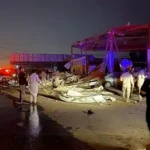
The most important editorial correction is language. Early reports described smoke near U.S. naval facilities and Iranian claims of strikes. But without a full public U.S. or Bahraini damage report, the article should not state as fact that the US base in Bahrain was destroyed, disabled or heavily damaged.
A better phrasing is:
Iran said it targeted U.S. military facilities in Bahrain, including sites linked to Naval Support Activity Bahrain. Missile alerts sounded in Bahrain, and regional reporting described smoke and explosions, but the confirmed extent of damage was not immediately clear.
That wording protects credibility. It avoids both underplaying the seriousness of the claim and exaggerating what has been independently verified.
In wartime, both sides shape information. Iran may inflate impact. The U.S. may withhold operational details. Social media videos may show real smoke but not prove the target, timing or damage. A careful news article should keep those possibilities separate.
The US base in Bahrain is too important for vague claims to be turned into certainty. Readers deserve precision.
What the attack claim means for Bahrain
For Bahrain, the Iran strike claim is a sovereignty issue and a public-safety issue. Even if the target is American, the missiles or drones pass through Bahraini airspace and endanger people living nearby. Bahrain’s position as host country means any attack on the US base in Bahrain is also an attack on Bahraini territory.
That is why Gulf states usually condemn such strikes as violations of sovereignty. They also have to manage domestic fear. Sirens, interceptions and smoke can trigger panic, especially in a small country where military and civilian zones are close together.
The presence of U.S. forces brings economic and strategic benefits, but it also increases exposure. If the conflict continues, Bahrain may face repeated missile alerts, airspace restrictions, disrupted shipping, insurance pressure and heightened security around critical infrastructure.
The US base in Bahrain is therefore both a shield and a lightning rod. It helps defend Gulf waters, but it also draws hostile attention during crisis.
The wider Iran-U.S. war context
This strike claim follows a conflict that began with U.S.-Israeli attacks on Iran on February 28. The original aim, according to Washington and Israel, was to weaken Iran’s missile, drone, naval and nuclear-related capabilities. Iran called those strikes illegal aggression and promised retaliation.
Since then, the war has moved through several phases: initial strikes, Iranian retaliation, attempts at ceasefire arrangements, renewed fighting around shipping, and the latest wave of regional missile attacks. The News Ink’s updated article on how the U.S. and Israel struck Iran explains the first phase, while our report on the U.S.-Iran ceasefire under pressure explains why diplomacy has struggled to hold.
The US base in Bahrain now represents the regional phase of the conflict. Instead of strikes staying inside Iran or Israel, the war-risk map has expanded to Gulf host countries, commercial vessels and maritime chokepoints.
That is why this article should not be written only as “Iran attacks a base.” The deeper story is that the war’s geography is widening.
How Israel fits into the escalation
Israel also remains part of the picture. The original war began with U.S.-Israeli attacks on Iran, and Israel has continued to respond to Iranian missile launches with air defences and its own military operations. When Iran fires across the region, Israel activates nationwide alerts and prepares for possible follow-up waves.
The US base in Bahrain is not inside Israel’s immediate defence system, but the crises are linked. Iran can pressure Israel directly with missile launches while pressuring the United States through Gulf bases. That dual track creates more risk of miscalculation.
If Iran hits U.S. forces heavily, Washington may respond with broader strikes. If Israel interprets Iranian activity as preparation for attacks on its territory, it may act separately. Gulf states may then face more incoming fire because U.S. regional facilities are nearby.
This is why the Bahrain claim matters even if casualties are not confirmed. A strike on a U.S. naval hub can become a trigger for decisions far beyond Bahrain.
Economic impact: oil, shipping and inflation
The economic consequences of this crisis are already visible. Reuters reported that the war and Iran’s effective blockade of the strait have caused energy prices to surge, feeding global inflation. Even smaller military exchanges can move markets because traders fear supply disruption.
A US base in Bahrain plays a role in protecting maritime routes, but the same base can become a target, adding to market anxiety. If shipping companies believe the Gulf is unsafe, they face higher insurance costs, rerouting delays and crew-safety concerns. Those costs can flow into fuel prices, goods prices and government budgets.
For readers following financial fallout, The News Ink’s coverage of oil prices and the wider economy provides useful context. A missile alert in Bahrain may feel geographically distant, but it can affect petrol prices, electricity bills and inflation expectations in many countries.
This is why the US base in Bahrain story belongs in both world news and economic coverage. Military escalation and market confidence are now tightly connected.
What could happen next
Several paths are possible after Iran’s claim of a strike on a US base in Bahrain.
The first is contained retaliation. Washington could respond only to confirmed damage, Tehran could pause after showing it can reach Gulf bases, and mediators could try to return the focus to shipping arrangements in the Strait of Hormuz.
The second is continued tit-for-tat escalation. Iran could keep striking U.S.-linked sites, while the United States continues hitting Iranian missile, drone and naval infrastructure. This is the most dangerous short-term path because each side may believe it is acting defensively.
The third is a wider regional rupture. If a strike kills U.S. service members or large numbers of civilians, political pressure for a heavier response would rise sharply. A major hit on the US base in Bahrain would be especially sensitive because of the Fifth Fleet’s role.
The fourth is diplomatic narrowing. Oman, Qatar, Pakistan and other mediators could focus on a limited deal around shipping routes, base attacks and inspection mechanisms. That would not solve every issue, but it could reduce the immediate risk of war spreading.
The key question is whether both sides can accept a smaller agreement before a larger mistake occurs.
The careful takeaway
Iran claims strike on a US base in Bahrain should be treated as a serious escalation, but also as a claim that needs careful verification. Iran has said it targeted American military infrastructure in Bahrain and Kuwait. Reuters and AP confirm a broader wave of Iranian attacks or alerts across Gulf states, including Bahrain, after U.S. strikes on Iran. But the full confirmed damage picture at Naval Support Activity Bahrain remained unclear in the earliest public reporting.
That does not make the story less important. The US base in Bahrain is a key node in American naval power, Gulf security and the struggle over the Strait of Hormuz. Any credible threat to it raises the risk of U.S. retaliation, Gulf instability and market shock.
The most responsible conclusion is neither panic nor dismissal. Iran’s claim shows that the war has moved deeper into the Gulf. The United States says it is acting to protect shipping. Iran says it is responding to aggression. Gulf states are trying to survive the consequences.
The US base in Bahrain now sits at the centre of that dangerous triangle. What happens next will depend on whether leaders treat the latest strike claims as a warning to de-escalate or as another reason to climb higher on the escalation ladder.
For more geopolitics, conflict analysis and public-interest reporting, follow The News Ink on Medium.