



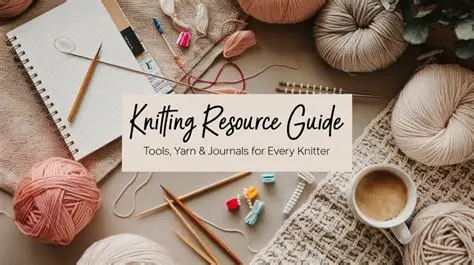
How Knitting Can Help You Break Harmful Habits
Knitting can help interrupt the small sequence that keeps many harmful habits alive: an uncomfortable feeling appears, the hands move automatically and a momentary sense of relief reinforces the behaviour. Picking up needles and yarn gives the hands another task while asking the mind to focus on counting, texture, rhythm and the next stitch.
That does not make knitting a cure for obsessive-compulsive disorder, addiction, eating disorders or trauma. The scientific evidence remains limited, with much of it coming from surveys, small studies and personal accounts rather than large controlled clinical trials. Knitting may nevertheless work as a useful supporting activity because it is affordable, portable, repetitive and capable of producing a visible result.
For Amanda Wilson, a finance worker from Mississauga, the change was physical as well as emotional. She described years of biting her nails and picking her skin and scalp until they were damaged. After knitting became a regular part of her life, her hands were occupied by an activity that was incompatible with those behaviours.
Her experience illustrates the strongest practical reason knitting can help: it offers the brain and body a competing response. When both hands are holding needles and yarn, they cannot simultaneously bite, scratch, pick or scroll.
The wider question is whether that simple interruption can support meaningful behaviour change—and where people need professional treatment rather than another ball of wool.
Knitting Can Help Because Habits Need a Replacement
Harmful habits rarely disappear because someone simply decides to stop. Many follow a behavioural loop:
- A trigger appears.
- An urge or uncomfortable emotion develops.
- The person performs the familiar behaviour.
- The behaviour provides relief, stimulation or distraction.
- The brain learns to repeat it under similar conditions.
A person may bite their nails while anxious, pick their skin while concentrating, smoke during work breaks or scroll through distressing news when unable to sleep. The action may initially be voluntary but become increasingly automatic through repetition.
Evidence-based habit-reversal approaches teach people to identify triggers and use a competing response that makes the harmful behaviour more difficult. The International OCD Foundation explains that comprehensive behavioural treatment for skin-picking and hair-pulling often includes awareness, environmental changes and alternative actions matched to the person’s specific triggers.
Knitting can help fit into that framework because it is physically incompatible with many hand-based behaviours. It also lasts longer than squeezing a stress ball or briefly clenching the hands. A scarf, square or sleeve can keep someone engaged through the period when an urge would normally peak and fade.
However, simply buying knitting needles does not reproduce a complete psychological treatment. Habit-reversal therapy includes identifying emotional, sensory and environmental triggers, practising responses in different situations and preparing for relapse.
Knitting can help provide the replacement action. A clinician may still be needed to address the reason the habit developed and why it continues.
Seven Ways Knitting May Support Behaviour Change
| Possible benefit | How it may affect a harmful habit |
|---|---|
| Occupies both hands | Makes picking, biting, smoking or scrolling more difficult |
| Creates repetition | Provides rhythm during stress or restlessness |
| Requires attention | Redirects focus from intrusive thoughts or urges |
| Produces visible progress | Creates satisfaction without the harmful behaviour |
| Can be used socially | Reduces isolation and supports connection |
| Is portable | Offers an alternative activity in multiple settings |
| Encourages routine | Creates a planned response to predictable triggers |
These mechanisms are plausible, but their effects differ between people. Someone whose skin-picking is triggered by rough skin may need different strategies from someone who picks during work stress. A smoker may need nicotine-replacement treatment alongside knitting. A person experiencing severe OCD symptoms may need specialised cognitive behavioural therapy and medication.
The value lies in matching the craft to the problem rather than presenting it as a universal solution.
1. Knitting Can Help Keep Restless Hands Occupied
The clearest benefit is mechanical. Knitting requires both hands to cooperate. One controls the working needle, the other manages yarn tension, while the fingers repeatedly reposition the material.
That makes several habits temporarily impossible.
Someone cannot easily bite their nails while completing a row. Picking skin becomes harder while both hands are holding a project. A person accustomed to holding a cigarette during television or work breaks may find the needles provide another familiar object and sequence.
This resembles the competing-response principle used in habit-reversal training. The replacement action should be safe, accessible and incompatible with the unwanted behaviour.
A 2023 controlled study of another simple habit-replacement method found that gentle, harmless movements reduced self-reported body-focused repetitive behaviours for some participants. Around 53% of people assigned the replacement technique reported improvement after six weeks, compared with 19% in a waiting-list control group. The study had limitations, including self-reported diagnoses and no long-term follow-up, but it supports the broader idea that replacing a damaging movement with a harmless one can interrupt the cycle.
Knitting has not been tested in the same way for nail-biting or skin-picking. It should therefore be described as a potentially useful competing activity rather than a proven standalone treatment.
The News Ink’s report on why people feel tired despite enough sleep also shows how automatic habits often intensify when stress, exhaustion and poor routines combine. Identifying the trigger remains as important as keeping the hands busy.
2. Repetition Can Create a Calmer Rhythm
Knitting involves a repeated sequence: insert, wrap, pull through and move the stitch. Once the basic movements become familiar, the process can demand enough attention to quiet competing thoughts without being overwhelmingly difficult.
Many knitters compare this rhythm with meditation. That comparison should be used cautiously. Knitting is not clinically equivalent to meditation, and it should not be described as activating the nervous system in a specific way unless direct research supports the claim.
However, repetitive, focused activities can help some people shift attention away from rumination and towards immediate sensory information. Yarn texture, needle movement and stitch counting anchor attention in the present task.
This may explain why knitting can help during periods of anxiety, boredom or emotional overload. Instead of trying to suppress an urge through willpower, a person gives the nervous system another structured activity.
Research on experienced knitters consistently identifies calm, concentration and emotional regulation as perceived benefits. A qualitative study of passionate knitters found themes including happiness, mental challenge, social connection, identity and creative expression. The findings describe lived experiences rather than proving a medical effect, but they show why people continue using the activity during stressful periods.
The News Ink’s guide to science-backed sleep improvements discusses a similar principle: calming routines can help signal a transition away from stimulation. Knitting may work well in an evening routine provided bright screens, difficult patterns or deadline pressure do not make it stressful.
3. Knitting Can Help Redirect Attention From Intrusive Urges
A harmful habit often grows stronger when a person tries not to think about it. Telling yourself not to pick, smoke or check the phone keeps the unwanted behaviour mentally active.
Knitting redirects attention towards a task with immediate demands:
- counting stitches;
- remembering a pattern;
- correcting an error;
- following colour changes;
- maintaining even tension;
- planning the next row.
This is more than distraction in the dismissive sense. Attention is a limited resource. A task requiring visual, tactile and numerical processing may leave less capacity for repetitive thinking.
The effect appears particularly relevant in preliminary eating-disorder research. In a 2009 study, 38 women receiving inpatient treatment for anorexia nervosa were taught knitting and asked about its effect. Twenty-eight participants—approximately 74%—said it reduced the intensity of eating-disorder fears and preoccupations, while the same number described it as calming and therapeutic. Twenty reported satisfaction, pride and accomplishment.
The researchers explicitly described the findings as preliminary and called for controlled studies. The participants were already receiving specialist inpatient care, meaning knitting was an addition to treatment rather than a replacement.
This distinction is essential. Knitting can help someone tolerate distress surrounding meals or recovery routines. It cannot treat the medical dangers, nutritional needs or psychological causes of an eating disorder by itself.
Anyone experiencing an eating disorder should seek qualified medical and psychological support. The craft may be used alongside care when the treatment team considers it appropriate.
4. Visible Progress Provides a Healthier Reward
Many harmful habits offer an immediate reward. Nail-biting may briefly reduce tension. Scrolling provides continuous novelty. Smoking delivers nicotine and a familiar pause. Skin-picking can create a sense of completion even when it causes injury.
Stopping the behaviour removes the reward and can leave an uncomfortable gap.
Knitting can help fill that gap because progress is visible. A row grows. A pattern appears. A finished object can be worn, gifted or displayed. The brain receives evidence that time and effort produced something.
This sense of achievement appeared in the eating-disorder study and in qualitative research with regular knitters.
The reward does not need to be a perfect jumper. A beginner can benefit from learning one stitch or producing an uneven square. In fact, perfectionism can make knitting counterproductive if every mistake becomes evidence of failure.
The healthier approach is process-focused:
- measure time spent knitting rather than output;
- choose simple patterns initially;
- expect dropped stitches;
- repair mistakes without self-criticism;
- avoid turning the hobby into another performance target.
Knitting can help build patience when the activity is allowed to remain imperfect.
The News Ink’s article on simple lifestyle changes for brain health similarly emphasises sustainable activities over dramatic short-lived interventions.
5. Knitting Can Help Reduce Smoking Triggers
The connection between knitting and smoking has moved beyond anecdote.
The Knit to Quit programme was developed for women receiving residential substance-use treatment. It combined knitting lessons, smoking-cessation education and social support. Participants described knitting as an enjoyable replacement for smoking and a way to regulate stress and emotions.
This finding does not show that knitting alone causes people to quit. The programme combined several components, and the published evaluation focused on feasibility, readiness and participant experience rather than establishing knitting as a replacement for evidence-based cessation treatment.
Still, the mechanism is practical. Smoking is attached to rituals: holding something, stepping outside, pausing after food or socialising during breaks. Knitting can substitute parts of that ritual while occupying the hands.
The story of Rotterdam resident Loes Veenstra offers a dramatic cultural example. She knitted more than 550 jumpers over decades and has been described as using knitting to resist cigarette addiction. Her collection later became a celebrated community art project.
Her experience is inspiring but should not be treated as a clinical trial.
People seeking to stop smoking have stronger evidence-based options, including behavioural counselling and approved medicines or nicotine-replacement products. Knitting can help support the routine change while those treatments address nicotine dependence.
6. It Can Replace Doomscrolling With a Screen-Free Task
Doomscrolling is different from skin-picking or nicotine dependence, but it follows a similar loop. Anxiety prompts someone to check the phone. Disturbing information increases anxiety, which creates another urge to check.
Knitting can help break the physical side of that loop because the hands become occupied and the phone must be put down.
The craft also offers something many digital activities do not: a natural stopping point. A person can complete one row, one pattern repeat or a fixed period. Social-media feeds are deliberately designed without an ending.
A practical method is to place a small project where scrolling usually happens:
- beside the sofa;
- near the bed;
- in a commuting bag;
- next to the television;
- in a waiting-room bag.
When the urge to open a social app appears, knit for five minutes first. The goal is not necessarily to ban phone use. It is to introduce enough delay for the automatic urge to become a conscious choice.
Knitting can help most when the alternative is easy to begin. A complicated pattern stored in another room will lose against a phone already in the hand.
For people whose scrolling is driven by anxiety about current events, the News Ink’s balanced lifestyle guide offers additional ways to create limits without becoming disconnected from important information.
7. Social Knitting Can Reduce Isolation
Some habits are maintained partly by loneliness. Smoking breaks provide social contact. Online scrolling creates the appearance of connection. Repetitive behaviours may increase when someone is alone with difficult emotions.
Knitting can help create a different social structure through classes, craft groups, community projects and online communities organised around making rather than passive consumption.
A large 2020 international survey of crochet participants found a significant improvement in self-reported mood after crocheting. Respondents also described themes involving health, connection, contribution and online community. The study used a self-selected survey of people already interested in crochet, so it cannot prove the activity caused better mental health.
Its strongest message is that fibre crafts can combine solitary concentration with social belonging.
That may matter for behaviour change. A person trying to quit smoking or reduce compulsive habits benefits when an alternative activity also provides identity and community. “I am learning to knit” can be more motivating than “I am trying not to bite my nails.”
The craft becomes something added to life, not only something used to remove a problem.
What the Evidence Does—and Does Not—Show
The evidence surrounding knitting is promising but uneven.
| Claim | Current strength of evidence |
|---|---|
| Experienced knitters often report calm and enjoyment | Supported by surveys and qualitative studies |
| Knitting may reduce eating-related anxiety during treatment | Supported by one small preliminary inpatient study |
| Knitting can act as a replacement activity during smoking cessation | Supported by a small programme evaluation and participant reports |
| Knitting may occupy hands during picking or nail-biting urges | Behaviourally plausible, but direct knitting trials are limited |
| Knitting treats OCD | Not established |
| Knitting works like EMDR | Not established |
| Knitting directly reduces amygdala or insula activity | Not established by robust published clinical evidence |
| Knitting cures addiction, PTSD or eating disorders | Unsupported |
The original claims about knitting resembling eye movement desensitisation and reprocessing require particular caution. EMDR is a structured psychotherapy delivered by trained professionals and includes far more than repetitive bilateral movement. Knitting should not be presented as equivalent simply because both involve coordinated actions.
Claims about preliminary electroencephalography findings affecting the amygdala or insula also need published, peer-reviewed evidence before being treated as established fact.
The most defensible conclusion is modest: knitting can help some people regulate attention, occupy their hands, tolerate uncomfortable feelings and create a healthier routine. More rigorous research is needed to determine which groups benefit, how large the effect is and whether it lasts.
Knitting Can Help, but It Can Also Become Compulsive
Almost any rewarding activity can become excessive.
A person may spend beyond their means on yarn, stay awake to complete projects, neglect work or become distressed when unable to knit. Someone recovering from an eating disorder may also use knitting to avoid treatment conversations or meals rather than tolerate them.
These outcomes do not make knitting dangerous. They show why the purpose matters.
A useful hobby broadens life. A compulsive pattern narrows it.
Signs that the activity may need adjustment include:
- pain in the hands, wrists, neck or shoulders;
- continuing despite injury;
- using knitting to avoid every difficult conversation;
- spending money needed for essentials;
- losing sleep repeatedly;
- feeling panic or anger when unable to knit;
- replacing one damaging compulsion with another rigid one.
Regular breaks, comfortable posture and realistic project limits can help prevent physical strain. People with arthritis, nerve problems or repetitive-strain injuries may need adapted needles or guidance from a clinician.
A Practical Four-Step Habit-Replacement Plan
Knitting can help most effectively when it is connected to a specific plan rather than used randomly.
Step 1: Identify the Trigger
For several days, note when the habit occurs.
Does nail-biting happen during work calls? Does skin-picking begin in front of a mirror? Does smoking occur after meals? Does doomscrolling start in bed?
Record the time, place, emotion and activity.
Step 2: Prepare an Easy Project
Choose thick yarn, comfortable needles and a simple repetitive pattern. Keep the project near the trigger location.
The alternative must be easier to begin than the harmful habit.
Step 3: Delay Rather Than Demand Perfection
When the urge appears, knit for five or ten minutes before deciding what to do next.
This reduces the all-or-nothing pressure that often causes relapse. Even delaying the habit can weaken its automatic nature.
Step 4: Track Reduction and Seek Help When Needed
Measure progress realistically. Fewer episodes, shorter duration or reduced injury all matter.
Persistent skin-picking, nail-biting, hair-pulling or compulsive behaviours that cause bleeding, infection, shame or disruption deserve professional assessment. Knitting can help alongside treatment, but it should not postpone care.
When Knitting Is Not Enough
Professional help is important when a behaviour causes injury, major distress or loss of control.
Skin-picking and hair-pulling can be body-focused repetitive behaviour disorders that respond to specialised cognitive behavioural approaches. OCD involves intrusive thoughts and compulsions that typically require evidence-based treatment rather than distraction alone. Substance dependence may require medication, medical supervision, counselling and recovery support.
Eating disorders can become life-threatening and require specialist care. Knitting may help someone manage anxiety during treatment, but it cannot replace nutritional rehabilitation, medical monitoring or psychotherapy.
Seek urgent help when a habit involves serious self-harm, suicidal thoughts, dangerous substance withdrawal or an inability to stay safe.
The goal is not to prove that willpower or a hobby can solve every problem. The goal is to add a low-cost tool to an appropriate support plan.
Why Knitting Research Has Been Overlooked
Researchers and clinicians have suggested that knitting’s association with domestic work and older women may have contributed to its limited status as a serious research subject.
Activities historically performed by women are sometimes dismissed as hobbies even when they involve concentration, mathematics, motor learning, creativity and community-building.
That bias should not lead researchers to accept exaggerated claims. It should lead to better studies.
Useful future research would compare beginners randomly assigned to knitting with people using another hand-based activity, relaxation exercise or usual care. Researchers could measure urges, anxiety, mood and relapse over time rather than relying only on retrospective surveys of enthusiastic knitters.
Clinical trials should also identify who benefits. The same activity may help a person who picks skin during boredom but frustrate someone whose perfectionism is triggered by mistakes.
Better evidence could turn a collection of plausible mechanisms and personal stories into practical clinical guidance.
The Bottom Line
Knitting can help break harmful habits because it gives the hands and attention something safer to do during the moment an urge appears. Its repetitive movements can create structure, while visible progress offers satisfaction that does not depend on biting, picking, smoking or checking a screen.
Preliminary evidence supports some specific uses. A small eating-disorder study found that around three-quarters of participants reported reduced preoccupation and a calming effect. A smoking-cessation programme found that women in residential substance-use treatment viewed knitting as an enjoyable replacement activity and a way to manage stress. Surveys of knitters and crocheters consistently describe calm, connection and improved mood.
The limitations are equally important. Much of the research is based on small samples, self-selected participants and self-reported outcomes. Strong evidence does not currently show that knitting cures OCD, addiction, PTSD or eating disorders. Claims that it operates like EMDR or directly changes specific brain regions remain insufficiently established.
Knitting can help most safely as one part of a broader strategy. It can become a competing response in habit-reversal work, a calming activity during recovery or a screen-free replacement for automatic scrolling. It works best when people understand their triggers, choose an accessible project and seek professional care for serious or persistent symptoms.
The craft’s appeal lies partly in its simplicity. It is portable, relatively inexpensive and forgiving of beginners. A person does not need to create a perfect jumper or master a complicated pattern. They need only enough yarn, two needles and a willingness to complete the next stitch instead of repeating the old behaviour.
Sometimes breaking a harmful habit begins not with removing an action, but with giving the hands something better to make.
For more health, sleep and practical wellbeing coverage, follow The News Ink on WhatsApp or read our guides to better sleep and healthy lifestyle changes.