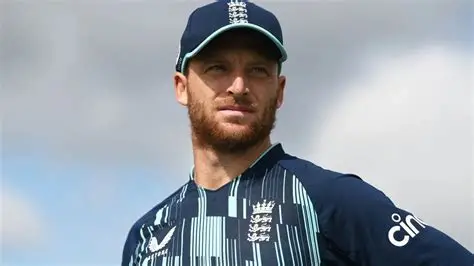
Jos Buttler: How an Urgent 2026 England Call Exposed a Costly T20 Slump
Jos Buttler became one of the biggest selection questions of England’s 2026 T20 World Cup campaign when his run of low scores continued before the knockout stage. It felt unusual because Jos Buttler is not an ordinary batter fighting for a place. He is one of England’s greatest limited-overs players, a World Cup winner in two formats and a cricketer whose best T20 innings have changed the direction of major tournaments.
The question before England’s final Super Eight match was simple but uncomfortable: should Jos Buttler remain in the side, should his role change, or should England make a brutal call before the semi-finals? The completed tournament now gives that debate a clearer answer. England backed him. They beat New Zealand, reached the semi-finals and then lost an extraordinary run-fest to India by seven runs in Mumbai.
That ending does not make the original debate pointless. Jos Buttler did not suddenly rediscover his most destructive form. He made 25 from 17 balls in the semi-final, looked sharper than he had for much of the tournament, but was bowled by Varun Chakaravarthy during the powerplay. England’s chase remained alive because Jacob Bethell produced a stunning 105 from 48 balls, yet India held on. The Buttler question therefore became less about one man being blamed and more about how England should manage proven greatness when form disappears at the worst possible time.
Why Jos Buttler Became a Knockout Selection Debate
England entered the late Super Eight stage in a strong position, but Jos Buttler’s form created a dilemma. The team were winning matches, yet their opening partnership was not giving them the starts expected from a side built around aggressive white-ball batting. Phil Salt had at least produced a half-century in the tournament, while Jos Buttler was searching for rhythm.
Sky Sports noted before the semi-final that England’s opening stand had not passed 38 in the tournament, had totalled nothing against Pakistan and had reached only two against New Zealand. The same analysis said Jos Buttler had not passed seven in his previous five innings and that his best score of the tournament at that stage was 26. Those numbers were too stark to ignore.
The awkwardness came from his status. Dropping a fringe player in poor form is a normal tournament decision. Dropping Jos Buttler before a World Cup semi-final would have been different. It would have meant leaving out England’s most accomplished T20 batter just before the stage on which he had so often delivered.
The debate was therefore not emotional loyalty against cold logic. It was a genuine cricket decision with three possible answers: back him, move him, or replace him.
The Case for Backing Jos Buttler
The strongest argument for keeping Jos Buttler was simple: class does not disappear quickly. In T20 cricket, one over can change a tournament. One clean strike can reset confidence. One high-pressure innings can make several failures feel like part of the journey rather than the end of it.
England had reason to believe that Jos Buttler could still produce that innings. He had already shown across his career that he can dominate new-ball pace, attack spin and finish games with control. His 80 not out against India in the 2022 T20 World Cup semi-final remained one of the defining innings of England’s modern white-ball era.
There was also a structural point. England were already changing around him. Harry Brook had become the captain and had moved to No. 3. Will Jacks had become a powerful finisher. Tom Banton, Sam Curran and Rehan Ahmed were giving the middle and lower order more options. Removing Jos Buttler would have been one change too many at the top of the order.
Backing Jos Buttler also protected a clear left-right and role balance. Buttler and Salt gave England two natural powerplay players. Even if the partnership was failing, the theory behind it was still sound. A semi-final is not always the best time to tear up a batting structure.
What Happened Against Pakistan
England’s win over Pakistan put the Jos Buttler debate into sharper focus. Pakistan made 164 for nine in Kandy, with Sahibzada Farhan scoring 63. England’s chase started badly when Shaheen Shah Afridi removed Salt first ball and then dismissed Jos Buttler in similar fashion. England were under immediate pressure.
The official ICC report on England’s win over Pakistan records how Brook, promoted to No. 3, produced a captain’s innings of 100 from 51 balls. He steadied England after the early wickets and pushed them toward a two-wicket win that secured a semi-final place.
That match showed both sides of the issue. Jos Buttler failed again, but England still won. Brook’s century reduced the immediate cost of the opening failure. Jacks, Curran and the lower order helped complete the chase. The side did not need to panic because the wider batting order was finding ways to survive.
However, it also made the problem harder to dismiss. England could not keep relying on rescue innings. A semi-final against India at the Wankhede Stadium was unlikely to forgive another slow start.
The New Zealand Match Gave England the Same Warning
The match against New Zealand should have been a lower-pressure chance for Jos Buttler to spend time at the crease. England had already reached the semi-finals, and the final Super Eight fixture gave them an opportunity to test rhythm before the knockouts. Instead, the same issue returned.
New Zealand made 159 for seven in Colombo, with Glenn Phillips scoring 39. England then slumped to two for two after eight balls. Salt edged Matt Henry to the wicketkeeper, and Jos Buttler fell to Lockie Ferguson in similar fashion. The ICC report on England’s win over New Zealand described it as another difficult moment in Buttler’s tough campaign.
England still won by four wickets with three balls remaining. Will Jacks delivered an unbeaten 32 from 18 balls and took two for 23. Rehan Ahmed added a valuable 19 from seven balls. The result showed England’s depth, but it also repeated the pattern: early danger, middle-order repair, late rescue.
That is why the Jos Buttler decision did not disappear when England kept winning. Winning can hide a problem, but it does not always solve it. England’s finishers were excellent. Their starts remained unstable.
Option One: Keep Jos Buttler as Opener
England chose the most likely route: they kept Jos Buttler in the team and at the top. That decision made sense even after the New Zealand failure.
Changing a player’s role is not always less disruptive than dropping him. If Jos Buttler moved down, someone else had to open. Brook could have done it, but he had just scored a century at No. 3. Bethell had opening experience, but England valued his middle-order flexibility. Banton had been recalled partly for his ability against spin in the middle overs. Jacks was thriving as a finisher.
Keeping Jos Buttler as opener protected the rest of the order. It also gave him the maximum number of balls to influence a knockout match. England did not need him to bat 20 overs. They needed him to win a powerplay, damage India’s plans and let Brook, Bethell and Jacks enter with momentum.
The risk was obvious. If Jos Buttler failed again, England could be under pressure immediately. But the reward was still large enough to justify the decision.
Option Two: Move Him Down the Order
The second option was more creative. England could have moved Jos Buttler down to No. 3, No. 4 or even a finishing position. The argument was that removing him from the first over might ease pressure and allow him to play spin or pace once the field spread.
There was some logic in that. Jos Buttler has experience in different roles across formats. In 50-over cricket, he built a career around middle-order acceleration and late-innings hitting. In franchise cricket, he has also shown adaptability across match situations.
The problem was the domino effect. England’s middle order was working. Brook had become the anchor and accelerator at No. 3. Bethell was capable of changing a chase. Jacks had turned himself into one of England’s best finishers. Moving Jos Buttler could have fixed one problem while weakening several strengths.
It also would not have guaranteed runs. Poor form is not always about batting position. Sometimes the problem is timing, decision-making or confidence. A player searching for touch can still nick off at No. 4 or misread spin at No. 5. England would have changed the whole structure without knowing whether the change would actually help.
Option Three: Drop Jos Buttler
The boldest option was to leave Jos Buttler out. In purely short-term terms, there was a case. England’s top order was not functioning, and tournament knockouts demand ruthlessness. If a player is not scoring, reputation alone cannot win a semi-final.
But dropping Jos Buttler would have been a huge call. Ben Duckett was the spare specialist batter, but he had not made an irresistible case during the winter. Rehan Ahmed offered leg-spin and lower-order hitting, but picking him as an extra all-rounder would have changed the balance. England were not choosing between an out-of-form Buttler and an obvious replacement in peak form.
The psychological impact also mattered. Dropping Jos Buttler before an India semi-final would have signalled a major break from England’s recent white-ball identity. It might have been brave, but it could also have looked reactive.
There are times when elite teams must make decisions that feel harsh. This was not clearly one of them. The evidence said Jos Buttler was struggling. It did not prove England had a better solution.
The Semi-Final Answer Was Complicated
The India semi-final did not deliver a clean verdict. India made 253 for seven after Sanju Samson scored 89 from 42 balls, supported by Ishan Kishan, Shivam Dube, Hardik Pandya and Tilak Varma. England replied with 246 for seven, falling seven runs short in a match that produced 499 runs, the most in a men’s T20 World Cup match.
The official ICC semi-final report said Jos Buttler looked in good touch while scoring 25 from 17 balls before Varun Chakaravarthy bowled him with a googly. That detail matters. Jos Buttler did not explode, but he did not look completely lost either. He gave England a start, though not the decisive one the chase demanded.
England’s defeat was not simply a Buttler failure. Brook fell early. India’s fielding was exceptional. Bethell’s 105 kept England alive. Bumrah’s death bowling and India’s boundary-hitting proved decisive. A seven-run margin in a 499-run match cannot be reduced to one selection call.
Still, the semi-final reinforced the bigger concern. Jos Buttler produced signs of life but not enough to settle the debate. England backed the proven player and were not embarrassed by the decision. They also did not receive the match-winning return they hoped for.
What England Learned From the Buttler Debate
The Jos Buttler debate showed England where their T20 side is changing. For years, Buttler was central to almost every white-ball plan. By 2026, the team had a new captain, new finishers and a different distribution of responsibility.
That is not an insult to Jos Buttler. It is the natural evolution of a team. Great players eventually move from being automatic answers to being part of a wider question. England must now decide how much of their next cycle should be built around Buttler and how much should be built around Brook, Bethell, Jacks, Salt and the next wave.
The decision before the knockouts was about one tournament. The decision after the tournament is bigger. Does Jos Buttler remain an opener? Does he shift into a specialist-impact role? Does England manage his workload? Does the team start planning for a future in which his place is no longer automatic?
Those questions are not disrespectful. They are necessary.
Why England’s Middle Order Changed the Selection Equation
One reason England could afford to back Jos Buttler was the strength below him. Jacks became a major tournament figure because of his finishing. Sky Sports noted before the semi-final that he had produced 21 and three wickets against Sri Lanka, 28 against Pakistan and 32 not out from 18 balls against New Zealand. The same piece described finishing as England’s superpower while identifying starting as the real struggle.
That phrase captured England’s tournament perfectly. The middle and lower order repeatedly found solutions. Jacks, Curran, Banton, Rehan and Bethell helped England recover from awkward positions. The issue was that too much pressure kept falling on them too early.
Jos Buttler’s slump therefore did not destroy England’s campaign, but it changed its shape. Instead of using the middle order to accelerate from strong starts, England often used it to repair damage. That is sustainable for a few games. It becomes dangerous in knockouts.
How the Wider Tournament Ended
England’s defeat to India was effectively the end of the Buttler selection story for that tournament. India went on to face New Zealand in the final. Reuters reported that India won by 96 runs in Ahmedabad, becoming the first team to successfully defend the men’s T20 World Cup title.
That result gives England’s semi-final exit extra context. They lost narrowly to the eventual champions in a record-scoring knockout. The campaign was not a collapse. It was a strong run with a visible flaw at the top of the order.
For readers following the wider tournament structure, The News Ink’s cricket guide explains how T20 matches, powerplays, strike rates and knockout stages work. The News Ink also covered the NZ vs Pakistan T20 World Cup washout, a result that shaped the same Super Eight group.
Major events often turn on small selection, venue and scheduling decisions. The News Ink’s guide to sports tournaments in 2026 gives wider context on how elite competitions create pressure beyond the field of play.
Should England Have Made the Big Call?
In hindsight, England were right not to drop Jos Buttler before the knockouts. The alternatives were not convincing enough, and the disruption could have been greater than the benefit. His semi-final innings of 25 was not a failure on the same scale as his earlier dismissals, even if it was not decisive.
The more serious criticism is not that England backed Buttler for one semi-final. It is that England must avoid letting reputation delay longer-term planning. A great player can deserve patience and still require a fresh role. The two ideas can exist together.
A sensible post-tournament approach would include four steps:
- review whether Buttler remains best suited to opening in T20Is;
- examine how often the Salt-Buttler partnership gave England strong starts;
- protect the middle-order roles that worked during the tournament;
- give younger batters enough chances before the next global event.
That kind of review is stronger than a dramatic dropping. England do not need to treat Buttler as finished. They do need to treat the 2026 slump as evidence that the next stage requires planning.
Frequently Asked Questions
Did England drop Buttler before the knockouts?
No. England kept Buttler in the side and continued using him as an opener.
How did Buttler perform against New Zealand?
Buttler fell early against New Zealand as England slipped to two for two after eight balls. England recovered to win by four wickets.
What did Buttler score in the semi-final?
Buttler scored 25 from 17 balls against India before being bowled by Varun Chakaravarthy.
Did England lose because of Buttler?
No. England lost to India by seven runs in a match that produced 499 runs. Buttler’s form was a concern, but India’s batting, fielding and death bowling were also decisive.
Who stood out for England during the knockout push?
Harry Brook scored a 51-ball hundred against Pakistan, Will Jacks delivered key all-round performances and Jacob Bethell made 105 from 48 balls in the semi-final.
What should England do next?
England should review Buttler’s role carefully rather than making a purely emotional decision. He remains a great player, but his position should be judged against team balance, current form and the next World Cup cycle.
Buttler Still Matters, but England Must Plan Ahead
Buttler remains one of England’s greatest white-ball cricketers. One difficult T20 World Cup does not erase a decade of match-winning performances. It also does not remove the need for honest selection conversations.
England were justified in backing Buttler before the semi-final because the alternatives carried their own risks. The decision was not a sentimental mistake. It was a reasonable call based on experience, role balance and the belief that elite players can rediscover rhythm quickly.
The next decision is harder. Buttler’s 2026 slump showed that England’s future cannot depend only on past greatness. Brook, Bethell, Jacks and the newer group are already shaping a different T20 identity. Buttler may still be part of that future, but his role should be defined by evidence, not memory.
For more cricket analysis and sports explainers, follow The News Ink on X.