GIBELLINA has long stood as one of Italy’s most unusual towns. Built as an ambitious artistic experiment, it struggled for decades to attract attention. Now, the town is preparing for a major revival that could finally bring it back to life.
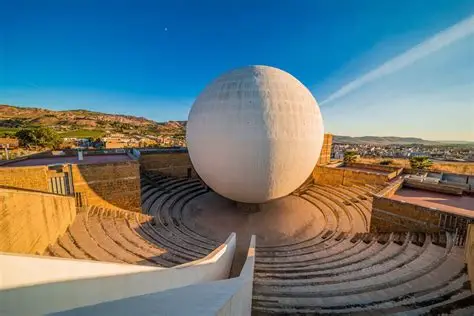
At the center of this transformation is the unfinished Teatro, designed by Pietro Consagra. This massive concrete structure dominates the skyline but has remained incomplete for over 40 years. Despite its striking design, it has rarely served its intended purpose.
Gibellina was rebuilt in the 1970s after a devastating earthquake destroyed the original town. Planners reimagined it as a modern art utopia, filling the area with sculptures, experimental architecture, and public artworks. However, the project failed to attract steady visitors, leaving many buildings abandoned.
In 2026, Italy named Gibellina its first Capital of Contemporary Art. This recognition has sparked a year-long cultural programme that includes exhibitions, performances, and artist residencies. Organizers aim to transform unused spaces into active cultural venues and bring new energy to the town.
Andrea Cusumano, who leads the initiative, plans to restore key structures while preserving their raw, industrial character. He wants to turn the Teatro from a static sculpture into a functional space for art and performance.
Artists will actively engage with the town itself. Some will host public workshops, while others will stage performances in historic and abandoned locations. This approach aims to connect the community with the creative process and redefine how people experience the space.
Nearby, visitors can explore Cretto di Burri, a vast land artwork created by Alberto Burri. It preserves the ruins of the old town beneath white concrete, serving as a powerful reminder of the earthquake that reshaped the region.
The town’s history explains many of its challenges. After the 1968 earthquake in the Belice Valley, authorities relocated residents and introduced modern urban planning concepts. Wide streets and uniform housing replaced the traditional village layout. However, these changes disrupted local identity and failed to meet the needs of the community.
Today, Gibellina stands at a turning point. The new cultural programme offers a chance to redefine its purpose and attract visitors. If successful, it could transform the town from a forgotten experiment into a vibrant center of contemporary art.