Sussex Asylum Seeker Housing Site: Why Crowborough’s Alarming 2026 Court Fight Matters
Sussex asylum seeker housing site is now one of the most closely watched local immigration disputes in Britain. What began as community opposition to the Home Office’s plan to use Crowborough Training Camp has become a live High Court fight over planning powers, consultation, public services, environmental concerns and the government’s wider attempt to move asylum seekers out of hotels.
The original story focused on Crowborough Shield, a residents’ group preparing a fresh legal challenge after its first case was dismissed as premature. That has now moved forward. Wealden District Council has reported that a new legal challenge by Crowborough Shield CIC has been lodged, that it has been given permission to proceed to a hearing scheduled for July, and that the council remains an interested party while not taking an active role.
That update matters. The Sussex asylum seeker housing site is no longer only a proposal. The Home Office says Crowborough Training Camp began accommodating asylum seekers on January 22, 2026. The site is being phased up to a maximum capacity of 540 asylum seekers. The government says it is designed to be basic, safe and as self-sufficient as possible, with on-site services intended to reduce pressure on the local area.
Residents and local officials remain unconvinced. They argue that the process has lacked transparency, that the site’s impact on Crowborough has not been properly assessed, and that the location near Ashdown Forest raises planning and environmental questions. The dispute also sits inside a national argument over Labour’s asylum policy, as ministers try to reduce hotel use while facing opposition to large accommodation sites.
For The News Ink readers following the bigger immigration debate, this case connects directly with our coverage of Shabana Mahmood’s asylum reforms and the wider pressures on the UK economy. The Sussex asylum seeker housing site is local, but the questions it raises are national.
What is happening at Crowborough Training Camp?
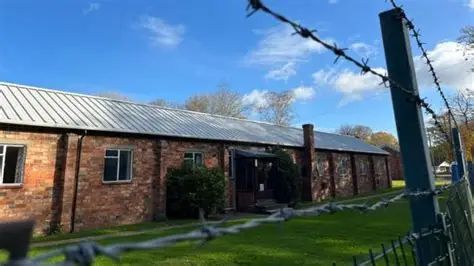
The Sussex asylum seeker housing site is Crowborough Training Camp, a former army training centre in East Sussex. The Home Office says the site is being used to provide accommodation for asylum seekers as part of its effort to reduce reliance on hotels. It says the site recently served as transitional accommodation for the Afghan Resettlement Programme and can provide basic accommodation while claims are initially processed.
According to the Home Office, the camp is not a detention centre. Asylum seekers living there are people with pending claims who have permission to remain in the UK while their claims are processed. The site accommodates single adult male asylum seekers aged 18 to 65, after screening checks against policing and immigration databases.
The government says Crowborough is being phased gradually toward a maximum of 540 residents. It also says the camp is designed to be self-contained, with laundry, communal spaces, faith and worship facilities, recreational areas and health support. Clearsprings Ready Homes manages the site under a Home Office contract.
That is the official account. The local argument is different. Crowborough Shield and many residents say the Sussex asylum seeker housing site has been imposed without adequate engagement, with too little clarity about long-term use, security, local services and environmental effects.
Why the first legal challenge failed
Crowborough Shield’s first legal challenge did not fail because the court decided all local concerns were wrong. It failed mainly because of timing. The group filed its initial claim before the Home Office had formally decided to use the site.
Mr Justice Mould dismissed the case as premature. Sky News reported that he said the group had “jumped the gun” because there was no clearly determined policy to use the camp when the first legal action was launched. The Guardian also reported that the judge ruled residents could not challenge a decision before it had been formally made.
That distinction matters. A court can reject a claim as premature without ruling that a later challenge must fail. The judge indicated that, after the government’s January decision to proceed, a fresh legal challenge could in principle be brought.
That is what has happened. The Sussex asylum seeker housing site is now being challenged after the formal decision, not before it. That makes the legal position more serious than the first round.
The fresh High Court challenge
The fresh legal challenge is the key update. Wealden District Council said in June that Crowborough Shield had lodged a new challenge to the Home Office decision and that the case had been given permission to proceed to a July hearing. The council also said that, after disclosure of Home Office documents, Crowborough Shield had reduced its initial grounds of challenge.
That means the case has moved from political protest into a more focused legal argument. The court will not decide whether residents dislike the site. It will consider whether the Home Office acted lawfully in the way it made and implemented the decision.
Likely issues include planning powers, environmental duties, consultation, local-service assessment, transparency and whether the government properly considered impacts on the community and the people being accommodated. The exact arguments will depend on the pleaded grounds before the court, but the earlier public debate has centred on those themes.
The Sussex asylum seeker housing site therefore sits at the intersection of immigration policy and administrative law. The court is not being asked to rewrite asylum policy. It is being asked whether the government followed the law when choosing this site.
Why Wealden District Council is not leading the challenge
Wealden District Council has strongly opposed the use of the camp, but it is not actively leading the new judicial review. That has caused confusion locally, so it needs clear explanation.
The council said it took legal advice and was told that a new judicial review was unlikely to achieve practical value and could even be counterproductive. Its lawyers identified arguable legal errors around environmental and planning issues, but advised that these could be corrected by the government. The council also warned that even a successful challenge might simply allow ministers to remake the decision and potentially extend the timetable.
That is a difficult position. The council says it opposes the Sussex asylum seeker housing site, but it does not want to spend public money on a legal case it believes is unlikely to stop the camp in principle. Crowborough Shield, as a community group, has chosen to continue the legal fight.
This creates a two-track local response: the residents’ group pursues the court challenge, while the council presses the Home Office for information, engagement and mitigation.
The 12-month promise and the 2030 concern
One of the biggest updates is the question of how long the site will operate. Early political discussion focused on temporary use. But Wealden District Council has said official papers indicate the Home Office sought agreement from the Ministry of Defence to extend use of the site. The Home Office factsheet now says the Ministry of Defence has given permission for use of Crowborough until January 2030, subject to appropriate planning permission.
That does not mean the site will definitely operate until 2030. But it changes the local debate. Residents who were told the use was short-term now see a possible multi-year arrangement. That makes concerns about services, policing, health provision, local cohesion and planning feel more significant.
The Sussex asylum seeker housing site is therefore not only about 540 beds. It is about trust. If residents believe the government’s temporary promise has shifted, they are less likely to accept reassurances about community impact.
The Home Office says use remains temporary and that the site will eventually be returned to the Ministry of Defence. But in local politics, “temporary until 2030” can sound very different from “temporary for 12 months.”
What residents are worried about
Residents’ concerns fall into several categories. Some are about safety. People worry about the arrival of hundreds of single adult men in a relatively small town. Others worry about pressure on GP services, transport, policing, local shops and community cohesion. Some also object to the lack of consultation and the perception that decisions were made in Whitehall before local evidence was fully considered.
There are also environmental concerns. Crowborough is close to Ashdown Forest, an important protected landscape and habitat. The Guardian reported that the site is near an area with protected species and conservation designations, and earlier legal arguments raised questions about conservation rules and planning powers.
A separate concern is the welfare of the asylum seekers themselves. Crowborough Shield supporters have argued that placing people who may have survived war, torture or trafficking in a military environment could retraumatise them, especially where there are nearby training or shooting facilities. That argument complicates the picture because the residents’ group is not only saying “not here.” It is also saying the site may be unsuitable for vulnerable people.
The Home Office rejects the idea that the site is unsafe or unmanaged. It says people are screened, security is in place, healthcare is provided on site and individuals whose needs cannot be met there can be moved elsewhere.
What the Home Office says
The Home Office’s defence of the Sussex asylum seeker housing site rests on several points. It says the government has a statutory obligation to house asylum seekers who would otherwise be destitute. It says hotels are expensive, unpopular and unsuitable as a long-term backbone of the asylum system. It says existing accommodation on Ministry of Defence sites can reduce hotel reliance.
The Home Office also says Crowborough is managed with 24/7 security, CCTV, screening checks and multi-agency working with police, local authorities and health partners. It says asylum seekers will receive initial health checks, that routine healthcare is delivered on site where possible, and that the site is intended to reduce pressure on local GP services.
The government also stresses that the camp is not a permanent settlement route into Crowborough. It says asylum seekers are accommodated there during initial processing and, if granted protection, move into the national dispersal system rather than automatically staying locally.
Those points are important because they show how the Home Office wants the site understood: not as a new community settlement, but as a controlled processing accommodation site.
Why local trust has broken down
Even where the Home Office offers reassurances, local trust has been damaged. Wealden District Council has repeatedly complained about a lack of information, delayed answers and insufficient engagement. The council said in May that the Home Office declined an invitation to attend a local scrutiny meeting and answer questions.
Trust matters because large accommodation sites depend on cooperation. Police, councils, NHS services, schools, voluntary groups, charities, transport providers and residents all need clear information. If the community believes details are being withheld, even accurate official statements may not calm concern.
The Sussex asylum seeker housing site has also been surrounded by rumours. Wealden has warned that incorrect or misleading claims have circulated online, including claims about hundreds of electric bikes being delivered to the camp, which the council said were not true. This shows how quickly local disputes can become misinformation environments.
The Home Office may be right that the site has security and services. Residents may still be right that communication has been poor. Both things can be true.
The national asylum accommodation problem
The Crowborough case cannot be separated from the wider asylum accommodation crisis. The Home Affairs Committee has said the asylum hotel system became expensive, unpopular with local communities and unsuitable for asylum seekers. The Public Accounts Committee reported that asylum support costs rose to around £4 billion in 2024–25, driven largely by hotel use.
That is the pressure behind the Sussex asylum seeker housing site. Ministers want to move people out of hotels. But every alternative creates political difficulty. Hotels anger towns and councils. Barges and barracks raise welfare concerns. Military sites trigger planning and community objections. Dispersal accommodation depends on local housing markets already under pressure.
This is why Crowborough matters nationally. It shows the gap between a slogan and implementation. “End asylum hotels” sounds simple. Finding lawful, humane, cost-effective and locally acceptable alternatives is much harder.
The News Ink’s coverage of personal finance and the economy often returns to this same public-policy problem: when state systems are expensive and overstretched, decisions that look financial quickly become social and political.
Why the court case may not settle the politics
Even if the High Court rules on the legal challenge, the politics may continue. If Crowborough Shield wins, the Home Office may be forced to revisit the decision, correct legal defects or carry out further assessment. But that may not permanently stop the site being used. If the Home Office wins, residents may still feel ignored.
This is the difference between legal resolution and public consent. A lawful decision can still be unpopular. An unlawful decision can sometimes be remade lawfully. The court can decide process, but it cannot repair trust on its own.
That is why the Sussex asylum seeker housing site will remain politically sensitive whatever happens. Ministers need to show that asylum accommodation is not being dumped on communities without warning. Residents need accurate information and a voice. Asylum seekers need safe, dignified accommodation while their claims are processed.
All three needs have to be considered together. Ignoring any one of them creates another crisis.
The role of Clearsprings Ready Homes
Clearsprings Ready Homes manages the Crowborough site for the Home Office. The company is already a major player in asylum accommodation contracts, which have faced parliamentary scrutiny. The Home Affairs Committee’s June session examined asylum accommodation contracts, large sites and the government’s plan to reduce hotel use.
The provider question matters because many local residents do not deal directly with ministers. They experience the site through security, transport, behaviour, communication and day-to-day management. If the contractor performs well, pressure may reduce. If problems emerge, public anger will be directed at both the provider and the Home Office.
The Home Office says Clearsprings is responsible for safe operation and wraparound support. Residents and councils will judge that by outcomes, not by contract language.
The Sussex asylum seeker housing site is therefore also a test of outsourced public-service delivery. A central government decision depends on a private provider operating a sensitive local site in a politically charged environment.
How asylum seekers fit into the story
One risk in coverage of the Sussex asylum seeker housing site is that asylum seekers become abstract numbers: 27 arrivals, 350 residents, 540 capacity. But they are people waiting for legal decisions, often after dangerous journeys, uncertain futures and trauma.
That does not mean local concerns should be dismissed. Communities have legitimate questions about services, safety, transparency and planning. But humane reporting should avoid treating asylum seekers as a threat by default. The Home Office says residents are screened and are not detained because people with pending asylum claims have permission to remain while the state decides their cases.
Good journalism must hold two truths together. The community deserves answers. The asylum seekers deserve safety and dignity. A policy can fail local residents and vulnerable migrants at the same time if it is poorly planned.
This is why the Crowborough case is more complicated than a simple “for” or “against” argument. The real question is whether the government has designed accommodation that is lawful, workable, transparent and humane.
What happens next
The next major step is the July hearing. The court will consider the fresh Crowborough Shield challenge to the Home Office decision. Because the case has permission to proceed, the legal arguments will receive fuller examination than the first premature claim.
Residents will watch for whether the court accepts arguments around planning, consultation, environmental assessment or local impact. The Home Office will argue that it has lawful powers, that the site is necessary to meet accommodation duties, and that safeguards are in place.
At the same time, the site continues to operate. The Home Office says numbers are being phased up to 540. The council continues to seek clarity about long-term use. Volunteer groups have begun accessing the site for activities such as English language and music lessons, according to Wealden’s updates.
The Sussex asylum seeker housing site will therefore remain active while the legal and political arguments continue.
The careful takeaway
Sussex asylum seeker housing site is now more than a local planning dispute. It is a test of how the UK government handles asylum accommodation when hotels are costly, military sites are controversial and local trust is fragile.
Crowborough Shield’s first legal challenge failed because it was premature. Its fresh challenge has now been allowed to proceed to a July hearing. That gives residents a new opportunity to test whether the Home Office lawfully decided to use Crowborough Training Camp for up to 540 asylum seekers.
But the court case is only one part of the story. The Home Office must explain why the site is suitable, how long it will operate, how local services will be protected, and how asylum seekers’ welfare will be safeguarded. Wealden District Council must keep pressing for transparency while avoiding false hope about legal outcomes. Residents need accurate information rather than rumours. Asylum seekers need to be treated as people, not political symbols.
The Sussex asylum seeker housing site matters because it shows the limits of national policy made without local consent. Ending asylum hotels may be politically necessary, but replacing them with large sites will keep producing conflict unless decisions are lawful, transparent and humane.
For more politics, migration coverage and public-interest reporting, follow The News Ink on Medium.