


Five Iranian Women Footballers Granted Humanitarian Visas in Australia After Anthem Protest
Five Iranian women footballers have been granted humanitarian visas in Australia after refusing to sing Iran’s national anthem at the AFC Women’s Asian Cup, a silent protest that quickly turned into an international safety crisis.
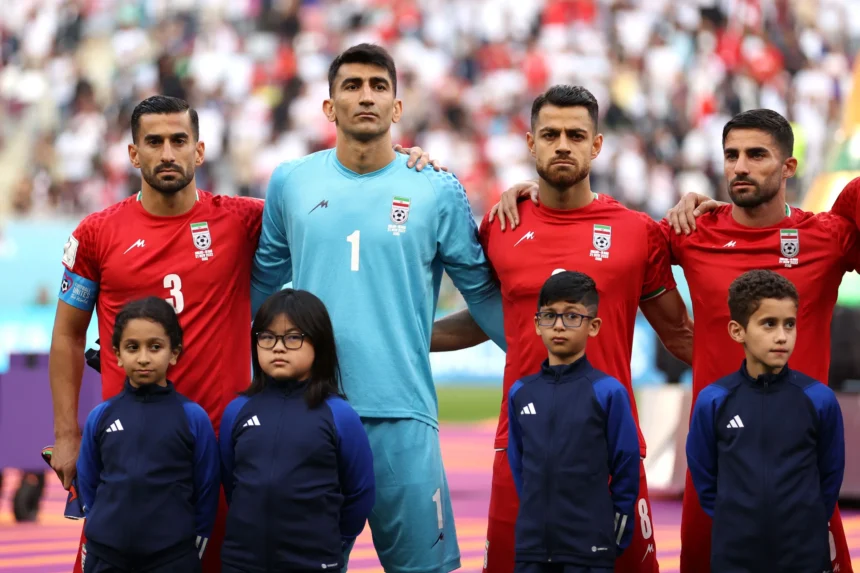
The players were in Australia for the tournament when the wider conflict involving Iran, the United States and Israel escalated. Their decision to stand silent before Iran’s opening match against South Korea drew sharp criticism from Iranian state media and conservative commentators. Supporters, human rights advocates and members of the Iranian diaspora feared the players could face punishment if they returned home.
Australia then moved quietly but quickly. Police helped take the five Iranian women footballers to a secure location, where Home Affairs Minister Tony Burke finalised humanitarian visas. Prime Minister Anthony Albanese later confirmed that the women were safe and said Australia remained ready to help other members of the squad if they wanted protection.
The case is about football, but it is also about women’s rights, state pressure, wartime politics and the risks athletes face when symbolic gestures become political acts. A team that arrived to play football became a global human-rights story because silence during an anthem was heard far beyond the pitch.
Who Are the Five Iranian Women Footballers?
Australian officials identified the five Iranian women footballers as Zahra Sarbali Alishah, Mona Hamoudi, Zahra Ghanbari, Fatemeh Pasandideh and Atefeh Ramezanizadeh. They were photographed with Tony Burke after receiving humanitarian protection and were kept at an undisclosed location under police protection.
The group included senior figures from Iran’s women’s national football setup. Zahra Ghanbari, the team captain, was among the names reported by international outlets. Fatemeh Pasandideh, the youngest of the group, was also named in the Australian reporting. The others were Mona Hamoudi, Zahra Sarbali Alishah and Atefeh Ramezanizadeh.
According to Reuters, the five players sought asylum because they feared persecution if they returned to Iran after the anthem protest. Australian officials said they were moved away from the official delegation and taken to safety before their visas were finalised.
This was not treated as a normal immigration story. It unfolded under police protection, with security agencies involved and the Australian government asking the media to show restraint because of risks to the players and their families.
The News Ink’s football guide explains how football often carries politics, identity and national pride. This case showed that clearly: the pitch became the place where fear, protest and power collided.
Why the Anthem Protest Mattered
National anthems are symbolic moments in international sport. Players stand in uniform, cameras move across faces, and the state expects visible loyalty. When the Iranian women footballers remained silent before the match against South Korea, the meaning was immediately understood by supporters and critics.
In many countries, not singing an anthem might trigger debate, boos or media criticism. In Iran’s current political climate, the stakes are much higher. Athletes have faced pressure over public gestures, dress codes, political comments and displays of solidarity with protest movements. A silent anthem moment can be interpreted by authorities as dissent, especially during wartime.
Reuters reported that Iranian state television labelled the players “wartime traitors” after the protest. A commentator also described their silence as dishonourable. Those labels alarmed supporters because they suggested the issue had moved from sports criticism into national-security language.
That is why the five Iranian women footballers became the focus of urgent concern. Their silence was not only a personal gesture. It was read through the lens of war, loyalty and repression.
The News Ink’s coverage of life in Tehran under fire shows why wartime symbolism inside Iran has become so sensitive. In that climate, even a football anthem can become dangerous.
Australia’s Quiet Operation
The Australian government said it had been preparing for the situation before the visa announcement became public. Albanese said the government had been working on the matter “for some time,” while Burke travelled to Queensland and then Sydney as the operation unfolded.
The prime minister’s press conference confirmed that five humanitarian visas were issued late at night and that the Australian Federal Police moved the women to a safe location. Albanese said the offer of help remained available to other women in the team, while stressing that the decision had to be theirs.
Burke later gave more detail in a Home Affairs transcript. He said players and delegation members were given private interviews without minders present, with interpreters available, so they could make their own choices. He also said the process was designed to avoid rushing or pressuring them.
That detail matters. In asylum and protection cases, agency is essential. The Australian government wanted to show that the players were not being used as political symbols by Australia. They were being offered a choice.
The five Iranian women footballers accepted that choice. Others did not, or were still weighing the risks.
Humanitarian Visas and What They Mean
The visas granted to the Iranian women footballers were described as humanitarian visas with a pathway to permanent status. The exact visa arrangements were handled through ministerial intervention, and Burke later said he had no intention of making those who accepted protection fight through the courts for permanent status.
Australia’s Global Special Humanitarian visa framework allows eligible people to stay permanently, work, study and propose certain family members for permanent residence. In this case, officials described an urgent humanitarian response rather than an ordinary application process.
That distinction is important. The players did not simply apply through a slow overseas channel. The Australian government acted because they were already in the country, the tournament had ended, and concerns about return risk had become immediate.
The humanitarian visa decision also carried political weight. It signalled that Australia accepted the players’ fear as serious enough to justify protection. It also placed Australia directly at odds with Iranian officials, who insisted the remaining team members could return safely.
For the five Iranian women footballers, the visas offered more than legal status. They offered time, safety and the chance to decide what their sporting and personal futures might look like.
A Team Bus Surrounded by Supporters
The public drama intensified after the team was eliminated from the tournament. AP reported that a commotion erupted outside the team’s hotel on the Gold Coast when members of the public knelt or lay down in front of a bus believed to be carrying the remaining Iranian players. Protesters chanted “Save our girls” and “Please act now.”
The bus was delayed only briefly, but the images captured the emotional pressure around the case. Members of the Iranian diaspora in Australia were desperate for the players not to be placed on flights without first receiving a genuine chance to ask for protection.
Some demonstrators believed that every minute mattered. If the players left Australia, their ability to seek protection could become far more complicated. If they returned to Iran, supporters feared they might face questioning, punishment or pressure on their families.
The five Iranian women footballers who accepted visas were already safe by then. The uncertainty centred on the rest of the squad and support staff.
This was the human tension at the centre of the story: not every player made the same choice, and not every choice could be understood from the outside.
Why Some Players May Still Have Returned
One of the hardest parts of this case is that protection was offered, but not everyone accepted. That does not mean the remaining players felt safe. It may mean the pressure was more complicated than outsiders could see.
Burke acknowledged that some players may have been thinking about their families back home. He said officials could not remove the context of what might have been said to them before, or the pressures they may have felt involving relatives in Iran. That was a crucial point.
Asylum is never only about the person holding the passport. It can also involve parents, siblings, spouses, children, teammates and colleagues. An athlete may want to stay but fear consequences for family members. Another may believe returning is safer for loved ones. Another may distrust foreign governments. Another may simply feel overwhelmed.
This is why the story of the Iranian women footballers should not be reduced to “brave players stayed” and “others went back.” Every member of the delegation faced a painful decision under extraordinary pressure.
Human rights advocates, including figures linked to the global players’ union FIFPRO, stressed that the priority had to be agency, rights and safety for all players.
Trump’s Intervention Added Global Attention
Donald Trump pushed the case into wider international headlines when he posted that Australia should grant asylum to the Iranian women’s team and said the United States would take them if Australia would not. He later praised Albanese after speaking with him and learning that five players had already received help.
The intervention was politically explosive. Trump’s initial claim that the players would likely be killed if returned to Iran was not independently verified, but it reflected genuine fears among some supporters and diaspora activists. Iranian officials and state-linked voices criticised his comments as political interference.
Albanese later said Trump had called him before 2 a.m. and that he explained the steps Australia had already taken over the previous 48 hours. That call turned a sensitive protection operation into a high-profile diplomatic episode.
For the five Iranian women footballers, Trump’s role may have increased international attention, but Australian officials stressed that the government had already been working on the case before his public posts.
This distinction matters. The rescue was not simply a reaction to a foreign leader’s message. It was already underway.
A Timeline of the Case
| Date or stage | What happened |
|---|---|
| Before tournament | Iran’s women’s team travelled to Australia for the AFC Women’s Asian Cup |
| First match | Players stood silent during the national anthem before facing South Korea |
| After protest | Iranian state media and conservative voices criticised the team |
| Later matches | The team sang the anthem before games against Australia and the Philippines |
| After elimination | Safety concerns grew as the team prepared to leave Australia |
| March 9-10 | Five Iranian women footballers were moved to safety and granted humanitarian visas |
| After visa decision | Australia said help remained available to other squad members |
| Later reporting | Some players publicly thanked Australia, while others returned or continued making decisions |
This timeline shows how quickly the situation moved. A symbolic protest became a visa and security case within days because the tournament ended and the players faced the immediate question of return.
Why Women’s Football in Iran Carries Special Risk
Women’s football in Iran has always existed under restrictions. Players have had to navigate rules around dress, travel, public visibility, federation control and political expectations. International tournaments give women athletes rare global exposure, but that exposure can also make them vulnerable.
The players’ anthem protest came in a country where women’s public behaviour is often treated as a political matter. Since the Women, Life, Freedom movement, Iranian women athletes have faced particular scrutiny over gestures that may be read as dissent. Refusing to sing the anthem during wartime carried even greater risk.
The five Iranian women footballers were therefore not only athletes seeking safety. They were part of a much larger struggle over women’s autonomy, public speech and state control.
The News Ink’s article on sexism in football gives useful context for the barriers women face in the sport globally. In Iran’s case, those barriers are intensified by state politics and security fears.
The War Changed Everything
The timing of the tournament made the case even more dangerous. Iran’s campaign began as the conflict involving the United States and Israel escalated. Reuters reported that the team’s Asian Cup campaign started as airstrikes were launched on Iran and the country entered a period of national crisis.
In peacetime, an anthem protest might still have been sensitive. During war, it became far more serious. State media could frame silence as disloyalty to the country, not merely criticism of the government. Conservative commentators could argue that athletes owed visible unity during an attack.
That is why the “wartime traitors” label mattered so much. It placed the players’ act inside a national-security narrative. Once that happened, supporters feared the consequences could extend beyond sporting discipline.
The News Ink’s report on US and Israel strikes on Iran explains the conflict setting that turned a football protest into a far larger diplomatic and human-rights issue.
The Families Question
One of the unresolved concerns is whether the families of the five Iranian women footballers could face pressure in Iran. Reuters reported that FIFPRO remained concerned about the safety and wellbeing of other players and their families. Iranian football officials also said they had spoken with the families of the five players.
Family pressure is a common fear in high-profile defection and asylum cases. A state may not be able to reach someone abroad, but relatives at home can become vulnerable to questioning, surveillance, employment pressure or travel restrictions. It is not always visible, and it is often difficult to verify.
Australian officials were aware of that concern. Albanese thanked media organisations for restraint, saying the story had to be handled in a way that did not present danger to the athletes or to their families and friends back home.
This is why responsible reporting matters. Publishing unnecessary details about locations, travel plans or private decisions can increase risk. In this case, much of the protection effort depended on keeping movements quiet until the women were safe.
The News Ink’s coverage of cyber warfare in the Iran conflict highlights how modern conflict also includes information control, surveillance and pressure networks. Athletes and their families can be affected by that environment.
Why the Players Said They Were Not Political Activists
Burke said the players wanted to make clear they were not political activists. That statement should be understood carefully. It does not mean their act had no political meaning. It means they did not want to be turned into symbols beyond their own safety and choices.
Many athletes who protest do not begin as politicians. They are people responding to pressure, fear, grief or conscience. When their actions become global news, they can lose control of the narrative. Governments, activists, foreign leaders and media outlets all project meanings onto them.
The five Iranian women footballers may have wanted the world to understand that they were athletes first. They wanted safety, dignity and a future. They did not ask to become diplomatic weapons.
That is one reason Australia’s language about choice was important. The government said help was available, but the decision belonged to each woman. That principle is essential when athletes are already caught between state pressure and international attention.
Australia’s Afghanistan Women’s Cricket Precedent
Australia has faced similar issues before. Reuters noted that Australia previously granted emergency humanitarian visas to more than 20 members of Afghanistan’s women’s cricket team after the Taliban returned to power in 2021 and banned women’s sport.
That precedent matters because Australia has become a destination for women athletes fleeing regimes that restrict or punish women’s participation in sport. It also means Australian officials had some experience handling cases where athletes’ safety, sport and asylum intersect.
The Iranian case was different because the players were in Australia for a major tournament and the decision unfolded under intense diplomatic pressure. But the underlying theme was similar: women athletes were at risk because their sport and public identity clashed with state power.
Australia’s response will likely be remembered as part of a growing pattern. International sport can bring at-risk athletes into safer jurisdictions. Host countries then face a moral and legal question: if an athlete fears return, what duty does the host country have?
Sport as a Refuge and a Risk
Football gave the Iranian women footballers a platform, but it also exposed them. Without the Asian Cup, they may not have been in Australia. Without the anthem camera shot, the protest may not have become international news. Without the tournament ending, they may not have faced the immediate return decision.
This is the double nature of sport for athletes under restrictive governments. International competition can offer escape, visibility and solidarity. It can also create danger because every gesture is seen by officials at home.
The same field that allows athletes to represent their country can become the stage where they are judged by that country’s authorities.
That is why governing bodies need stronger protection protocols. Teams from high-risk environments should know their rights. Host countries should have confidential support channels. Players’ unions should be able to reach athletes privately. Tournament organisers should understand that political pressure does not stop at the stadium gate.
The Iranian women footballers case shows that safeguarding is not only about injury, abuse or harassment inside sport. It can also be about state pressure.
What Happens Next for the Five Players?
The immediate answer is safety and legal status. The five Iranian women footballers were granted humanitarian protection and placed under police protection in Australia. Later reporting said some players publicly thanked the Australian government and hoped to rebuild their lives and continue their sporting careers.
The longer-term answer is less certain. Elite athletes seeking asylum face practical challenges. They need housing, income, legal support, language help, mental health support, training access, club opportunities and contact with family. They may also carry trauma from the decision to stay and the fear of consequences for loved ones.
Restarting a football career is not simple. A player may need federation clearance, club contracts, fitness support and competitive opportunities. Even if she is safe, she may have lost the national-team environment that shaped her career.
Still, Australia has a strong women’s football culture, especially after the growth of the Matildas and the domestic women’s league. If the players wish to continue in the sport, they are in a country where women’s football has public visibility and infrastructure.
The challenge will be turning protection into a life.
The Political Message to Iran
Australia’s decision sent a clear message: if athletes fear punishment for peaceful expression, they may be offered protection. Iran’s official response was more defensive. Iranian media reported that remaining team members were invited back “with peace and confidence,” while football officials criticised foreign political interference.
From Tehran’s perspective, the case became embarrassing because it suggested some national-team players did not trust the state to protect them. From Australia’s perspective, the humanitarian obligation came first.
This diplomatic tension will not disappear quickly. The case sits inside a wider breakdown between Iran and Western governments during war. It also touches broader questions about women’s rights, international sport and asylum.
The News Ink’s report on mixed emotions in Iran shows how divided Iranian society has become during the conflict. The footballers’ case reflects that division on a global stage.
Why This Story Matters Beyond Football
The story of the Iranian women footballers matters because it challenges the idea that sport can be separated from politics. For some athletes, simply standing silently can become a political act because the state demands visible loyalty.
It also matters because women athletes are often asked to represent nations that restrict them. They carry flags, sing anthems and compete under federations that may not fully protect their rights. When they resist, even quietly, the consequences can be serious.
The case also raises questions for tournament hosts. Australia did not only stage matches. It became responsible for responding when visiting athletes sought protection. Future hosts may face similar situations, especially as global sport continues to intersect with authoritarian politics, war and women’s rights.
The News Ink’s coverage of Middle East flights cancelled shows how the conflict affected travel and movement. For these players, movement itself became the central question: board the plane home, or remain and seek safety.
What Responsible Coverage Should Avoid
This story should be reported with care. It is tempting to turn the five Iranian women footballers into dramatic symbols, but they are real people with families, careers and uncertain futures.
Responsible coverage should avoid claiming every returning player was forced to go home unless evidence supports it. It should avoid publishing sensitive location details. It should avoid exaggerating unverified threats. It should avoid treating asylum as a simple heroic choice when family pressure can make every option painful.
At the same time, responsible coverage should not minimise the risk. State media language such as “wartime traitors” is serious. Police protection, humanitarian visas and official concern from Australia all show that the situation was treated as real and urgent.
The fairest approach is to hold both truths together: the five players made a difficult personal decision, and the political context made that decision dangerous.
The Bottom Line
Five Iranian women footballers were granted humanitarian visas in Australia after their anthem protest at the AFC Women’s Asian Cup raised fears for their safety. Zahra Sarbali Alishah, Mona Hamoudi, Zahra Ghanbari, Fatemeh Pasandideh and Atefeh Ramezanizadeh were moved to a secure location by Australian police before their protection was finalised.
Their silence before Iran’s match against South Korea became a global story because Iranian state media branded the players “wartime traitors” during a period of conflict and repression. Australia said the women were offered a choice, not pressured, and that help remained available to other squad members.
The case is bigger than one tournament. It shows how women’s football, state power, asylum law and international politics can collide in a single anthem ceremony. It also shows the risks faced by athletes whose public gestures are interpreted as defiance.
For the five Iranian women footballers, the humanitarian visas offer safety and a possible new future. For the rest of the team and their families, uncertainty remains. For world football, the message is clear: protecting players cannot stop at the touchline.
For more football, women’s sport and Middle East coverage, readers can follow The News Ink on X.