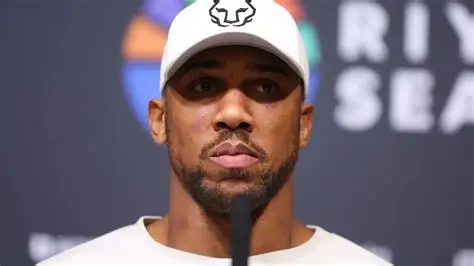
Anthony Joshua Crash Case: Devastating Trial Delays After Fatal Nigeria Accident
The Anthony Joshua crash case has moved beyond its original March hearing date after a Nigerian court adjourned proceedings again in the trial connected to the fatal Lagos-Ibadan Expressway accident that killed two members of the former heavyweight champion’s team.
Joshua was travelling in a Lexus SUV on December 29, 2025, when the vehicle crashed near Sagamu in Ogun State, Nigeria. His personal trainer, Latif Ayodele, and strength and conditioning coach, Sina Ghami, both died after the collision. Joshua survived with minor injuries and was later discharged from hospital after treatment.
The Anthony Joshua crash case now centres on allegations against the driver, Adeniyi Mobolaji Kayode, who has been accused of dangerous and reckless driving causing death, driving without due care and attention, causing bodily harm and property damage, and driving without a valid national driver’s licence. Those allegations remain accusations unless proven in court.
The original report said the hearing had been adjourned to March. The latest reliable update shows the case was adjourned again. Channels Television reported that Ogun Magistrate’s Court 1, sitting in Sagamu, moved the matter to June 2, 2026, after the prosecution requested more time to file a fresh charge or updated information.
Editor’s update — June 2026: This article has been rebuilt to reflect the later April court update. The March adjournment is no longer the latest verified development.
What Happened in the Anthony Joshua Crash Case?
The Anthony Joshua crash case began after a road accident on the Lagos-Ibadan Expressway, one of Nigeria’s busiest routes. Joshua was in Nigeria during the festive period when the Lexus SUV carrying him and members of his team collided with a stationary truck near Sagamu.
Reuters reported that Joshua sustained minor injuries, while two close friends and members of his team died. Matchroom Boxing identified the victims as Sina Ghami and Latif Ayodele. The Federal Road Safety Corps said five men were involved in the crash: two died, one was injured, and two escaped unhurt. Read the Reuters report here: Anthony Joshua injured in Nigeria car crash that killed two of his friends.
The Federal Road Safety Corps later said preliminary findings suggested the vehicle had been travelling above the legal speed limit and lost control during an overtaking manoeuvre before crashing into a stationary truck. Arise News carried the FRSC statement, which said excessive speed and wrongful overtaking remain major causes of fatal crashes on Nigerian highways. Read the FRSC-based report here: FRSC blames crash on excessive speed and wrongful overtaking.
The Anthony Joshua crash case is therefore both a sports story and a criminal-court story. It involves a famous boxer, but the legal focus is on the circumstances of a road accident that killed two people.
Quick Facts About the Case
| Detail | Information |
|---|---|
| Incident | Fatal road crash involving Anthony Joshua’s vehicle |
| Date | December 29, 2025 |
| Location | Lagos-Ibadan Expressway, near Sagamu, Ogun State |
| Vehicle | Lexus SUV carrying Joshua and members of his team |
| People who died | Latif Ayodele and Sina Ghami |
| Joshua’s condition | Minor injuries; later discharged after treatment |
| Defendant | Adeniyi Mobolaji Kayode |
| Court | Ogun Magistrate’s Court 1, Sagamu |
| Latest verified adjournment | June 2, 2026 |
| Legal status | Allegations remain unproven unless established in court |
Why the Court Hearing Was Adjourned
The Anthony Joshua crash case was first reported as adjourned after the driver appeared in court in February. Reuters reported that a Nigerian court postponed a hearing for the driver accused of causing the crash that killed two members of Joshua’s team and injured the boxer. Read the Reuters video report here: Nigerian court postpones trial of boxer Anthony Joshua’s driver.
The case later returned to court in April. Channels Television reported that Magistrate Olufunmilayo Somefun adjourned the matter to June 2 after the prosecution requested more time. According to that report, it was the third adjournment and was intended to allow the prosecuting team to file a fresh charge to the existing information on the case. Read the latest court report here: Court adjourns trial of driver in Anthony Joshua’s car crash to June 2.
The defence did not object to the adjournment, according to the same report. Defence counsel Abiodun Olalekan said after the proceeding that the development was meant to ensure justice for all parties involved.
That wording is important. The Anthony Joshua crash case should not be treated as though the delay automatically helps or hurts one side. In criminal proceedings, adjournments can happen for evidence preparation, filing issues, amended charges, legal advice or procedural requirements.
What Charges Has the Driver Faced?
The defendant in the Anthony Joshua crash case has been identified in reports as Adeniyi Mobolaji Kayode or Adeniyi Mobolaji. The Guardian reported in January that Nigerian police charged Kayode, 46, with causing death by dangerous driving. The same report said he was also charged with driving without a valid licence and driving without due care and attention, causing bodily harm and damage to property. Read the Guardian report here: Anthony Joshua’s driver charged with dangerous driving after fatal crash in Nigeria.
Channels Television later reported that the defendant faced four counts, including allegations of dangerous driving causing death, reckless and negligent driving, driving without due care and attention, causing bodily harm and property damage, and driving without a valid national driver’s licence.
The Anthony Joshua crash case must be written with legal caution. Being charged is not the same as being convicted. The driver has been accused by prosecutors, but the court must still hear the evidence and determine whether the allegations are proved.
The Human Cost: Latif Ayodele and Sina Ghami
The legal process is only one part of the Anthony Joshua crash case. The heart of the story is the loss of two people close to Joshua and central to his professional life.
Latif Ayodele was described as Joshua’s personal trainer. Sina Ghami was described as his strength and conditioning coach. Both were more than staff members in a sporting operation. Reports and tributes described them as close friends and trusted members of Joshua’s inner circle.
Boxing training teams often become deeply personal units. A boxer spends weeks or months in camp with trainers, conditioning coaches, physiotherapists, nutritionists, sparring partners and advisers. These are the people who see an athlete outside public fight-night moments. They manage fatigue, injury risk, weight, recovery and confidence.
That is why the Anthony Joshua crash case has remained emotionally heavy. It is not only about how a crash happened. It is about the sudden loss of people who helped shape Joshua’s preparation, daily routine and support system.
The News Ink’s sports training guide explains why elite athletes rely on carefully planned training, recovery and performance support. Ayodele and Ghami worked in exactly that world, where trust between athlete and coach can be as important as any public result.
Joshua’s Recovery and Public Grief
Joshua survived the crash with injuries described as minor in the early reports. He was taken for medical checks and later discharged after doctors considered him clinically fit to continue recovery.
The emotional recovery is harder to measure. The loss of two close friends and team members would affect any athlete, especially when the deaths happened during a trip connected to family, community and personal roots.
The Anthony Joshua crash case unfolded while Joshua was also being discussed in boxing terms. Before the accident, he had been expected to continue his return to the ring. After the crash, the sporting calendar became secondary to grief, recovery and the legal process.
A public figure faces an additional burden in such moments. Joshua had to mourn privately while media attention followed the investigation, court dates and speculation about his boxing future. That should be handled with sensitivity.
The Lagos-Ibadan Expressway Context
The Lagos-Ibadan Expressway is one of Nigeria’s most important road corridors. It connects Lagos with Ibadan and carries heavy commercial and private traffic. Accidents on the route often attract public attention because of the volume of vehicles and the long-running concerns around speeding, parking, enforcement and road conditions.
In the Anthony Joshua crash case, FRSC statements cited excessive speed and wrongful overtaking as preliminary factors. The reported collision with a stationary truck also raised questions about highway safety and the danger of parked vehicles on major routes.
A criminal trial may focus on specific conduct by specific people. A road-safety discussion is broader. It asks how dangerous driving, vehicle condition, highway design, enforcement, emergency response and illegally parked trucks combine to create fatal outcomes.
Those two conversations should not be confused. The court must decide the charges before it. The wider public can still use the tragedy to examine road safety on a busy expressway.
Why Legal Language Matters in This Story
The Anthony Joshua crash case involves allegations of serious criminal conduct. That means every report should avoid declaring guilt before a court ruling.
Careful language includes phrases such as:
- “the defendant is accused of”;
- “prosecutors allege”;
- “the court has not yet reached a verdict”;
- “the allegations remain unproven unless established in court”;
- “preliminary findings suggested”;
- “according to FRSC”;
- “according to court reports.”
This approach protects accuracy and fairness. It also improves the professionalism of the article. A sports blog can discuss the human impact, but a legal story must still respect due process.
The Anthony Joshua crash case is tragic, but tragedy does not remove the need for careful reporting.
How the Case Affects Joshua’s Boxing World
Joshua is one of the biggest names in modern heavyweight boxing. His fights, injuries and training changes are followed around the world. But the Anthony Joshua crash case is different from a normal boxing setback.
This was not a torn muscle, a postponed bout or a training-camp dispute. Two people died. The effect on Joshua’s professional world is therefore personal and structural. Trainers and conditioning coaches help build fight plans, manage workload and support an athlete mentally during camp. Losing trusted figures can change the rhythm of preparation.
The News Ink has followed major boxing stories such as the Wood vs Warrington rematch and the Katie Taylor farewell fight. Those articles focus on fights, rivalries and sporting legacy. This Joshua story sits in a different category: it is a legal and personal tragedy surrounding a global athlete.
That distinction matters. The Anthony Joshua crash case should not be used only as a way to speculate about future fights. Joshua’s boxing future may eventually become relevant, but the immediate story remains the court process and the families affected by the accident.
Timeline of the Anthony Joshua Crash Case
| Date | Development |
|---|---|
| December 29, 2025 | Joshua’s vehicle crashed on the Lagos-Ibadan Expressway near Sagamu |
| December 29–30, 2025 | FRSC and police reports confirmed deaths and injuries from the crash |
| January 2026 | Reports said the driver had been charged with dangerous-driving and licence-related offences |
| February 25, 2026 | Reuters reported that a Nigerian court adjourned a hearing for the driver |
| April 16, 2026 | Channels Television reported another adjournment to June 2, 2026 |
| June 2026 | The latest reliable public reporting checked for this rewrite still points to the June 2 adjournment as the next hearing date |
What Happens Next?
The next step in the Anthony Joshua crash case depends on the court process in Ogun State. Prosecutors are expected to present or update their case, while the defence will have the opportunity to respond. If a plea has not yet been entered or a full hearing has not begun, procedural issues may still shape the timeline.
Several questions remain important:
- What fresh charge or updated information did prosecutors intend to file?
- Has the defendant entered a plea?
- What evidence will be presented about speed, overtaking, vehicle condition and the stationary truck?
- Will investigators call FRSC officials, police officers, medical witnesses or crash-scene experts?
- How will the court assess the licence-related allegation?
- Will any additional parties face legal scrutiny?
Until those questions are answered in court, the Anthony Joshua crash case remains open.
A Tragedy Beyond the Courtroom
The Anthony Joshua crash case will continue through legal channels, but its human meaning is already clear. Two men connected to Joshua’s team lost their lives. Families, friends and colleagues were left grieving. Joshua survived, but the crash became a life-changing event far beyond boxing.
Court updates matter because they show whether the justice process is moving forward. But the case should not be reduced to adjournment dates alone. It is also a reminder that road-safety failures can destroy lives in seconds.
For now, the responsible conclusion is cautious: the trial has been delayed, the charges remain allegations, and the families of Latif Ayodele and Sina Ghami are still waiting for answers.
For more sports and current-affairs updates, follow The News Ink on its WhatsApp channel.