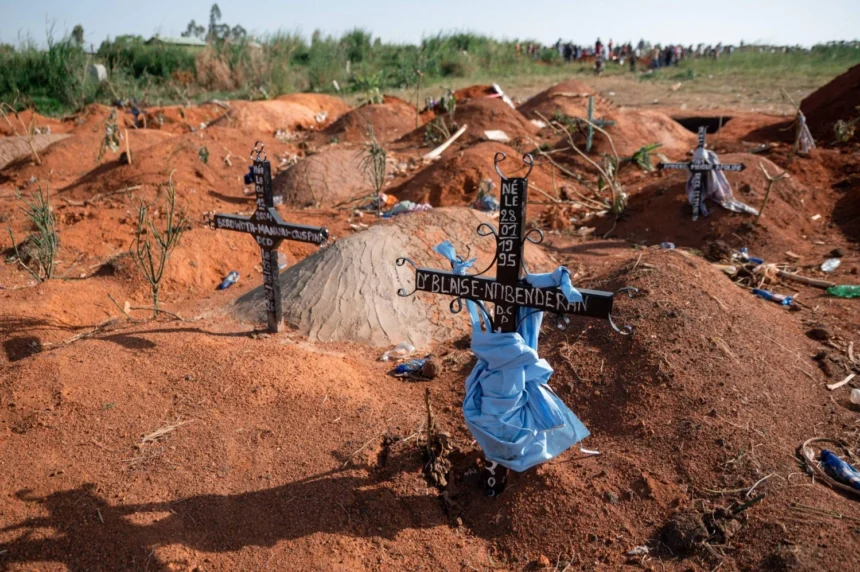
Congo Ebola Outbreak Becomes Deadliest in Its History: What Went Wrong?
The Congo Ebola outbreak has become the deadliest Ebola emergency in the Democratic Republic of the Congo’s history, overtaking the devastating 2018–2020 epidemic after only three months of officially recognized transmission. Government data reported on August 16 showed 4,945 confirmed cases and 2,325 deaths. That exceeds the 2,299 deaths recorded during Congo’s previous worst outbreak and makes the current crisis the second-most lethal Ebola outbreak ever recorded, behind only the 2014–2016 West Africa epidemic.
The scale of the Congo Ebola outbreak cannot be explained by the virus alone. It was detected late, the Bundibugyo virus involved has no approved vaccine or specific treatment, surveillance teams have struggled to keep pace, armed conflict has restricted access, and health workers are operating in a system strained by insecurity, displacement and funding shortages.
Recent Ebola successes created confidence in vaccines and antibody treatments, but those tools are not approved for Bundibugyo virus disease. Here, the fundamentals of control are decisive again: early detection, isolation, contact tracing, supportive care, safe burials and community trust.
What went wrong was not one failure. It was a chain of failures that allowed the virus to gain a head start and then made it difficult for responders to catch up.
Congo Ebola Outbreak: The Scale of the Crisis
| Measure | Latest confirmed picture |
|---|---|
| Confirmed DRC cases | 4,945 |
| Confirmed deaths | 2,325 |
| Case fatality ratio | About 47% |
| Outbreak formally declared | May 15, 2026 |
| Ebola species | Bundibugyo virus |
| DRC outbreak number | 17th recorded Ebola outbreak |
| Previous DRC record | 3,481 cases and 2,299 deaths, 2018–2020 |
| Larger global outbreak | West Africa, 2014–2016 |
| Approved Bundibugyo vaccine | None |
| Approved specific Bundibugyo treatment | None |
The latest case and death totals come from Congolese government data reported on August 16. WHO had already documented rapid spread across multiple health zones in five provinces by late July. The Congo Ebola outbreak also produced cases in neighboring Uganda, although Uganda later stopped its transmission chain.
1. The Virus Was Spreading Before Authorities Knew What They Were Facing
The first major failure in the Congo Ebola outbreak was time.
The Democratic Republic of the Congo formally declared the outbreak on May 15, 2026 after laboratory testing confirmed Bundibugyo virus. Evidence assembled later suggested transmission may have begun months earlier, possibly in January around the mining town of Mongbwalu in Ituri Province.
That hidden period was disastrous. Ebola control depends on identifying a case, tracing people who had close contact with that person, monitoring them and rapidly isolating anyone who develops symptoms. When an outbreak is recognized late, unknown contacts multiply. WHO identifies rapid case detection, isolation and contact tracing as central elements of Ebola control.
Reuters reported that some early patients were diagnosed with conditions such as peritonitis rather than Ebola. Initial testing also faced problems because health workers were looking for the wrong Ebola species, while some samples sent to Kinshasa were mishandled. By the time Bundibugyo virus was confirmed, transmission networks had already expanded.
The Congo Ebola outbreak therefore did not truly begin on May 15. That was the date authorities recognized it. The virus had already had a substantial head start. This interpretation is supported by subsequent epidemiological work indicating much earlier transmission.
That helps explain the extraordinary acceleration that followed. Reuters reported that the outbreak is spreading around five times faster than previous Congo outbreaks at a comparable stage. It reached 2,000 confirmed cases in roughly two months. The 2018–2020 outbreak took more than 10 months to reach the same threshold.
The News Ink tracked the early warning signs when Ebola spread in DR Congo first sparked alarm. What initially looked like another difficult regional outbreak became much larger because transmission had already escaped the visible chains responders were trying to follow.
2. Bundibugyo Ebola Lacks the Medical Tools Used Against Zaire Ebola
The Congo Ebola outbreak is exposing a major gap in Ebola preparedness.
Most vaccine and treatment breakthroughs of the past decade were developed for Zaire ebolavirus, the species responsible for the 2014–2016 West Africa epidemic and Congo’s 2018–2020 outbreak. The licensed Ervebo vaccine protects against Zaire Ebola. It is not an approved vaccine for Bundibugyo virus disease.
The same problem exists with specific therapeutics. Antibody treatments used against Zaire Ebola are not approved for Bundibugyo disease. The CDC’s Bundibugyo guidance states that no vaccine or specific treatment has been approved to prevent or treat Bundibugyo virus disease.
That leaves supportive care as the clinical foundation. Patients need careful fluid replacement, correction of electrolyte abnormalities and treatment of shock, oxygen problems and organ complications. Early supportive care can improve survival, but it works best when patients reach treatment centers before severe deterioration.
This makes the rising fatality ratio in the Congo Ebola outbreak especially concerning. Government data cited by Reuters show that the proportion of confirmed patients dying rose from about 20% in early June to roughly 47% by mid-August. Experts caution that this does not show the virus suddenly became more lethal. Instead, it points to late detection, late arrival for care and deaths occurring in communities before treatment.
There is scientific progress. WHO opened the PARTNERS clinical trial in July to evaluate candidate treatments, while Moderna began a first-in-human trial of an experimental Bundibugyo vaccine in August. But experimental products cannot be presented as proven protection available to stop the Congo Ebola outbreak today.
The News Ink previously covered concerns that an Ebola vaccine remained months away while cases were accelerating. The worsening toll shows why that missing layer of protection matters.
3. Contact Tracing Has Fallen Too Far Behind Transmission
An outbreak is controlled when health teams can see the transmission network clearly enough to get ahead of it. That has not happened consistently in the Congo Ebola outbreak.
In July, WHO said more than 80% of new cases were being identified outside known contact lists. On August 12, WHO Director-General Tedros Adhanom Ghebreyesus said the outbreak still had a large head start and that responders were playing catch-up. He also highlighted a high proportion of deaths occurring in communities and outside known contact lists.
This is one of the most important indicators in the emergency.
If an infected person is already on a contact list, health teams can monitor them, test rapidly if symptoms appear and isolate them before extensive onward transmission. If most cases appear unexpectedly, surveillance is discovering infections only after the virus has already moved. WHO’s outbreak-control guidance places rapid identification and contact tracing at the center of the response for exactly this reason.
The Congo Ebola outbreak becomes much harder to stop under those conditions. Each surprise case creates another investigation involving where the person traveled, who cared for them, which clinics they visited and who may have been exposed at home or during a funeral.
WHO said on August 12 that about 90% of cases and 80% of deaths were in Ituri Province, with sustained transmission in Bunia, Rwampara, Nizi and Lita. Surveillance and laboratory capacity have expanded, but the core problem is speed.
That is why earlier warnings that WHO believed Ebola was spreading faster than expected proved so important. A surveillance system that expands more slowly than the epidemic is always operating in arrears.
4. Conflict and Population Movement Make Basic Control Harder
The Congo Ebola outbreak is inseparable from eastern Congo’s security crisis.
Ituri and North Kivu have experienced years of armed violence, displacement and attacks on civilians. Contact tracers need safe access to communities. Ambulances need roads. Laboratories need sample transport. Treatment centers need staff and supplies. Burial teams need to reach families quickly.
Conflict disrupts every one of those steps.
The CDC outbreak situation summary cites security problems, violence against healthcare workers, shortages of protective equipment, limited access to diagnostic services and frequent population movement as factors complicating the 2026 response. WHO likewise describes the Congo Ebola outbreak as occurring amid a humanitarian crisis, insecurity and high population and trade movements.
Mobility matters because Ebola follows people. Eastern Congo contains mining communities, trade corridors and displacement areas, with people traveling for work, food, family, healthcare and safety. Someone infected in one health zone may become symptomatic somewhere else before anyone realizes they were exposed. WHO identified high population mobility and cross-border movement as major risk factors when it assessed the emergency in May.
Cases linked to the Congo Ebola outbreak reached Uganda, including Kampala. Uganda ultimately contained its cluster, with Reuters reporting 20 confirmed cases and two deaths before the outbreak there was declared over. That shows cross-border spread can still be contained when surveillance catches up quickly.
Inside Congo, however, movement between cities, mining areas and displaced communities makes tracing far more difficult. Each newly affected area also requires fresh laboratory links, trained teams, treatment capacity and community communication.
5. Community Deaths and Funeral Transmission Keep Chains Alive
Ebola remains highly infectious in the bodily fluids of a person who has died. Traditional burial practices that involve washing, touching or preparing a body can therefore become transmission events when infection-control precautions are absent. WHO confirms that Ebola spreads through direct contact with bodily fluids of infected people, living or dead, and contaminated materials.
Reuters reported that funeral practices contributed to early spread in the Congo Ebola outbreak before the alarm was fully raised and have continued to complicate control.
Safe burial is a trust issue as well as an infection-control issue. Families need clear explanations, trusted local leaders and respectful participation wherever it can be done safely. WHO has repeatedly emphasized community engagement as one of the core interventions required to end Ebola transmission.
The problem is most serious when patients die before receiving care.
WHO said in July that around two-thirds of deaths were occurring in communities. A person who dies without being diagnosed may have exposed relatives, caregivers and funeral participants before health teams know Ebola is involved.
That creates a dangerous cycle in the Congo Ebola outbreak: late detection leads to community deaths, community deaths create new exposures, and new exposures produce cases that are again outside known contact lists.
Breaking that cycle requires faster case finding and safer, dignified handling of deaths.
6. A Strained Health System Is Losing the Race for Speed
The Congo Ebola outbreak is unfolding in a health system that was already under pressure.
WHO and CDC have described limited access to healthcare, diagnostics, infection-prevention supplies and basic services in affected areas. Reuters has reported overstretched surveillance teams, funding shortages, attacks and unpaid health workers.
Those weaknesses can mean fewer contact tracers, slower test results, inadequate protective equipment and weaker community outreach.
Money alone does not stop the Congo Ebola outbreak, but a rapidly growing epidemic punishes every operational delay. A contact visited tomorrow instead of today may already have symptoms. A delayed test result may allow another exposure. A health worker without adequate protection can become a patient.
International funding has also become part of the story. Reuters reported that aid cuts disrupted health-surveillance efforts before and during the outbreak, while the U.S. CDC later activated $107 million in emergency funding. The scale of response needed, however, has continued to rise with the number of cases.
More cases also mean more contacts, tests, beds and burial teams, making the response progressively harder.
7. The Rising Death Rate Shows Patients Are Still Being Found Too Late
The most disturbing number in the Congo Ebola outbreak may be the changing case fatality ratio.
Early in June, the reported ratio was around 20%. By mid-August, government data put it at roughly 47%.
Public-health specialists say that increase should not be interpreted as evidence that Bundibugyo virus mutated into a much more lethal pathogen. It is more consistent with late diagnosis and changes in who is being detected.
Thomas Parisch, a public-health specialist deployed with Médecins Sans Frontières, told Reuters that an effective response would normally be expected to reduce fatality as contact tracing improves and patients are found earlier. Instead, many people are still being identified very late, sometimes only after death.
That is a system-level warning.
Early supportive care does not guarantee survival, but severe dehydration, electrolyte abnormalities, shock and organ complications become more difficult to reverse with delay. CDC clinical guidance emphasizes rapid supportive management of exactly these complications.
A rising fatality ratio therefore says something about the response as well as the disease. The Congo Ebola outbreak is still finding too many patients after the period when care has its best chance to help.
Why This Outbreak Is Different From Congo’s 2018–2020 Crisis
The 2018–2020 epidemic involved Zaire ebolavirus. By then, ring vaccination had become a powerful control tool, and trials identified antibody treatments that substantially improved survival. Current WHO guidance distinguishes those Zaire Ebola countermeasures from the lack of approved Bundibugyo-specific vaccines and therapies.
The Congo Ebola outbreak in 2026 is caused by Bundibugyo virus, which has appeared in only a few known outbreaks. CDC records its first identification in Uganda in 2007, with 149 suspected cases and 37 deaths. A 2012 outbreak in DRC produced 56 laboratory-confirmed cases and 17 deaths.
The current event has expanded far beyond those earlier Bundibugyo outbreaks.
| Outbreak | Approximate cases | Deaths | Main virus |
|---|---|---|---|
| Uganda, 2007–08 | 149 suspected | 37 | Bundibugyo |
| DRC, 2012 | 56 confirmed | 17 | Bundibugyo |
| DRC, 2018–20 | 3,481 | 2,299 | Zaire |
| DRC, 2026 | 4,945 confirmed | 2,325 | Bundibugyo |
| West Africa, 2014–16 | More than 28,600 | More than 11,300 | Zaire |
The WHO’s West Africa Ebola record lists more than 28,600 infections and more than 11,300 deaths, so the 2026 crisis has not approached that scale. What is exceptional is the speed at which the Congo Ebola outbreak reached its current numbers.
The News Ink’s earlier report on 65 deaths in eastern Congo now marks an early stage of a crisis that multiplied many times over within months.
What Could Still Turn the Congo Ebola Outbreak Around
Ebola is not spread through routine airborne transmission like measles. It spreads mainly through direct contact with infected bodily fluids, contaminated materials or infected animals. That means transmission chains can still be broken when public-health measures are applied consistently.
The immediate priorities are well established:
- identify suspected cases rapidly;
- test with correct diagnostics;
- isolate and care for confirmed patients;
- trace and monitor contacts for 21 days;
- protect healthcare workers;
- investigate unexplained community deaths;
- conduct safe and dignified burials;
- engage trusted community leaders;
- and maintain strong surveillance in neighboring areas.
WHO says these interventions remain central because there is no approved Bundibugyo-specific vaccine or treatment. Better supportive care can also reduce deaths while experimental therapies are being evaluated.
Uganda offers an important example. The virus reached Kampala, yet authorities ended the transmission chain. That does not mean the much larger Congo Ebola outbreak will be easy to contain, but it shows that containment remains biologically possible.
The challenge is making surveillance, testing, care and trust move faster than the virus across a far larger and less secure area.
Frequently Asked Questions
How many people have died in the Congo Ebola outbreak?
Government data reported on August 16, 2026 showed 4,945 confirmed cases and 2,325 deaths in the Democratic Republic of the Congo. The figures are evolving and may change as surveillance continues.
Is this the worst Ebola outbreak ever?
No. It is the deadliest in DRC history and the second-most lethal globally. The 2014–2016 West Africa epidemic remains much larger, with more than 28,600 infections and more than 11,300 deaths recorded by WHO.
Why is there no approved vaccine for this outbreak?
The Congo Ebola outbreak is caused by Bundibugyo virus. Vaccines licensed for Zaire Ebola are not approved specifically to prevent Bundibugyo virus disease. Candidate vaccines are under study.
Can Ebola spread through the air?
Ebola is primarily transmitted through direct contact with blood or other bodily fluids of an infected or deceased person, contaminated objects, or infected animals. It is not considered an airborne disease spread by ordinary casual contact.
Why is the death rate rising?
Experts say the increase does not necessarily mean the virus has become more lethal. It points instead to delayed diagnosis, late presentation for treatment and infections being detected only after severe illness or death.
Conclusion
The Congo Ebola outbreak became the deadliest in the country’s history because several vulnerabilities converged at once.
The virus circulated before it was recognized. Early diagnoses and testing missed cases. Bundibugyo virus arrived without the licensed vaccine and proven specific treatments available for Zaire Ebola. Contact tracing has struggled to keep pace, while conflict, mobility, mistrust, community deaths and limited health-system capacity have made every control measure harder to deliver.
None of those problems alone explains 4,945 confirmed cases and 2,325 deaths. Together, they created an epidemic that repeatedly stayed ahead of the response.
The Congo Ebola outbreak also carries a wider warning. Medical breakthroughs against one Ebola species do not guarantee preparedness for another. Surveillance matters before an emergency is declared. Local healthcare capacity matters before international teams arrive. Community trust matters before burial teams are needed. Funding matters most when it allows action before case numbers become overwhelming.
There are still reasons for hope. Uganda contained its related outbreak. Diagnostic capacity has expanded. WHO and partners are testing potential treatments. Vaccine research is moving forward. Ebola transmission chains can be broken.
But the immediate priority is much less futuristic: find sick people earlier, provide care sooner, protect health workers, trace contacts faster and stop community transmission before another infection becomes another unseen chain.
Until that happens consistently, the Congo Ebola outbreak will remain not only a medical emergency but a measure of whether the response can finally move faster than the virus.
This article is for general information only. It is not a substitute for professional medical advice, diagnosis or treatment.
Follow The News Ink
Stay connected with The News Ink for health, science, world news, technology and sports coverage.
Follow us on X, Instagram, Threads, TikTok, Bluesky and Mastodon.
For longer-form reporting and analysis, follow The News Ink on Medium, Substack and Quora, or find visual stories on Pinterest.