6 AI Innovations Transforming Healthcare in 2026
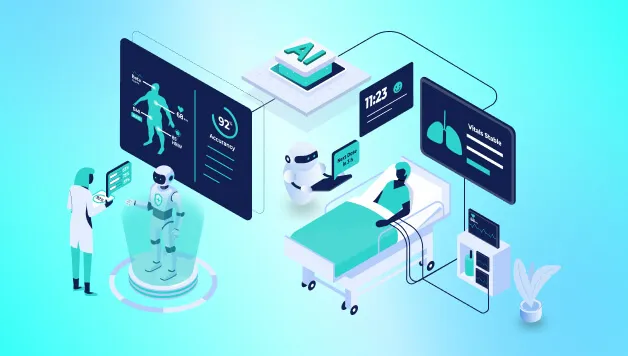
AI innovations transforming healthcare are reshaping the medical industry faster than ever before. From early disease detection and robotic surgeries to virtual healthcare assistants and predictive analytics, artificial intelligence is becoming a central part of modern medicine.
Hospitals, pharmaceutical companies, and healthcare providers are increasingly relying on AI-driven systems to improve patient outcomes, reduce operational costs, and speed up medical research. In 2026, the healthcare industry is expected to see even more rapid adoption of advanced AI technologies that can assist doctors, automate repetitive tasks, and personalize treatments.
The rise of AI in healthcare is not only improving efficiency but also helping solve long-standing challenges such as limited medical staff, delayed diagnoses, and unequal access to healthcare services. As global demand for healthcare continues to increase, AI innovations transforming healthcare are becoming essential for the future of medicine.
Why AI Is Becoming Essential in Healthcare
Healthcare systems worldwide are under pressure due to aging populations, rising treatment costs, and increasing demand for medical services. Artificial intelligence offers practical solutions by analyzing vast amounts of medical data faster and more accurately than traditional systems.
According to the World Health Organization, digital health technologies are expected to play a major role in strengthening healthcare systems and improving access to care globally.
AI-powered tools can now identify diseases from medical scans, predict patient risks, automate administrative work, and assist surgeons during complex procedures. These advancements are helping doctors focus more on patient care rather than paperwork and repetitive processes.
The following innovations highlight how AI innovations transforming healthcare are changing the medical industry in 2026.
1. AI-Powered Disease Detection and Diagnostics
One of the biggest breakthroughs in healthcare AI is advanced disease detection. AI systems can analyze X-rays, MRIs, CT scans, and pathology reports with incredible accuracy.
Machine learning algorithms are now being used to identify early signs of cancer, heart disease, neurological disorders, and lung conditions before symptoms become severe. In many cases, AI-assisted diagnostics can detect abnormalities faster than traditional methods.
Healthcare organizations are increasingly partnering with companies like IBM Watson Health and Google Health to develop AI-powered medical imaging systems.
AI Diagnostic Benefits
| Healthcare Area | AI Impact |
|---|---|
| Cancer detection | Earlier diagnosis and improved survival rates |
| Medical imaging | Faster scan analysis |
| Pathology testing | Reduced diagnostic errors |
| Emergency care | Faster patient prioritization |
These advancements are making AI innovations transforming healthcare one of the most important technological developments in modern medicine.
2. Personalized Treatment Through Predictive Analytics
AI is helping doctors create highly personalized treatment plans based on patient history, genetics, lifestyle, and medical conditions.
Predictive analytics systems can analyze millions of medical records to identify patterns and recommend treatments tailored to individual patients. This is particularly useful in oncology, cardiology, and chronic disease management.
Instead of relying only on generalized treatment methods, healthcare providers can now use AI to determine which therapies are most likely to succeed for specific patients.
Organizations such as Mayo Clinic are actively researching how predictive AI can improve personalized medicine and reduce treatment risks.
This shift toward individualized healthcare is one of the most promising examples of AI innovations transforming healthcare in 2026.
3. AI-Driven Robotic Surgery Systems
Robotic-assisted surgery has evolved significantly over the past decade, and AI is now making these systems even more precise and effective.
AI-powered robotic systems help surgeons perform delicate procedures with greater accuracy, reduced invasiveness, and shorter recovery times for patients. These systems can analyze surgical data in real time and assist with movement precision during operations.
Robotic surgeries are increasingly being used in:
- Heart surgery
- Orthopedic procedures
- Neurosurgery
- Minimally invasive operations
- Cancer treatment procedures
Companies like Intuitive Surgical continue expanding robotic healthcare technologies used by hospitals worldwide.
How AI Improves Robotic Surgery
| Feature | Medical Benefit |
|---|---|
| Motion precision | Reduced surgical errors |
| Real-time analytics | Better surgical decisions |
| Smaller incisions | Faster recovery |
| AI-assisted imaging | Improved accuracy |
As surgical technology continues advancing, AI innovations transforming healthcare are making operations safer and more efficient.
4. Virtual Healthcare Assistants and AI Chatbots
AI-powered virtual assistants are becoming increasingly common in healthcare systems. These tools help patients schedule appointments, receive medication reminders, monitor symptoms, and access medical guidance remotely.
Healthcare chatbots can answer common medical questions and direct patients toward appropriate healthcare services without requiring immediate human intervention.
This technology is especially valuable in regions facing doctor shortages or limited healthcare access.
According to Johns Hopkins Medicine, AI-driven patient engagement tools are helping improve communication between healthcare providers and patients.
Virtual healthcare assistants are also reducing administrative workloads for hospitals by automating repetitive tasks.
Common uses include:
- Appointment scheduling
- Prescription reminders
- Symptom monitoring
- Mental health support
- Patient follow-up communication
The rapid adoption of digital assistants highlights how AI innovations transforming healthcare are improving both accessibility and efficiency.
The Growing Role of AI in Medical Research
Artificial intelligence is also accelerating scientific research and pharmaceutical development. Drug discovery traditionally takes years, but AI can significantly reduce development timelines by quickly analyzing chemical compounds and predicting outcomes.
Researchers now use AI to:
- Identify potential drug candidates
- Analyze clinical trial data
- Predict treatment effectiveness
- Study genetic diseases
- Improve vaccine development
Companies such as Pfizer and other pharmaceutical leaders are increasingly using AI systems to streamline research processes.
This technological progress became especially visible during recent global health crises, where AI tools helped researchers process vast amounts of medical data rapidly.
The integration of AI into medical research demonstrates another important way AI innovations transforming healthcare are reshaping the future of medicine.
5. AI in Hospital Operations and Administration
Hospitals are using AI not only for patient care but also to improve internal operations. Administrative inefficiencies have long been a major issue in healthcare systems worldwide.
AI-powered management systems are helping hospitals optimize staffing, reduce waiting times, manage inventory, and improve patient flow.
Areas Where AI Improves Hospital Efficiency
| Operational Area | AI Advantage |
|---|---|
| Staff scheduling | Better workforce management |
| Inventory tracking | Reduced supply shortages |
| Patient admissions | Faster processing |
| Billing systems | Fewer administrative errors |
These improvements reduce operational costs while allowing healthcare workers to spend more time on patient care.
Healthcare providers are increasingly investing in automation technologies to handle growing patient demands more effectively.
The use of operational AI is becoming another major reason why AI innovations transforming healthcare are gaining global attention.
6. AI-Powered Remote Monitoring and Wearable Technology
Remote healthcare monitoring has become one of the fastest-growing medical technology sectors. AI-powered wearable devices can now track heart rate, oxygen levels, sleep patterns, blood pressure, and glucose levels in real time.
These devices help doctors monitor patients remotely and identify health risks before emergencies occur.
Wearable AI technologies are especially valuable for patients with chronic illnesses such as diabetes, heart disease, and respiratory disorders.
Popular wearable healthcare innovations include:
- Smartwatches with health monitoring
- Continuous glucose monitoring devices
- AI fitness trackers
- Remote cardiac monitoring systems
- Sleep analysis devices
This technology is improving preventive healthcare while reducing unnecessary hospital visits.
The expansion of wearable technologies further strengthens the importance of AI innovations transforming healthcare in modern medicine.
Challenges Facing AI in Healthcare
Despite the rapid growth of AI healthcare technologies, several challenges remain.
Key Challenges
- Data privacy concerns
- Cybersecurity risks
- Regulatory approval processes
- Algorithm bias issues
- High implementation costs
Healthcare providers must ensure that AI systems remain transparent, accurate, and ethically managed.
Governments and regulatory agencies worldwide are also developing new frameworks to oversee AI-based medical systems and protect patient data.
Even with these concerns, experts believe the long-term benefits of AI adoption will outweigh the challenges as technologies continue improving.
Future Outlook for Healthcare AI
The future of AI in healthcare looks increasingly promising. Experts predict that AI will become deeply integrated into nearly every aspect of medicine over the next decade.
Future developments may include:
- Fully AI-assisted hospitals
- Real-time disease prediction systems
- Advanced robotic caregivers
- Faster vaccine development
- Personalized genomic treatments
As healthcare systems continue evolving, AI innovations transforming healthcare are expected to improve patient outcomes while making medical services more efficient and accessible worldwide.
The combination of machine learning, robotics, predictive analytics, and wearable technology is creating a smarter healthcare ecosystem capable of addressing some of the world’s biggest medical challenges.
Conclusion
AI innovations transforming healthcare are redefining the future of medicine in 2026. From disease detection and robotic surgery to remote monitoring and personalized treatments, artificial intelligence is helping healthcare providers deliver faster, safer, and more effective care.
While challenges related to ethics, privacy, and regulation still exist, the benefits of AI-driven healthcare solutions continue to grow rapidly. Hospitals, researchers, and technology companies are investing heavily in systems that can improve patient outcomes and strengthen healthcare infrastructure worldwide.
As artificial intelligence becomes more advanced, its influence on medicine will likely continue expanding across every area of healthcare.
For more technology, healthcare, and AI industry insights, visit The News Ink for detailed global coverage and expert analysis.