AI Finds Hidden Sperm, Offering New Hope for Infertile Men
A groundbreaking medical innovation is changing the future of fertility treatment as AI finds hidden sperm in men previously diagnosed as infertile. This new technique is offering hope to couples who were once told they had no chance of having biological children.
Developed by researchers at Columbia University Fertility Center, the system uses artificial intelligence to detect extremely rare sperm cells in men with azoospermia, a condition where no sperm is found in semen samples. The technology is already leading to successful pregnancies, marking a major shift in reproductive medicine.
How AI finds hidden sperm in complex samples
The new method, known as the Star system, works by scanning semen or tissue samples at high speed. Unlike traditional techniques, where technicians manually search for sperm under a microscope, this system uses machine learning to identify even a single sperm cell in a complex sample.
Doctors say the challenge has always been like finding a needle in a haystack. In many azoospermic cases, sperm may exist but in such low numbers that they are nearly impossible to detect using standard methods.
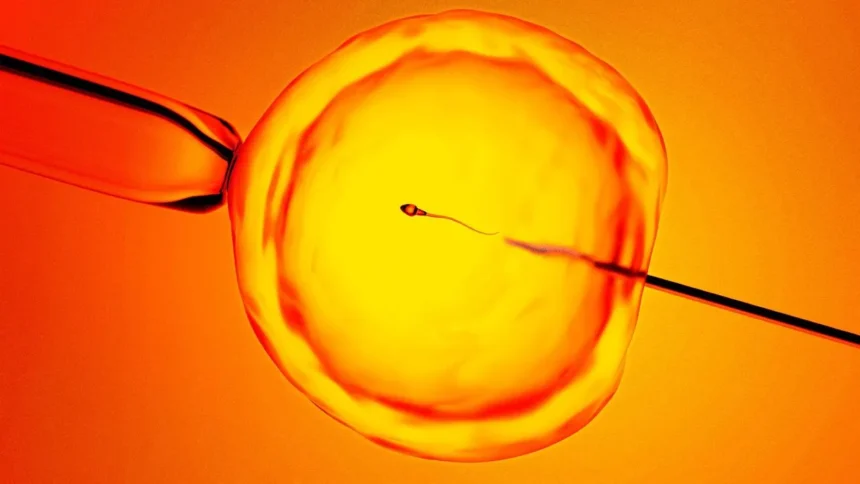
The AI system processes hundreds of images per second, distinguishing sperm cells from debris and other biological material. Once detected, a robotic mechanism isolates the sperm within milliseconds, making it usable for fertility procedures like IVF.
Real life success stories changing lives
The impact of this innovation is already being felt by patients. One couple, after years of failed attempts, finally conceived after AI finds hidden sperm in the male partner’s sample.
The case involved a patient with Klinefelter syndrome, a genetic disorder that often results in little to no sperm production. After hormone therapy and surgical extraction, the AI system successfully located viable sperm cells.
Out of the isolated sperm, one embryo developed successfully, leading to a pregnancy. For many couples, even a single viable embryo can mean everything, especially after years of unsuccessful treatments.
Success rates and medical potential
Early data from the fertility center shows that AI finds hidden sperm in nearly 30% of cases where men were previously told they had none. This is a significant improvement compared to traditional methods.
In controlled comparisons, the AI system has been shown to detect up to 40 times more sperm than manual searches conducted by trained specialists. This dramatic increase in detection capability could redefine how male infertility is diagnosed and treated.
Here is a quick comparison of traditional versus AI assisted detection:
| Method | Detection Capability |
|---|---|
| Manual search | Limited and time consuming |
| AI system | Up to 40 times more effective |
| Detection speed | Milliseconds per scan |
| Sensitivity | Near 100% accuracy |
These results suggest that many men previously diagnosed as infertile may still have a biological pathway to fatherhood.
Why this matters for global fertility trends
Infertility is a growing global concern, affecting roughly one in six people at some point in their lives. Male infertility contributes to nearly half of these cases, making innovations like this particularly significant.
Conditions such as azoospermia impact about 1% of men worldwide. For these individuals, the idea that AI finds hidden sperm offers a completely new perspective, shifting diagnosis from final to potentially reversible.
Experts believe this could reduce reliance on donor sperm and expand options for couples seeking biological children. To better understand fertility science and global health trends, you can explore resources from World Health Organization, which provides detailed insights into reproductive health worldwide.
Challenges and ethical considerations
Despite the excitement, experts caution that more research is needed before the technology becomes widely available. Clinical trials on a larger scale will help determine long term success rates and safety.
There are also concerns about cost, accessibility, and ethical use of artificial intelligence in healthcare. Advanced fertility treatments are often expensive, and there is a risk that such innovations may not be equally accessible to all patients.
Additionally, handling sensitive medical data raises questions about privacy and regulation. Ensuring that patient information is protected will be critical as AI becomes more integrated into healthcare systems.
A turning point in reproductive medicine
The development of this technology marks a significant step forward in reproductive science. By enabling doctors to detect what was previously invisible, AI finds hidden sperm and redefines the boundaries of male fertility treatment.
For couples who have spent years facing disappointment, this innovation represents more than just a scientific breakthrough. It offers a realistic chance at parenthood where none existed before.
As research continues and the technology improves, it could become a standard part of fertility care, helping thousands of families achieve what once seemed impossible.
For more health, science, and breakthrough stories, you can explore in depth coverage on The News Ink, where complex topics are explained in a clear and engaging way.