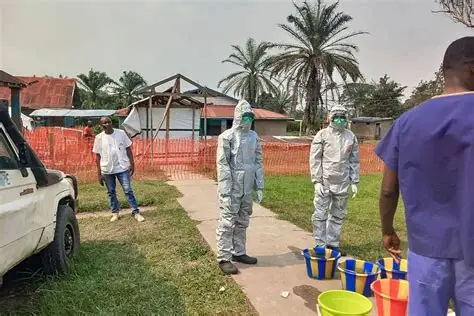
The Ebola spread in DR Congo has reached a critical stage, with health experts warning that the outbreak is expanding faster than response efforts can keep pace. Just weeks after the outbreak was officially declared, suspected infections have already crossed the 1,000 mark, prompting urgent calls for stronger containment measures and international support.
Medical teams working on the ground describe the situation as one of the most concerning Ebola outbreaks in recent years. The rapid increase in cases, combined with ongoing security challenges and limited access to affected communities, has raised fears that the disease could continue spreading across borders if immediate action is not taken.
Key Highlights
- More than 1,000 suspected Ebola cases reported in DR Congo.
- At least 246 deaths linked to the outbreak.
- Neighboring Uganda has confirmed infections and a fatality.
- Health workers warn the true scale may be larger due to testing delays.
- Conflict and transportation restrictions are slowing response efforts.
- International health agencies are increasing monitoring and containment measures.
Ebola Spread in DR Congo Accelerates Rapidly
Health officials say the Ebola spread in DR Congo has accelerated at an alarming pace since the outbreak was declared earlier this month. Medical teams are reporting new suspected cases daily, creating growing pressure on already stretched healthcare systems.
The eastern province of Ituri remains the center of the outbreak, accounting for the majority of reported infections. Communities across the region are facing increasing concern as authorities work to trace contacts, isolate patients, and prevent further transmission.
Experts note that Ebola outbreaks are particularly dangerous when early detection and rapid isolation measures are delayed. In the current situation, the speed of new infections has outpaced testing capacity in several affected areas.
Health Experts Warn of Serious Challenges
Doctors and humanitarian organizations have expressed concern that the outbreak may be significantly larger than official figures suggest.
One major issue is the backlog of laboratory testing. Hundreds of samples reportedly remain unprocessed, making it difficult for health authorities to determine the full scale of the crisis. Without accurate data, response teams face challenges in allocating resources effectively.
Healthcare workers also continue to face logistical barriers while trying to reach remote communities. Limited infrastructure, transportation difficulties, and security concerns have complicated efforts to provide medical assistance where it is needed most.
Major Obstacles Facing Response Teams
- Delays in laboratory testing.
- Limited access to remote communities.
- Security concerns caused by regional instability.
- Shortages of medical resources.
- Difficulties tracking potential contacts.
- Border and transportation restrictions.
These challenges have slowed containment efforts during a period when rapid action is critical.
Rising Death Toll Raises Concerns
The growing death toll has intensified concerns among international health organizations. According to available reports, at least 246 people have died during the outbreak.
Ebola is a severe viral disease that can spread through direct contact with infected bodily fluids. Symptoms often include:
- Fever
- Severe weakness
- Headaches
- Muscle pain
- Vomiting
- Diarrhea
- Internal and external bleeding in severe cases
Early diagnosis and supportive medical care can improve survival rates, making timely detection a crucial component of outbreak management.
Uganda Reports Confirmed Cases
The outbreak is no longer confined to DR Congo. Health authorities in neighboring Uganda have already confirmed multiple Ebola infections and reported at least one death.
Cross-border movement remains a significant concern because communities in the region frequently travel between countries for trade, work, and family connections. Public health officials are therefore increasing surveillance at border crossings and transportation hubs.
The emergence of cases outside DR Congo highlights the importance of coordinated regional action to prevent wider transmission.
Conflict Complicates Containment Efforts
One of the biggest challenges facing healthcare workers is the ongoing Ebola spread in DR Congo.
Armed conflict and security concerns have affected humanitarian operations for years in the region. Medical teams often face difficulties reaching affected communities safely, while some residents may hesitate to seek treatment because of security fears.
The combination of a fast-moving disease outbreak and an unstable security environment creates particularly difficult conditions for health authorities attempting to contain the virus.
Impact of Conflict on Healthcare Response
- Delayed emergency medical deployments.
- Reduced access to affected villages.
- Challenges transporting medical supplies.
- Difficulty conducting contact tracing.
- Increased risks for healthcare workers.
These factors can significantly slow efforts to interrupt chains of transmission.
International Health Agencies Intensify Response
Global health organizations are working closely with local authorities to strengthen containment measures.
Emergency response efforts include:
- Expanding testing capacity.
- Increasing surveillance activities.
- Deploying additional healthcare workers.
- Improving public awareness campaigns.
- Supporting treatment facilities.
- Enhancing border monitoring.
Public health experts stress that rapid coordination between national governments, humanitarian organizations, and local communities will be essential to controlling the outbreak.
Why the Outbreak Is Drawing Global Attention
The Ebola spread in DR Congo is attracting international concern because of the unusually rapid increase in suspected cases shortly after the outbreak declaration.
Historically, early intervention plays a major role in limiting Ebola outbreaks. When infections rise quickly before containment systems are fully established, the risk of wider transmission increases substantially.
Health officials are particularly focused on preventing additional cross-border spread while improving testing and treatment access within affected regions.
Importance of Community Awareness
Public education remains one of the most effective tools for controlling Ebola outbreaks.
Health authorities continue encouraging residents to:
- Report symptoms immediately.
- Avoid direct contact with infected individuals.
- Follow hygiene recommendations.
- Cooperate with contact tracing teams.
- Seek medical care as early as possible.
Community engagement helps health workers identify cases more quickly and reduce opportunities for further transmission.
Outlook for the Coming Weeks
The coming weeks will likely be critical in determining whether the outbreak can be brought under control.
While response efforts are expanding, experts caution that the situation remains highly uncertain due to testing delays, security challenges, and the continued emergence of new suspected cases. The ability of healthcare teams to rapidly identify infections and isolate patients will play a major role in shaping the outbreak’s trajectory.
For now, the Ebola spread in DR Congo remains a major public health concern, with authorities racing to strengthen containment measures before the outbreak grows even larger.
MORE INFO ON THE NEWS INK HEALTH.