A breast cancer chemotherapy DNA test Prosigna 2026 study has produced results that could fundamentally change how millions of breast cancer patients around the world are treated — offering the prospect of sparing more than two-thirds of patients the debilitating side effects of chemotherapy without compromising their survival prospects. The landmark international trial, led by University College London, used a gene test to identify which patients were genuinely likely to benefit from chemotherapy and which could be safely and effectively treated with hormone therapy alone.
The findings — presented at the world’s largest cancer conference, the American Society of Clinical Oncology annual meeting in Chicago on Saturday — show a five-year survival rate of 93.7% among patients who avoided chemotherapy and received hormone therapy instead. This compares with a 94.9% survival rate among those who received chemotherapy as part of their care — a difference small enough to suggest that the vast majority of patients who skipped chemotherapy did not pay a meaningful survival price for doing so.
The implications are enormous. More than 5,000 NHS patients a year could avoid chemotherapy as a direct result of the trial, UCL said — and across the international healthcare systems involved in the study, the potential to spare millions of patients from chemotherapy’s serious side effects could transform the experience of breast cancer treatment worldwide.
Breast Cancer Chemotherapy DNA Test Prosigna 2026: How the Test Works
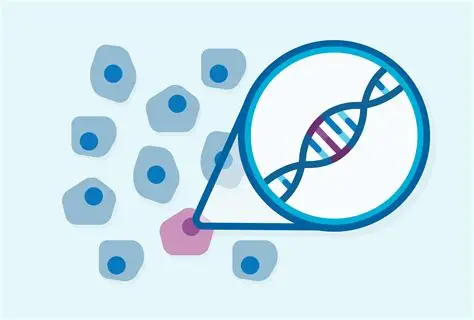
The breast cancer chemotherapy DNA test Prosigna 2026 trial centred on a gene test called Prosigna — a diagnostic tool that measures the activity of 50 genes involved in breast cancer growth to calculate an individual patient’s risk of the disease returning after initial treatment.
Prosigna produces a numerical score that places patients into risk categories — those at low risk of cancer recurrence and those at higher risk. The central question the trial addressed was whether patients who received a low Prosigna score — indicating a low likelihood of cancer returning — could safely forgo chemotherapy and achieve comparable survival outcomes through less toxic treatment approaches.
The answer the trial produced was a clear and clinically significant yes. Two-thirds of the more than 4,000 participants received low Prosigna scores and were not treated with chemotherapy. Their five-year survival rate of 93.7% — compared with 94.9% for the chemotherapy-receiving group — demonstrated that the test successfully identified patients for whom chemotherapy provided little additional benefit.
How the Prosigna test works:
- Measures the activity of 50 genes specifically involved in breast cancer growth
- Calculates a numerical risk score indicating the likelihood of cancer returning
- Low scorers — two-thirds of the trial group — were identified as unlikely to benefit from chemotherapy
- High scorers were identified as more likely to benefit from chemotherapy as an additional treatment
- The test enables personalised treatment decisions based on each patient’s specific tumour biology
- The test is already available and in clinical use — the trial validates its application at scale
- The approach represents the cutting edge of personalised oncology — treating the specific cancer rather than the category
The principle underlying Prosigna reflects a broader shift in cancer treatment philosophy — away from standard protocols applied to all patients with a given diagnosis and toward personalised treatment plans built around the specific biological characteristics of each individual patient’s cancer. Not all breast cancers are the same, and not all patients respond to the same treatments in the same ways. Prosigna provides a tool to distinguish between them with clinical precision.
Breast Cancer Chemotherapy DNA Test Prosigna 2026: The Trial in Detail
The breast cancer chemotherapy DNA test Prosigna 2026 trial was international in scope and substantial in scale — reflecting the rigour required to produce findings that could justify changing clinical practice for millions of patients worldwide.
The study, led by UCL, involved more than 4,000 newly diagnosed breast cancer patients over the age of 40 across six countries — the United Kingdom, Norway, Sweden, Australia, New Zealand, and Thailand. The geographic spread of the trial is significant — it means the findings reflect diverse patient populations, healthcare systems, and clinical environments, strengthening the case for their broad applicability.
The trial focused specifically on patients with breast cancer that had spread to nearby lymph nodes — a group for whom chemotherapy is regularly offered as part of standard care. This is also precisely the group for which UCL noted clinicians have expressed concern that chemotherapy provides limited benefit for the most common type of breast cancer.
The trial’s key parameters:
- Led by University College London — the UCL Cancer Institute
- More than 4,000 newly diagnosed breast cancer patients participated
- Patients were over the age of 40 — an important demographic qualifier
- Six countries participated: UK, Norway, Sweden, Australia, New Zealand, and Thailand
- The trial focused on patients with early-stage breast cancer that had spread to nearby lymph nodes
- Participants with low Prosigna scores — two-thirds of the group — did not receive chemotherapy
- Those patients received hormone therapy instead — and in some cases radiotherapy
- The five-year survival rate for the non-chemotherapy group was 93.7%
- The five-year survival rate for those who received chemotherapy was 94.9%
- The 1.2 percentage point difference was considered clinically acceptable — not justifying the risks of chemotherapy for low-score patients
Professor Rob Stein — the trial’s chief investigator and professor of breast oncology at the UCL Cancer Institute — described the findings as “an important and significant step toward more personalised treatment” — language that places the results within the broader movement toward precision oncology that is transforming cancer care across multiple tumour types.
Breast Cancer Chemotherapy DNA Test Prosigna 2026: The Human Cost of Chemotherapy
The breast cancer chemotherapy DNA test Prosigna 2026 findings carry particular significance when understood in the context of what chemotherapy actually involves for patients who receive it — a treatment that can be as physically and psychologically demanding as the disease itself.
Chemotherapy can cause fatigue — sometimes debilitating — nausea, hair loss, a significantly weakened immune system that increases vulnerability to infections, and fertility issues that can permanently affect patients’ reproductive futures. For many patients, particularly those of working age or with young children, the side effects of chemotherapy represent a sustained and serious disruption to every dimension of their lives over months of treatment.
When a patient receives chemotherapy that does not ultimately improve their survival prospects — as the Prosigna trial suggests is the case for two-thirds of patients currently receiving it — they are experiencing all of those side effects for no clinical gain. The ability to identify those patients in advance and spare them from unnecessary treatment is not merely a scientific achievement — it is a profound act of care for individual human beings.
The side effects of chemotherapy that patients could avoid:
- Fatigue — often severe and persistent throughout treatment and for months afterward
- Nausea — frequently requiring anti-nausea medication and significantly affecting quality of life
- Hair loss — a visible and psychologically significant effect that affects many patients’ self-image
- Weakened immune system — increasing susceptibility to infections during treatment
- Fertility issues — potentially permanent, affecting patients’ reproductive options
- Emotional and psychological impact — the cumulative effect of managing all of the above simultaneously
- Financial and employment impact — the difficulty of maintaining work and normal life during treatment
- The potential long-term health consequences of chemotherapy itself
For the two-thirds of patients who received low Prosigna scores in this trial, avoiding these consequences while maintaining comparable survival rates represents an outcome of immense personal significance — one that goes far beyond statistical survival rates into the quality and experience of life during and after treatment.
Breast Cancer Chemotherapy DNA Test Prosigna 2026: One Patient’s Story
The breast cancer chemotherapy DNA test Prosigna 2026 findings take on their most human dimension in the story of Karen Bonham, 64, from Cardiff — a trial participant who avoided chemotherapy thanks to her low Prosigna score and who has instead been treated with eight years of radiotherapy and hormone therapy.
Bonham’s response to the trial results captured the emotional weight of what avoiding chemotherapy means for those who are spared it. She described the findings as “an immense relief” that feels “like Christmas” — language that conveys both the joy of a positive outcome and the underlying fear against which that outcome is measured.
“Cancer diagnosis and treatment can be shocking,” she said. “It certainly propels you into a world of uncertainty. Life priorities realign — you simply want to survive.”
That final phrase — “you simply want to survive” — is perhaps the most important thing to understand about the significance of this research. Cancer patients are not primarily interested in treatment protocols, gene expression scores, or statistical survival rates. They want to live. They want to avoid suffering. They want to spend their time and energy on the people and things that matter to them rather than on managing the side effects of treatments that may not even help them.
Karen Bonham’s story — key details:
- Age 64, from Cardiff — a participant in the international Prosigna trial
- Received a low Prosigna score — identifying her as unlikely to benefit from chemotherapy
- Has been treated with eight years of radiotherapy and hormone therapy instead
- Described the trial results as “an immense relief” and like “Christmas”
- Spoke about the shock and uncertainty of cancer diagnosis and treatment
- Her experience illustrates the human significance of what the research means for individual patients
- Her eight-year treatment with radiotherapy and hormone therapy demonstrates the long-term nature of breast cancer management
Bonham’s eight years of treatment — even without chemotherapy — underlines that avoiding one toxic treatment does not mean avoiding treatment altogether. Hormone therapy and radiotherapy carry their own demands and side effects. But for the millions of patients who could potentially benefit from the Prosigna approach, those demands are substantially less severe than those imposed by chemotherapy.
Breast Cancer Chemotherapy DNA Test Prosigna 2026: What Comes Next
The breast cancer chemotherapy DNA test Prosigna 2026 findings will now go through the process of incorporation into clinical guidelines — a pathway that, if successful, would make Prosigna testing a standard part of breast cancer treatment decision-making across the NHS and potentially in healthcare systems worldwide.
UCL’s statement that more than 5,000 NHS patients a year could avoid chemotherapy as a direct result of the trial provides a concrete estimate of the immediate potential impact in the United Kingdom alone. Across the six countries that participated in the international study — and the broader global breast cancer patient population — the potential scale of impact is far larger.
What comes next for the research:
- Findings presented at the American Society of Clinical Oncology annual meeting in Chicago on Saturday
- The ASCO meeting is the world’s largest cancer conference — giving the findings maximum scientific visibility
- The results will now be reviewed by clinical guideline bodies in the UK and internationally
- NHS England and equivalent bodies in participating countries will assess the case for incorporating Prosigna into standard treatment protocols
- UCL estimates more than 5,000 NHS patients a year could avoid chemotherapy immediately
- International implementation across the six trial countries would expand that number significantly
- Further follow-up data from the trial will strengthen the evidence base over time
- The findings represent a step toward personalised oncology — treating the specific patient rather than the category
Final Word on Breast Cancer Chemotherapy DNA Test Prosigna 2026
The breast cancer chemotherapy DNA test Prosigna 2026 findings represent one of the most significant advances in breast cancer treatment in years — not because they have found a new way to kill cancer cells, but because they have found a way to spare millions of patients from a treatment that was not helping them while they thought it was.
Two-thirds of breast cancer patients could safely avoid chemotherapy. A five-year survival rate of 93.7% — achieved without chemotherapy’s devastating side effects — compared with 94.9% for those who received it. The science is clear. The human benefit is enormous.
Karen Bonham said it feels like Christmas. For every patient who avoids the hair loss, the nausea, the exhaustion, and the fear that comes with chemotherapy they did not need — it will feel like something more lasting than that.
It will feel like being given back time. And that is everything.
MORE YOU GET ON THE NEWS INK HEALTH.