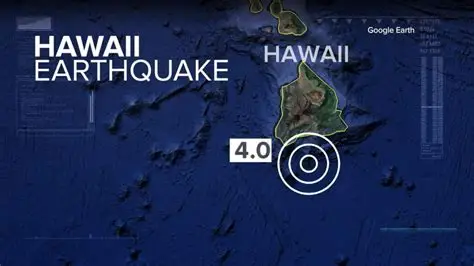
A powerful Hawaii earthquake measuring magnitude 6.0 struck Hawaiʻi Island late Friday night, shaking communities across the state and triggering landslides, road closures, and emergency inspections.
The earthquake hit the South Kona region and was strong enough to be felt on multiple islands, including Kauaʻi and Niʻihau.
Officials confirmed that although the quake caused some infrastructure damage and road blockages, no tsunami was generated.
Hawaii Earthquake Hits South Kona Region
The Hawaii earthquake occurred at approximately 9:46 p.m. local time on Friday, according to the United States Geological Survey.
Scientists initially recorded the earthquake as a magnitude 5.9 event before upgrading it to 6.0.
The quake’s epicenter was located about four miles east-southeast of the Hōnaunau-Nāpōʻopoʻo area on the western flank of Maunaloa.
Officials reported the earthquake struck at a depth of approximately 14 miles underground.
Strong Shaking Felt Across Hawaii
Residents throughout the islands reported feeling the powerful Hawaii earthquake.
People from several locations submitted reports to the USGS describing strong shaking that lasted several seconds.
The earthquake was reportedly felt in:
- Hawaiʻi Island
- Maui
- Oʻahu
- Kauaʻi
- Niʻihau
Authorities said the west side of Hawaiʻi Island experienced strong to very strong shaking capable of causing moderate damage to infrastructure and utility lines.
Aftershocks Follow the Hawaii Earthquake
Following the initial Hawaii earthquake, multiple aftershocks occurred throughout the evening.
A magnitude 3.2 aftershock struck only six minutes after the main quake.
Several smaller aftershocks continued afterward, although most measured below magnitude 3.
Scientists warned that additional aftershocks may continue in the coming days.
However, experts believe future tremors are unlikely to become large enough to cause serious damage or widespread concern.
Landslides Cause Road Closures
The Hawaii earthquake triggered several landslides that blocked important roadways across Hawaiʻi Island.
Crews from the Hawaii Department of Transportation worked overnight to clear debris from highways and roads.
Officials temporarily closed:
- Highway 11 between Captain Cook and Ocean View
- Nāpōʻopoʻo Road in Captain Cook
Emergency crews successfully removed debris and reopened both roads by Saturday morning.
Authorities also announced bridge inspections across the island as part of standard earthquake safety procedures.
Kona Hospital Reports Minor Damage
Local officials confirmed the Hawaii earthquake caused minor damage to Kona Hospital.
Kimo Alameda stated that medical services continue operating normally despite the damage.
Hospital officials reported:
- No interruption to patient care
- No major structural damage
- Continued operation of emergency services
Emergency management teams continue monitoring public facilities across the island.
Officials Say Quake Was Not Volcanic
Experts from the Hawaiian Volcano Observatory said the Hawaii earthquake does not appear directly connected to volcanic activity.
Scientists analyzed:
- The earthquake’s depth
- Seismic wave patterns
- The location near Maunaloa
Based on current evidence, researchers believe the earthquake resulted from tectonic movement rather than volcanic activity.
No Tsunami Generated After Hawaii Earthquake
The Pacific Tsunami Warning Center confirmed that the Hawaii earthquake did not generate a tsunami threat.
Officials quickly reassured residents that no evacuation orders were necessary.
Although Hawaii regularly monitors earthquakes closely due to tsunami risks, experts determined this event did not create dangerous ocean activity.
Emergency Officials Ask Residents to Report Damage
Authorities urged residents to report any damage caused by the Hawaii earthquake to local emergency management agencies.
The County of Hawaiʻi Civil Defense Agency asked people to submit reports through its website or contact emergency officials directly.
Residents were encouraged to report:
- Cracked roads
- Structural damage
- Fallen debris
- Utility outages
- Water or gas leaks
Emergency officials continue surveying affected areas for additional hazards.
Hawaii Earthquake Raises Safety Concerns
The latest Hawaii earthquake highlights the region’s vulnerability to seismic activity.
Hawaiʻi Island frequently experiences earthquakes because of its location above active volcanic and tectonic zones.
Although many earthquakes remain minor, stronger tremors can trigger:
- Landslides
- Road damage
- Building cracks
- Utility disruptions
Experts encourage residents to maintain emergency preparedness kits and review earthquake safety plans.
Key Facts About the Hawaii Earthquake
Important Details
- The earthquake measured magnitude 6.0
- It struck South Kona on Hawaiʻi Island
- The quake happened Friday at 9:46 p.m. local time
- Residents across multiple islands felt the shaking
- Landslides blocked roads and highways
- Kona Hospital reported minor damage
- No tsunami was generated
- Several aftershocks followed the main quake
Scientists Continue Monitoring Aftershocks
Seismologists continue tracking aftershock activity following the Hawaii earthquake.
Although experts expect smaller tremors to continue temporarily, officials do not currently anticipate another major earthquake in the immediate future.
Authorities also continue infrastructure inspections throughout Hawaiʻi Island to ensure public safety.
Final Thoughts
The powerful Hawaii earthquake that struck Hawaiʻi Island caused widespread shaking, road closures, and minor infrastructure damage across the region.
While officials confirmed there was no tsunami threat and no major casualties reported, the quake served as another reminder of Hawaii’s active geological environment.
Emergency teams remain on alert as aftershocks continue and inspections move forward across affected communities.
- Read more breaking world news at The News Ink TOP STORIES.
- Explore our latest natural disaster coverage
- Check more earthquake and weather updates