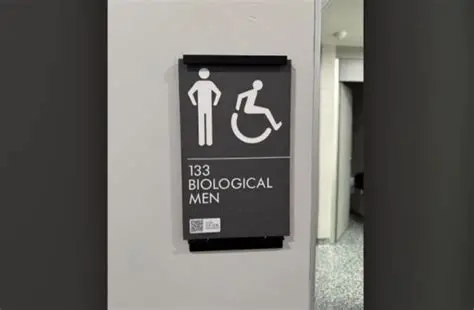
New biological sex guidance published by the equality watchdog has confirmed that single-sex spaces such as toilets and changing rooms must be used according to biological sex under UK equality law.
The updated biological sex guidance follows last year’s landmark Supreme Court ruling, which stated that the legal definition of a woman under the Equality Act is based on biological sex rather than gender identity.
Under the new biological sex guidance, a transgender woman who is biologically male should not use female-only toilets or changing facilities. Instead, organisations are encouraged to provide gender-neutral or third-space facilities where possible.
The guidance aims to help businesses, public services, and organisations apply equality law clearly and consistently across the country.
What the Biological Sex Guidance Says
The new biological sex guidance was issued by the Equality and Human Rights Commission and approved by ministers.
It explains how organisations should manage single-sex services and spaces in line with the Equality Act.
According to the biological sex guidance:
- Female-only spaces should be used by biological females
- Male-only spaces should be used by biological males
- Transgender individuals should be offered alternative facilities where possible
- Gender-neutral facilities may help organisations remain inclusive
- Leaving trans people without any access could be discriminatory
The guidance applies to many public and private settings across the UK.
Biological Sex Guidance Applies to Many Public Spaces
The new biological sex guidance covers a wide range of locations and services.
Places affected by the biological sex guidance include:
- Shopping centres
- Gyms and fitness clubs
- Hospitals
- Restaurants
- Schools and colleges
- Leisure centres
- Public toilets
- Workplace changing rooms
Organisations are expected to review their policies and facilities to ensure they comply with the updated interpretation of equality law.
Supreme Court Ruling Led to Biological Sex Guidance
The latest biological sex guidance follows a major Supreme Court judgment delivered last year.
The court ruled that the definition of “woman” in the Equality Act should be interpreted based on biological sex.
That decision triggered significant debate across political, legal, and social groups throughout the UK.
Supporters of the ruling argued it provides legal clarity for single-sex spaces and protections for women’s services.
Critics raised concerns about how the guidance could affect transgender people and their access to public facilities.
Government Supports New Biological Sex Guidance
Bridget Phillipson said the government’s priority is ensuring organisations understand how to apply the law fairly.
She stated that the new biological sex guidance is intended to help people live free from discrimination and harassment while giving organisations practical instructions.
Government ministers approved the updated code of practice before its publication.
The guidance is expected to influence policies across both public institutions and private businesses.
Gender-Neutral Facilities Recommended
The biological sex guidance also encourages organisations to consider gender-neutral facilities where practical.
The Equality and Human Rights Commission suggested that self-contained spaces with lockable doors and floor-to-ceiling walls may provide a suitable alternative.
Suggested gender-neutral features include:
- Private lockable cubicles
- Individual wash basins
- Separate self-contained changing spaces
- Unisex toilet facilities
- Accessible facilities for all users
The watchdog said organisations may allow transgender people to use disabled toilets or other private facilities if appropriate.
Businesses May Need Policy Changes
Many organisations may now need to update internal policies following the release of the biological sex guidance.
Employers and public service providers could face pressure to:
- Review signage for toilets and changing rooms
- Introduce new gender-neutral facilities
- Train staff on equality law requirements
- Update workplace inclusion policies
- Communicate changes clearly to users
Legal experts say businesses should carefully assess how the guidance applies to their specific environments.
Debate Continues Over Biological Sex Guidance
The publication of the biological sex guidance has already sparked strong reactions from campaign groups on all sides of the debate.
Some women’s rights organisations welcomed the move, arguing it protects single-sex spaces and provides long-awaited legal certainty.
Meanwhile, transgender rights advocates expressed concern that the guidance could make trans people feel excluded from public life.
The issue remains one of the most politically sensitive topics in the UK equality debate.
What Happens Next?
The biological sex guidance is now expected to shape how organisations interpret and apply equality law in everyday settings.
Although the guidance itself is not new legislation, it carries significant legal weight because courts may consider it when handling future discrimination cases.
Businesses, schools, healthcare providers, and public institutions are likely to face growing scrutiny over how they implement the recommendations.
Legal specialists believe further challenges and public debate may continue as organisations adapt to the updated rules.
For now, the new biological sex guidance provides the clearest official direction yet on how single-sex spaces should operate under UK law following the Supreme Court ruling.