US Hotels Fear World Cup 2026 Washout as FIFA Cancellations Leave Rooms Empty Across Host Cities
The FIFA World Cup 2026 was supposed to be a once-in-a-generation economic windfall for the United States. Hotels invested heavily, cities prepared for record tourist numbers, and industry forecasts painted an optimistic picture of packed rooms, surging revenues, and a tourism boom that would ripple through local economies for years.
Instead, the reality taking shape just weeks before the opening game tells a very different story. US hotels World Cup 2026 bookings are running well below expectations in almost every host city — and the finger-pointing has already begun.
The Report That Set Off Alarm Bells
A new report from the American Hotel and Lodging Association has sent a warning signal through the US hospitality industry. The AHLA — the largest hotel association in the country, representing more than 32,000 properties and over 80% of all franchised hotels — found that bookings across World Cup host cities are dramatically short of what the industry had planned for.
The association stated clearly that current booking levels do not align with FIFA’s own claim that more than five million tickets have been sold for the tournament. The mismatch between ticket sales and hotel occupancy raises a troubling question: where are the fans planning to stay?
The AHLA warned that this gap creates a real risk that the anticipated economic boost from the World Cup may never fully materialise — with the opening game now less than three weeks away on 11 June.
How FIFA’s Block Bookings Created a False Market
At the heart of the US hotels World Cup 2026 booking crisis is a specific accusation directed at FIFA. According to the AHLA, world football’s governing body block-booked enormous quantities of hotel rooms across host cities — not because it needed them all, but as a holding strategy that distorted the entire market.
The process worked like this:
- FIFA reserved massive room blocks across multiple host cities, creating the appearance of high demand
- Hotels responded by raising prices to match what they believed was genuine tournament-level demand
- International visitors saw elevated prices and either chose not to book or looked elsewhere
- FIFA then cancelled a large proportion of those rooms, leaving hotels with artificially high pricing and a sudden vacuum of bookings
The AHLA said up to 70% of rooms reserved by FIFA in Boston, Dallas, Los Angeles, Philadelphia, and Seattle have since been cancelled. By the time those rooms came back onto the open market, the damage was done — prices were too high, and international visitors had already made other plans or abandoned travel altogether.
FIFA rejected the AHLA’s characterisation of events and stated it had followed all agreements made with hotel chains. The dispute between the two parties remains unresolved.
What Hotels Were Promised — and What They Got
The stakes for US hotels in the World Cup 2026 cycle were enormous. These were not casual investments made on a whim. Properties across all host cities spent years preparing for the tournament based on official projections that painted a picture of historic demand.
A study commissioned by FIFA and released last year predicted that the World Cup could generate remarkable results for the US economy:
- 185,000 new jobs created across the country
- $17.2 billion added to US GDP during and around the tournament period
- A sustained influx of high-spending international visitors booking longer stays
Hotels built staffing plans, made capital investments, and set pricing structures around those projections. The AHLA said these large-scale FIFA bookings directly shaped revenue forecasts and operational decisions across the industry.
Now, with those projections looking increasingly optimistic, hotels are staring at significant financial exposure — investments made for a boom that may not arrive.
Why International Fans Are Staying Away
FIFA’s block-booking and cancellation cycle is not the only factor driving the shortfall in US hotels World Cup 2026 occupancy. Several converging pressures have made international travel to the United States for the tournament less attractive than anticipated.
Key reasons visitors are staying away:
- High match ticket prices have deterred many fans who might otherwise have committed to a full trip
- Local transport costs in host cities are adding significantly to the overall expense of attending games
- Tax burdens on hospitality and tourism spending have made the cost of a World Cup trip in the US steeper than comparable tournaments in other countries
- The political backdrop in the United States has created uncertainty and discomfort among potential international visitors, particularly those travelling from countries with strained diplomatic relations with Washington
- Artificially elevated hotel pricing, set during the period of false FIFA demand, has not fully corrected downward fast enough to attract last-minute bookings
Together, these factors have suppressed the flow of overseas fans — the exact visitors hotels most needed. International travellers typically book longer stays, spend more per day, and generate the kind of sustained occupancy that justifies tournament-level investments. Their absence threatens the entire economic model the industry built around this event.
The Host Cities Feeling It Most
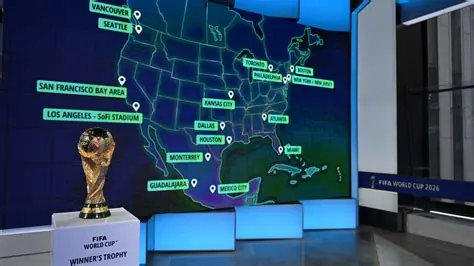
The impact is not uniform across all World Cup host cities, but the AHLA’s data points to widespread underperformance. The five cities where FIFA cancelled the highest proportion of its reserved rooms — Boston, Dallas, Los Angeles, Philadelphia, and Seattle — face the most acute pressure.
Each of these cities made significant infrastructure and hospitality investments on the assumption that FIFA’s bookings reflected genuine, sustained demand. With up to 70% of those reservations now gone and replacement bookings not filling the gap, hotels in these markets are recalculating their World Cup economics in real time.
Los Angeles, as one of the tournament’s flagship venues and the site of the final, faces particular scrutiny. The city’s hotel market had priced aggressively in anticipation of enormous demand. With international visitor numbers tracking below forecasts, the gap between expectation and reality is especially visible there.
What Happens in the Next Three Weeks
The opening game of the FIFA World Cup 2026 takes place on 11 June. That leaves a narrow window for the situation to improve — but industry observers are cautious about expecting a dramatic late surge in bookings.
What could still change the picture:
- A wave of last-minute bookings from domestic US fans, who tend to book closer to the event
- Price corrections in host cities bringing rooms back within reach of spontaneous travellers
- Strong early tournament results involving popular national teams driving fan travel mid-tournament
- FIFA and AHLA reaching a resolution that clarifies the booking situation and restores confidence
However, the international visitor shortfall is largely locked in. Fans travelling from overseas need flights, visas, and logistical planning that cannot be compressed into three weeks. The window for capturing that high-value tourism segment has effectively closed.
The Broader Economic Warning
The US hotels World Cup 2026 situation carries a warning that extends well beyond the hospitality sector. If the economic lift from the tournament falls short of projections, it affects a wide range of businesses — restaurants, transport providers, retailers, entertainment venues, and local governments that have structured budgets and staffing around the expected influx.
FIFA’s study predicted $17.2 billion in GDP impact. If hotel bookings across five of the biggest host cities are running at 30% of FIFA’s own reserved capacity, the assumptions underpinning that figure deserve serious scrutiny.
The AHLA has called for greater transparency from FIFA and a more honest accounting of actual visitor flow projections. Whether that conversation produces any meaningful change before the tournament begins — or whether it becomes a post-mortem exercise after empty rooms tell their own story — remains to be seen.
For detailed hospitality industry analysis and the full AHLA World Cup report, visit the American Hotel and Lodging Association directly.
Key Takeaways
- US hotels World Cup 2026 bookings are significantly below expectations across nearly all host cities
- The AHLA accused FIFA of manufacturing artificial demand through mass block-bookings followed by large-scale cancellations
- Up to 70% of FIFA-reserved rooms in Boston, Dallas, Los Angeles, Philadelphia, and Seattle have been cancelled
- FIFA rejected the AHLA’s claims and said it followed all agreed hotel contracts
- High ticket prices, transport costs, political factors, and inflated room rates are deterring international visitors
- The tournament’s projected $17.2 billion GDP contribution is now at serious risk of falling short
- The opening game is scheduled for 11 June, leaving very little time for the situation to recover