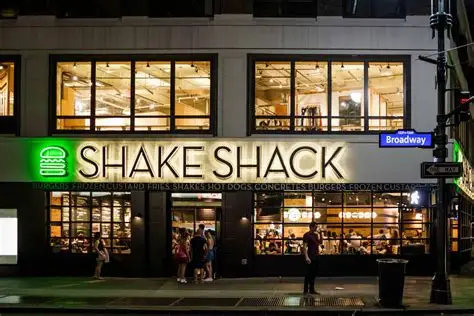
Shake Shack shares drop sent shockwaves through financial markets on Thursday, May 7, 2026, as the popular burger chain recorded its worst single trading day in company history. Shares tumbled as much as 30.4%, falling to $67.21 — their lowest point since January 2024 — after the company reported a surprise quarterly loss driven by surging beef costs and deteriorating consumer spending across the fast food sector.
The dramatic Shake Shack shares drop arrives against a backdrop of widening pressure across the restaurant industry, with multiple major chains reporting disappointing results as rising fuel prices, Middle East conflict, and record beef costs combine to squeeze both operators and their customers simultaneously.
Key Facts: Shake Shack Shares Drop and Q1 2026 Results
- 📉 Share decline: Shake Shack shares drop of 30.4% — worst single day in company history
- 💵 Share price: Fell to $67.21, lowest since January 2024
- 📋 Quarterly result: Loss of 1 cent per share vs. profit of 11 cents per share one year ago
- 🎯 Adjusted profit: $0.002 per share — sharply missed the 12-cent analyst estimate
- 💰 Revenue: $366.7 million — up 14.3% year-on-year but below the $371.9 million estimate
- 👩💼 Leadership change: Michelle Hook named new CFO, effective May 11
- 🥩 Key pressures: Record beef costs and weakening consumer spending
- ⚔️ External factor: Middle East conflict driving gasoline prices higher and reducing consumer discretionary spending
Shake Shack Shares Drop 30%: What Happened?
The Shake Shack shares drop of 30% represents more than a single bad quarter. It signals the collision of multiple economic forces hitting the company at the same time — forces largely outside its direct control but devastating in their combined impact.
Shake Shack swung from a profit of 11 cents per share in Q1 2025 to a loss of 1 cent per share in Q1 2026. The adjusted profit figure of just $0.002 per share fell dramatically short of analyst expectations of 12 cents — a miss so significant that investor confidence collapsed almost immediately when the results became public.
Revenue told a more complicated story. The company grew its top line by an impressive 14.3% to $366.7 million — a figure that under normal circumstances would represent solid progress. However, analysts had forecast $371.9 million, and in a market already nervous about fast food sector headwinds, even a modest revenue miss proved deeply damaging.
The Shake Shack shares drop reflects investor concern not just about one quarter but about the company’s ability to manage costs and sustain margins in an increasingly hostile operating environment.
Rising Beef Costs and Consumer Strain Drive the Decline
Two interconnected forces sit at the heart of the Shake Shack shares drop — and both show little sign of easing in the near term.
Record Beef Prices
Beef prices across the United States have reached record levels due to dwindling domestic cattle supplies. The shortage has driven input costs higher for every burger-focused restaurant operator, but the impact falls particularly hard on premium chains like Shake Shack, where beef quality forms the core of the brand promise.
Shake Shack cannot simply switch to cheaper ingredients without fundamentally damaging its identity. The company built its reputation on better quality burgers at a premium price point. That positioning becomes extremely difficult to maintain when the raw material costs surge to historic levels.
Companies including Chipotle Mexican Grill and Restaurant Brands International — parent company of Burger King — have also publicly flagged rising beef prices as a significant challenge. The issue is industry-wide, but Shake Shack’s premium positioning makes it particularly exposed.
Weakening Consumer Spending
The second major pressure driving the Shake Shack shares drop involves the consumer. Spending at restaurants has weakened noticeably as rising gasoline prices — themselves driven higher by the ongoing conflict in the Middle East — eat into household budgets and reduce discretionary spending.
Michael Gunther, SVP at Consumer Edge, addressed the situation directly following the earnings release.
“We are seeing broader signs of consumer strain across restaurants, and it will be important to watch how the company navigates elevated beef costs going forward,” Gunther said.
His assessment captures the dual squeeze facing Shake Shack and its peers — costs rising from one direction while revenues face pressure from the other.
The Middle East Factor: War Impacts Fast Food
Shake Shack executives addressed the geopolitical dimension of their results during the post-earnings call, making clear that the ongoing war in the Middle East has created real and measurable impact on their business.
The conflict has pushed gasoline prices significantly higher, reducing the spending power of everyday consumers across the United States. When fuel costs rise sharply, households typically cut back on discretionary spending first — and restaurant visits represent one of the first categories to face the axe.
Shake Shack’s leadership acknowledged that short-term results have been impacted by the war and warned that this pressure will continue for the foreseeable future. The admission underscores how global events can transmit rapidly into quarterly earnings for consumer-facing businesses — even those with strong brand recognition and loyal customer bases.
Shake Shack Is Not Alone: Industry-Wide Pressure Mounts
The Shake Shack shares drop does not occur in isolation. Multiple major fast food and casual dining operators have reported disappointing results in recent weeks, painting a consistent picture of sector-wide stress.
Chains facing similar headwinds include:
- 🍔 McDonald’s — Missed its United States sales growth target as value-focused promotions failed to lift overall demand sufficiently
- 🍕 Domino’s Pizza — Fell short of sales estimates as diners pulled back on spending
- 🍕 Papa John’s — Missed quarterly estimates as living costs continued to rise and squeeze customer budgets
- 🌯 Chipotle Mexican Grill — Reported a surprise quarterly sales rise, demonstrating that not every operator is struggling equally
The divergence between Chipotle’s relative resilience and the struggles of burger-focused chains highlights an important dynamic — beef prices create a specific burden for operators whose menus depend heavily on that protein. Chains with more diversified or chicken-heavy menus face a meaningfully different cost structure.
For a broader overview of fast food industry trends and consumer spending data, visit the National Restaurant Association resource centre.
Leadership Change: Michelle Hook Named New CFO
Alongside the earnings announcement, Shake Shack confirmed a significant leadership change that adds another layer of uncertainty to an already turbulent moment for the company.
Michelle Hook will assume the role of Chief Financial Officer effective May 11, 2026. Hook joins from Portillo’s, where she previously served as CFO, bringing restaurant industry financial experience to a role that will require steady hands and sharp strategic thinking during a challenging period.
Hook replaces Katherine Fogertey, who stepped down from the CFO position in early March 2026. The timing of the transition — arriving simultaneously with a historically bad earnings report and the worst single-day Shake Shack shares drop in company history — presents Hook with an immediate and significant challenge.
Her priorities upon taking the role will likely include:
- Managing beef cost exposure through supply chain strategy and menu pricing decisions
- Communicating financial strategy clearly to an investor base shaken by the shares drop
- Identifying efficiency opportunities without compromising brand quality
- Providing guidance that rebuilds confidence in the company’s medium-term outlook
What Shake Shack Must Do Next
The 30% Shake Shack shares drop demands a clear and credible response from leadership. Investors, analysts, and customers will be watching closely to see how the company navigates what may prove to be a prolonged period of cost pressure and consumer caution.
Key strategic priorities the company must address include:
- Pricing strategy — Carefully balancing the need to pass on beef cost increases without alienating price-sensitive customers already under financial strain
- Menu innovation — Exploring options that reduce beef dependency without abandoning the brand’s core identity
- Cost efficiency — Identifying savings across operations, supply chain, and overhead that do not compromise the customer experience
- Consumer confidence — Communicating clearly and honestly with customers about value, quality, and the company’s long-term commitment to both
- Investor relations — Providing realistic and credible guidance that stabilises sentiment after the historic shares drop
Shake Shack’s Longer-Term Outlook
Despite the severity of the Shake Shack shares drop, the company retains genuine strengths that should not be overlooked amid the short-term pain.
Revenue growth of 14.3% year-on-year demonstrates that the brand continues to attract customers and expand its footprint. The fundamental appeal of Shake Shack — premium quality burgers in an accessible, experience-focused setting — has not disappeared. What has changed is the economic environment in which the company must operate.
If beef prices stabilise, consumer spending recovers, and the Middle East situation de-escalates, Shake Shack’s underlying business model remains compelling. The question is how much damage the current environment inflicts before conditions improve — and whether the company’s balance sheet and leadership team can navigate the turbulence effectively.
For investors monitoring the situation, resources like Yahoo Finance and MarketWatch provide up-to-date tracking of Shake Shack’s share price recovery and analyst sentiment following the historic drop.