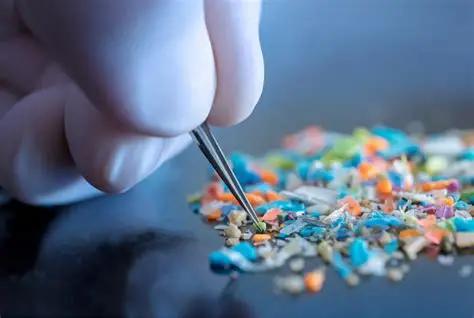
Microplastics now fill the air inside many homes, and people may inhale hundreds of thousands to millions of these tiny particles each year.
Experts say most exposure happens indoors, where synthetic materials release invisible plastic fibres into the air through everyday use, cleaning, and movement.
Clothing made from synthetic fabrics is one of the main sources. When people wear, wash, or dry these garments, they release tiny fibres that spread through indoor spaces.
Once airborne, these particles remain suspended and can be inhaled easily during normal breathing, increasing daily exposure without people noticing.
Researchers believe that inhalation may now be the main way microplastics enter the human body, even more than food or water.
A typical person may breathe in millions of microplastic and nanoplastic particles every year, depending on their environment and lifestyle.
Studies show that people spend around 90% of their time indoors, which significantly increases exposure levels compared with outdoor air.
Indoor air can contain far higher concentrations of microplastics than outdoor environments, even in homes that use natural materials or avoid synthetic fabrics.
These particles come not only from clothing but also from furniture, carpets, cleaning activities, and general household wear and tear.
Experts warn that the full health impact of inhaling microplastics is still being studied, but early findings have raised concerns among scientists.
Environmental health researcher Dana Barr explains that microplastics are impossible to fully avoid, but people can reduce exposure through simple behavioural changes.