Dominik Szoboszlai Was Right: How Liverpool’s Late-Goal Crisis Nearly Cost Champions League Football
Dominik Szoboszlai sounded less like a player searching for excuses and more like one who had run out of ways to explain the same mistake. On March 15, 2026, Liverpool were leading Tottenham Hotspur 1-0 at Anfield, sitting minutes away from a result that would have strengthened their Champions League push. Then Richarlison scored in the 90th minute.
The 1-1 draw was painful because it was familiar. Dominik Szoboszlai had put Liverpool ahead with an 18th-minute free-kick, but the reigning Premier League champions again failed to close out a match. By full time, frustration had spilled from the stands onto the pitch.
“We have to wake up,” Dominik Szoboszlai said afterwards.
His warning went further. If Liverpool continued performing at that level, he argued, they should be satisfied even to reach the Conference League rather than assuming Champions League football was guaranteed.
Five months later, hindsight makes the moment even more revealing.
Liverpool did recover enough to finish fifth in the 2025-26 Premier League on 60 points and qualify for the 2026-27 Champions League. But they finished 25 points behind champions Arsenal, Arne Slot left at the end of the season, and Andoni Iraola was appointed as his successor.
Dominik Szoboszlai was therefore too pessimistic about Europe, but not about the seriousness of Liverpool’s decline.
The Tottenham draw captured one of the defining problems of a title defence that unravelled: Liverpool repeatedly failed to manage the final minutes of matches they were capable of winning.
The Tottenham Draw That Triggered Dominik Szoboszlai’s Warning
Liverpool entered the Tottenham game knowing the opportunity in front of them.
Aston Villa and Chelsea had dropped points, leaving Arne Slot’s team with the chance to strengthen their position in the race for Champions League qualification.
Tottenham arrived at Anfield in serious trouble near the bottom of the table and under interim coach Igor Tudor.
Liverpool appeared to take control early.
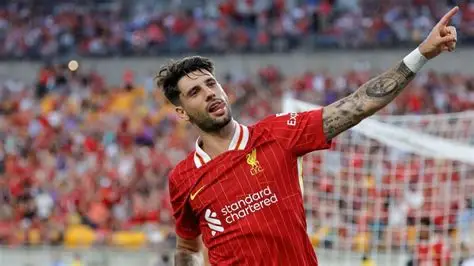
Dominik Szoboszlai opened the scoring in the 18th minute with a direct free-kick.
It was another reminder that the Hungary captain had become one of Liverpool’s most important attacking players from midfield.
The home side controlled much of the first half but did not build a decisive lead.
That became costly after the break.
Tottenham stayed within one goal, gradually created more pressure and eventually found the equaliser when Richarlison finished from close range in the 90th minute.
Liverpool still had stoppage time to respond, but they could not find a winner.
The official Liverpool reaction from Dominik Szoboszlai focused less on one defensive action and more on the repeated nature of the problem.
He said the team had played well before half-time but had failed to reproduce the same control in the second half.
That distinction mattered.
Liverpool were not simply unlucky. They had repeatedly allowed games to change after being in favourable positions.
Liverpool Had Already Conceded Eight Goals in the 90th Minute or Later
The Tottenham equaliser was not an isolated late collapse.
By March 15, Liverpool had conceded eight Premier League goals in the 90th minute or later, their highest total in a single Premier League campaign at that stage.
Even more damaging, every one of those eight late goals came in a match Liverpool either drew or lost.
That means the statistic was not padded by meaningless consolation goals in comfortable victories.
Each one was directly connected to dropped points or defeat.
Sky Sports also reported that Liverpool had dropped seven points from winning positions at Anfield by the Tottenham match, their highest home total since the 2016-17 season.
The problem had appeared against different types of opponents and in different situations.
Some late goals came from individual quality. Others followed defensive mistakes, poor game management or Liverpool failing to convert enough chances earlier.
Arne Slot stressed that the goals were not identical.
A deflection against one opponent could not be analysed in exactly the same way as a long-range strike or a penalty-box breakdown against another.
But the outcomes kept repeating.
That was the concern behind Dominik Szoboszlai’s reaction.
Liverpool did not need one single defensive fix. They needed to understand why the team repeatedly reached the closing stages of matches without enough control.
Why Late Goals Hurt More Than the Scoreline Suggests
A goal conceded in the 20th minute gives a team time to respond.
A goal conceded in the 90th minute usually does not.
That is why late-game weakness can distort an entire season.
The problem is partly mathematical. A team protecting a one-goal lead can turn three points into one in a single moment. If the score is level, a stoppage-time concession turns one point into none.
But the psychological effect can be just as damaging.
Players begin to expect danger.
Supporters become nervous when the fourth official raises the board.
Defenders may drop deeper.
Midfielders may become less aggressive in possession.
Forwards may chase another goal rather than controlling territory.
Once a pattern becomes part of a team’s identity, every late phase carries the memory of what happened before.
Dominik Szoboszlai admitted after Tottenham that he did not know why the same problem kept occurring.
That uncertainty was almost as concerning as the goals themselves.
The Liverpool-Tottenham Draw in Numbers
| Match detail | Liverpool vs Tottenham |
|---|---|
| Date | March 15, 2026 |
| Venue | Anfield |
| Result | Liverpool 1-1 Tottenham |
| Liverpool scorer | Dominik Szoboszlai, 18′ |
| Tottenham scorer | Richarlison, 90′ |
| Liverpool position after match | 5th |
| Liverpool points after match | 49 |
| Gap to Aston Villa | 2 points |
| 90th-minute-or-later goals conceded by Liverpool | 8 |
Reuters confirmed the basic match sequence: Dominik Szoboszlai scored from a free-kick, Richarlison levelled in the final minute of normal time, and Liverpool were booed after dropping another important result.
The result left Liverpool fifth and still firmly in the Champions League race.
But the mood was closer to crisis than opportunity.
Dominik Szoboszlai’s Conference League Warning Was More Than Emotion
Post-match interviews can produce dramatic statements that look excessive once emotions cool.
Dominik Szoboszlai’s warning was different because it reflected the wider table.
Liverpool had won the Premier League in 2024-25, finishing the job with four matches remaining.
Less than a year later, they were struggling merely to secure the European competition expected of a club with their squad and ambitions.
Dominik Szoboszlai said Liverpool should be happy with the Conference League if they continued playing in the same way.
The wording was deliberately severe.
He was not predicting that Liverpool would definitely finish in a Conference League place.
He was arguing that their performance level did not justify assumptions about Champions League football.
That distinction was proved by the final table.
Liverpool eventually finished fifth with 60 points, only three ahead of Bournemouth in sixth.
They secured Champions League qualification, but there was almost no margin for complacency.
The warning therefore missed the eventual competition but accurately captured the fragility of Liverpool’s position.
Liverpool Eventually Finished Fifth on 60 Points
The final 2025-26 Premier League table gives the Tottenham draw better context.
| Position | Club | Points |
|---|---|---|
| 1 | Arsenal | 85 |
| 2 | Manchester City | 78 |
| 3 | Manchester United | 71 |
| 4 | Aston Villa | 65 |
| 5 | Liverpool | 60 |
| 6 | Bournemouth | 57 |
Liverpool finished 25 points behind Arsenal only one season after winning the championship.
They also ended five points behind Aston Villa and only three points ahead of Bournemouth.
England had a fifth Champions League qualification place available, so Liverpool’s fifth-place finish was enough to preserve their place in Europe’s top competition.
That qualification softened the damage.
It did not turn the season into a success.
A defending champion finishing fifth with 60 points represented a major decline, and Dominik Szoboszlai’s frustration in March now looks like an early public recognition that the season had gone far beyond a temporary dip in form.
The Bigger Problem Was Liverpool’s Loss of Control
Late goals were the most visible symptom, but they were not the entire problem.
Liverpool often struggled to control matches after taking the lead.
At their best under Slot, the team could dominate territory, press aggressively and use possession to keep opponents away from dangerous areas.
During the difficult 2025-26 campaign, those qualities became inconsistent.
The Tottenham match followed that pattern.
Liverpool looked comfortable early.
They created chances, controlled possession and scored first.
But the second half became less secure.
Instead of gradually removing uncertainty from the game, Liverpool allowed Tottenham to remain within one moment of changing the result.
Elite game management is not always about defending deeper.
Often it means keeping the ball, controlling territory and choosing when to slow the match.
Liverpool too often ended games caught between chasing another goal and protecting the one they already had.
Arne Slot Could Not Find One Simple Explanation
Slot’s post-match reaction reflected the complexity of the problem.
He acknowledged that Liverpool had again conceded at the end of a match but rejected the idea that every late goal came from the same mistake.
That was fair.
Different goals require different technical analysis.
But from a team perspective, repeated late concessions can still point to shared weaknesses: concentration, substitutions, fitness, defensive structure, emotional control or the inability to dominate possession under pressure.
Slot also highlighted another issue against Tottenham.
Liverpool had created enough opportunities to score more than once.
Their expected-goals total for the match was around 1.67, according to Sky Sports, yet they scored only through Dominik Szoboszlai’s free-kick.
If a team repeatedly leaves matches at 1-0, every defensive mistake becomes potentially decisive.
This is why attacking inefficiency and late defending cannot always be separated.
A stronger finish at one end can remove pressure at the other.
Jamie Carragher Saw a Deeper Squad Problem
Jamie Carragher was much harsher.
The former Liverpool defender called the Tottenham result a disaster for the club’s Champions League qualification hopes and criticised the quality of Liverpool’s defending.
But his argument went beyond one goal.
Carragher questioned whether Liverpool’s problems came from the manager or from the profile of the squad that had been assembled.
He argued that too many players appeared comfortable when the ball was at their feet but less suited to the physical and defensive work required when matches became difficult.
Whether that diagnosis was completely fair is debatable.
But the broader issue was real.
Liverpool had gone from champions to a team that opponents increasingly believed they could hurt late.
Once opponents believe a leading team is vulnerable, they are more likely to keep committing bodies forward rather than accepting defeat.
Dominik Szoboszlai Became One of Liverpool’s Strongest Voices
One reason the comments carried weight was the player making them.
Dominik Szoboszlai was not speaking from the margins of the squad.
He had become one of Liverpool’s most influential performers and one of the players prepared to carry responsibility when the team struggled.
His free-kick against Tottenham was another example of his growing importance.
He also showed positional flexibility during the season, at times being asked to operate in deeper roles and even at right-back when Liverpool needed tactical solutions.
His willingness to speak publicly about standards also revealed growing leadership.
Dominik Szoboszlai did not blame one defender, the manager or the supporters.
He repeatedly used collective language.
Liverpool had to wake up, sit down together and fight for the club.
That approach made the criticism stronger because he included himself in it.
Supporters’ Frustration Became Part of the Story
The Tottenham draw ended with boos at Anfield.
Dominik Szoboszlai said he understood the frustration even while asking supporters to stay behind the team.
That relationship became increasingly important as the season deteriorated.
A year earlier, Liverpool supporters had celebrated a title-winning team.
Now they were watching the defending champions struggle to protect leads against teams near the relegation zone.
Expectations had been set by Liverpool’s own recent level, and nervousness in the stadium could feed into nervousness on the pitch.
Dominik Szoboszlai later urged supporters not to leave games early and said the team could feel when backing disappeared.
At the same time, the players had to give the crowd reasons to believe late leads would survive.
Trust works in both directions.
The Late-Goal Crisis Was Part of a Wider Collapse
The Tottenham result did not exist in isolation from the rest of the campaign.
Liverpool’s domestic cup form also deteriorated, and The News Ink later examined how Liverpool’s FA Cup collapse deepened the crisis under Arne Slot.
Champions League qualification itself became financially important enough that The News Ink analysed the potential £120 million risk if Liverpool missed the Champions League.
Those stories help explain why the Tottenham equaliser caused such a strong reaction.
It was not merely two dropped points.
It threatened sporting prestige, future revenue, recruitment plans and the credibility of Liverpool’s attempt to build on the previous season’s championship.
Champions League Qualification Saved Something, Not Everything
Liverpool eventually avoided the worst-case scenario.
Fifth place was enough for the Champions League.
It protected elite European football for 2026-27 and reduced the financial consequences of the domestic decline.
But the final position did not erase the warning signs.
Liverpool won only 17 of 38 league matches and lost 12.
Their final goal difference was only +10.
They finished closer in points to Bournemouth in sixth than to Manchester United in third.
For a club defending a league title, those numbers represented a dramatic fall.
Dominik Szoboszlai had warned in March that the team was running out of time.
They found just enough of it.
Arne Slot’s Title Defence Ended With His Departure
The season ultimately brought an end to Arne Slot’s Liverpool tenure.
Slot had delivered the Premier League title in his first campaign after replacing Jürgen Klopp, an achievement that made the decline in year two even more striking.
Liverpool confirmed in June that Andoni Iraola would become the new head coach for 2026-27, succeeding Slot.
The News Ink covered the change in its report on Liverpool appointing Andoni Iraola as manager.
The managerial change gives the Tottenham draw additional historical significance.
When Dominik Szoboszlai told Liverpool to wake up, he was speaking during the final months of Slot’s time at Anfield.
The club recovered enough to reach the Champions League.
It did not recover enough to convince Liverpool’s hierarchy that the same leadership should continue.
What Liverpool Needed to Learn From the Late Goals
The simplest lesson is obvious: defend better at the end of matches.
But that is too shallow.
Liverpool’s late-game problems required several improvements.
Control Possession Under Pressure
Teams protecting leads need players who remain calm enough to keep the ball rather than clearing it back to the opposition repeatedly.
Recognise When the Game Has Changed
If an opponent becomes more aggressive, midfield positioning and pressing distances may need to change before the warning signs become a goal.
Use Substitutions to Protect Structure
Fresh legs matter, but substitutions must maintain the relationships that allow a team to defend spaces collectively.
Finish Chances Earlier
The safest way to protect a one-goal advantage is often to turn it into a two-goal advantage.
Avoid Emotional Panic
A history of late concessions can become self-fulfilling if players begin defending the memory of previous mistakes instead of the current situation.
These are broader principles of game management, a subject explored in The News Ink’s complete football guide.
Dominik Szoboszlai’s Warning Looks Different in Hindsight
At the time, the Conference League line sounded dramatic.
By the end of the season, it looked closer to a challenge than a prediction.
Liverpool did not fall that far.
They finished fifth, secured Champions League football and gave themselves a platform for another rebuild.
But the margin was narrow enough to justify Dominik Szoboszlai’s concern.
Bournemouth ended only three points behind them.
The title was 25 points away.
And the manager who had made Liverpool champions one year earlier was replaced before the next campaign began.
That is why the Tottenham draw remains worth revisiting.
It was one of those matches that seemed to contain an entire season inside 90 minutes.
Liverpool started with quality.
Dominik Szoboszlai produced a moment of class.
The team failed to turn control into a decisive lead.
The opponent remained alive.
A late defensive failure changed the result.
Frustration followed.
A New Liverpool Era Has Already Begun
Liverpool entered 2026-27 under Andoni Iraola rather than Arne Slot.
Dominik Szoboszlai remained an important part of the squad and continued to offer the versatility that made him valuable during the previous campaign.
Iraola arrived after leading Bournemouth to sixth place and European qualification, with Liverpool officially presenting him as the coach chosen to begin the club’s next phase.
The managerial change turned the late-goal problem into one of the clearest lessons for the new coaching staff.
Iraola inherited a team with enough talent to qualify for the Champions League but also one that had lost the control and consistency required to defend a Premier League title.
The new Liverpool cannot simply aim to create more chances or press harder.
It must become more reliable when games are on the line.
Dominik Szoboszlai Was Right About the Urgency
Dominik Szoboszlai did not accurately predict Liverpool’s final European competition.
Liverpool reached the Champions League, not the Conference League.
But he was right about the urgency.
The March 15 draw with Tottenham showed a defending champion whose margin for error had almost disappeared.
Eight goals conceded in the 90th minute or later by that stage of the season were not background noise.
They were part of a pattern that repeatedly damaged results and confidence.
Liverpool eventually collected enough points to finish fifth.
They did not recover enough to prevent a change of head coach.
That makes Dominik Szoboszlai’s “wake up” message one of the most revealing moments of Liverpool’s 2025-26 campaign.
It captured the fear inside the team before the final table confirmed just how far the champions had fallen.
The warning was severe.
The season proved it was necessary.
For more Premier League analysis, Liverpool coverage and major football stories, follow The News Ink on X.