Formula 1 Hybrid Era in 2026: Why Shanghai Exposed the Rules Debate
The Formula 1 hybrid era entered its most controversial phase in 2026, when a completely redesigned generation of cars and power units changed not only how teams built their machines but how drivers raced them. The Chinese Grand Prix in Shanghai became the clearest early example of both sides of the argument.
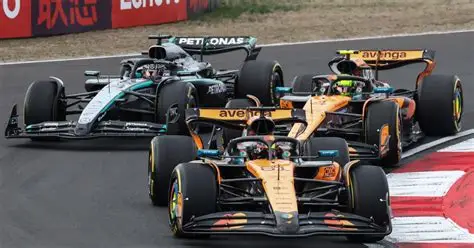
Kimi Antonelli won from pole for Mercedes, George Russell completed a one-two, and Lewis Hamilton took his first Grand Prix podium for Ferrari after a long, aggressive fight with Charles Leclerc. The race delivered repeated position changes, unusual overtaking tactics and close wheel-to-wheel action. It also produced fresh criticism from Max Verstappen, whose Red Bull retired with a technical problem late in the race.
That contrast sits at the heart of the Formula 1 hybrid era. Some drivers believe the new cars are easier to follow and create better racing. Others argue that battery harvesting, electrical deployment and tactical boost management now shape too much of what happens on track.
Shanghai did not settle the argument. It made the argument impossible to ignore. The Formula 1 hybrid era had produced both a showcase and a warning in the same weekend.
The 2026 Chinese Grand Prix Became the Perfect Test
The Chinese Grand Prix took place at Shanghai International Circuit from March 13 to 15. Antonelli had already made history by becoming Formula 1’s youngest Grand Prix polesitter, starting ahead of Russell, Hamilton and Leclerc.
Hamilton made the best start and swept into the lead at Turn 1, but Antonelli recovered quickly and retook first place before the end of lap two. From there, the 19-year-old controlled the race and eventually finished 5.515 seconds ahead of Russell.
Hamilton took third, 25.267 seconds behind Antonelli, with Leclerc another 3.627 seconds back in fourth. Oliver Bearman finished fifth for Haas and Pierre Gasly sixth for Alpine.
Official 2026 Chinese Grand Prix race result
2026 Chinese Grand Prix Top Six
| Position | Driver | Team |
|---|---|---|
| 1 | Kimi Antonelli | Mercedes |
| 2 | George Russell | Mercedes |
| 3 | Lewis Hamilton | Ferrari |
| 4 | Charles Leclerc | Ferrari |
| 5 | Oliver Bearman | Haas |
| 6 | Pierre Gasly | Alpine |
The News Ink also followed the immediate aftermath in its report on Lewis Hamilton finding his rhythm as Antonelli shone in China.
What Changed in the Formula 1 Hybrid Era?
The Formula 1 hybrid era is built around a much larger electrical contribution than the previous generation.
The 2026 overhaul was one of the largest technical resets in modern Formula 1.
The familiar 1.6-litre turbocharged V6 remains, but the power unit now depends far more heavily on electrical energy. The FIA originally described the concept as moving towards an approximately even split between combustion and electric power.
The internal-combustion element was designed around roughly 400kW, while the MGU-K electrical system rose dramatically to as much as 350kW. The MGU-H used in the previous generation disappeared, simplifying the architecture while increasing the importance of energy recovery and battery deployment.
The Formula 1 hybrid era also introduced fully sustainable fuel, helping the FIA and Formula 1 present the new regulations as both a racing project and a technology platform relevant to future road vehicles.
FIA overview of the 2026 Formula 1 regulations
The electrical side of the car is therefore no longer a supporting element. It is one of the central performance variables.
That is why a driver can sometimes gain time by lifting earlier, harvesting energy or changing how power is deployed instead of simply attacking every braking zone as late as possible.
Boost, Overtake and Recharge Changed the Language of Racing
Three terms quickly became central to understanding the Formula 1 hybrid era: Boost, Overtake Mode and Recharge.
Boost allows drivers to influence electrical deployment manually when attacking or defending, provided enough energy has been stored.
Overtake Mode replaces the old DRS overtaking concept. When a car is within the required gap at the detection point, it can receive an enhanced electrical power profile for the following lap.
Under the original concept, the pursuing car could gain an additional 0.5MJ of energy and maintain stronger electrical deployment at high speed.
Recharge describes the different methods used to replenish the battery. Energy can be recovered under braking, on partial throttle, during lift-and-coast phases and through so-called super clipping, when harvesting occurs while the driver is still at full throttle.
Formula 1 guide to Boost, Overtake Mode and Recharge
These systems make the Formula 1 hybrid era more tactical.
A driver attacking on one straight may use enough energy to become vulnerable on the next. A rival who saves deployment can respond later.
The result can be a sequence of overtakes and counter-attacks rather than a single DRS-assisted pass followed by separation.
Why Hamilton and Leclerc Enjoyed Shanghai
Lewis Hamilton emerged from Shanghai as one of the strongest supporters of what the new regulations could produce.
After taking third, Hamilton described the Grand Prix as one of his most enjoyable races in years. His battle with Leclerc featured repeated side-by-side running and several changes of position, with the two Ferrari drivers able to stay close through corners and then use different energy strategies on the straights.
Leclerc was similarly positive.
He said the new cars were enjoyable to race because drivers could use tactics and energy deployment to create attacks rather than waiting for one conventional passing opportunity.
The Formula 1 hybrid era therefore delivered exactly what its supporters had promised in one respect: cars that could follow more closely and keep a battle alive for several corners or even several laps.
Ferrari team principal Fred Vasseur also chose not to freeze the positions, allowing Hamilton and Leclerc to continue racing.
That decision helped turn the fight for third into one of the most memorable parts of the Grand Prix.
Formula 1’s analysis of Hamilton and Leclerc’s Shanghai battle
The Karting Comparison Was About the Racing, Not Simplicity
The original debate around Shanghai sometimes became simplified into the idea that the cars had suddenly become like go-karts.
The more accurate point is that drivers were comparing the repeated back-and-forth battles to kart racing, not claiming that the Formula 1 hybrid era had become technically simple.
George Russell made that comparison after the Sprint, saying the constant exchanges with Ferrari reminded him of karting battles from earlier in his career.
Hamilton later used similar language when describing his own fight with Leclerc.
What felt like karting was the closeness and frequency of the fighting.
The technical systems underneath those fights remained extremely complicated.
Verstappen Saw the Same Racing Very Differently
Max Verstappen has been one of the most consistent critics of the Formula 1 hybrid era.
His concerns began before the season.
During pre-season testing, Verstappen argued that the new cars involved too much management and said the feeling was closer to “Formula E on steroids” than the Formula 1 he preferred.
Shanghai hardened that view.
Verstappen ran outside the leading battle and retired around 10 laps from the end. Formula 1’s race report recorded the retirement, while contemporary reporting linked it to the Red Bull’s energy-recovery system.
After the race, he objected to a pattern in which one driver could use electrical power to overtake, become depleted, and then be repassed when the rival had a stronger energy state on the next straight.
His criticism was not that overtaking itself was bad.
It was that he felt some overtakes were being created by temporary energy differentials rather than braking skill, corner exits or natural car performance.
That is the philosophical divide inside the Formula 1 hybrid era.
Supporters see tactical variability.
Verstappen sees too much intervention between the driver and the race.
BBC analysis of the divided driver reaction after China
The News Ink has followed his concerns separately in Max Verstappen’s argument that modern F1 needs to be more fun for drivers.
Fernando Alonso’s Concern Was About What Drivers No Longer Do
Fernando Alonso’s criticism has focused less on overtaking and more on the nature of the driving challenge.
Before the Chinese Grand Prix, Alonso explained that famous high-speed corners had traditionally forced drivers to test grip, confidence and bravery.
Under the 2026 rules, some of those sections could instead become useful places to harvest energy for the straights that followed.
That changes what counts as the fastest way around a circuit.
The Formula 1 hybrid era can sometimes reward a driver for sacrificing speed in one part of the lap to improve electrical deployment somewhere else.
Alonso did not say there was no skill involved.
His point was that the skill set had changed.
Energy management, anticipation and strategic thinking have become more important. Pure commitment through a demanding corner can matter less if taking that corner flat leaves the car in a worse energy state later.
That question goes beyond nostalgia.
Formula 1 has always promoted itself as a championship in which drivers operate cars at the limit of physics. If the fastest lap increasingly involves deliberate harvesting in corners once defined by bravery, critics believe part of that identity is being diluted.
FIA Chinese Grand Prix driver press conference transcript
The New Cars Are More Than Different Engines
Calling 2026 only an engine change understates the scale of the Formula 1 hybrid era.
The chassis became shorter, narrower and lighter. The regulations also introduced active aerodynamics at the front and rear of the car.
Unlike DRS, active aero is not primarily an overtaking aid.
The moveable wings reduce drag on straights to help cars meet the energy demands of the new power units.
This is another reason the new cars can behave differently in combat.
Reduced dimensions and a revised aerodynamic philosophy were designed to make following another car easier.
Shanghai suggested that part of the concept can work.
Hamilton and Leclerc stayed close enough to repeatedly attack without immediately losing all front-end grip in turbulent air.
The News Ink’s Formula 1 guide provides the wider background on how F1 rules, teams, strategy and technology fit together.
Mercedes Showed Why Power-Unit Execution Matters
Shanghai was also an early warning that the Formula 1 hybrid era could create a new form of competitive separation.
Mercedes did not merely have a fast car.
It appeared particularly strong at combining straight-line efficiency, electrical deployment and consistent race pace.
Antonelli and Russell qualified first and second. Russell won the Sprint. Antonelli won the Grand Prix. Even after Russell lost positions at the start of Sunday’s race, he recovered to second.
Ferrari had impressive cornering performance and strong starts, but Vasseur later acknowledged that straight-line performance remained an area requiring work.
That matters because the new rules connect aerodynamics and power-unit behaviour more closely than before.
A weakness on the straight may be influenced by combustion performance, electrical deployment, active-aero efficiency, energy state or some combination of them.
The Formula 1 hybrid era therefore creates a more complicated development puzzle for engineers as well as drivers.
In that sense, the Formula 1 hybrid era is as much an engineering contest over energy use as it is a traditional race for aerodynamic performance.
Reliability Became Part of the Formula 1 Hybrid Era Debate
Shanghai also showed the less glamorous side of the new technology.
McLaren suffered a disastrous Sunday.
Reigning world champion Lando Norris did not start because his car could not be fired up, while Oscar Piastri was withdrawn before the formation lap with a different electrical problem on the power-unit side.
Verstappen retired late.
Aston Martin also failed to finish with either car. Lance Stroll stopped early with a suspected battery-related problem, while Alonso was eventually retired because severe vibrations made continuing uncomfortable.
These failures mattered to the Formula 1 hybrid era debate because the new regulations arrived with enormous technical complexity.
Bringing more manufacturers into Formula 1 was one of the objectives of the regulations. Audi entered as a manufacturer, Honda returned as a full works supplier, and Red Bull developed its new power-unit project with Ford.
The cost of a major reset is that reliability and performance gaps can appear while teams learn how to operate unfamiliar systems.
The FIA Did Not Ignore Complaints About the Formula 1 Hybrid Era
The most important update since the Chinese Grand Prix is that the rules did not remain frozen in their original form.
After studying the opening races and receiving extensive feedback from teams and drivers, the FIA agreed changes for the Miami Grand Prix.
The Formula 1 hybrid era had exposed excessive harvesting in some situations, particularly in qualifying.
To reduce that effect, maximum permitted recharge was reduced from 8MJ to 7MJ.
Peak super-clipping power was increased to 350kW, helping reduce the amount of time spent harvesting and encouraging more consistent flat-out driving.
The FIA also limited the maximum additional Boost power available during races to reduce extreme speed differentials.
FIA details of the post-China 2026 regulation refinements
The FIA later said the Miami changes had improved competition without creating material new safety concerns.
That is significant.
It shows the governing body accepted that the first implementation of the new technical concept required refinement once real racing exposed issues that simulations and testing had not fully resolved.
The 2027 and 2028 Changes Go Even Further
By June, Formula 1 and the FIA had already agreed that the power balance should gradually move further towards the combustion engine.
The World Motor Sport Council formally ratified a staged rebalancing for 2027 and 2028 on June 23.
The 2026 baseline uses approximately 400kW from the internal-combustion engine and 350kW from the MGU-K, producing an official approximate split of 53% combustion and 47% electrical power.
For 2027, maximum combustion power is planned to rise to 420kW while standard MGU-K deployment falls to 300kW.
For 2028, combustion power rises again to 450kW, with standard MGU-K power remaining at 300kW.
Overtake Mode can still provide up to 350kW electrically.
Planned Power Balance
| Season | ICE max power | Standard MGU-K max | Approximate split |
|---|---|---|---|
| 2026 | 400kW | 350kW | 53% / 47% |
| 2027 | 420kW | 300kW | 58% / 42% |
| 2028 | 450kW | 300kW | 60% / 40% |
FIA World Motor Sport Council decision on future F1 rules
The change is significant because it shows the Formula 1 hybrid era is already evolving in response to its first season.
The FIA is not abandoning electrification or sustainable fuel.
It is trying to retain those goals while reducing the most extreme energy-management behaviour.
Shanghai Looks More Important With Hindsight
By September, the Chinese Grand Prix looks less like an isolated spectacle and more like the race that clearly demonstrated what the Formula 1 hybrid era could become.
Antonelli’s win became the first of several victories in a breakthrough season. Official Formula 1 results show he subsequently won in Japan, Miami, Canada, Monaco and Belgium, while Ferrari and McLaren also claimed victories as the season developed.
The News Ink later reported on Kimi Antonelli becoming the youngest F1 championship leader after his Japan victory.
The early debate did not disappear.
Verstappen continued to express unhappiness with the 2026 cars, even as Red Bull improved later in the year. Formula 1 reported in August that his dislike of the new-spec machinery had been significant enough to form part of the discussion around his future, although he ultimately committed to Red Bull through 2030.
Shanghai therefore captured both the promise and the problem of the regulations in one weekend.
Has the Formula 1 Hybrid Era Improved Racing?
There is evidence for both answers.
The case in favour is strong in wheel-to-wheel racing.
The cars can follow more closely in certain conditions. Overtake Mode can keep fights alive. Drivers can counter-attack rather than watching a rival disappear once a pass is completed.
The Hamilton-Leclerc battle in China showed that the system can create a genuinely entertaining contest between elite drivers.
The case against is about authenticity and driver challenge.
Critics dislike seeing drivers harvest energy in places where previous generations attacked flat out.
They dislike overtakes created by large temporary energy differences.
They worry that the fastest technique can sometimes look less spectacular because a driver deliberately gives away speed to improve battery state.
Those criticisms were not confined to Verstappen.
Ahead of Shanghai, Reuters reported wider driver concern that increased energy management could reduce the role of bravery and traditional flat-out driving.
What Fans Should Watch as the Formula 1 Hybrid Era Develops
The remainder of 2026 and the transition into 2027 will answer several important questions.
First, can the FIA reduce excessive harvesting without destroying the tactical variation that made races such as Shanghai entertaining?
Second, will the revised future power split make qualifying feel more natural and reward flat-out driving more consistently?
Third, can manufacturers improve reliability enough that electrical problems stop deciding major results?
Fourth, will Overtake Mode become accepted in the way DRS eventually was, or will fans continue to see it as an artificial intervention?
Finally, can teams close the performance gaps between power units before one manufacturer gains an era-defining advantage?
The new regulations were always going to require adaptation.
Formula 1 has repeatedly changed technical rules after learning from the opening months of a new concept.
The unusual part of the Formula 1 hybrid era is how quickly those changes began.
For teams and drivers, the Formula 1 hybrid era has become a moving target rather than a finished technical formula.
The News Ink has also examined the wider 2026 reset in how Formula 1’s new era began in Australia.
A More Electric F1, but Not a Finished Product
The Chinese Grand Prix showed why the 2026 regulations cannot be judged with a simple good-or-bad verdict.
Antonelli’s first victory was a major sporting story.
Hamilton and Leclerc produced one of the best team-mate battles of the season.
Russell compared the repeated exchanges to karting.
Ferrari saw encouraging progress.
Fans saw cars that could stay close enough to fight again and again.
At the same time, Verstappen rejected the style of racing, Alonso questioned what had happened to some traditional high-speed challenges, McLaren suffered electrical problems and the FIA was already preparing changes to how energy should be managed.
That combination defines the Formula 1 hybrid era better than any single quote.
The 2026 cars are technologically ambitious, more dependent on electrical power and built around sustainable fuel.
That is why the Formula 1 hybrid era cannot be judged only by the number of overtakes it produces.
The rules have created new strategic possibilities and attracted manufacturers, but they have also forced Formula 1 to confront a fundamental question:
How much energy management can the sport introduce before the driver’s job begins to feel too far removed from traditional flat-out racing?
Shanghai offered the first great answer and the first great warning.
The racing can be spectacular.
The formula still needs refinement.
For more Formula 1 analysis, technical explainers and race coverage, follow The News Ink on X.