Online Prediction Markets in 2026: Why War Bets, Insider Trading Fears and State Lawsuits Are Forcing New Rules
Online prediction markets have rapidly moved from a niche forecasting tool into one of the most controversial parts of the US financial and betting landscape. In 2026, the debate is no longer only about whether these markets can forecast elections, sports or economic data. It is about whether people should be able to profit from war, political deaths and secret government decisions, and whether federal or state regulators should control the industry.
The controversy intensified after large trades appeared around the US-Israeli attack on Iran and the removal of Supreme Leader Ali Khamenei. Some positions were placed shortly before major events became public, prompting lawmakers and Public Citizen to call for investigations into possible misuse of nonpublic information. Reuters reported on the suspicious Iran-related trading, while Public Citizen formally asked the CFTC to investigate.
At the same time, online prediction markets have kept growing. A National Conference of State Legislatures report estimated that Kalshi and Polymarket together facilitated about $44 billion in contracts in 2025. Kalshi has since expanded further into mainstream sports, including brand partnerships announced in August 2026 with five Major League Baseball teams.
That combination of enormous trading volume, sensitive geopolitical contracts and unresolved legal authority has turned online prediction markets into a major US regulatory test.
What Are Online Prediction Markets?
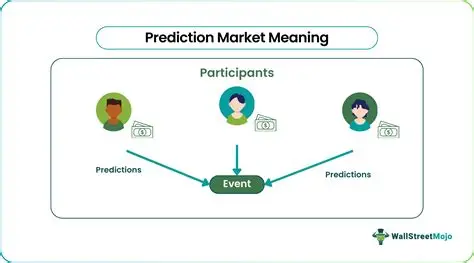
Online prediction markets allow users to buy and sell contracts based on whether a specified event will happen. A contract may pay a fixed amount if an event occurs and nothing if it does not, meaning its trading price can also be interpreted as a market-implied probability.
The Commodity Futures Trading Commission describes event contracts as derivatives whose payouts are based on specified events, occurrences or values. Legitimate examples can include inflation, weather, corporate results and other measurable outcomes.
This structure is one reason companies such as Kalshi argue they are not ordinary sportsbooks. Kalshi is registered with the CFTC as a designated contract market. QCX LLC, operating as Polymarket US, is also listed as a designated contract market in the CFTC’s current exchange records.
The CFTC’s full list of designated contract markets shows just how quickly the regulated exchange landscape has expanded.
Supporters say online prediction markets can aggregate information more quickly than polls and may help companies hedge some event-driven risks. The controversy becomes much sharper when the event is a military strike, political leadership change or government decision that insiders could know about before everybody else.
A $10 Khamenei Trade Showed How Fast the Market Had Changed
One widely reported example involved a 35-year-old Montana bettor identified as Stew.
He had mainly used Kalshi for sports. After seeing online reports about unusually heavy pizza deliveries around the Pentagon, a social-media signal sometimes jokingly treated as evidence of increased late-night government activity, he placed a $10 trade on whether Ali Khamenei would be “out” as Iran’s supreme leader by March 1.
The amount was tiny. The implications were not.
Online prediction markets can transform geopolitical rumours, open-source intelligence and social-media chatter into financial positions within seconds.
That becomes ethically and legally significant when some market participants may have access to information ordinary users do not.
The broader geopolitical background is important. The News Ink has separately examined why the US and Israel attacked Iran and how the conflict evolved beyond its initial military phase.
Iran War Bets Triggered Insider-Trading Fears
The US-Israeli attack on Iran became a defining moment for online prediction markets.
Reuters reported in March 2026 that prediction platforms faced intense scrutiny after traders placed large positions connected to military strikes and Khamenei’s removal from power. Six accounts identified by blockchain analytics reportedly made about $1.2 million from positions placed shortly before the attacks.
Public Citizen then sent a March 5 letter to CFTC Chairman Michael Selig demanding an investigation.
According to its formal CFTC complaint, one Polymarket account allegedly earned more than $553,000 from a contract tied to Khamenei being removed from power. The group also said roughly half a billion dollars had traded on Polymarket contracts concerning when US forces would strike Iran.
Those figures do not prove insider trading.
Exceptionally good timing is not by itself evidence that a trader possessed classified information. A person might correctly interpret public military movements, official statements, aircraft tracking, satellite images or other open-source information.
But the trades exposed a vulnerability regulators can no longer dismiss as theoretical.
The CFTC itself has acknowledged the broader problem. In February 2026, its Enforcement Division issued a prediction-markets enforcement advisory covering misuse of nonpublic information and fraud.
One enforcement case described by the agency involved a political candidate who traded on a contract tied to his own candidacy. Kalshi ultimately imposed disgorgement, a financial penalty and a five-year suspension.
The News Ink has also examined insider-trading concerns surrounding unusual market moves. Conventional securities markets operate under a different regulatory system, but the central policy concern is similar: people with privileged information should not be able to quietly turn it into a personal trading advantage.
Why War Contracts Are Legally Different
US law already treats some event contracts differently from normal financial products.
CFTC Regulation 40.11 addresses contracts involving or referencing terrorism, assassination, war, gaming and activities that are unlawful under federal or state law.
The CFTC’s current event-contract guidance likewise identifies terrorism, assassination and war among the categories receiving special treatment under federal law.
The difficulty is applying those principles to real contracts.
A platform may avoid asking:
“Will this political leader be assassinated?”
Instead it might ask:
“Will this person be out of power by a certain date?”
A market may avoid asking whether a war will begin while allowing trading on military deployments, troop movements, control of territory or strikes on particular facilities.
That is why wording has become such an important part of the debate around online prediction markets.
The issue is more than semantics.
If a contract is deliberately written to avoid terms such as “death,” “assassination” or “war,” regulators still have to decide whether the underlying event effectively belongs to one of those restricted categories.
The Nuclear Detonation Market Became an Ethical Flashpoint
One of the most extreme examples arrived when Polymarket archived a market tied to whether a nuclear weapon would be detonated during 2026.
The market had attracted hundreds of thousands of dollars in trading before its removal. The Block reported that the contract covered several possible deadlines and had drawn at least around $650,000 in volume before being archived.
The Wall Street Journal also reported the removal amid growing public criticism.
For critics, the problem was straightforward.
Someone holding a “yes” position could financially benefit if a nuclear detonation occurred.
That controversy goes beyond narrow legal classification.
A product can be technically sophisticated while still creating a legitimate public-interest question about whether society wants direct financial incentives attached to catastrophic events.
The contrast becomes especially uncomfortable during a real conflict.
The News Ink has reported on life in Tehran under sustained military strikes and on global markets becoming volatile as the Iran war pushed oil and gas prices higher.
Those stories show the human and economic consequences behind numbers that may appear as simple probabilities on a trading screen.
How the 2024 Election Case Helped Prediction Markets Expand
The modern US growth of online prediction markets accelerated after a major court fight involving election contracts.
The CFTC had blocked Kalshi from offering contracts based on which political party would control Congress.
Kalshi sued.
In September 2024, US District Judge Jia Cobb ruled in the company’s favor, concluding that the congressional-control contracts did not involve gaming or unlawful activity in the way the CFTC had claimed.
The D.C. Circuit subsequently refused to maintain a stay blocking those contracts while the appeal continued because the agency had not established irreparable harm.
The D.C. Circuit’s decision provides one of the most important legal foundations for the industry’s political-event expansion.
Then, in May 2025, the CFTC moved to dismiss its appeal.
That legal victory helped normalize election trading and gave online prediction markets enormous visibility around US politics.
But it did not amount to blanket legal approval for every imaginable event contract.
Election markets, sports markets and war-related contracts can present very different issues under the Commodity Exchange Act.
The Industry Has Moved Far Beyond Elections
Online prediction markets now cover sports, economic indicators, political appointments, entertainment, weather, government announcements and many other current events.
Sports have become particularly important.
The NCSL report estimated that sports-related contracts accounted for a large majority of Kalshi’s trading activity and a substantial share of Polymarket’s activity during 2025.
For ordinary customers, that makes the difference between a prediction exchange and a sportsbook increasingly difficult to see.
The issue became even more visible on August 25, 2026, when Kalshi announced brand partnerships with five Major League Baseball teams. Reuters described the agreements as another step in the platform’s push into mainstream professional sports.
This sports expansion also creates integrity concerns.
The News Ink previously reported on MLS issuing lifetime bans over betting violations, illustrating why leagues treat wagering by people with privileged information or direct influence over competition as a serious threat.
The CFTC Is Rewriting the Federal Rulebook
Federal regulators are no longer treating the growth of online prediction markets as a temporary trend.
On March 12, 2026, the CFTC opened an Advanced Notice of Proposed Rulemaking on prediction markets.
The agency sought public input on market integrity, inside information, public-interest concerns, sporting events and the categories of event contracts that might warrant restrictions.
Then, on June 10, the CFTC published a more detailed proposed framework for sensitive event contracts.
The proposal focuses on activities Congress specifically identified in the Commodity Exchange Act, including:
- terrorism;
- assassination;
- war;
- gaming;
- conduct that is unlawful under federal or state law.
The proposal would create a more structured review process for determining whether a contract involving one of those categories is contrary to the public interest.
That matters because the CFTC is trying to accomplish two things simultaneously.
It wants to allow what it considers responsible financial innovation while drawing clearer boundaries around the most sensitive products.
As of August 2026, this remains an active regulatory process rather than a completely settled rulebook.
States Say Sports Event Contracts Are Gambling
State regulators are approaching the issue from the opposite direction.
Their argument is simple:
If someone puts money on whether a sports team wins, the activity looks like sports betting even if the company operating it calls the product an event contract or financial derivative.
That disagreement has produced several major legal battles.
Massachusetts
Massachusetts Attorney General Andrea Campbell sued Kalshi over sports contracts.
In January 2026, a court granted a preliminary injunction that would prevent Kalshi from offering sports wagers in Massachusetts without complying with the state’s sports-gaming laws.
The Massachusetts Attorney General’s Office said Kalshi would have to follow requirements including state licensing.
Michigan
Michigan Attorney General Dana Nessel filed a similar lawsuit in March.
The state’s official complaint announcement alleged that Kalshi was offering sports betting under the guise of event contracts without the necessary state licence.
In June, a Michigan court issued a temporary restraining order stopping Kalshi from offering what state authorities described as unlicensed sports wagers.
The Michigan Gaming Control Board said the order immediately restricted those sports contracts in the state.
Minnesota
Minnesota went further and passed a law specifically targeting prediction markets.
But that produced the opposite result.
On July 27, a federal judge preliminarily blocked Minnesota from enforcing the law against CFTC-registered designated contract markets.
The federal court order said the injunction would preserve the status quo until the merits of the federal-preemption dispute could be fully decided.
That is important: the Minnesota decision was preliminary, not a final nationwide ruling that states have no authority.
New York Made the Federal-State Conflict Even Bigger
The dispute escalated sharply again on July 31, 2026.
New York Attorney General Letitia James sued Kalshi, arguing that the company’s prediction products constituted illegal gambling because Kalshi lacked a state gaming licence.
Reuters reported that the lawsuit became one of the most significant state challenges yet to the prediction-market business model.
The federal regulator responded forcefully.
On August 11, the CFTC exercised emergency authority after Kalshi notified it about the New York action.
In its official August 11 statement, the CFTC said federal law requires a uniform national derivatives market and emphasized its responsibility to protect the operation of federally regulated exchanges.
For online prediction markets, this has become one of the industry’s defining legal questions:
Can individual states regulate a federally registered exchange when its products look and function like gambling under state law?
The answer remains unsettled.
Why Insider Information Is the Hardest Problem to Solve
Supporters of online prediction markets often argue that financial markets have always rewarded people who collect information more efficiently than everyone else.
That is true.
But research and privileged access are not the same thing.
A trader who reads:
- public government announcements;
- satellite images;
- aircraft tracking data;
- shipping information;
- public speeches;
- credible news reporting;
and reaches the correct conclusion before most other people is engaging in analysis.
A military official who learns during a classified briefing that an attack will begin the following morning is in a completely different position.
The same problem can arise outside military events.
A White House employee may know what the president is about to announce.
A campaign official may know when a candidate will withdraw.
A central-bank employee may know a policy decision before publication.
An athlete or coach may know about an injury that has not yet been disclosed.
When online prediction markets immediately attach money to those outcomes, confidential information becomes directly monetizable.
That is why Public Citizen has repeatedly pressed regulators to enforce restrictions around nonpublic information.
In July, the organization again called on the CFTC to act after reports involving profitable prediction trades by a person with access to forthcoming presidential speeches.
National Security Raises the Stakes
War-related online prediction markets create concerns that go beyond fairness between traders.
Military plans affect:
- troop safety;
- intelligence operations;
- diplomatic negotiations;
- allied governments;
- civilian populations;
- financial markets.
If a large prediction market suddenly shifts from a 20% probability of an attack to 80%, observers may reasonably ask why.
That movement could reflect public analysis.
But it could also raise questions about whether someone with advance knowledge is trading.
Large markets could theoretically create incentives not only to trade directly, but also to leak confidential information to another trader.
There is no public evidence that every profitable Iran-related trade came from a government insider.
The point is the incentive structure.
Regulators have to build systems capable of identifying the difference between outstanding analysis and prohibited use of privileged information.
The News Ink has also reported on how the Iran war challenged global rules and on uncertainty surrounding the conflict’s timeline.
When military decisions have global consequences, markets that monetize advance knowledge deserve especially careful scrutiny.
The Strongest Arguments for Prediction Markets
Supporters of online prediction markets make several arguments that deserve serious consideration.
First, market prices can aggregate dispersed information extremely quickly.
Second, well-designed event contracts may provide genuine hedging value. Businesses exposed to weather, economic releases or other measurable events can potentially use these products to reduce financial risk.
Third, regulated exchanges can impose:
- surveillance;
- audit trails;
- recordkeeping;
- trading restrictions;
- market-integrity controls.
Those safeguards may not exist on informal offshore betting websites.
Fourth, banning regulated markets does not necessarily eliminate demand. It could push users toward less transparent platforms.
Finally, the industry argues that a national derivatives market cannot function efficiently if every state imposes a different gambling regime on the same federally regulated contract.
These points help explain why CFTC Chairman Michael Selig has repeatedly framed the agency’s approach around responsible innovation rather than simply eliminating online prediction markets.
The Strongest Arguments for Tougher Limits
Critics respond that online prediction markets have expanded more quickly than the rules governing them.
Their concerns include:
- insider trading using confidential government information;
- manipulation by people able to influence the event;
- financial incentives tied to war or assassination;
- contracts involving mass-casualty scenarios;
- gambling addiction;
- differences in state age requirements;
- aggressive advertising;
- unclear settlement rules;
- conflicts between state gambling laws and federal derivatives regulation.
The Khamenei controversy showed why settlement rules matter.
Kalshi faced criticism over how a contract asking whether the Iranian leader would be “out” should resolve after his death.
The dispute illustrated a fundamental problem: wording designed to avoid a direct death contract can still produce a market whose economic meaning is closely connected to a person’s death.
Seven Questions Regulators Still Have to Answer
For online prediction markets to become a stable part of the US financial system, regulators need clearer answers to at least seven questions.
| Regulatory Question | Why It Matters |
|---|---|
| Who has final jurisdiction? | Federal and state regulators are fighting over authority. |
| What legally counts as gaming? | Sports and political contracts can resemble traditional gambling. |
| What counts as a war contract? | Indirect wording may still track military action. |
| How should insider information be policed? | Government and corporate insiders can know outcomes first. |
| Which events are too harmful to trade? | Death, terrorism and nuclear scenarios raise ethical concerns. |
| What consumer protections apply? | Age limits, advertising and addiction safeguards vary. |
| How should ambiguous contracts settle? | Unclear wording can cause disputes when unexpected events occur. |
These are not minor technical questions.
They will determine whether online prediction markets develop primarily as financial exchanges, become a new nationwide form of gambling, or remain a hybrid of the two.
Regulation Is Moving Much Faster Than It Was in March
When this debate first intensified in early 2026, one of the biggest questions was whether regulators would actually respond.
By August, they clearly have.
The CFTC has:
- issued prediction-market enforcement guidance;
- launched a broad rulemaking review;
- proposed new rules for sensitive event contracts;
- defended federal authority in court;
- invoked emergency authority during the New York dispute.
States including Massachusetts, Michigan, Minnesota and New York have simultaneously pursued their own legal strategies.
Meanwhile, the industry is still growing.
Kalshi’s August MLB partnerships demonstrate that online prediction markets are becoming increasingly mainstream even while courts are debating whether some of the industry’s most popular contracts should be treated as gambling.
That tension is likely to define the next phase.
Frequently Asked Questions
What are online prediction markets?
Online prediction markets are platforms where users trade financial contracts based on whether specified future events occur. Their prices often function as market-implied probabilities.
Are prediction markets legal in the United States?
Some are. Federally registered designated contract markets can legally offer event contracts that comply with the Commodity Exchange Act and CFTC regulations. Specific products may still face restrictions and state legal challenges.
Is Kalshi regulated by the CFTC?
Yes. Kalshi appears on the CFTC’s list of designated contract markets and has been federally designated since 2020.
Is Polymarket regulated in the United States?
QCX LLC, operating as Polymarket US, is currently listed as a CFTC-designated contract market. The distinction between the regulated US entity and the wider Polymarket ecosystem is important.
Can online prediction markets offer contracts on war?
Federal law and CFTC rules impose special restrictions on event contracts involving war, terrorism, assassination, gaming and unlawful activity. The difficult question is how those rules apply when a contract uses indirect wording rather than explicitly mentioning war or death.
Why were Iran-related prediction trades controversial?
Some accounts made large profits from positions placed shortly before major military developments became public. The unusual timing triggered demands for investigations into possible misuse of confidential or classified information, although suspicious timing alone does not prove wrongdoing.
How large is the prediction-market industry?
The NCSL estimated that Kalshi and Polymarket together handled approximately $44 billion in contracts during 2025, and activity has continued growing during 2026.
Why are states suing prediction-market companies?
States including Massachusetts, Michigan and New York argue that certain sports event contracts effectively constitute unlicensed gambling. Prediction-market companies and the CFTC argue that derivatives listed on federally regulated exchanges fall primarily within federal jurisdiction.
The Future of Online Prediction Markets Depends on Trust
Online prediction markets have already demonstrated enormous demand for trading on real-world events.
They can aggregate information, create useful probability signals and potentially offer real hedging tools. Those advantages explain why simply banning the entire industry would be controversial.
But the Iran episode exposed the other side of the model.
When people can profit from military strikes, political leadership changes or catastrophic events, market integrity becomes inseparable from ethics and national security.
When positions appear shortly before secret government actions become public, insider-information rules stop being an abstract concern.
Sports create another major unresolved question.
If a sports event contract looks almost identical to a conventional wager, states will continue asking why it should escape gambling regulations simply because the trade takes place on a derivatives exchange.
As of August 2026, there is still no single settled answer.
The CFTC is writing new rules.
States are litigating.
Courts are issuing preliminary and sometimes conflicting decisions.
Advocacy groups are demanding stronger enforcement.
And online prediction markets continue expanding while all of this happens.
The long-term future of online prediction markets will depend on whether regulators can preserve their useful forecasting and hedging functions without allowing confidential information, war or human tragedy to become just another trading edge.
For more coverage of technology, financial regulation and global affairs, follow The News Ink on X, Medium and Threads.