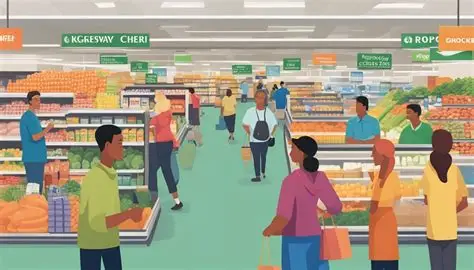
Independent grocery stores in the United States say they face growing pressure from large supermarket chains that can sell products at lower prices.
Alap Vora, owner of Concord Market in Brooklyn, New York, says the pricing gap makes competition nearly impossible for small stores. While walking through his store, he points to a box of Honey Bunches of Oats cereal. He explains that he pays about $5 to his distributor for the product. However, large chains sell the same item to customers for nearly the same price.
Vora says large retailers often have direct relationships with manufacturers. These connections allow them to secure better deals and preferred pricing. As a result, smaller stores struggle to keep prices competitive.
There are more than 21,000 independent grocery stores across the US. Together, they account for roughly one-third of grocery sales. Despite their presence, many owners say rising costs and uneven pricing structures threaten their survival.
Vora has spoken publicly about the issue. In May 2024, he testified before the US Senate Committee on Banking, Housing and Urban Affairs. During the hearing, he described the pricing system used by distributors as “fluctuating” and “opaque.”
He also shared how these pricing pressures affect his business. Some customers choose to travel to larger stores such as Costco or Trader Joe’s to find cheaper products. In some cases, Vora even buys items from Costco and resells them in his store because the prices are lower than what distributors offer.
Recently, the financial strain forced him to close a second grocery store in Manhattan. Sitting in the basement office of Concord Market, he now keeps boxes of unsold inventory from the closed location.
Experts say the issue extends beyond grocery stores. Katherine Van Dyck, founder of consulting firm KVD Strategies, says small businesses across several industries report similar concerns. Independent bookstores, pharmacies, and other retailers often face the same pricing disadvantage.
Van Dyck believes enforcement of the Robinson-Patman Act could help address the problem. The law, passed in 1936, prohibits companies from offering preferential prices to certain buyers if it harms competition.
The rule remained largely unused for decades. However, regulators revived it near the end of former President Joe Biden’s administration. Authorities filed lawsuits against a major alcohol distributor and beverage company PepsiCo under the law.
One of the cases continues, while the lawsuit against PepsiCo was later dismissed. The company has maintained that it provides fair and competitive pricing to all customers.
Not everyone agrees that enforcing the law would help consumers. Daniel Francis, a law professor at New York University, says stronger enforcement could lead to higher prices for shoppers.
Francis suggests policymakers should instead reduce regulatory and tax burdens for small retailers. He says this approach could provide more practical support for local businesses.
Still, advocates argue there is little evidence that enforcing the Robinson-Patman Act harms consumers. The debate continues as small retailers search for solutions that will allow them to compete with major supermarket chains.
The US Small Business Administration, which supports small companies across the country, has not yet commented on the issue.