Gabriel Heinze: The Big Brother Helping Arteta’s Arsenal Push for Glory
Gabriel Heinze arrived at Arsenal without the noise of a marquee signing, but his influence quickly became one of the quieter stories behind Mikel Arteta’s final step from title challenger to Premier League champion.
After three consecutive second-place finishes, Arsenal did not need only more talent. They needed sharper habits, stronger standards, deeper trust and a harder edge when matches became tense. The club added players during the summer, but the change inside the coaching staff mattered just as much. Carlos Cuesta left for Parma, and Arteta turned to an old ally who knew him long before the Emirates Stadium, before Manchester City, before management, and before the pressure of trying to end Arsenal’s long title wait.
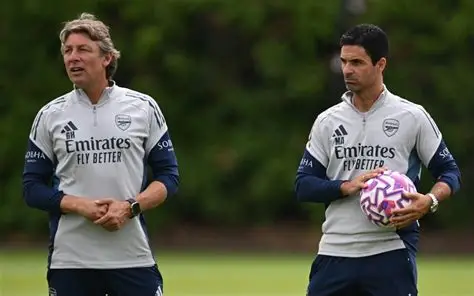
That ally was Gabriel Heinze, the former Argentina, Paris Saint-Germain, Manchester United, Real Madrid and Marseille defender. Arsenal confirmed his appointment as men’s first-team coach in July 2025, placing him inside one of the most demanding coaching environments in English football.
At first glance, the move looked unusual. Gabriel Heinze had played for Manchester United, had built a reputation as an intense and confrontational competitor, and had endured mixed spells as a head coach. But to Arteta, he was not just a former elite defender. He was someone who had helped him settle as a teenager in Paris and had remained part of his football education.
In hindsight, the appointment looks less like a gamble and more like a personal piece of title-winning architecture.
Why Gabriel Heinze Was More Than a Staff Appointment
Gabriel Heinze was not hired only to put cones on a training pitch. He was brought in because Arteta trusted the person, the personality and the football instincts behind the name.
Every successful manager needs people who can challenge him without weakening him. Arteta already had a detailed coaching structure at Arsenal, with Albert Stuivenberg, Miguel Molina, set-piece coach Nicolas Jover and goalkeeping coach Inaki Cana all carrying important responsibilities. But Cuesta’s departure created a gap, not only in coaching detail but in daily energy.
Gabriel Heinze filled that space differently. He brought the voice of a former defender who played at the highest level, won titles in different countries and understood the emotional demands of elite football. He also brought the honesty of someone who knew Arteta personally, not just professionally.
That matters because managers can become isolated. At a club like Arsenal, every decision is analysed, every draw feels like a crisis and every title race becomes a psychological test. A trusted assistant can offer perspective when the noise gets loud.
The News Ink’s football guide often returns to a simple truth: elite football is built on systems, but systems still depend on human trust. Gabriel Heinze gave Arteta a trusted voice at the exact moment Arsenal needed final-stage authority.
The PSG Bond That Shaped Arteta
The relationship between Gabriel Heinze and Mikel Arteta began in Paris in 2001. Arteta was a teenager on loan from Barcelona, searching for senior football and trying to adapt to a new country. Heinze arrived from Real Valladolid later that year, already older, tougher and more experienced.
That PSG dressing room was full of major personalities. Ronaldinho was there. Mauricio Pochettino was there. Jay-Jay Okocha and Nicolas Anelka were there too. For an 18-year-old midfielder from Spain, it was both exciting and intimidating.
Arteta has described his time in Paris as formative. It shaped him as a player and helped ignite his future interest in management. He did not only learn tactics. He learned dressing-room dynamics, personality management and the importance of experienced players who help young footballers survive unfamiliar environments.
Pochettino became a father-like figure. Gabriel Heinze became closer to a big brother. He was near enough in age to relate to Arteta, but experienced enough to guide him. The relationship was built through training, shared language, family connection and the difficult emotional work of adapting abroad.
That history explains why the Arsenal reunion carried more meaning than an ordinary coaching hire. Arteta was not adding a stranger. He was bringing back someone from the beginning of his football adulthood.
A Big Brother With a Hard Edge
The phrase “big brother” can sound soft, but Gabriel Heinze’s football personality was anything but gentle. He was a rugged, demanding defender who played with aggression, pride and a constant need to compete.
That edge followed him from PSG to Manchester United, Real Madrid and Marseille. It also followed him into management. His spells with Godoy Cruz, Argentinos Juniors, Velez Sarsfield, Atlanta United and Newell’s Old Boys showed the same intensity. Sometimes that intensity worked. Sometimes it became difficult to control.
That is why the Arsenal appointment had risk. A dressing room can benefit from high standards, but it can also tire of constant confrontation. A coach can raise energy, but he must not create unnecessary tension. The difference lies in trust, timing and clarity.
At Arsenal, Gabriel Heinze did not arrive as the main voice. That helped. Arteta remained the manager. Heinze became one of the voices inside the machine, able to channel his obsession without needing to carry every public responsibility.
That may be why the fit worked. Arteta could use the energy without allowing it to dominate the environment. Arsenal did not need chaos. They needed controlled fire.
Arteta Needed a Different Type of Help
After three years of falling short in the Premier League, Arteta’s challenge was psychological as much as tactical. Arsenal had become good enough to compete. They had not yet become ruthless enough to finish the job.
That difference is small but decisive. A team can play excellent football and still lack the edge to survive the final weeks of a title race. It needs players who accept pressure, coaches who reinforce habits and a staff that refuses drift.
Gabriel Heinze arrived with exactly that reputation. He was not known for passive encouragement. He was known for intensity, directness and defensive obsession. For an Arsenal side already technically strong, that personality had value.
The appointment also allowed Arteta to share some of the emotional load. A manager cannot be the only person driving standards every day. If the same voice delivers every warning, every correction and every demand, players can tune it out. A staff needs different tones.
Arteta could be the architect. Gabriel Heinze could be the daily edge. Jover could continue sharpening set pieces. Stuivenberg and Molina could support tactical planning. Cana could work with the goalkeepers. The whole structure mattered.
That is why this story should not make Heinze the sole reason Arsenal improved. It should explain why his profile fit what Arsenal needed.
Arsenal’s Title Was Built on Defensive Authority
The strongest evidence of Arsenal’s evolution came in the numbers. By the end of the 2025-26 Premier League campaign, Arsenal were champions for the first time since 2004. The Guardian’s Opta analysis described their title as being built on defensive excellence, relentless consistency and fine margins.
Arsenal conceded only 26 league goals, fewer than any other Premier League side that season. They allowed just 8.2 shots per game and 2.4 shots on target per game, the best figures across Europe’s top five leagues. David Raya also moved level with Arsenal’s best Premier League clean-sheet totals and won the Golden Glove for a third straight season.
Those numbers do not belong to one coach alone. Defensive structure is collective. It involves Arteta’s game model, the centre-backs, midfield protection, pressing triggers, goalkeeping, set pieces and recruitment. But Gabriel Heinze’s arrival strengthened the feeling that Arsenal wanted even more defensive control.
He worked primarily with defenders, bringing the authority of someone who had lived the position under pressure. For players such as William Saliba, Gabriel Magalhaes, Jurrien Timber, Ben White and Riccardo Calafiori, that kind of voice can matter.
Elite defenders do not need long speeches. They need details. Body shape. Scanning. Distance. Cover angle. Timing. Aggression. Distribution. When a former top-level defender delivers those messages with credibility, players listen.
The Heinze Effect in Simple Terms
| Area | What Gabriel Heinze added | Why it mattered |
|---|---|---|
| Defensive coaching | Elite playing experience and position-specific detail | Arsenal were already strong, but small improvements decide title races |
| Mentality | Intensity, competitiveness and direct standards | Arsenal needed to turn near-misses into final control |
| Trust | Long personal bond with Arteta from PSG | The manager gained a confidant, not just another staff member |
| Training energy | A demanding daily presence | Players received a different tone from the coaching staff |
| Title pressure | Experience from elite clubs and national-team football | Arsenal needed calm aggression during the run-in |
The table shows why Gabriel Heinze’s appointment was important without overstating it. He was not a miracle worker. He was a missing ingredient in a team already close to glory.
A Different Voice After Carlos Cuesta
Carlos Cuesta’s departure was a major moment for Arsenal’s staff. He had been one of Arteta’s trusted assistants, known for tactical intelligence, emotional maturity and individual development work. The Guardian later reported that Cuesta called leaving Arsenal for Parma perhaps the most difficult decision of his life.
That tells us something about the environment Arteta had built. Cuesta was not a replaceable background figure. He was part of the project. Losing him could have weakened the staff if Arsenal had simply filled the vacancy without thought.
Gabriel Heinze was not a like-for-like replacement. That was the point. Cuesta was younger, analytical and quietly influential. Heinze was older, battle-tested and more forceful. Both could add value, but in different ways.
Arteta did not try to recreate Cuesta. He chose a different profile for a different phase. Arsenal had already developed the technical and tactical framework. Now they needed to harden the final layer.
That is good staff building. Strong teams do not hire the same person repeatedly. They build balance.
The News Ink’s sports training technology guide explains how modern sport depends on specialist roles. Arsenal’s staff became another example: set-piece expertise, goalkeeper work, tactical planning, individual development and defensive detail all formed part of the same title push.
Why PSG Still Matters to Modern Arsenal
It may seem strange that a short spell at PSG more than two decades ago still matters to Arsenal in 2026. But football relationships often outlast contracts. Players remember who helped them when they were young. Coaches remember who challenged them. Managers return to people who shaped their standards.
For Arteta, Paris was not just a loan. It was a finishing school. He learned from elite personalities and from the discomfort of being away from home. He saw how dressing rooms work when talent, ego and expectation collide.
Gabriel Heinze was part of that education. He represented the competitive hardness Arteta later tried to build into Arsenal. Not recklessness, but commitment. Not noise for its own sake, but intensity with purpose.
That is why the reunion in north London carried emotional logic. Arteta’s Arsenal project has always been about more than tactics. It has been about culture, standards and identity. Bringing in someone from his formative years was a way of adding memory to the staff.
A club chasing history needs more than fresh ideas. Sometimes it needs old trust.
The Defensive Pairing Heinze Could Influence Most
The centre-back partnership of William Saliba and Gabriel Magalhaes became central to Arsenal’s title. The Guardian’s Opta analysis noted that among centre-back pairings to start together more than five times, Saliba and Gabriel had the best clean-sheet rate in the Premier League.
That partnership already had elite qualities before Heinze arrived. Saliba brought calm, recovery speed and composure. Gabriel brought aggression, aerial power and leadership. Together, they gave Arsenal the physical and technical base to control matches.
Gabriel Heinze’s role was not to reinvent them. It was to sharpen details. A former defender can often see things that a general coach may miss: when a centre-back should step, when to hold, how to defend the blind side, how to manage a striker’s first contact, how to use body angle when passing into midfield.
Those details are not always visible in highlights. They appear in fewer shots conceded, fewer emergency tackles, fewer chaotic transitions and more clean sheets.
In title races, that is gold.
Arsenal’s Set-Piece Strength and Defensive Culture
Arsenal’s title was also shaped by set pieces. Opta’s Guardian analysis said Arsenal scored 28 league goals from dead-ball situations, including a Premier League-record 18 from corners. Nicolas Jover deserves major credit for that area, but the wider defensive and physical culture around the squad helped too.
Set pieces reveal mentality. Players must be disciplined, aggressive, brave and repetitive. The same is true when defending them. Arsenal’s dominance from dead balls showed a team comfortable with detail and physical contact.
That environment suited Gabriel Heinze. His playing career was built on duels, timing and competitive pride. He understood that football is not only patterns and possession. It is also confrontation.
For years, critics accused Arsenal of being too soft in decisive moments. Under Arteta, and especially in the title-winning season, that old label became harder to use. The team could still play, but it could also grind.
The News Ink’s report on how the Premier League break affects title races explored how rhythm and resilience decide campaigns. Arsenal’s 2025-26 season proved that margins, recovery and mentality can be as important as flair.
The Manchester United Connection Added Extra Edge
There was also an interesting symbolic layer: Gabriel Heinze had once played for Manchester United, Arsenal’s great Premier League rival from the Arsene Wenger era. For older Arsenal supporters, he was not a neutral figure. He belonged to the enemy’s history.
But football changes. Arteta did not hire him for nostalgia or rivalry. He hired him for standards. Heinze had played in winning environments and understood what it meant to be hated away from home, tested under pressure and expected to deliver every week.
That experience is valuable. Arsenal’s young squad had grown with Arteta, but some of its key players were still learning how to become serial winners. A staff member who had lived through Manchester United, Real Madrid and Argentina dressing rooms could bring stories and standards that younger players respected.
The News Ink’s article on Manchester United’s managerial struggles shows how hard it is to recreate winning culture once it disappears. Arsenal’s task was different: they had to complete a new winning culture before another near-miss damaged belief.
Gabriel Heinze helped reinforce that urgency.
Why Arteta Could Trust Him
Trust is the word that keeps returning. Arteta could trust Gabriel Heinze because their relationship was built before power entered it. They knew each other as young players, not as manager and assistant. That changes the dynamic.
A coach hired through reputation alone may be respected. A coach hired through deep personal knowledge may be relied upon in harder ways. Arteta knew what kind of person Heinze was. He knew the intensity, the loyalty and the honesty. He knew the risk and the reward.
That is important because assistants must sometimes tell managers uncomfortable truths. They must challenge a training plan, question a selection idea, warn about mood in the squad or offer a different reading of a player. Those conversations work only when trust is strong.
Arteta is known for control and detail. A manager like that does not hand influence to people lightly. The fact he brought Gabriel Heinze into such an important season says plenty.
It also shows Arteta’s maturity. Successful leaders do not surround themselves only with agreeable voices. They surround themselves with people who can improve the environment.
The Coaching Staff as Arsenal’s Hidden Signing
Supporters naturally focus on transfers. New strikers, midfielders and defenders are easier to see than coaching appointments. But staff changes can be just as important.
A player may decide one position. A coach can influence several players every day. He can shape habits, confidence, preparation and match understanding. Over a full season, that influence compounds.
Gabriel Heinze’s appointment was therefore a hidden signing. He did not score goals or make tackles, but he worked with the people who did. He added knowledge to training, fire to the environment and reassurance to the manager.
That is why the story matters. Arsenal’s title was not built only in matches. It was built between matches, in conversations, corrections and repeated demands.
Modern football is too complex for one genius manager acting alone. Arteta may be the face of Arsenal’s project, but the project depended on a staff that could execute his ideas daily.
Gabriel Heinze became part of that execution.
What Heinze Could Still Add Next
Winning the Premier League changes the challenge. Before the title, Arsenal had to prove they could get over the line. Now they must prove they can stay there.
That may make Gabriel Heinze even more important. Defending a title is a different test from winning one. Players can relax. Opponents study patterns. Motivation shifts. The emotional hunger that carried a team through a long chase can soften after success.
Heinze’s personality works against comfort. He is not likely to let standards drift because a trophy has arrived. That kind of staff member can be valuable after success, when complacency becomes the hidden opponent.
Arsenal also reached the Champions League final in 2026 before losing to PSG on penalties after a 1-1 draw. That heartbreak leaves another target. The league title ended one wait, but Europe remains unfinished business.
The News Ink’s analysis of VAR and football has shown how fine margins can dominate elite matches. Arsenal’s next step will depend on mastering those margins again.
The Caution: Do Not Turn One Coach Into a Myth
It would be wrong to say Gabriel Heinze alone made Arsenal champions. Football does not work like that. Arteta built the project over years. Edu and the recruitment team shaped much of the squad before the final title step. Jover’s set pieces were crucial. Raya, Saliba, Gabriel, Rice, Saka, Odegaard, Havertz and others delivered on the pitch.
Heinze’s contribution should be framed correctly. He was not the whole story. He was a meaningful part of the final chapter.
That distinction matters because football coverage often turns individuals into magic explanations. A team wins, and one new face becomes the secret. Reality is usually more layered. Arsenal improved because many pieces aligned: recruitment, coaching, physicality, set pieces, defensive depth, experience and belief.
Gabriel Heinze mattered because he fitted those pieces. He gave Arsenal something they needed at the right time.
That is a stronger argument than pretending he transformed everything by himself.
Why This Story Works as a Football Feature
This is not only a staff-news article. It is a relationship story. It begins with a young Arteta in Paris, unsure and far from home. It moves through Heinze’s fierce playing career and Arteta’s slow managerial rise. It lands at Arsenal, where an old bond becomes useful in a modern title race.
That arc gives the story depth. It explains why football is not only about tactics, money and analytics. It is also about memory, loyalty and the people a manager trusts when pressure becomes unbearable.
The best part of the story is that it does not feel manufactured. Arteta and Gabriel Heinze did not meet at Arsenal. They did not need a corporate introduction. Their connection was already old. Arsenal simply became the place where it mattered again.
For a club that had waited 22 years for a league title, that kind of trust proved valuable.
The News Ink’s report on Newcastle United and the financial limits of ambition looked at how club projects need more than money. Arsenal’s story shows the same truth from another angle. Talent matters, but alignment matters too.
The Bottom Line
Gabriel Heinze joined Arsenal as a first-team coach in July 2025, replacing Carlos Cuesta after the young Spaniard left for Parma. On paper, it was a backroom change. In reality, it reunited Mikel Arteta with one of the most trusted figures from his formative playing years at Paris Saint-Germain.
Their relationship began in 2001, when Arteta was an 18-year-old trying to adapt in Paris and Heinze became a big-brother figure. More than two decades later, Arteta brought that same loyalty, intensity and honesty into Arsenal’s title chase.
The timing could hardly have been better. After three consecutive Premier League runner-up finishes, Arsenal needed extra edge. Gabriel Heinze brought defensive knowledge, daily competitiveness and the kind of direct presence that can sharpen a squad already close to success.
Arsenal’s 2025-26 Premier League title was built on many foundations: Arteta’s long rebuild, elite defending, set-piece power, improved mentality, player development and a deep coaching staff. Heinze was not the only reason the Gunners finally got over the line, but he became an important part of the final push.
That is why his story matters. Gabriel Heinze was not Arsenal’s loudest arrival. He may not even have been the most discussed. But in a season defined by fine margins, his big-brother bond with Arteta and his relentless defensive edge helped give Arsenal something they had been missing.
For more Premier League and football features, readers can follow The News Ink on X.