Tottenham Fans: Shocking 2026 Relegation Fear After Palace Walkout
Tottenham fans leaving their seats before half-time against Crystal Palace became one of the most painful images of Spurs’ 2025-26 season because it showed more than frustration. It showed fear.
The match at Tottenham Hotspur Stadium on 5 March 2026 started with hope. Dominic Solanke gave Spurs the lead, and for a few minutes it looked as if Igor Tudor’s side might finally find the win that had been missing for weeks. Then everything collapsed. Micky van de Ven was sent off after conceding a penalty, Ismaila Sarr scored twice, Jorgen Strand Larsen added another, and Crystal Palace went into half-time 3-1 ahead.
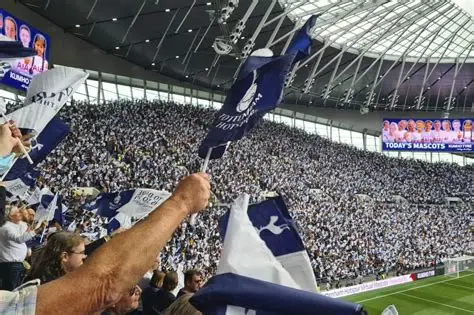
The reaction was immediate. Tottenham fans headed for the exits in large numbers. Some left before the second half began. Others stayed only to boo at full-time. It was not a normal bad-night reaction from impatient supporters. Spurs were 11 Premier League matches without a win, one point above the relegation zone, and still without a league victory in 2026. For a club with a world-class stadium, European pedigree and huge commercial power, the idea of relegation had stopped sounding impossible.
Tottenham eventually survived the season. Spurs finished 17th with 41 points, two above relegated West Ham United. But the Crystal Palace walkout remains important because it captured the moment the supporters stopped treating the crisis as temporary noise and started treating it as an emergency.
For readers who want the wider context of Spurs’ finances, The News Ink’s report on Tottenham’s £261m relegation warning explains why Premier League survival mattered far beyond league-table pride.
Why Tottenham fans left early
Tottenham fans left early because the Palace defeat felt like the same failure repeating in a worse form. Spurs did not merely lose. They collapsed from a winning position, lost discipline, conceded three goals in a short spell and looked emotionally drained.
The sequence was brutal. Solanke’s opener should have settled the stadium. Instead, Van de Ven’s red card changed the match. Sarr converted the penalty, Palace quickly added another through Strand Larsen, and Sarr struck again in first-half stoppage time. A team already short on belief suddenly looked unable to stop the damage.
That is why the walkout mattered. Supporters will usually tolerate defeat if they see fight, structure or a plan. This looked different. It looked like a side whose confidence had broken.
Tottenham fans were not protesting one mistake. They were reacting to months of drift: poor results, managerial change, injury problems, uncertain leadership and the growing possibility that Spurs could be dragged into the Championship.
The scoreline told only part of the story
The 3-1 scoreline was damaging, but the mood inside the stadium told the deeper truth. Tottenham fans had seen enough by half-time because the pattern was familiar. The team could start brightly, but one setback often turned into panic.
Crystal Palace did not need to produce a perfect attacking display for Spurs to unravel. They needed pressure, movement and patience. Once Tottenham went down to 10 men, Palace looked calmer, sharper and more convincing.
That contrast hurt. Palace were not title contenders. They were a mid-table side trying to move away from danger. Yet they looked more coherent than Tottenham at Tottenham Hotspur Stadium.
For Tottenham fans, that was the frightening part. If Spurs could not control a home match after taking the lead, where exactly were the remaining points going to come from?
The final table changed the ending, not the warning
The original moment happened when Tottenham were one point above the relegation zone. The updated version of this story must include the final outcome: Spurs survived.
NBC Sports’ final Premier League table listed Tottenham 17th with 10 wins, 11 draws, 17 defeats, a -9 goal difference and 41 points. West Ham finished 18th with 39 points and were relegated, alongside Burnley and Wolves. That means Tottenham fans eventually avoided the worst-case scenario, but only by two points.
That final table makes the Palace walkout even more meaningful. It was not an overreaction. It was an early public sign of how close the club really was to disaster.
Tottenham fans were watching a team that ultimately survived by one result. Their fear was justified.
The News Ink’s Premier League season review places the escape in a wider season where Arsenal won the title, Liverpool secured Champions League football and Spurs became one of the most unexpected survival stories.
Spurs’ winless run made the fear real
At the time of the Palace defeat, Tottenham had gone 11 league matches without a win. Reuters described it as their worst run in 50 years, while other reports compared the mood to some of the club’s darkest league spells.
The key detail is not only the number. It is the timing. A winless run in September can be repaired. A winless run in March, with nine matches left and relegation rivals still collecting points, becomes dangerous.
Tottenham fans had watched the team fail to find a league win since December. Home form had become toxic. The stadium, built to be a symbol of modern Spurs ambition, had become a place of anxiety.
That is why the Palace match felt like a breaking point. A club can tell supporters to stay patient when form dips. It cannot easily ask for patience when relegation becomes a serious possibility.
Igor Tudor’s confidence did not convince everyone
Igor Tudor tried to sound calm after the defeat. He said he believed more in the team after the match than before it, arguing that he saw energy, desire and passion in the dressing room. He also rejected pressure talk and insisted he had a job to do.
Those comments were honest from a manager trying to protect his players, but they did not land well with many Tottenham fans. After a 3-1 home defeat, a red card, a half-time walkout and an 11-match winless run, optimism sounded disconnected from the stadium mood.
Tudor’s problem was time. He had arrived as a rescue appointment after Thomas Frank’s dismissal, but lost his first three league games. The supporters did not have months to judge his ideas. Spurs needed points immediately.
The Guardian later reported that Tudor publicly admitted the Premier League relegation fight was the club’s priority, even with a Champions League tie against Atletico Madrid approaching. That showed how serious the situation had become. European football could not distract from survival.
Tudor’s Spurs spell ended quickly
The Palace defeat did not immediately end Tudor’s time at Tottenham, but it pushed the pressure higher. By late March, Spurs had parted company with him after only 44 days and seven games. Roberto De Zerbi was then appointed on a long-term deal, with the urgent task of keeping the club in the Premier League.
That update is important because it shows the Palace match was not just another bad result. It was part of a managerial collapse. Tudor had been brought in to create stability. Instead, the club changed direction again before the season ended.
Tottenham fans had lived through too many resets. Ange Postecoglou’s era had ended. Thomas Frank’s spell had collapsed. Tudor’s rescue job was brief. De Zerbi then arrived with seven league matches to save the club.
A club cannot build trust with supporters when every few weeks feels like a new emergency plan.
Crystal Palace exposed Spurs’ lack of control
The Palace defeat was especially damaging because Tottenham had moments of attacking promise but no control. That has been a recurring problem for Spurs across different managers. The team can create chances, press in bursts and excite the crowd for short spells. But when the match turns, the structure often weakens.
Against Palace, one red card should not have meant total emotional collapse. Good teams adjust. They slow the match. They protect the penalty area. They avoid conceding again immediately. Tottenham did the opposite.
For Tottenham fans, that was familiar and exhausting. The frustration was not only about tactical choices. It was about seeing the same mental fragility appear again.
The News Ink’s sports training technology guide explains how modern clubs use data, fitness and tactical preparation to manage pressure. Spurs looked like a team without enough of that clarity when the crisis hit.
Joe Cole’s criticism matched the mood
Joe Cole’s reaction on TNT Sports was important because it matched what many Tottenham fans felt in the ground. He criticised the lack of energy and intensity, and questioned whether the club needed a different kind of personality to handle the situation.
Pundit criticism can sometimes feel exaggerated. In this case, the stadium itself had already delivered the verdict. Empty seats before half-time and boos at full-time said more than any studio panel.
The key point is that Tottenham fans were not angry only because their team lost. They were angry because the performance did not look like a team fighting for its Premier League life.
That is the most damaging accusation in a relegation battle. Quality can dip. Confidence can fall. Injuries can hurt. But effort and urgency must be visible. Against Palace, many supporters did not see enough.
The financial shadow behind the walkout
The walkout also mattered because Tottenham’s business model depends on Premier League status. Spurs are not built like a club that can quietly absorb Championship football. Tottenham Hotspur Stadium, premium hospitality, major sponsorships, NFL events, concerts and global commercial partnerships all sit on top of the club’s Premier League identity.
The News Ink’s previous analysis explained that relegation could have cost Spurs more than £250m in lost revenue. Broadcast money would have fallen sharply. Matchday income would have been pressured. Sponsorship value could have been affected. The cost of running a giant stadium would not have disappeared.
Tottenham fans understand enough of that reality to know relegation would have been more than sporting humiliation. It would have reshaped the club’s future.
That is why the Palace defeat felt frightening. The team on the pitch was threatening the entire structure around it.
Why home form hurt so much
Home form is emotional. Away defeats can be blamed on travel, hostile crowds or difficult fixtures. Home defeats happen in front of the people who pay the most, sing the longest and carry the club’s identity.
Tottenham fans had not seen a Premier League home win since December 2025. By March, the stadium atmosphere had changed from expectation to tension. Players could feel it. Supporters could feel the players feeling it. That loop can become toxic.
Tottenham Hotspur Stadium is one of the finest venues in world football. But expensive stadiums do not automatically create intimidating atmospheres when the team gives supporters little to believe in.
Against Palace, the stadium became a mirror. It reflected fear, anger and disbelief.
The players had to face the reality
Dominic Solanke later said Spurs needed to figure out how to avoid relegation “as soon as possible.” That was a blunt but necessary admission. By that stage, denial would have made things worse.
For Tottenham fans, hearing players acknowledge the danger mattered. Supporters do not need fake positivity when the table is obvious. They need honesty and action.
Spurs eventually found just enough to survive. Reuters reported in May that Tottenham finally eased relegation fears with a vital 2-1 win at Aston Villa, ending a long league wait and moving above West Ham. That result became one of the turning points in the escape.
But the Palace match remained the low point because it forced everyone to accept the truth. Tottenham were not too big to go down. They were in a real fight.
Why supporters leaving early was understandable
Some people criticise fans for leaving early. In normal circumstances, that argument has weight. Supporters often demand loyalty from players and should show loyalty themselves.
But this was not a normal situation. Tottenham fans had endured months of poor results and watched a home match collapse before half-time in a relegation battle. Leaving early was not only about avoiding traffic. It was a statement of despair.
Supporters are not required to applaud dysfunction. They are not paid employees. They are the people funding the club through tickets, memberships, shirts, travel and loyalty over decades. When they leave early in large numbers, the club should treat it as feedback.
The message from Tottenham fans was clear: this level is unacceptable.
The wider Tottenham identity crisis
The Palace walkout fitted a bigger identity crisis. What are Tottenham trying to be?
A club with Champions League ambitions? A commercial giant? A trophy-chasing side? A development project? A survival team? In 2025-26, Spurs looked like all and none of those at once.
They had European status but league panic. They had a great stadium but poor home form. They had expensive players but little cohesion. They changed managers but did not find stability.
Tottenham fans have heard promises before. They have seen rebuilds begin, stall and restart. What made the 2026 crisis different was the threat of relegation. It stripped away branding and forced a basic question: can the team win enough football matches to stay in the league?
For a club of Spurs’ size, that question should never have become so urgent.
De Zerbi’s arrival changed the survival race
Roberto De Zerbi’s appointment at the end of March gave Spurs another reset. Reuters reported that he arrived on a long-term deal with the club just one point above the relegation zone and seven games left to save the season.
De Zerbi described the job as the biggest challenge of his career and said he would remain even if results went badly. That mattered because Tottenham needed someone who could look beyond panic while still solving the immediate problem.
His appointment also changed the mood around the club. Tottenham fans did not suddenly forget the Palace defeat, but there was at least a new direction. De Zerbi’s football had a clear identity at Brighton, and Spurs needed clarity more than anything.
The club survived, but the survival was narrow enough to prove that the rescue came late.
What the Palace defeat should teach Spurs
The Palace defeat should remain a lesson inside Tottenham even after survival.
First, form can collapse faster than club reputation. A big badge does not win points.
Second, managerial churn creates emotional fatigue. Players and supporters need a plan they can recognise.
Third, home supporters are a warning system. When Tottenham fans leave at half-time in a relegation battle, the club should listen.
Fourth, financial strength does not protect a team from poor football decisions.
Fifth, survival should not become the new standard. Finishing 17th is not a platform to celebrate; it is a warning to rebuild properly.
The News Ink’s report on Liverpool’s Champions League qualification warning shows the same lesson at a different end of the table. Elite clubs face major consequences when results fall below the level their business model expects.
The emotional cost on Tottenham fans
The human side of the story should not be ignored. Tottenham fans were mocked by rivals, criticised by pundits and asked to keep supporting through chaos. Many did. But support does not mean silence.
A relegation battle changes the emotional rhythm of a fanbase. Every fixture becomes a calculation. Every rival result matters. Every red card feels catastrophic. Every missed chance feels bigger than it should. Supporters start looking at the table before looking at performance.
That is what happened after Palace. Tottenham fans were no longer asking whether Spurs could rescue a European push. They were asking whether the club could avoid the Championship.
That is a humiliating shift for a club that sees itself among England’s biggest.
The final judgment
Tottenham fans leaving early against Crystal Palace became the defining image of Spurs’ relegation scare because it captured the moment hope ran out inside the stadium.
The match had everything that made the season feel broken: a promising start, a sudden collapse, a red card, defensive panic, boos, empty seats and a manager trying to find positives that supporters could not see. Spurs were 11 league games without a win, one point above the relegation zone and running out of time.
The ending was not disaster. Tottenham survived by two points and stayed in the Premier League. De Zerbi replaced Tudor, the club avoided the financial cliff and West Ham went down instead. But survival does not erase what happened.
Tottenham fans were right to be alarmed. They were watching a club with elite infrastructure perform like a relegation candidate. The Palace walkout should now be remembered not as disloyalty, but as a warning.
Spurs escaped the drop. They cannot afford to ignore the message from the seats they left behind.
For more football and sports finance analysis from The News Ink, follow The News Ink on X.