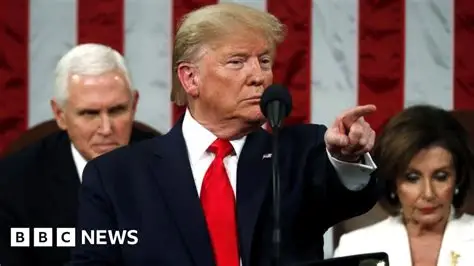
Trump Fact Check: The Alarming Claims From His Longest Address to Congress Explained
This Trump fact check examines the major claims President Donald Trump made during his record-length 2026 address to Congress. The speech lasted nearly one hour and 48 minutes and was filled with confident statements about inflation, grocery prices, gasoline, jobs, investment, energy and election security. Trump repeatedly argued that the United States was “winning again” and that his administration had produced a historic turnaround.
Some of the claims were partly supported by data. Employment totals were high, and inflation had slowed in January compared with the 2022 peak. But several claims were exaggerated, missing important context or contradicted by later official figures. This Trump fact check separates what was accurate, what was misleading and what required stronger evidence.
The most important update is timing. The speech was delivered on 24 February 2026. Since then, newer economic data has changed parts of the picture. Inflation was 2.4% in January, but by May it had risen to 4.2%. Gasoline prices later climbed sharply. The labour market remained resilient, but employment claims needed population context. The $18 trillion investment claim remained unsupported by the White House’s own lower public figure.
Editor’s update — June 2026: This article has been rebuilt with later official data and a clearer claim-by-claim structure. It keeps the original topic but updates the conclusions where newer numbers changed the context.
Trump Fact Check: How Long Was the Address?
Trump’s 2026 address was unusually long. Axios reported that the speech lasted 108 minutes, making it the longest State of the Union address on record. The length mattered because it gave Trump time to move across many subjects, from the economy and tariffs to elections and foreign policy.
A long speech can sound convincing because it creates the impression of detail. But length is not the same as accuracy. A proper Trump fact check must compare each claim with the best available data, not with the force of the delivery.
The address mixed genuine economic indicators with political framing. Trump used strong language to describe falling inflation, cheaper gasoline, record employment and huge investment commitments. In each case, the details require a closer look.
Quick Verdict Table
| Claim area | Trump’s message | Fact-check verdict |
|---|---|---|
| Inflation | Prices were coming down quickly | Partly true in January, but misleading without later data and cost-of-living context |
| Grocery prices | Families were seeing relief | Mixed; some items fell, but food-at-home prices were still rising |
| Gasoline | Prices were below $2.30 in most states | Misleading; national and state averages did not support the broad claim |
| Jobs | More Americans were working than ever | Technically true by raw total, but incomplete because population also grew |
| Investment | More than $18 trillion was secured | Unsupported; official and independent figures were much lower |
| Election fraud | Cheating was rampant | Unsupported; available evidence shows voter fraud is rare |
| Tariffs | Tariffs were helping the country | Misleading without noting consumer costs, legal questions and budget limits |
Trump Fact Check: Inflation Had Slowed, But Prices Were Still Rising
Trump argued that his administration had quickly lowered inflation and that previous Democratic policies were responsible for the high-price environment. This claim needs careful wording.
The Bureau of Labor Statistics January CPI release showed that consumer prices rose 2.4% over the 12 months ending in January 2026. That was lower than December’s 2.7% annual rate and far below the 9.1% inflation peak recorded in June 2022.
So one part of the claim was fair: inflation had slowed sharply from the 2022 high. But inflation slowing does not mean prices are falling overall. It means prices are rising more slowly than before. A family still paying more for food, rent, electricity or insurance may not feel that inflation is “solved.”
This Trump fact check should also include later data. By May 2026, the BLS reported that the Consumer Price Index was up 4.2% from a year earlier. Energy prices were the main driver, and gasoline rose 40.5% over 12 months. That later increase made Trump’s February description look too optimistic.
The News Ink’s economy guide explains this distinction clearly: lower inflation is not the same thing as lower prices. Prices can remain painful even when the inflation rate declines.
Grocery Prices: Relief Was Uneven
Trump highlighted progress on grocery prices. The numbers were mixed.
In January, food-at-home prices were up 2.1% from a year earlier. That was not runaway inflation, but it still meant grocery prices were rising. Some individual categories moved differently. BLS data showed that meat, poultry, fish and eggs rose 2.2% over the year in January, while dairy and related products fell 0.3%.
By May, the picture had shifted again. The BLS May CPI report showed food-at-home prices up 2.7% over 12 months. Fruits and vegetables were up 6.1%, nonalcoholic beverages rose 5.8%, and meats, poultry, fish and eggs increased 1.8%. Dairy and related products were down 1.0%.
The fair Trump fact check verdict is this: grocery inflation was lower than the worst period of 2022, but shoppers were not seeing broad price declines. Some items became cheaper, some rose modestly and others rose sharply. A political speech can highlight the favourable examples, but a full fact-check needs the whole basket.
Gasoline Prices: The Broad Claim Was Misleading
Trump claimed gasoline prices were below $2.30 per gallon in most states and as low as $1.99 in some places. That was one of the weaker claims in the speech.
The Guardian’s fact-check reported that AAA data showed Oklahoma as the only state near the figure Trump cited, at about $2.374 per gallon. It also noted that prices in some states exceeded $4.60. That directly undermined the phrase “in most states.”
The later picture became even less favourable. Reuters reported in June that the national average gasoline price had only just dipped below $4 per gallon for the first time since mid-April, according to GasBuddy data, before AAA listed the average at $4.065 the next day. That was far from the February claim that most states were below $2.30.
This Trump fact check verdict is clear: isolated low station prices or one low statewide average do not prove that most Americans were paying those prices. A national claim needs national evidence.
Jobs: A Record Total, But Not the Whole Story
Trump said more Americans were working than ever before. By raw employment totals, that type of claim can be true because the U.S. population keeps growing. More people in the country generally means more people working.
But raw totals are not the best way to judge labour-market strength. A stronger measure is the employment-to-population ratio: the share of the population that is employed.
The BLS May employment report showed that total nonfarm payroll employment increased by 172,000 in May and that the unemployment rate stayed at 4.3%. The employment-population ratio was 59.2%, while the labour-force participation rate was 61.8%.
The AP fact-check of the speech noted that the employment-population ratio was 59.8% in January and that the share of Americans with jobs had peaked at 64.7% in April 2000. That context matters because it shows why “most people working ever” can be technically true but incomplete.
A fair Trump fact check verdict is: the labour market was resilient, but the speech used a raw number that sounded stronger than the broader employment picture.
Investment Claims: The $18 Trillion Figure Lacked Evidence
Trump claimed he had secured more than $18 trillion in global investment commitments. That was one of the most dramatic claims in the address.
The Associated Press fact-check found that Trump had not presented evidence for the $18 trillion figure. AP reported that the White House’s own website listed a much lower figure of $9.6 trillion and that some commitments appeared to include pledges made during the Biden administration.
There is another important point: announced investment is not the same as completed investment. Companies and governments can announce plans that are delayed, reduced, changed or cancelled. A pledge can be politically useful before it becomes economically real.
This Trump fact check verdict is: the investment claim was exaggerated and insufficiently supported. Even the lower official number was large, but it did not prove the $18 trillion boast.
The News Ink previously reported on how trade policy and business uncertainty can affect investment decisions in its article on the US economic slowdown.
Tariffs: Revenue Claims Need Context
Trump presented tariffs as a major economic success. Tariffs can raise government revenue, but they also raise costs for importers and can be passed on to consumers.
The AP fact-check reported that before the Supreme Court struck down Trump’s emergency-based tariffs, the Congressional Budget Office estimated that the tariffs would raise about $3 trillion over 10 years. That is a large number, but AP noted it was not enough to cover the cost of major tax cuts or eliminate large annual deficits.
This Trump fact check should also highlight the legal and trade context. The News Ink’s report on Canada trade talks after Trump’s tariff ruling explains why the Supreme Court decision created new pressure around trade negotiations and tariff authority.
The correct verdict: tariffs raised revenue, but the speech overstated their ability to transform federal finances. Tariffs also create costs, uncertainty and possible retaliation.
Election Fraud Claims: Evidence Does Not Support “Rampant” Cheating
Trump repeated claims that cheating is rampant in U.S. elections and called for stricter rules, including tougher voter ID requirements and restrictions aimed at noncitizen voting.
The available evidence does not support the word “rampant.” Reuters reviewed state and private findings and reported that noncitizen voting is rare. The Brennan Center found 30 instances of noncitizens voting out of 23.5 million votes reviewed in 2016. The conservative Heritage Foundation found 24 instances of noncitizen voting between 2003 and 2023.
That does not mean fraud never happens. It means proven cases are small compared with the number of ballots cast. Election systems can and should investigate genuine violations, but broad claims of widespread cheating require strong evidence.
This Trump fact check verdict is: the claim of rampant election cheating was unsupported by available data.
Why “Fact Check” Does Not Mean “Attack”
A professional Trump fact check should not begin with the assumption that every political claim is false. Some claims are partly true. Some are technically accurate but incomplete. Some are unsupported. Some become outdated when newer data arrives.
That is why this article separates categories:
- Accurate but incomplete: employment totals;
- Partly true but overstated: inflation progress in January;
- Misleading: gasoline prices in most states;
- Unsupported: $18 trillion in investment;
- Not supported by evidence: rampant election cheating.
This approach is more useful than simply calling a speech true or false. Political speeches are designed to persuade. Fact-checking is designed to clarify.
What Changed After the Speech?
The biggest change after the address was inflation. January data showed 2.4% annual CPI inflation. May data showed 4.2%. That does not mean every February claim became false, but it does mean the speech’s confidence about prices looks less durable.
Gasoline also changed sharply. February claims about low prices were already weak; later fuel data made the affordability picture worse. Employment remained relatively stable, with 172,000 jobs added in May and unemployment holding at 4.3%.
Investment claims did not become better supported. The $18 trillion figure remained much larger than the White House’s own reported tracker number.
Election-fraud claims also remained unsupported by evidence of widespread cheating.
Why Readers Should Check the Time Period
One important lesson from this Trump fact check is that dates matter. A politician can cite a number from one month, while the public may experience a different reality weeks later.
Inflation in January was not inflation in May. A single low gasoline station price is not a national average. A record number of employed people is not the same as a record employment rate. An investment pledge is not the same as money already spent.
Readers should ask four questions when hearing economic claims:
- What time period is being measured?
- Is the number a rate, a total or a percentage?
- Does the claim use national data or isolated examples?
- Has the promised result already happened, or is it only a pledge?
Those questions make political claims easier to judge.
Final Verdict
This Trump fact check finds that the president’s address mixed real data with exaggeration. Inflation had slowed in January, but prices were still rising and later inflation accelerated. Employment totals were high, but the employment-population ratio gave a more cautious picture. Gasoline prices were not below $2.30 in most states. The $18 trillion investment claim was unsupported. Election fraud claims were not backed by evidence of widespread cheating.
The speech succeeded politically by presenting a confident story of national recovery. The data tells a more complicated story.
The United States economy in 2026 was not collapsing, but it was also not as simple as “winning again.” Prices, fuel costs, labour-market participation, tariffs and investment pledges all required more context than the speech provided.
For more current-affairs analysis, follow The News Ink on X.