Chelsea Discipline Woes: Why 6 Red Cards Became a Serious Warning Sign
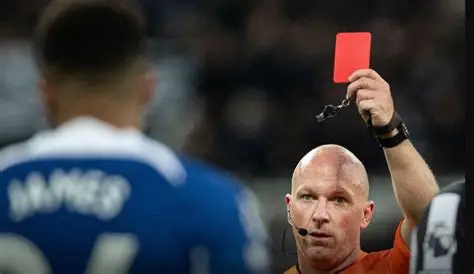
Chelsea discipline woes became impossible to ignore when Liam Rosenior’s side allowed Burnley to escape Stamford Bridge with a 1-1 draw on 21 February 2026. João Pedro had given Chelsea an early lead, Wesley Fofana was dismissed after receiving a second yellow card, and Zian Flemming headed in Burnley’s equaliser during stoppage time. A match that appeared under control became another example of a wider problem.
At that stage of the campaign, Chelsea had dropped 17 points from winning positions in Premier League home matches. No other team had lost more points from winning positions at home during the season. Fofana’s dismissal was also Chelsea’s sixth Premier League red card of the campaign, equalling the club’s highest total in a single season in the competition.
Chelsea discipline woes therefore involved more than one late equaliser. The Burnley draw exposed a recurring inability to manage difficult moments, protect narrow leads and maintain control when the pressure increased. The warning became more significant as the season unfolded. Rosenior was dismissed on 22 April, and Chelsea eventually finished 10th in the Premier League after missing out on European qualification.
Chelsea Discipline Woes Defined the Burnley Draw
Chelsea started brightly against Burnley. João Pedro scored after four minutes, converting Pedro Neto’s cross and placing the home side in a strong position. Burnley had arrived fighting near the bottom of the table, while Chelsea were attempting to strengthen their place in the race for European qualification.
The balance changed in the 72nd minute. Fofana received a second yellow card after a late challenge on James Ward-Prowse. Burnley gained belief, Chelsea dropped deeper and the visitors found their equaliser in the third minute of stoppage time when Flemming met Ward-Prowse’s corner with a powerful header.
The official Premier League matchweek review confirmed the key events and noted that the draw denied Chelsea the chance to move three points clear of Manchester United in fourth place.
| Match detail | Confirmed information |
|---|---|
| Fixture | Chelsea 1-1 Burnley |
| Competition | Premier League |
| Date | 21 February 2026 |
| Venue | Stamford Bridge |
| Chelsea scorer | João Pedro, 4 minutes |
| Burnley scorer | Zian Flemming, 90+3 minutes |
| Key disciplinary moment | Wesley Fofana shown a second yellow card in the 72nd minute |
Chelsea discipline woes mattered because the team had been close to securing a routine home victory. The lead was narrow, but Burnley had struggled to create clear chances for long periods. Once Chelsea were reduced to 10 players, however, the closing stages became uncertain. Flemming’s header punished a defensive lapse and turned two expected points into another source of frustration.
The Numbers Behind Chelsea Discipline Woes
The Burnley result did not stand alone. The Premier League’s analysis after Matchweek 27 identified red cards and dropped points as defining features of Chelsea’s season. It stated that Chelsea had received six Premier League red cards, matching the club record from 2007/08. The same analysis noted that the team had collected eight red cards in all competitions by that point.
Chelsea discipline woes were also connected to a damaging pattern at Stamford Bridge. Chelsea had dropped 17 points from winning positions in home league games. The club had lost more only once in a Premier League season at that stage of comparison: 20 points in 1995/96.
| Warning sign after the Burnley draw | Confirmed figure |
|---|---|
| Premier League red cards | 6 |
| Red cards in all competitions | 8 |
| Home points dropped from winning positions | 17 |
| Previous Chelsea Premier League season with more home points dropped from winning positions | 1995/96, with 20 |
| Rosenior’s opening Premier League run | 6 matches unbeaten |
The Premier League’s Matchweek 27 analysis made the wider point clearly. Rosenior had not lost any of his first six Premier League matches in charge, the longest unbeaten start by a Chelsea manager since Thomas Tuchel in March 2021. Even so, the results against Leeds United and Burnley created a sense that important points were being allowed to slip away.
Chelsea discipline woes were therefore not simply a matter of card totals. The cards had consequences. They changed match situations, increased pressure on defenders and made it harder for Chelsea to turn promising performances into victories.
The Leeds Draw Made the Pattern Harder to Dismiss
The Burnley match followed a 2-2 home draw against Leeds United in which Chelsea surrendered a two-goal lead. Rosenior’s frustration was understandable. Four points had disappeared across two Stamford Bridge fixtures that Chelsea had been well placed to win.
After the Burnley draw, Rosenior said Chelsea had “set fire to four points from two home games”. His comments were reported by Reuters, which also recorded his argument that stronger teams find ways to close out matches even when their performances are not perfect.
Chelsea discipline woes made that challenge more difficult. A team defending a narrow lead needs concentration, communication and emotional control. When a player is dismissed, every responsibility becomes harder. Space opens, substitutions become more defensive and opponents gain confidence.
It would be too simplistic to blame every dropped point on indiscipline. Chelsea also needed better finishing, stronger set-piece defending and calmer game management. However, Chelsea discipline woes repeatedly reduced the margin for error. In a competitive league, that can be decisive.
Why Red Cards Change More Than One Match
A red card immediately changes the tactical structure of a match. A team may sacrifice an attacker, defend deeper or abandon its original pressing plan. Players must cover more ground, and the opponent can circulate the ball with greater freedom.
The laws are straightforward. A player who receives a second yellow card is sent off and cannot be replaced. The IFAB laws on fouls and misconduct explain the disciplinary framework used in football. The practical consequences, however, extend beyond the written rule.
Chelsea discipline woes affected several areas at once:
- Defensive organisation: A reduced team must protect the penalty area with fewer players.
- Attacking threat: Removing an attacker can make it harder to hold the ball or relieve pressure.
- Set-piece concentration: Fatigue and tactical changes can disrupt marking assignments.
- Squad availability: Suspensions reduce the options available for later fixtures.
- Confidence: Repeated collapses can create anxiety when a match enters its final stages.
Flemming’s equaliser illustrated the third point. Burnley’s set piece found an unmarked runner in a dangerous area. The dismissal did not automatically cause the marking failure, but it contributed to a closing period in which Chelsea had lost the control they previously held.
Chelsea Discipline Woes Were Part of a Wider Game-Management Problem
The phrase game management can sound vague, but it has a clear meaning. Strong teams recognise what a match requires at different stages. They know when to press, when to slow the tempo, when to clear danger and when to avoid unnecessary risks.
Chelsea discipline woes suggested that this judgement was not consistent enough. The squad contained obvious technical quality, but the final stages of matches demanded more than talent. They required reliable decision-making under pressure.
Rosenior acknowledged that he was still learning which players he could trust in difficult moments. That did not mean one individual should carry the blame. Fofana’s red card was an important turning point, but the wider issue extended across the season. Chelsea had already collected multiple dismissals before Rosenior’s arrival.
This distinction matters. Chelsea discipline woes were partly inherited, but they also became a test of the new coaching staff. Rosenior needed to assess whether the problem came from isolated decisions, tactical fatigue, emotional reactions, poor positioning or a combination of factors.
Readers who want a broader explanation of bookings, dismissals, tactical roles and match management can explore The News Ink’s verified football guide.
Rosenior Inherited a Difficult Situation
Chelsea appointed Rosenior on 6 January 2026 after the departure of Enzo Maresca. The club’s official appointment announcement stated that he had signed a contract running until 2032 after leading Strasbourg to European qualification for the first time in 19 years.
His early league results offered encouragement. Chelsea discipline woes had not prevented him from building an unbeaten start in the Premier League, and there were signs that the team could respond positively to his ideas. Yet the Leeds and Burnley draws revealed weaknesses that had not disappeared.
Rosenior’s comments after Burnley were notable because they focused on accountability rather than excuses. He resisted the temptation to blame Chelsea’s young squad profile alone. Youth can affect consistency, but professional players are still expected to understand their responsibilities.
Chelsea discipline woes also raised a difficult question for the club’s wider strategy. Development matters, particularly in a squad assembled around young talent. However, a team competing near the top of the Premier League also needs experience, stability and players capable of controlling matches when the atmosphere changes.
Accountability Should Not Become Scapegoating
Fofana’s dismissal was central to the Burnley match, but responsible analysis must separate criticism of a football decision from personal attacks. A late challenge can be discussed. A red card can be reviewed. A player’s performance can be assessed. None of that justifies abuse.
After the match, Fofana and Burnley midfielder Hannibal Mejbri disclosed racist messages sent to them online. The News Ink’s report on racist abuse after the Premier League clash explains the response from the players and clubs.
Chelsea discipline woes remain a legitimate sporting subject. Racist abuse is not legitimate criticism and should never be normalised as part of football culture. The two issues must not be confused.
This distinction is especially important when frustration is high. Football analysis should examine decision-making, tactics and accountability without turning one player into a target for hatred. Clubs can demand improvement while still protecting players from discrimination and abuse.
The April Decision Changed the Meaning of the Burnley Draw
When the Burnley match ended, Rosenior remained unbeaten in his first six Premier League fixtures. The draw was frustrating, but it was still possible to interpret Chelsea discipline woes as a problem that could be corrected during the run-in.
That interpretation became harder to sustain as results deteriorated. On 22 April, Chelsea announced that Rosenior had left the club. The official Chelsea statement said that recent results and performances had fallen below the necessary standards and confirmed that Calum McFarlane would take charge until the end of the season.
The Burnley draw did not cause Rosenior’s departure on its own. It should not be treated as the single event that determined his future. However, Chelsea discipline woes visible in February were part of a broader pattern: points lost from strong positions, uncertainty in decisive moments and a failure to build consistent momentum.
The retrospective view is therefore more revealing than the original news angle. Chelsea discipline woes were not merely a temporary irritation. They were an early warning sign during a season that became increasingly unstable.
Chelsea Finished the Season Without European Qualification
Chelsea’s final weeks did not produce the recovery supporters wanted. McFarlane took charge on an interim basis, and the club still had opportunities to end the campaign positively. Chelsea reached the FA Cup final but lost narrowly to Manchester City. The league season then ended with a 2-1 defeat away to Sunderland.
Chelsea’s official end-of-season update confirmed that the Sunderland defeat resulted in a 10th-place Premier League finish and ended the club’s hopes of qualifying for European competition in 2026/27.
| Date | Development | Why it mattered |
|---|---|---|
| 6 January 2026 | Liam Rosenior appointed Chelsea head coach | Began a new attempt to stabilise the team |
| 21 February 2026 | Chelsea drew 1-1 with Burnley | Chelsea discipline woes again affected a home match |
| 22 April 2026 | Chelsea parted company with Rosenior | Recent results and performances fell below expectations |
| 16 May 2026 | Chelsea lost the FA Cup final to Manchester City | Missed the chance to finish with silverware |
| 24 May 2026 | Chelsea lost 2-1 at Sunderland | Finished 10th and missed European qualification |
Chelsea discipline woes were not the only explanation for the final outcome. Injuries, tactical inconsistency, managerial change and attacking problems also mattered. Still, Chelsea discipline woes and the February warning signs became difficult to overlook when viewed alongside the completed season.
What Chelsea Must Learn From the 2025/26 Campaign
Chelsea discipline woes offer several lessons for the next phase of the club’s development. The first is that individual quality cannot replace emotional control. A talented squad can dominate possession and still lose points through one reckless moment or one poorly defended set piece.
The second lesson from Chelsea discipline woes is that closing matches is a skill. Teams do not protect leads by retreating automatically. They protect leads through intelligent possession, compact defending, clear communication and the ability to recognise danger before it becomes a crisis.
The third lesson is that accountability must be collective. Chelsea discipline woes cannot be solved by identifying one player after each setback. Coaches must examine tactical decisions, senior players must organise the team and individuals must understand the consequences of avoidable cards.
The fourth lesson is that youth development needs structure. Young players improve when expectations are clear and experienced teammates help manage difficult periods. Chelsea’s squad has considerable potential, but potential must become consistency.
A practical improvement plan should include:
- reviewing the circumstances behind every booking and dismissal;
- rehearsing game-state scenarios with 10 players;
- improving late-match set-piece assignments;
- identifying leaders for high-pressure moments;
- reducing unnecessary challenges in non-critical areas;
- using substitutions to preserve control rather than simply add fresh legs.
Chelsea discipline woes should be studied in detail because the margins are small. One improved decision can preserve two points. Across a full season, those moments can change the table significantly.
Frequently Asked Questions About Chelsea Discipline Woes
What happened in Chelsea vs Burnley?
Chelsea drew 1-1 with Burnley at Stamford Bridge on 21 February 2026. João Pedro scored early, Wesley Fofana received a second yellow card in the 72nd minute and Zian Flemming equalised in stoppage time.
How many Premier League red cards had Chelsea received?
After the Burnley match, Chelsea had received six Premier League red cards during the 2025/26 campaign. That equalled the club’s highest total in a single Premier League season, previously recorded in 2007/08.
How many home points had Chelsea dropped from winning positions?
At the time of the Burnley draw, Chelsea had dropped 17 points from winning positions in Premier League home matches.
Why did Rosenior describe the situation so strongly?
Chelsea had surrendered a two-goal lead against Leeds and then conceded a late equaliser against Burnley. Rosenior said the team had “set fire to four points from two home games”.
Did Rosenior remain Chelsea head coach until the end of the season?
No. Chelsea parted company with Rosenior on 22 April 2026. McFarlane became interim head coach until the end of the campaign.
Where did Chelsea finish in the Premier League?
Chelsea finished 10th in the 2025/26 Premier League season and did not qualify for European competition for 2026/27.
Chelsea Discipline Woes Became a Defining Warning
Chelsea discipline woes were already visible before the season entered its final months. The Burnley draw brought the issue into sharp focus because Chelsea had controlled much of the match, taken an early lead and still failed to secure three points after another dismissal.
The completed season gives Chelsea discipline woes and that result greater significance. Rosenior’s early unbeaten league run did not develop into sustained progress. Chelsea discipline woes remained part of a wider struggle for consistency, and the club eventually changed head coach before finishing 10th.
The lesson is not that every setback came from one cause. Football seasons are more complicated than that. The lesson is that repeated indiscipline makes every other problem harder to solve. Chelsea discipline woes reduced the room for error, weakened promising performances and became one of the clearest warning signs of a difficult campaign.
For more football stories, analysis and explainers, follow The News Ink on Instagram.