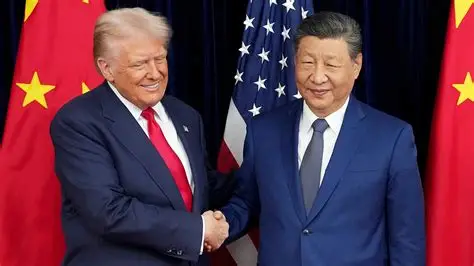
Trump China Visit Highlights Changing Dynamics Between Washington and Beijing
Trump China Visit Begins With Grand Ceremony in Beijing
The Trump China visit opened with extraordinary pageantry in Beijing as Chinese President Xi Jinping rolled out a lavish welcome ceremony for the American leader. The event signaled a possible reset in relations between the world’s two biggest economic powers despite years of political tension and trade disputes.
Military guards lined the entrance to the Great Hall of the People while a ceremonial band performed the American national anthem. Schoolchildren waved Chinese and American flags as Donald Trump walked alongside Xi Jinping during the official reception.
Trump appeared impressed by the carefully organized welcome. He paused multiple times to greet children and praised China openly during public appearances throughout the day.
As the two leaders shook hands, Trump warmly patted Xi on the arm before calling him “a great leader” during spontaneous remarks to reporters and officials.
The moment reflected a sharp contrast to Trump’s earlier rhetoric on China during his previous presidential campaigns and trade battles.
Xi Jinping Uses Trump China Visit to Display Global Power
China used the Trump China visit to present itself as a rising global power capable of hosting world leaders with unmatched diplomatic grandeur.
The Chinese leadership organized every detail carefully. Officials understood the images from Beijing would travel across the globe and shape international perceptions of China’s political strength.
The welcome ceremony included:
- Military honor guards
- Gun salutes
- Traditional cultural performances
- Diplomatic banquets
- Historic site tours
- Meetings with leading business executives
Xi Jinping also hosted Trump at the historic Temple of Heaven, one of Beijing’s most famous cultural landmarks. Trump later described China as “beautiful” during comments to reporters.
Political analysts believe the display served several purposes beyond diplomacy. China wanted to project confidence, stability, and global influence at a time when international politics remains deeply divided.
The visit also allowed Xi to strengthen his image as a leader capable of managing difficult relationships while protecting Chinese interests.
Trade Tensions Still Overshadow Trump China Visit
Despite the warm atmosphere, major disputes still dominate the relationship between Washington and Beijing.
Trade remains the biggest unresolved issue surrounding the Trump China visit.
Over recent years, both countries imposed massive tariffs on each other’s goods during a damaging trade war. At one point, tariff rates climbed above 100%, creating uncertainty for businesses and global markets.
Although both sides later agreed to a temporary truce, uncertainty continues over future economic policy.
Business leaders closely watched the Beijing meetings because the outcome could affect:
- Global supply chains
- Manufacturing costs
- International investments
- Technology partnerships
- Consumer prices
- Financial markets
Trump previously built much of his political identity around criticism of China’s economic practices. During earlier campaigns, he repeatedly accused Beijing of unfair trade behavior and harming American industries.
Now, however, his tone appeared far more diplomatic during the Beijing visit.
That shift raised questions about whether both governments may pursue a more cooperative relationship moving forward.
Taiwan Emerges as One of the Biggest Challenges
While public ceremonies focused on friendship and cooperation, deeper political disagreements remained impossible to ignore.
Taiwan continues to represent one of the most sensitive issues in US-China relations.
China considers Taiwan part of its territory, while the self-governed island maintains strong political and military ties with the United States.
Soon after talks began, Chinese officials reportedly emphasized Beijing’s position on Taiwan, signaling that the dispute remains a serious obstacle despite the positive atmosphere surrounding the visit.
The issue carries enormous geopolitical importance because any escalation could destabilize the wider Asia-Pacific region.
During the Trump China visit, analysts closely monitored every public statement related to Taiwan for signs of possible policy changes or diplomatic concessions.
So far, neither side appears willing to compromise significantly on the issue.
Iran Discussions Add Another Layer to Trump China Visit
Iran also emerged as a major discussion point during the meetings between Trump and Xi Jinping.
The United States hopes China can play a constructive diplomatic role in reducing tensions involving Tehran and broader Middle Eastern security concerns.
China maintains important economic and political relationships with Iran, giving Beijing influence that Washington cannot ignore.
Experts believe discussions may have included:
- Energy security
- Regional stability
- Nuclear negotiations
- Shipping routes
- Global oil markets
- International sanctions
The issue matters greatly because instability in the Middle East directly affects global trade and energy prices.
China’s growing influence in international diplomacy means Beijing increasingly participates in negotiations that once centered mainly around Western powers.
The Trump China visit highlighted how global politics continues shifting toward a more multipolar structure.
Business Leaders Watch Trump China Visit Closely
The diplomatic trip also carried enormous economic importance for major corporations and investors.
Around 30 business executives reportedly accompanied Trump during the visit. Many hoped the meetings could improve commercial cooperation between the two countries.
Executives remain eager for stability because ongoing trade uncertainty creates risks for multinational companies operating across both markets.
Key sectors monitoring the visit included:
- Technology
- Automotive manufacturing
- Artificial intelligence
- Energy
- Agriculture
- Financial services
China remains one of the world’s largest consumer markets, making strong relations with Beijing valuable for global companies.
At the same time, the United States continues to hold major influence over international finance and advanced technology industries.
Because of that economic reality, both governments understand the importance of maintaining at least some level of cooperation.
Trump’s Changing Tone Draws Global Attention
One of the biggest talking points surrounding the Trump China visit involved Trump’s noticeably softer tone toward Beijing.
In earlier years, Trump frequently used aggressive language when discussing China. He criticized trade policies, blamed Beijing for economic problems, and repeatedly promised tougher action against Chinese influence.
However, during this visit, his public comments sounded far more positive and diplomatic.
He praised Xi Jinping multiple times and described the meetings as a “cherished opportunity.”
Political observers believe several factors may explain the change:
- Economic pressure from global markets
- Growing geopolitical tensions
- Diplomatic strategy shifts
- Business interests
- International security concerns
Others argue the welcoming atmosphere in Beijing helped create a more cooperative mood.
Regardless of the reason, the contrast between past rhetoric and present diplomacy became one of the defining themes of the trip.
China Seeks Bigger Global Leadership Role
The Trump China visit also demonstrated China’s growing ambition on the global stage.
Over recent years, Beijing has expanded its international influence through trade agreements, infrastructure projects, and diplomatic partnerships.
Chinese officials increasingly present their country as a stable alternative in an unpredictable world.
Several world leaders from Europe, Asia, and North America have recently strengthened engagement with Beijing in search of economic opportunities and political cooperation.
China’s expanding role reflects broader global changes, including:
- Shifting economic power
- Rising Asian influence
- New trade partnerships
- Strategic competition with the US
- Technological rivalry
The Beijing summit reinforced the idea that US-China relations now shape nearly every major international issue.
From trade and security to technology and climate policy, cooperation or conflict between the two superpowers affects the entire world.
Key Takeaways From Trump China Visit
Here are the biggest conclusions from the visit:
- China organized a highly symbolic grand welcome
- Trump adopted a more diplomatic tone toward Beijing
- Trade tensions still remain unresolved
- Taiwan continues to create serious friction
- Iran discussions highlighted China’s growing global role
- Business leaders want economic stability
- Both countries recognize the importance of cooperation
Conclusion
The Trump China visit delivered powerful political imagery, warm public gestures, and renewed diplomatic engagement between Washington and Beijing.
However, beneath the ceremonies and public praise, major geopolitical disputes remain unresolved.
Trade disagreements, Taiwan tensions, and broader strategic competition will continue shaping relations between the two superpowers in the coming years.
Still, the visit showed that both governments understand the importance of dialogue during a period of global uncertainty.
Whether the meetings lead to lasting progress remains unclear, but the Beijing summit has already become one of the most closely watched diplomatic moments of the year.