Virginia Redistricting Referendum Faces Major Defeat After Supreme Court Ruling
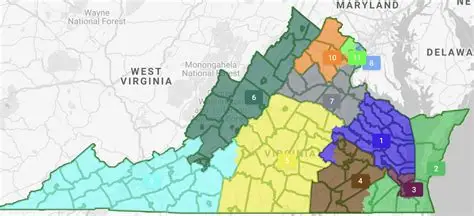
The Virginia redistricting referendum suffered a dramatic setback after the state’s Supreme Court struck down the measure that aimed to redraw congressional district boundaries ahead of the upcoming US midterm elections. The ruling delivers a significant political blow to Democrats, who hoped the new map would help them gain additional seats in the US House of Representatives.
The decision now keeps Virginia’s current congressional map in place for the next election cycle. Political analysts say the ruling could influence the balance of power in Washington as both major parties continue battling over district boundaries across the country.
The case also reignited a national debate over election fairness, constitutional procedures, and the growing political fight surrounding redistricting in America.
Why the Virginia Redistricting Referendum Matters
The Virginia redistricting referendum became one of the most closely watched political issues in the United States this year. Democrats supported the measure because they believed updated district lines could improve their chances of winning more congressional seats.
Supporters argued that the proposal would better reflect changing population patterns and voter demographics across Virginia. Critics, however, claimed the plan heavily favored one political party and violated constitutional procedures.
The state Supreme Court ultimately ruled that lawmakers failed to follow the required constitutional process when placing the referendum before voters.
Key Points From the Court’s Decision
- The referendum process violated Virginia’s constitutional rules.
- Lawmakers did not properly complete the required election procedure.
- The current congressional maps from 2021 will remain in place.
- The ruling affects the political landscape ahead of the midterm elections.
The court’s majority opinion stated that the process “irreparably undermined” the integrity of the referendum vote.
Democrats Lose a Critical Political Opportunity
The blocked Virginia redistricting referendum represents a major setback for Democrats nationally. Party strategists viewed Virginia as one of the few states where they could potentially offset Republican gains in other regions.
Political experts estimated that Democrats could have gained up to four additional House seats under the proposed district map.
That possibility has now disappeared.
Why Democrats Wanted New District Maps
Democrats believed the updated boundaries would:
- Create districts more favorable to urban and suburban voters
- Increase representation in fast-growing communities
- Reduce Republican advantages in several regions
- Help reclaim control of the House of Representatives
With the court’s ruling, those plans are now on hold.
Party leaders quickly criticized the decision, calling it undemocratic and harmful to voter representation.
Republicans Celebrate the Court’s Decision
Republicans praised the ruling as a victory for constitutional law and fair elections. Conservative leaders argued that the proposed maps were politically motivated and unfairly designed to benefit Democrats.
Supporters of the ruling pointed to the current congressional map as more balanced and less partisan than the proposed alternative.
Republican Arguments Against the Referendum
Republicans claimed the measure:
- Ignored constitutional requirements
- Rushed the legislative process
- Attempted to create heavily partisan districts
- Threatened election integrity
The ruling strengthens Republican confidence heading into the midterm campaign season.
Understanding Virginia’s Constitutional Dispute
At the center of the case was a legal disagreement about how constitutional amendments must be approved before reaching voters.
Virginia law requires:
- Approval by the General Assembly
- A general election between legislative votes
- Final approval before voters decide
Republicans argued that lawmakers failed to meet the “intervening election” requirement because early voting had already begun before legislative approval was completed.
The court agreed with that interpretation.
What the Majority Opinion Said
The majority ruled that early voters lost the opportunity to fully consider the constitutional amendment process before casting ballots.
Judges said this procedural flaw invalidated the referendum entirely.
However, dissenting justices strongly disagreed.
Dissenting Justices Raise Concerns
Not all members of the court supported the ruling. Several dissenting justices argued that the majority expanded the definition of “election” too broadly.
They warned the decision could create confusion around future elections and voting procedures.
Concerns Raised by Dissenting Judges
The dissent argued:
- Early voting should not redefine election timing
- The referendum reflected voter intent
- Canceling the vote damages public trust
- The ruling creates legal uncertainty
The disagreement highlights growing tensions over election law interpretation in the United States.
National Impact of the Virginia Redistricting Referendum
The Virginia redistricting referendum carried national significance because congressional maps directly affect control of the US House.
Across the country, both political parties continue aggressively fighting over district boundaries before the next election cycle.
Why Redistricting Matters
Congressional maps determine:
- Which voters belong to each district
- How competitive elections become
- Which party holds political advantages
- Representation in Washington
Even small changes can shift political power nationally.
Virginia became a key battleground because of its closely divided electorate and rapidly changing suburbs.
Growing National Redistricting Battles
The fight over the Virginia redistricting referendum reflects a much larger national trend.
Several states are currently facing:
- Court challenges over district maps
- Accusations of gerrymandering
- Legal battles over voting rights
- Disputes about fair representation
Both parties increasingly view redistricting as essential to controlling Congress.
States Facing Similar Political Battles
Other states dealing with redistricting disputes include:
- Texas
- North Carolina
- Georgia
- Wisconsin
- Florida
Courts across the country may play a decisive role in shaping future elections.
Voter Reactions Remain Divided
Public reaction to the Virginia redistricting referendum ruling has been sharply divided along political lines.
Supporters of the referendum expressed frustration, saying voters approved the measure and their voices should matter.
Opponents argued the Constitution must be followed regardless of political outcomes.
Common Reactions From Voters
Supporters said:
- The ruling overturns voter will
- Representation should evolve with population changes
- Courts are becoming too political
Opponents responded:
- Constitutional rules protect democracy
- Fair procedures matter most
- Partisan maps harm elections
The debate reflects broader national disagreements about democracy and election fairness.
What Happens Next?
The ruling means Virginia’s existing congressional districts will remain in place for the upcoming elections.
Political organizations supporting the referendum may still explore additional legal options, but experts say reversing the decision will be difficult.
Possible Next Steps
Future developments could include:
- Appeals to federal courts
- New legislative proposals
- Updated constitutional amendment efforts
- Increased national campaign spending in Virginia
Political strategists from both parties are already adjusting their midterm election plans.
Midterm Elections Could Still Be Competitive
Even without the Virginia redistricting referendum, analysts say the national political environment remains highly competitive.
Democrats still hope to benefit from voter frustration over economic issues and political divisions. Republicans, meanwhile, continue emphasizing border security, inflation, and energy policy.
Virginia’s ruling may shift some momentum, but the broader battle for Congress remains wide open.
Factors That Will Shape the Midterms
Several issues will influence voters:
- Inflation and living costs
- Immigration policy
- Healthcare
- Foreign policy
- Energy prices
- Voter turnout
Control of Congress could ultimately depend on a handful of competitive districts nationwide.
Conclusion
The collapse of the Virginia redistricting referendum marks one of the most important political and legal developments ahead of the US midterm elections. The Supreme Court’s ruling not only reshapes Virginia politics but also highlights the growing national fight over election maps and political power.
Democrats now face a tougher path toward gaining additional House seats, while Republicans celebrate a major legal and political victory.
As the midterm campaign intensifies, the debate surrounding voting rights, constitutional procedures, and congressional representation will remain at the center of American politics.