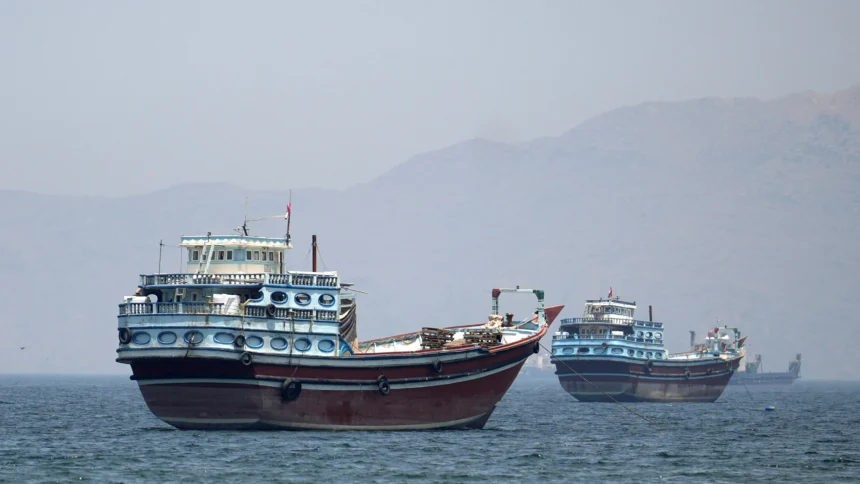
US sanctions Iran tolls raise global shipping concerns
US sanctions Iran tolls have become a major flashpoint in global trade as Washington warns shipping companies against making payments for safe passage through the Strait of Hormuz. The move signals an escalation in economic pressure and raises fresh uncertainty for one of the world’s most critical maritime corridors.
The warning, issued amid ongoing tensions, is already affecting shipping activity, with fewer vessels willing to risk penalties while navigating the region.
US sanctions Iran tolls trigger strict compliance warnings
The alert was released by Office of Foreign Assets Control, which clarified that US entities are broadly prohibited from making payments to Iranian institutions. Non US firms are also at risk if their transactions involve the US financial system or indirectly support restricted sectors.
Officials emphasized that payments could take multiple forms, including digital assets, indirect transfers, or informal financial arrangements. Even seemingly unrelated transactions could expose companies to enforcement actions if linked to Iranian authorities.
This has placed shipping firms, insurers, and financial intermediaries in a difficult position, forcing them to reassess operations in the region.
Strait of Hormuz traffic drops sharply
The impact of US sanctions Iran tolls is clearly visible in maritime traffic data. The number of ships passing through the Strait of Hormuz has fallen dramatically, reflecting growing concerns over security and legal risks.
| Factor | Before Conflict | Current Situation |
|---|---|---|
| Monthly ship traffic | Around 3,000 vessels | Reduced significantly |
| Daily crossings | High volume | Only a few ships |
| Trade flow | Stable | Disrupted |
| Shipping costs | Normal levels | Rising sharply |
This disruption is critical because the Strait handles a large share of global oil shipments, along with food, medicine, and industrial goods.
Iran defends toll collection policy
Iran has responded strongly to the US stance, arguing that toll collection is a legitimate measure under current conditions. Officials have described foreign naval actions as unlawful interference and have defended their right to control maritime access.
Reports suggest that toll revenues have already been collected, though details remain unclear. The situation continues to evolve as both sides maintain firm positions.
The broader conflict, which began earlier this year, has led to repeated incidents at sea, including vessel interceptions and restricted access to key ports.
Humanitarian operations face growing pressure
The consequences of US sanctions Iran tolls extend beyond commercial shipping. Aid agencies are now dealing with longer delivery times and increased costs due to rerouted supply chains.
UNHCR has warned that essential humanitarian shipments are being delayed, particularly to crisis zones where timely delivery is critical.
Rerouting cargo around longer sea routes can add up to 25 days to delivery schedules, significantly increasing fuel costs and logistical complexity. This is especially concerning for regions already facing conflict and food insecurity.
To better understand how sanctions influence global economies and supply chains, insights from World Bank provide valuable context on trade disruptions and financial pressures.
US strategy focuses on financial pressure
US sanctions Iran tolls are part of a broader strategy aimed at limiting Iran’s revenue streams, particularly in oil and shipping sectors. Additional measures have targeted financial networks accused of facilitating currency exchanges linked to Iranian exports.
Officials say the objective is to restrict Iran’s ability to fund operations while pushing for diplomatic engagement. Enforcement actions have already led to multiple vessels being turned away from the region.
This approach combines economic restrictions with military presence, creating a complex environment for global trade.
Uncertain diplomatic path ahead
Despite rising tensions, diplomatic efforts are still ongoing. Both sides have engaged in talks, but progress remains limited. Recent proposals have not yet resulted in a breakthrough, and disagreements continue over key terms.
Leadership dynamics within Iran and shifting geopolitical alliances are adding further complexity to negotiations. As a result, the timeline for any resolution remains unclear.
Global markets watch closely
US sanctions Iran tolls are now influencing global markets, particularly energy prices and shipping costs. Any prolonged disruption in the Strait of Hormuz could have widespread economic consequences.
Countries dependent on oil imports are especially vulnerable, as supply constraints could drive prices higher. Businesses are also adjusting strategies to manage risk in an increasingly uncertain environment.
For more global trade, conflict, and economic updates, visit The News Ink for in depth coverage and expert analysis of major world events.