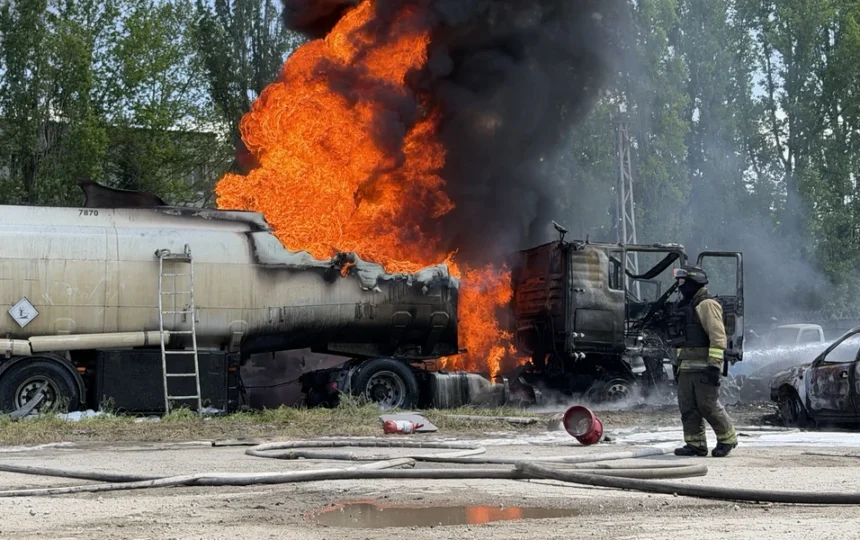
Ryazan Oil Refinery Drone Attack Halts Operations at Major Russian Energy Facility
A drone attack on the Ryazan oil refinery has forced one of Russia’s largest oil processing plants to suspend operations entirely. The strike, which took place on 15 May 2026, has sent shockwaves through Russia’s energy sector and raised new questions about the vulnerability of critical infrastructure deep inside Russian territory.
Two industry sources confirmed to a major international news agency that output at the Ryazan facility came to a complete halt following the attack. The refinery accounts for nearly 5% of Russia’s total oil refining capacity — making this one of the most significant infrastructure strikes of the ongoing conflict.
What Happened at the Ryazan Oil Refinery?
On 15 May 2026, Ukrainian drones struck the Ryazan region southeast of Moscow, hitting both residential areas and an industrial facility. Local Russian authorities confirmed the following in the immediate aftermath:
- Four people were killed, including a child
- Multi-storey residential buildings sustained damage
- An industrial facility — later identified by sources as the Ryazan oil refinery — was struck
- The refinery subsequently halted all oil processing operations
The attack reached a region located approximately 354 kilometres from the Ukrainian border — a significant operational distance that highlights the extended range of Ukraine’s drone campaign against Russian energy infrastructure.
Why the Ryazan Refinery Matters to Russia’s Energy Sector
The Ryazan oil refinery is not just another industrial site. It is a cornerstone of Russia’s domestic fuel production network. Understanding its scale helps explain why this strike carries serious strategic weight.
Key production figures from 2024:
- 13.1 million tonnes of crude oil processed annually
- 2.2 million tonnes of petrol produced
- 3.4 million tonnes of diesel fuel produced
- 4.3 million tonnes of fuel oil produced
Together, these numbers place the Ryazan refinery among Russia’s most productive energy facilities. A prolonged shutdown could tighten domestic fuel supplies, raise prices for Russian consumers, and reduce export capacity — all at a time when Russia is already under heavy economic pressure from international sanctions.
Who Owns the Ryazan Refinery?
The Ryazan oil refinery is owned by Rosneft, Russia’s largest state-controlled oil company. When approached for comment by the international news agency that broke this story, Rosneft did not respond.
The silence from Rosneft is notable. State-linked energy companies in Russia have historically been cautious about acknowledging infrastructure damage, particularly when it signals vulnerability in sectors the Kremlin considers strategically vital.
What the ownership structure means:
- Rosneft is closely tied to the Russian state, making damage to its assets politically sensitive
- Decisions about repairs and resumption of operations are likely to involve government coordination
- Any extended downtime affects not just Rosneft’s finances but Russia’s broader wartime energy planning
How Deep Inside Russia Did This Strike Reach?
The Ryazan region sits southeast of Moscow, placing it well within what many observers previously considered a relatively secure zone of Russian territory. The southernmost part of the region lies roughly 354 kilometres from the Ukrainian border.
This distance matters. Early in the conflict, drone strikes were largely limited to regions closer to the front lines or near the border. Attacks now regularly reach deep into Russian territory, targeting refineries, fuel depots, and military logistics infrastructure.
A pattern of energy infrastructure strikes:
- Ukrainian drones have previously targeted refineries in Saratov, Krasnodar, and other regions
- Russia’s oil refining capacity has faced repeated disruptions since 2024
- Energy infrastructure strikes are widely seen as part of a broader strategy to strain Russia’s war economy
Security analysts who track the conflict note that hitting fuel production directly impacts Russia’s ability to sustain military operations, supply its own domestic market, and maintain export revenues that fund the war effort.
What Happens Next: Repair Timeline and Impact
The suspension of operations at the Ryazan oil refinery raises an immediate question — how long will it be offline?
Past drone strikes on Russian refineries offer some context. Repairs to major refinery infrastructure typically take weeks to months, depending on the severity of the damage. In several previous cases, Russian authorities have managed partial resumptions of operations while repair work continues on damaged units.
Factors that will determine the timeline:
- The extent of structural and equipment damage from the drone strike
- Availability of replacement parts, which sanctions have made harder to source
- Whether further attacks occur during the repair window
- Political pressure on Rosneft and the Kremlin to restore output quickly
Until Rosneft provides an official assessment — or independent damage analysis becomes available — the full scale of the disruption remains unclear.
The Broader Strategic Picture
The Ryazan oil refinery drone attack fits into a wider pattern of Ukraine targeting Russian energy and logistics infrastructure. These strikes serve multiple strategic purposes simultaneously.
Why energy infrastructure is a key target:
- Fuel shortages strain Russian military logistics and frontline operations
- Reduced refinery output cuts into the export revenues that fund Russia’s defence budget
- Domestic fuel price pressures increase economic stress on Russian civilians
- Each successful deep-strike demonstrates the limits of Russian air defence coverage
Russia has responded to previous refinery strikes with increased air defence deployments around energy facilities, but the Ryazan attack suggests those measures have not eliminated the risk entirely.
For independent analysis of energy infrastructure in conflict zones, the Oxford Institute for Energy Studies and S&P Global Commodity Insights regularly publish assessments relevant to this developing situation.
Key Takeaways
- The Ryazan oil refinery halted operations after a Ukrainian drone strike on 15 May 2026
- The plant processes nearly 5% of all Russian crude oil annually
- Four people, including a child, died in the broader attack on the Ryazan region
- Rosneft, the state-owned operator, has not commented publicly
- The refinery sits 354 kilometres from the Ukrainian border — deep inside Russian territory
- The shutdown adds to a growing list of Russian energy facilities damaged by drone attacks
The full impact of this strike on Russia’s fuel supply and war economy will become clearer in the days and weeks ahead as damage assessments emerge and Rosneft decides how to respond publicly.