Russia’s long exile from global sport is coming to an end.
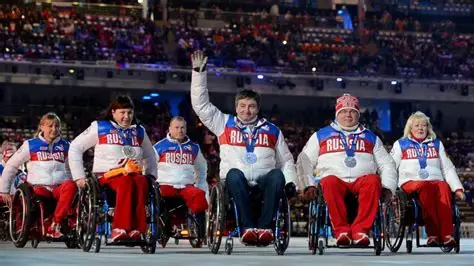
Athletes from Russia will compete under their national flag at the upcoming Winter Paralympics. It marks the first time since 2014 that the country returns with full national symbols.
The decision comes despite the ongoing war in Ukraine. It has triggered strong reactions across Europe.
How Many Athletes Will Compete?
Six Russian and four Belarusian athletes will take part in the Games.
Unlike the recent Winter Olympics in Milan-Cortina, where they competed as neutrals, these athletes will represent their countries. They may compete under their flags and hear their national anthems if they win gold.
The International Paralympic Committee lifted its partial ban last year.
However, the IPC does not control the six winter sports in the Paralympics. Bodies like the International Ski and Snowboard Federation kept their own bans in place.
Russia and Belarus appealed to the Court of Arbitration for Sport and won. As a result, athletes received wildcard entries for the Games.
Why Has the Policy Changed?
The IPC says it did not originally ban Russia in 2022 solely because of the invasion of Ukraine.
It claimed at the time that Paralympic sport was being used to promote the military campaign. The IPC now says there is less evidence of that.
In 2023, the IPC allowed Russian and Belarusian athletes to compete as neutrals at the Paris Paralympics. They could not use national symbols.
The International Olympic Committee followed a similar approach in recent Olympic Games.
IPC members voted against maintaining a full or partial suspension last September. The ruling reflects the wishes of its members.
Some officials argue sport should remain separate from politics. Others say it is unfair to punish athletes for decisions made by governments.
Strong Opposition Across Europe
The decision has sparked controversy.
Ukrainian President Volodymyr Zelensky called the move “awful.”
Ukrainian athletes will boycott the opening ceremony. Officials from Finland, Poland, Latvia, Estonia, and Czechia will also stay away.
European Commissioner for Sport Glenn Micallef confirmed he will not attend the event. He said he cannot support the return of national symbols while the war continues.
The UK and Italy have also voiced opposition.
Ukraine’s sports ministry says Russia’s invasion has killed more than 650 Ukrainian athletes and coaches. It also reports damage to more than 800 sports facilities.
Could Other Sports Follow?
The debate may not stop here.
IOC president Kirsty Coventry recently said sport must remain neutral and free from political divisions. Many observers see her comments as a signal that Olympic restrictions could ease further.
In football, FIFA president Gianni Infantino has also hinted at reviewing Russia’s suspension.
Some sports have already relaxed rules. The International Judo Federation now allows Russian athletes to compete under their national flag.
However, organisations like World Athletics continue to enforce bans.
Critics argue that lifting restrictions weakens sport’s moral stance. Supporters insist sport must stay neutral.
The IPC decision may set a precedent. But as long as the war continues, any wider reinstatement will face strong resistance, especially in Europe.