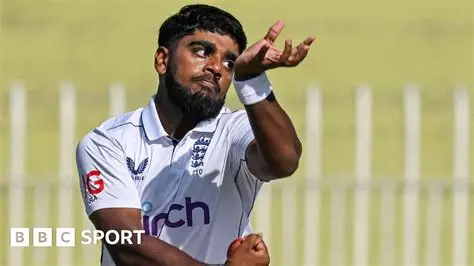
Rehan Ahmed: Why His Powerful 2026 World Cup Moment Still Matters for England
Rehan Ahmed gave England exactly what they needed in Colombo: a wicket with his first ball, a fearless late batting cameo and a reminder that calm selection talk can matter as much as individual ambition in tournament cricket.
The original story focused on whether Rehan Ahmed would keep his place for England’s T20 World Cup semi-final after starring against New Zealand. That question has now been answered. England left him out of the Mumbai semi-final and brought in Jamie Overton for the Wankhede Stadium conditions. India went on to win a remarkable high-scoring match by seven runs, posting 253-7 before England replied with 246-7.
That result changes the article. This is no longer a preview about whether Rehan Ahmed might play in a semi-final. It is an updated analysis of why his attitude, performance and omission all tell us something important about England’s white-ball planning.
Rehan Ahmed did not get the semi-final place he might have hoped for. Yet his World Cup still mattered. Against New Zealand, he took 2-28, struck with his very first delivery, and then smashed an unbeaten 19 from seven balls in a decisive late partnership with Will Jacks. England won by four wickets with three balls remaining and secured top spot in their Super Eight group.
For a 21-year-old playing his first T20 World Cup match, that was not a small contribution. It was a pressure performance in a must-control game. More importantly, Rehan Ahmed handled the selection debate with striking maturity. He said he was not too bothered about his place and trusted Brendon McCullum and Harry Brook to pick the best XI for the conditions. That response showed why England continue to see him as more than a promising leg-spinner.
For readers following cricket, the Rehan Ahmed story is a useful lesson in modern T20 selection. Teams no longer pick players only on reputation. They pick them for matchups, venues, batting depth, bowling balance and pitch conditions. Ahmed’s Colombo role was perfect. The Mumbai semi-final demanded a different call. Both things can be true.
What Rehan Ahmed did against New Zealand
The numbers explain why Rehan Ahmed became a talking point before the semi-final. New Zealand made 159-7 in Colombo. England chased the target in 19.3 overs, finishing on 161-6. Rehan Ahmed’s role in both innings was decisive.
With the ball, he entered the attack and struck immediately. A wicket with a first delivery in a World Cup debut is the kind of moment that sticks. He finished with 2-28 from three overs, giving England control on a turning surface at the R. Premadasa Stadium.
With the bat, Rehan Ahmed then became part of the final surge. England were under pressure in the chase before Will Jacks and Ahmed added an unbroken 44 from 16 balls. Jacks finished unbeaten on 32 from 18 balls, while Ahmed’s 19 not out from seven deliveries gave England the burst they needed at the death.
That late hitting mattered because England’s chase could easily have slipped. T20 matches often turn in tiny windows: one over, one matchup, one overpitched ball, one fearless swing from a lower-order batter. Rehan Ahmed took that window and changed the rhythm.
The result also meant England topped their Super Eight group. In tournament terms, that was a valuable outcome. In selection terms, it gave the management a pleasant problem before the semi-final: should they keep the young leg-spinning all-rounder who had just delivered, or alter the balance for Mumbai?
Why his semi-final comments stood out
Rehan Ahmed’s response to the semi-final question was almost as interesting as his performance. Instead of lobbying publicly for selection, he downplayed the issue. He said McCullum and Brook would choose the side they believed could win. If selected, he would play. If not, he would carry drinks and support the team.
That sounded simple, but it was revealing.
Many young players would have used a performance like that to make a loud case for themselves. Rehan Ahmed did not. He understood that England were not selecting a player of the match award. They were selecting a team for a different ground, different surface and different opposition.
That is important because England’s white-ball dressing room under Harry Brook and Brendon McCullum has leaned heavily into clarity. Players are encouraged to be aggressive, but they are also expected to accept role-based decisions. A spinner can be essential in Colombo and expendable in Mumbai. A lower-order hitter can win one match and still miss the next. That is not personal. It is tournament cricket.
Rehan Ahmed seemed to understand that better than many outside the dressing room. His comments did not sound like false humility. They sounded like a player who knew he had helped England and also knew that the semi-final was not about sentiment.
The Mumbai call: why England left him out
England eventually made the change. Rehan Ahmed was left out for the semi-final against India at Wankhede Stadium, and Jamie Overton came into the XI. ESPNcricinfo reported that England opted to bowl first and made one change, bringing in Overton for Ahmed.
The logic was clear enough. Wankhede is usually a fast-scoring venue. The ball can travel. Batting depth matters. Pace options can be useful if the pitch does not offer the same grip as Colombo. England likely looked at India’s batting power and decided that Overton’s pace, bounce and lower-order hitting gave them a better balance.
That does not mean leaving out Rehan Ahmed was obviously right or wrong. It means the decision was defensible. Selection is rarely about whether a player deserves to be dropped. It is often about whether the next match demands something else.
The semi-final became a run-fest. India made 253-7 in 20 overs. England got close, reaching 246-7, but fell seven runs short. The scoreline makes it tempting to revisit every selection call. Would Ahmed’s spin have changed India’s innings? Would his late hitting have mattered in the chase? Could his confidence from Colombo have helped?
Those are fair questions, but they cannot be answered with certainty. The match was lost by a narrow margin in a huge-scoring contest. Rehan Ahmed’s omission was one factor in the debate, not the only reason England fell short.
What the semi-final proved about England’s risk
The India semi-final showed the danger of T20 selection. England tried to optimise for conditions and matchups. India still scored 253. England still nearly chased it. That is how fine the margins are at elite level.
Rehan Ahmed’s absence became more noticeable because England lost narrowly. If England had won, the Overton decision would have been framed as brave and flexible. Because they lost, the question becomes whether they overcorrected from a spin-friendly Colombo game to a pace-and-power Mumbai plan.
This is why Rehan Ahmed remains central to the post-match discussion. He was not just any omitted player. He was the player who had delivered in the previous match and then accepted the possibility of missing out. His situation captured England’s tactical dilemma: pick the form player or pick the venue-specific XI.
The answer is not simple. Modern T20 cricket rewards flexibility, but it also rewards confidence. A young player who has just changed a World Cup game can carry momentum. At the same time, management cannot select only on momentum if the surface suggests a different shape.
England’s defeat does not prove they were wrong to leave out Rehan Ahmed. It proves the call was costly enough to be debated.
Why Rehan Ahmed’s all-round profile matters
Rehan Ahmed is not a one-dimensional selection. That is why England are invested in him. He bowls leg spin, can attack with the bat, and fields with energy. In a format where every player needs to contribute in more than one phase, that package is valuable.
His bowling gives England variation. Adil Rashid remains the senior leg-spinner, but Rashid will not be around forever. England need a younger spin option who can bowl attacking overs, handle pressure and learn how to operate against world-class hitters. Rehan Ahmed is one of the clearest candidates.
His batting is just as important. A lower-order player who can score 19 from seven balls in a chase changes team balance. Coaches can pick an extra bowler if they believe the lower order can still clear the rope. Captains can delay bigger hitters if a player at No. 7 or No. 8 can finish.
That is why Rehan Ahmed should not be viewed only as a “young spinner.” His value is as a developing T20 all-rounder. England have often been at their best when the lower order contains players who can change games quickly. Ahmed’s cameo against New Zealand showed that he has the temperament and swing to do it on a global stage.
The News Ink has already looked at how role clarity and modern preparation shape elite teams in our sports training and technology guide. Ahmed’s case fits that theme perfectly. His selection value depends on phase-specific use: middle-over spin, lower-order hitting and matchup flexibility.
The Rashid factor
Every discussion about Rehan Ahmed also includes Adil Rashid. Rashid has been England’s most important white-ball spinner for years. His experience, control and wicket-taking threat have shaped England’s T20 identity.
That creates a challenge and an opportunity. Rehan Ahmed is not being asked to replace Rashid immediately. He is being asked to grow alongside him, learn from him and be ready when England need a second spinner or a future lead option.
The Colombo game was a glimpse of that future. On a turning surface, England could use spin aggressively. Rehan Ahmed gave them wickets and batting depth. That combination is exactly what England will want in future tournaments, especially in Asia.
The semi-final also showed that England will not always pick both. In some conditions, they may choose Rashid as the specialist spinner and fill the rest of the XI with pace and batting. Ahmed will need to keep developing so that he becomes harder to leave out even when conditions are less obviously spin-friendly.
That is the next challenge. Rehan Ahmed has already shown he can contribute when the pitch helps him. The next step is proving he can be selected when the pitch does not scream for leg spin.
How his age changes the picture
Rehan Ahmed was born in August 2004, which means his cricket story is still early. ESPNcricinfo notes that he became England’s youngest men’s Test cricketer when he debuted at 18 years and 126 days in Karachi in December 2022. That achievement created huge expectations before he had even fully learned his game.
Young players often get judged too quickly. One good performance becomes proof of greatness. One omission becomes a problem. Rehan Ahmed needs a more patient reading.
His World Cup debut was not the end of a journey. It was a marker. He showed he could handle a global tournament match. He showed he could strike with the ball under pressure. He showed he could finish with the bat. He also showed that he could accept selection uncertainty without making it about himself.
That maturity matters because England’s schedule is relentless. Players move between formats, leagues, tours and tournaments. A young spinner has to manage confidence through selection changes, workload questions and public scrutiny.
Rehan Ahmed’s calm reaction to missing or possibly missing a semi-final should be seen as part of his development. Talent gets players noticed. Emotional control keeps them around.
What England learned from the New Zealand match
The New Zealand match gave England several useful lessons. First, it confirmed that their lower order had more hitting than opponents might expect. Will Jacks and Rehan Ahmed did not panic when the chase tightened. They attacked smartly and finished the match.
Second, it showed that England can still find impact from players outside the first-choice core. Tournament winners usually need more than 11 players. Conditions change. Injuries happen. Form moves. Squad depth wins games.
Third, it reinforced the value of wrist spin in Asian conditions. Even in a format dominated by power hitting, wicket-taking spin remains precious. Batters can line up pace at the death, but a leg-spinner who turns the ball both ways can still create mistakes.
Fourth, it showed that Rehan Ahmed belongs at this level. That may be the most important point. A World Cup debut can be overwhelming. Ahmed treated it like an opportunity rather than a burden.
England did not win the tournament, but they gained information. Rehan Ahmed is part of their future planning.
Why the article should not frame him as unlucky only
It would be easy to write the updated story as “Rehan Ahmed unlucky to miss semi-final.” That is too narrow.
Yes, Rehan Ahmed had a strong case after his New Zealand performance. Yes, he might have helped in Mumbai. Yes, England lost by seven runs, which makes every selection decision look bigger. But calling him only unlucky misses the deeper story.
The deeper story is that Ahmed is becoming the type of player England can trust in different roles. Sometimes that trust means selection. Sometimes it means being left out without drama because the team shape changes. Both are part of a long international career.
The best teams need players who can handle both. A squad cannot function if every omission becomes a crisis. Ahmed’s words before the semi-final showed he understood that. It was a team-first answer from a player who had just earned the right to think about himself.
That is why Rehan Ahmed’s attitude may matter as much as his 2-28 or 19 not out. It tells England that he is not only talented. He is ready to be part of a high-pressure squad environment.
What comes next for Rehan Ahmed
The next stage for Rehan Ahmed is consistency. England know he can produce moments. The challenge is turning those moments into reliable selection pressure.
As a bowler, he needs overs in different conditions. Not every pitch will grip like Colombo. Not every batter will give him easy attacking chances. He must keep improving his control, especially when batters target the short boundary or sit deep in the crease.
As a batter, he has to prove the New Zealand cameo was not an isolated burst. Lower-order hitting is a specialist skill. It requires clarity from ball one, range against pace and spin, and calm under scoreboard pressure.
As a squad member, he must keep doing what he did before the semi-final: stay ready, avoid public frustration and make selection difficult through performance.
England’s white-ball side is changing. Harry Brook is leading a new phase. Will Jacks is becoming increasingly important. Jos Buttler still has major influence. Adil Rashid remains vital. Around them, England need younger players who can grow into tournament roles.
Rehan Ahmed fits that need. He may not yet be undroppable, but he is already impossible to ignore.
The wider England lesson
England’s T20 World Cup exit against India showed how brutal the format can be. A team can play bold cricket, score 246 in a semi-final and still go home. That is why squad decisions are so heavily debated afterward.
The Rehan Ahmed selection debate should not become a search for one scapegoat. England conceded 253. India batted brilliantly. England nearly chased it. The match was decided by fine margins across 40 overs, not by one team sheet alone.
Still, the debate is useful. It asks what kind of balance England want in future tournaments. Do they want more spin insurance? More lower-order hitting? More pace? More flexibility? More faith in form? Rehan Ahmed sits at the centre of those questions because he offers several skills in one place.
That makes him valuable even when he is not selected. A player who changes the balance conversation is already important.
For readers who followed England’s wider T20 World Cup issues, The News Ink’s earlier coverage of England’s struggle for form amid pressure and Will Jacks’ role in England’s campaign gives useful context.
The careful takeaway
Rehan Ahmed downplayed his semi-final hopes because he understood the bigger picture. England’s management had to pick a side for conditions, not reward one performance. In the end, they left him out, selected Jamie Overton, and lost a thrilling semi-final to India by seven runs.
That omission does not erase what Rehan Ahmed did in Colombo. His wicket with his first ball, his 2-28, his unbeaten 19 from seven balls and his finishing stand with Will Jacks all helped England top their Super Eight group. For a young player making a World Cup debut, that was a powerful statement.
The more lasting message is about maturity. Rehan Ahmed showed that he can win moments for England and still speak like a squad player. That combination is rare. It is also exactly why his England story is only beginning.
For more cricket analysis, sports stories and tournament updates, follow The News Ink on Medium.