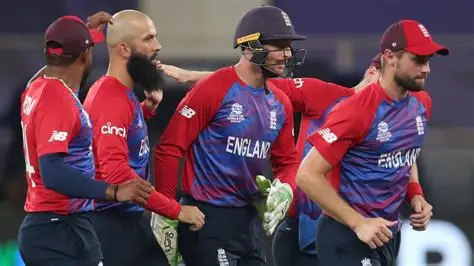
England T20 World Cup Campaign: A Dramatic 2026 Recovery and Painful Semi-Final Exit
The England T20 World Cup campaign looked fragile before it became compelling. During the opening week of the 2026 ICC Men’s T20 World Cup, Harry Brook’s side appeared uncertain, underprepared for unfamiliar opposition and vulnerable to the noise surrounding the team. England narrowly avoided an upset against Nepal, lost convincingly to the West Indies and entered their final group matches knowing that another mistake could end their tournament early.
That was only the first half of the story. The England T20 World Cup campaign recovered. England defeated Scotland and Italy to reach the Super Eight stage, then beat Sri Lanka, Pakistan and New Zealand to finish top of their Super Eight group. Brook produced a memorable century against Pakistan. Will Jacks emerged as an increasingly important all-rounder. Jacob Bethell nearly completed an extraordinary chase in the semi-final.
England eventually lost to India by seven runs in Mumbai after conceding 253-7 and replying with 246-7. The ending was painful, but the England T20 World Cup campaign cannot be reduced to another disappointing exit. It revealed weaknesses in preparation and execution while also showing resilience, tactical flexibility and the value of younger players willing to attack under pressure.
Editor’s update — June 2026: This article has been rebuilt as a retrospective analysis. England progressed beyond the uncertain group stage described in the original report, reached the semi-finals and lost a dramatic match to eventual champions India.
Why the England T20 World Cup Campaign Started Under Pressure
The tournament began after a difficult period for English cricket. Questions about Brendon McCullum’s future and the team’s preparation had followed England into the competition. Brook was leading the white-ball side in an environment where every result invited wider debate about the direction of the team.
England were drawn into Group C with West Indies, Nepal, Italy and Scotland. Scotland joined the group late after replacing Bangladesh. The ICC confirmed the change after the Bangladesh Cricket Board refused to participate under the published schedule and its request to move matches from India to Sri Lanka was rejected.
The England T20 World Cup campaign therefore involved more uncertainty than a routine group stage. England knew the West Indies carried major T20 pedigree. Nepal brought an energetic side and passionate support. Scotland arrived with experience and little to lose. Italy were making their first appearance at the event. Reputation alone would not be enough.
The ICC tournament guide explained that the top two sides from each first-round group would reach the Super Eight stage. The leading two teams in each Super Eight group would then advance to the semi-finals.
Readers learning the format can explore The News Ink’s cricket guide, which explains T20 innings, run rates, powerplays and tournament structures in simple terms.
Nepal Exposed the Early Weaknesses
The England T20 World Cup campaign almost began with a major shock. England made 184-7 against Nepal in Mumbai, with half-centuries from Bethell and Brook and a valuable late contribution from Jacks. Nepal responded with 180 and fell only four runs short.
The result looked acceptable in the standings. The performance was more worrying. Nepal attacked England’s bowling confidently and entered the final over needing 10 runs. Sam Curran held his nerve, but England had been pushed to the edge by a side many casual observers had underestimated.
That match contained an early lesson for the England T20 World Cup campaign: associate nations were not present merely to complete the fixture list. Nepal had players capable of punishing loose deliveries and handling a high-pressure chase. Brook’s later admission that England may have underestimated some opponents made sense in that context. Preparation must cover every opponent, including players unfamiliar to a wider audience.
West Indies Turned Concern Into a Qualification Risk
England’s next major setback was more damaging. West Indies defeated England by 30 runs after making 196. England were dismissed for 166, with the chase losing momentum as the West Indies attack applied pressure.
The England T20 World Cup campaign now had no room for complacency. A narrow opening win could be treated as an early warning. A clear defeat to the West Indies turned that warning into a qualification problem.
England still had a route forward. Wins against Scotland and Italy would take the team into the Super Eight stage. However, the England T20 World Cup campaign had already exposed the danger of incomplete preparation and slow adaptation.
England’s Group-Stage Results
| Opponent | Result | Key lesson |
|---|---|---|
| Nepal | England won by four runs | Sam Curran protected a narrow advantage after Nepal threatened an upset |
| West Indies | England lost by 30 runs | England’s batting failed to control the chase after West Indies posted 196 |
| Scotland | England won by five wickets | Tom Banton’s unbeaten 63 steadied a chase after early wickets |
| Italy | England won and qualified for the Super Eights | Will Jacks produced England’s fastest men’s T20 World Cup fifty |
The England T20 World Cup campaign survived because different players responded at important moments. Against Scotland, Banton made an unbeaten 63 after England lost early wickets while chasing 153. The ECB highlights show how his innings prevented another difficult position from becoming a crisis.
Against Italy, Jacks accelerated sharply and recorded England’s fastest men’s T20 World Cup half-century. The ECB’s match highlights confirm that his innings helped England secure qualification.
The Super Eight Stage Changed the Mood
The England T20 World Cup campaign became more convincing after the first round. England returned to Sri Lanka, where recent experience offered some familiarity with conditions.
England began the Super Eight stage by defending 146 against Sri Lanka. It was not an extravagant total, but the result showed that the side could adjust to a lower-scoring contest. T20 cricket is associated with boundary hitting, yet successful teams also need to recognise when conditions demand control.
The next match became the defining moment of the England T20 World Cup campaign. Pakistan made 164-9 in Pallekele and reduced England to a dangerous position during the chase. Brook, promoted to number three, responded with his first T20 international century. England reached 166-8 and won by two wickets with five balls remaining.
The ECB highlights capture the importance of the innings. Brook’s century arrived when England needed composure, power and judgment. Reuters reported that the win made England the first team to secure a semi-final place.
England then defeated New Zealand by four wickets while chasing 160. Jacks contributed with the ball and formed a valuable partnership with Rehan Ahmed. The England T20 World Cup campaign had moved from uncertainty to momentum.
England’s Super Eight Recovery
| Opponent | Result | Why it mattered |
|---|---|---|
| Sri Lanka | England defended 146 | The team adapted to a lower-scoring match |
| Pakistan | England won by two wickets | Brook’s century secured a semi-final place |
| New Zealand | England won by four wickets | England finished top of the Super Eight group |
The England T20 World Cup campaign showed how quickly a tournament can change. Group-stage performances matter because they determine qualification. They do not always predict what a team will become in the next round.
Harry Brook’s Century Changed the Conversation
Brook carried pressure into the tournament. As captain, he was asked to explain performances, preparation and wider questions surrounding England’s direction. The Pakistan innings gave the England T20 World Cup campaign a clear centrepiece.
Promoting Brook to number three proved important. Shaheen Shah Afridi created early problems, but Brook did not allow the innings to collapse. He attacked when opportunities appeared, managed the difficult periods and kept England close enough for the lower order to complete the chase.
One innings cannot answer every leadership question. It can still reveal something valuable. Brook responded to pressure with a match-winning performance when England’s semi-final route depended on it. The tactical decision also showed that the England T20 World Cup campaign improved when the side became more adaptable.
Will Jacks Became Essential to England’s Balance
The England T20 World Cup campaign also strengthened the case for Jacks as a valuable multi-skilled player. His impact was not limited to one role.
He contributed late runs against Nepal, accelerated against Italy, supported England during the Super Eight stage and remained involved in the semi-final against India. His ability to bat aggressively, offer bowling options and contribute in the field gave England flexibility.
Modern T20 teams benefit from players who can change the shape of an innings and respond to unexpected situations. The News Ink’s sports training guide explains why preparation, analysis, recovery and role clarity increasingly matter across elite sport.
Jacks did not solve every problem in the England T20 World Cup campaign. He made the side more adaptable, which became essential as the pressure increased.
The Semi-Final Exposed England’s Limits
The England T20 World Cup campaign ended in Mumbai on 5 March. India scored 253-7, with Sanju Samson making 89 from 42 balls. England replied with 246-7 and lost by seven runs.
India’s batting placed England under immediate pressure. Brook dropped Samson before the India batter developed a match-shaping innings. England’s bowlers struggled to contain the scoring rate on a surface that rewarded attacking batting.
England then lost early wickets. Brook made only seven. Jos Buttler contributed 25, but the required rate remained severe. Bethell changed the atmosphere with an extraordinary innings of 105 from 48 balls. Jacks supported him with 35, while Curran and Jofra Archer added late resistance.
The semi-final report highlighted India’s fielding. Axar Patel completed a difficult catch to dismiss Brook and contributed to the boundary relay that removed Jacks. In a match dominated by batting, fielding still changed the result.
The England T20 World Cup campaign ended with a brave chase rather than a timid defeat. England were not good enough to reach the final, but they forced the eventual champions into a demanding contest.
India’s Title Added Context to England’s Exit
India went on to defeat New Zealand by 96 runs in the final in Ahmedabad. The official ICC match page records the final, while Reuters reported that India became the first side to win three men’s T20 World Cup titles and the first to retain the trophy.
That outcome does not turn England’s semi-final loss into a success. It places the England T20 World Cup campaign in context. England lost narrowly to the strongest team in the tournament after recovering from a poor start.
Readers following the wider sporting calendar can explore The News Ink’s article on sports tournaments in 2026, which places the T20 World Cup alongside other major events shaping the year.
Associate Nations Forced England to Rethink Preparation
One of the wider lessons from the England T20 World Cup campaign concerned the changing depth of international cricket. Nepal pushed England to the final over. Italy recorded a historic tournament victory against Nepal. Scotland entered after a late invitation and still presented a serious challenge. Other associate teams created difficult moments elsewhere in the tournament.
Reuters later described the performances of second-tier nations as one of the brightest features of the competition. That matters because established sides cannot treat smaller teams as background characters.
England’s analysts need current information on unfamiliar opponents. Bowlers need plans for batters who may not appear regularly in major franchise leagues. Captains need to adjust quickly when a supposedly routine match becomes tense.
The England T20 World Cup campaign improved after the team confronted those problems directly. Future tournaments should not require the same warning.
What the Tournament Revealed About Preparation
Preparation became one of the central themes of the England T20 World Cup campaign. England entered with talent, experience and a recent series win in Sri Lanka. Yet they still looked uncertain against Nepal and vulnerable against the West Indies.
Good preparation is not the same as collecting large amounts of data. The purpose is to identify details that affect decisions:
- Which batters attack spin early?
- Which bowlers rely on pace changes?
- How does a surface behave during a chase?
- Which boundary is easier to target?
- When should a captain protect a specialist bowler’s remaining overs?
- Which players remain calm when a match tightens?
Brook’s comments about limited knowledge of some opponents should lead to practical changes. England do not need to overcomplicate every match. They need fewer avoidable gaps.
The England T20 World Cup campaign also showed that adaptation during an event is possible. The team became more flexible, found roles for key players and produced better performances in the Super Eight stage.
The McCullum Question Did Not Disappear
The England T20 World Cup campaign did not settle the debate around McCullum. It complicated it.
A group-stage exit would have intensified criticism. A semi-final appearance showed resilience, but it came after a difficult winter that included a 4-1 Ashes defeat in Australia. After England lost to India, Reuters reported that McCullum intended to continue in the role and that his contract ran through 2027.
The useful question is whether England can build on the parts of the England T20 World Cup campaign that worked while addressing the problems that nearly ended it early. That requires honest review rather than panic or complacency.
A Campaign of Contradictions
The England T20 World Cup campaign contained several versions of the same team.
There was the nervous England that almost lost to Nepal. There was the flat England beaten by the West Indies. There was the practical England guided by Banton against Scotland. There was the aggressive England lifted by Jacks against Italy. There was the resilient England that defended 146 against Sri Lanka. There was the inspired England led by Brook’s century against Pakistan. There was the fearless England that chased India’s 254-run target until the final over.
All of those performances belong to the same England T20 World Cup campaign. Ignoring the early weaknesses would be dishonest. Describing the entire tournament as a failure would also be too simple.
England did not win the trophy. India deservedly did. England did not solve every issue surrounding preparation, bowling control or leadership. But the side recovered from genuine danger, reached the final four and found important performances from Brook, Bethell, Jacks and Banton.
What Comes Next for England?
The strongest lesson from the England T20 World Cup campaign is that talent needs structure. England can attack. The semi-final chase proved that. England can adapt. The Super Eight results proved that. The next step is to become less dependent on emergency recovery.
That means better preparation for unfamiliar opponents, sharper fielding, clearer bowling plans and continued flexibility in selection and batting order. T20 cricket will always contain uncertainty. The aim is to respond to it more effectively.
The original concern surrounding England was understandable. The team looked loose and vulnerable during the group stage. The completed England T20 World Cup campaign tells a fuller story. England were inconsistent, then resilient, then agonisingly close to a final.
For more sports analysis, follow The News Ink on X.