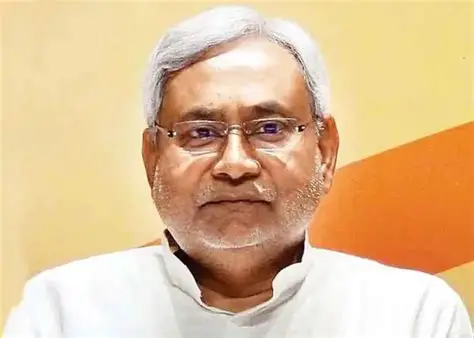
Nitish Kumar: Why His Stunning 2026 Rajya Sabha Move Reshaped Bihar
Nitish Kumar has ended one of the longest and most unusual chief ministerial chapters in Indian politics by moving from Bihar’s top office to the Rajya Sabha. What first looked like speculation inside the National Democratic Alliance has now become a completed power shift: Kumar has left the chief minister’s chair, entered Parliament’s upper house, and opened the way for the Bharatiya Janata Party to lead Bihar directly for the first time.
The original story focused on Kumar announcing that he would step down and join the Indian Parliament. That was the right immediate angle. But the political story has now moved further. Samrat Choudhary has been sworn in as Bihar’s 24th chief minister, marking the BJP’s first turn at the top of the state government after years of playing junior or supporting partner to Kumar’s Janata Dal (United).
That makes the Nitish Kumar move much bigger than a personal career decision. It is a transition of authority inside Bihar’s ruling alliance. It is the end of the “Nitish as indispensable chief minister” model. It is also a sign of how strongly the BJP has grown in a state where regional caste-based politics, socialist legacies and coalition arithmetic have long shaped power.
Kumar framed the move as the fulfilment of a long-held desire to serve in both Houses of the Bihar legislature and both Houses of Parliament. In his public message, he thanked the people of Bihar for trusting him for more than two decades and promised that the new state government would have his full cooperation and guidance.
But politics rarely turns on one explanation. Supporters see the decision as a graceful exit by a veteran leader who dominated Bihar for most of the past two decades. Critics see it as the BJP finally gaining the chief minister’s office after using Kumar’s popularity and alliance management to consolidate power. JD(U) workers who campaigned in his name felt stunned because the 2025 mandate had been sold heavily around his leadership.
For readers following The News Ink’s wider economy and public-policy coverage, Bihar’s leadership change matters because it affects one of India’s poorest, most populous and most politically important states. This is not only a party reshuffle. It is a change in who controls the state’s development narrative.
Why Nitish Kumar’s Rajya Sabha move matters
Nitish Kumar has moved to the Rajya Sabha after building a career around state-level power. That is what makes the decision so striking. Many Indian politicians move from Parliament to state leadership when they want executive authority. Kumar has done the reverse after spending years as Bihar’s central political figure.
The Rajya Sabha gives him national status, but not the same kind of direct administrative control he had as chief minister. A Rajya Sabha member can speak in Parliament, influence legislation, advise his party and negotiate within a coalition. A chief minister controls the state cabinet, bureaucracy, budget priorities and daily governance.
That is why the move changes Bihar’s political structure. Nitish Kumar remains important, but he is no longer the executive centre of the state. The BJP now has the chief minister’s chair through Samrat Choudhary. JD(U) remains inside the ruling alliance, but its role has shifted.
For the BJP, this is a historic breakthrough. Bihar had long been a state where the party depended on allies to expand power. Even when it was electorally strong, it often operated under Kumar’s leadership because he carried cross-caste acceptability and had a reputation for governance. Now the BJP has converted alliance strength into direct leadership.
For JD(U), the challenge is survival beyond its founder-like figure. The party must prove it can remain relevant without Kumar physically sitting in the chief minister’s office.
The 2025 mandate made the exit more surprising
Nitish Kumar’s decision was surprising because it came only months after the NDA’s sweeping 2025 Bihar Assembly victory. The BJP-led alliance won 202 of the 243 seats, while the BJP alone took 89. Kumar’s JD(U) won 85 seats, giving the coalition an enormous mandate.
That result strengthened Prime Minister Narendra Modi nationally and seemed to confirm Kumar’s continued usefulness in Bihar. Kumar then took oath for a record 10th term as chief minister in November 2025. To many voters and JD(U) workers, that looked like another full term under the familiar Nitish-led model.
The Rajya Sabha move changed that expectation. Voters had heard campaign slogans built around continuity. JD(U) leaders had gone door to door asking people to support Kumar. When he announced the move, some party workers protested outside his residence and argued that people had voted for him to remain chief minister.
That emotional reaction was predictable. Nitish Kumar was not just another alliance leader. For many supporters, he was the face of Bihar’s post-2005 transformation. His exit felt like the removal of the person around whom the mandate had been organised.
This is why the decision produced both admiration and discomfort. It looked orderly at the top, but unsettling at the grassroots.
BJP’s first chief minister in Bihar
The most important outcome is clear: Bihar now has its first BJP chief minister. Samrat Choudhary’s elevation marks a major shift in the state’s political history.
For years, the BJP grew in Bihar but rarely held the top executive position. It depended on alliances with leaders who could reach social groups beyond its older base. Nitish Kumar was the most important of those leaders. His Kurmi background, socialist roots, governance image and alliance flexibility made him the bridge between BJP power and Bihar’s complex caste politics.
Now that bridge has delivered the BJP to the chief minister’s office.
Choudhary’s rise also reflects the BJP’s effort to expand its OBC outreach. His political profile, organisational role and aggressive style fit the party’s wider strategy of building leadership beyond traditional upper-caste support. His appointment tells Bihar voters that the BJP no longer wants to be seen only as a national partner in the state. It wants to own Bihar’s governance agenda.
That makes Nitish Kumar’s exit one of the BJP’s most significant state-level gains since losing its outright parliamentary majority nationally and becoming more dependent on allies.
Why JD(U) faces a difficult future
JD(U)’s biggest problem is identity. For years, the party’s identity was Nitish Kumar. Its organisation, messaging and negotiation power all revolved around him. That worked while he remained chief minister. It becomes harder when he moves to Delhi.
A party built around one leader must eventually answer a hard question: what remains when the leader steps back from executive power?
JD(U) still has ministers, MLAs, caste networks and a place inside the NDA. But it now risks being seen as a supporting party inside a BJP-led Bihar government. That is a major psychological shift. The party once shaped the alliance from the top. Now it must bargain from within.
There is also the question of succession. Reports around the transition mentioned speculation about Kumar’s son, Nishant Kumar, entering politics. That is sensitive because Kumar had long cultivated an image different from dynastic politicians. Any family-based succession talk could complicate his legacy.
JD(U) must therefore balance loyalty to Nitish Kumar with the need to build independent relevance. If it fails, the BJP could absorb more of its political space over time.
Nitish Kumar’s long Bihar era
Nitish Kumar’s career cannot be judged only by this exit. He became Bihar’s longest-serving chief minister and dominated state politics across multiple alliances, breaks and returns.
His first brief chief ministerial stint in 2000 lasted only a week. The real era began in 2005, when he helped end the long Lalu Prasad Yadav-Rabri Devi period and built his image around governance, roads, law and order, women’s welfare and administrative credibility. Supporters called him “Sushasan Babu,” a title linked to good governance.
Under Kumar, Bihar’s image changed. The state remained poor and heavily dependent on migration, but there were visible improvements in infrastructure, school participation, roads and state administration. Schemes aimed at girls’ education, women’s participation in local governance and self-help groups became part of his governing brand.
His politics, however, was never simple. He moved between alliances with the BJP and opposition formations several times. He broke with the BJP in 2013 after Narendra Modi’s rise, joined hands with Lalu Prasad Yadav, later returned to the NDA, then left and returned again. Critics called him opportunistic. Supporters called him pragmatic.
Both descriptions capture part of the truth. Nitish Kumar survived because he understood Bihar’s political arithmetic better than most.
The alliance-switching legacy
Nitish Kumar’s legacy is inseparable from his alliance switches. No major Bihar politician of his generation has used coalition movement more effectively. He built power with the BJP, fought against it, rebuilt alliances with former rivals, then returned to the NDA when political conditions changed.
That flexibility made him powerful, but it also weakened trust among critics. Opponents argued that Kumar’s main ideology was survival. Supporters argued that he kept Bihar stable by choosing whichever alliance allowed him to govern.
The 2026 transition adds another layer. Did Kumar leave office voluntarily to complete a parliamentary ambition, or did alliance arithmetic and BJP strength make the shift inevitable? The answer may be a mixture of both.
Kumar may genuinely have wanted a Rajya Sabha role. But the BJP also had strong reasons to seek the chief minister’s office after the 2025 landslide. The party had the organisational strength, the national momentum and the numbers inside the alliance to push for a leadership reset.
That is why this move feels like both personal closure and strategic pressure. Nitish Kumar is leaving on his own terms, but those terms were shaped by a changed power balance.
Why Bihar matters nationally
Bihar matters far beyond Patna. It has nearly 130 million people, sends 40 members to the Lok Sabha and often serves as a test of political mood in India’s Hindi-speaking belt. It is one of India’s poorest states, but its electoral weight gives it enormous national significance.
The 2025 election was a major test for Modi because the BJP-led central government had been relying on allies after losing its single-party majority in the 2024 national election. A landslide victory in Bihar gave the NDA momentum and reassured the BJP that its alliance strategy still worked.
Nitish Kumar’s Rajya Sabha move now changes that alliance story. The BJP no longer only benefits from Kumar’s support. It has gained direct control of Bihar’s chief ministerial office. That could strengthen the party before future state contests in Uttar Pradesh, West Bengal and Assam, and before the 2029 general election.
For the opposition, the transition is a warning. The BJP has shown that it can use alliances not only to win power, but eventually to lead governments directly.
The governance question for Samrat Choudhary
Samrat Choudhary now carries the hardest part of the transition. It is one thing to become the BJP’s first Bihar chief minister. It is another to govern a state shaped by Nitish Kumar’s long administrative style.
Choudhary must manage several pressures at once. He has to satisfy the BJP’s central leadership, keep JD(U) comfortable inside the alliance, avoid alienating Kumar’s supporters, and show voters that the new government can deliver beyond symbolism.
He must also decide how much of the Nitish model to preserve. Bihar’s voters may have accepted a leadership change, but many still associate stability, roads, education schemes and women-focused welfare with Kumar. A sudden break could create unease. A complete continuation could make the BJP look dependent on the old model.
The likely path is a hybrid: keep the language of development and governance, while adding stronger BJP branding, more central-government alignment and new caste outreach.
That will determine whether the BJP’s Bihar breakthrough becomes lasting or only transitional.
The emotional response inside JD(U)
The strongest early reaction came from within Kumar’s own support base. Some JD(U) workers and leaders were uneasy because they felt the 2025 mandate had been collected in his name. Their argument was simple: voters were promised Nitish Kumar as chief minister, not a handover to the BJP months later.
That does not make the transition unlawful. Legislatures choose leaders, alliances negotiate power, and chief ministers can resign. But the emotional complaint matters politically.
Regional parties depend heavily on trust between leader and cadre. If workers feel blindsided, morale suffers. If voters feel the campaign message changed after the election, opposition parties can exploit that in future contests.
Nitish Kumar tried to soften this by promising cooperation and guidance to the new government. That message was meant to reassure supporters that he was not abandoning Bihar. But guidance from Delhi is not the same as authority from the chief minister’s office.
The question is whether JD(U) voters accept that distinction.
Nitish Kumar in the Rajya Sabha
Nitish Kumar’s Rajya Sabha role gives him a new platform, but also a different type of politics. He can now intervene in national debates, support NDA legislation, speak on Bihar’s development concerns and act as an elder statesman inside the alliance.
This could suit the final phase of his career. Instead of managing daily state administration, he can shape policy arguments and protect Bihar’s interests in Parliament. His experience as chief minister, Union minister and coalition builder gives him credibility few regional leaders possess.
But the Rajya Sabha also reduces his direct contact with the machinery that made him powerful. Bihar’s bureaucracy will now answer to Choudhary. Cabinet decisions will come from the new chief minister. Political credit for future state schemes may shift toward the BJP.
That means Nitish Kumar’s influence will depend on how actively he uses his parliamentary role and how much the NDA continues to value his guidance.
The move gives him dignity. It does not give him the same command.
Bihar’s economic stakes
The leadership transition matters because Bihar’s economic challenges remain severe. The state has enormous human capital but continues to struggle with poverty, job creation, migration and infrastructure gaps. Millions of Biharis work outside the state because local employment opportunities remain limited.
This is where political symbolism must become policy. A new chief minister is not enough. Bihar needs stronger industrial investment, better urban planning, improved schools, more health capacity, skilled jobs and credible governance in districts beyond Patna.
Nitish Kumar’s supporters argue that he restored basic law and order and rebuilt confidence in state institutions. Critics argue that Bihar still failed to generate enough jobs and that migration remained a sign of unfinished development.
Both points can be true. The next government inherits a state that has improved from earlier crisis years but still faces deep structural problems.
For BJP, the risk is now direct accountability. It can no longer blame a partner for Bihar’s shortcomings while claiming credit for national development. With a BJP chief minister, the party owns more of the state’s future.
What the opposition will argue
The opposition will frame Nitish Kumar’s exit as proof that the BJP used JD(U) as a vehicle to capture Bihar. Leaders such as Tejashwi Yadav are likely to argue that Kumar’s repeated switches weakened his own bargaining power and eventually allowed the BJP to take the top post.
That line may resonate with voters who believe the 2025 campaign was centred on Kumar. It may also appeal to JD(U) supporters who feel uneasy about the transition.
But the opposition has its own problem. The 2025 election was a heavy defeat. The NDA won a huge majority. If voters wanted to punish Kumar’s alliance decisions, they did not do so then. The opposition must therefore do more than criticise the handover. It must offer a stronger development and jobs agenda.
Bihar politics has often been about caste coalitions. It is now also about delivery, women voters, welfare schemes, migration, youth employment and national party machinery. The opposition will need to respond on all fronts.
The careful takeaway
Nitish Kumar’s Rajya Sabha move is one of the most important Bihar political transitions in years. It ends his long run as the state’s central executive figure and allows the BJP to claim the chief minister’s office for the first time through Samrat Choudhary.
The decision can be read in two ways. It is a dignified national move by a 75-year-old leader who wanted to serve in both Houses of Parliament. It is also a decisive shift in alliance power after the BJP-led NDA’s landslide 2025 victory.
Both readings matter. Nitish Kumar remains one of Bihar’s most consequential leaders. His record includes improved governance, women-focused schemes, infrastructure gains and a reputation for administrative stability. It also includes repeated alliance switches, political contradictions and a party now facing life outside the chief minister’s chair.
For the BJP, this is a historic opening. For JD(U), it is an identity test. For Bihar’s voters, the real question is whether the new government can deliver jobs, growth, services and stability beyond the symbolism of a first BJP chief minister.
Nitish Kumar has moved to Delhi, but his shadow will remain over Patna. The next phase of Bihar politics will reveal whether that shadow protects his legacy or slowly fades as the BJP builds its own.
For more India politics, global affairs and public-policy analysis, follow The News Ink on Medium.