



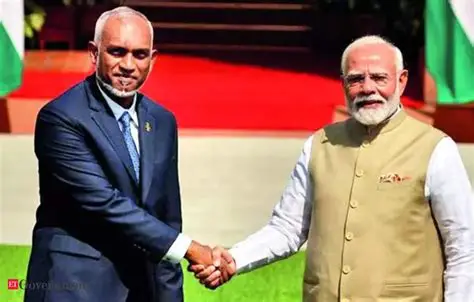
Maldives India treasury bill repayment signals stronger debt reduction efforts
The latest Maldives India treasury bill repayment announcement has drawn international attention after Mohamed Muizzu confirmed that the Maldives settled another $50 million treasury bill owed to India.
The payment marks the second major treasury bill repayment made by the Maldivian government under President Muizzu’s administration as the country continues efforts to reduce external debt pressure and stabilize public finances.
Officials described the repayment as part of a broader strategy aimed at easing long-term debt obligations and strengthening economic stability.
Maldives India treasury bill repayment linked to older financial support
The treasury bills involved in the repayment were originally issued in 2019 when the Maldives faced budget shortfalls and economic pressure.
India provided financial assistance through treasury bills subscribed by State Bank of India as part of emergency support to the island nation.
The bills had reportedly been rolled over annually instead of being repaid upon maturity under the previous Maldivian administration.
President Muizzu said his government has now focused on clearing those liabilities rather than extending them further.
President Muizzu says debt burden is being reduced
Speaking during a press conference, President Muizzu stated that the repayment effort is designed to protect the Maldives from a growing external debt burden.
According to reports, the administration already repaid one $50 million treasury bill earlier and has now completed settlement of a second payment.
Muizzu argued that repaying the bills now could help the country avoid deeper long-term financial strain.
Key repayment developments include:
- One $50 million treasury bill repaid in early 2024
- Another $50 million payment settled this week
- One additional treasury bill reportedly due later this year
- Government aiming to reduce foreign debt exposure
India continues playing major role in Maldives economy
India has remained one of the Maldives’ most important economic and strategic partners despite periods of diplomatic tension between the two countries.
The treasury bill support formed part of broader Indian financial assistance programs designed to help stabilize the Maldivian economy during periods of fiscal stress.
India has also supported the Maldives through:
- Infrastructure financing
- Water and sanitation projects
- Emergency economic assistance
- Credit lines
- Development cooperation programs
Economic ties between the two neighboring countries remain deeply interconnected.
Treasury bills helped ease financial pressure
Treasury bills, commonly known as T-bills, are short-term government debt instruments used by governments to raise immediate funding.
In the Maldives case, India’s assistance reportedly included interest-free rollovers that helped the country manage short-term foreign exchange and fiscal challenges.
The arrangement allowed the Maldives additional time to stabilize finances during periods of economic uncertainty.
Maldives continues facing debt concerns
The Maldives has faced increasing scrutiny over rising external debt levels in recent years.
Economic analysts have warned that the country faces significant repayment obligations over the next several years, particularly as tourism recovery and global economic conditions remain uncertain.
Financial challenges facing the Maldives include:
- External debt obligations
- Foreign exchange pressures
- Infrastructure financing costs
- Tourism sector dependence
- Rising fiscal deficits
Debt sustainability has become one of the central economic issues facing the island nation.
Maldives India treasury bill repayment reflects changing priorities
The repayment also reflects a broader effort by the Muizzu administration to reshape the country’s financial and foreign policy direction.
President Muizzu previously campaigned on issues related to national sovereignty, foreign influence and economic management.
However, despite earlier tensions in India-Maldives relations, economic cooperation between the two countries has continued in several important sectors.
Recent developments suggest both governments remain interested in maintaining financial and strategic cooperation.
Economic ties between India and Maldives remain significant
India continues holding strategic importance for the Maldives because of geography, trade, security cooperation and economic support.
The two countries have collaborated on several major projects involving:
- Transportation infrastructure
- Water systems
- Connectivity programs
- Financial assistance
- Security partnerships
Recent years have also seen renewed diplomatic engagement aimed at improving bilateral ties.
Key Maldives India treasury bill repayment facts
Important updates
- Maldives repaid another $50 million treasury bill to India
- President Mohamed Muizzu confirmed the payment
- India previously provided support through SBI treasury bills
- The move aims to reduce external debt pressure
- Another treasury bill reportedly matures later this year
- India has rolled over Maldivian treasury bills since 2019
Investors and analysts watching closely
International observers continue monitoring the Maldives’ financial position because of concerns surrounding debt sustainability and repayment obligations.
The country remains heavily dependent on tourism revenues, making economic performance vulnerable to global market conditions and travel demand.
Analysts say reducing short-term liabilities may help strengthen investor confidence and improve financial flexibility.
India-Maldives relations continue evolving
Relations between India and the Maldives have experienced both cooperation and political friction in recent years.
President Muizzu’s administration initially attracted attention because of its emphasis on reducing foreign influence and strengthening ties with other regional powers.
However, economic cooperation with India has continued through infrastructure funding, development projects and financial assistance initiatives.
Both countries appear focused on maintaining practical economic engagement despite political differences.
Why treasury bill repayments matter
Repaying treasury bills can help governments:
- Lower debt exposure
- Reduce rollover risks
- Improve fiscal credibility
- Strengthen investor confidence
- Reduce future interest burdens
For smaller economies like the Maldives, maintaining stable debt levels is especially important because external financing conditions can change rapidly.
Economic stability remains major priority
The Muizzu administration has repeatedly emphasized economic reform and debt management as key national priorities.
Reducing dependence on rolled-over debt obligations may help the government improve long-term financial planning and reduce vulnerability to external economic shocks.
However, analysts note that the Maldives still faces substantial financial obligations in the coming years.
Final thoughts
The latest Maldives India treasury bill repayment highlights ongoing efforts by Mohamed Muizzu and his administration to reduce external debt pressure while maintaining financial cooperation with India.
As the Maldives continues balancing economic challenges, debt obligations and diplomatic priorities, the repayment signals an attempt to strengthen fiscal stability and improve long-term financial management.
The move also reflects the continued importance of India-Maldives economic ties despite shifting political dynamics in the region.