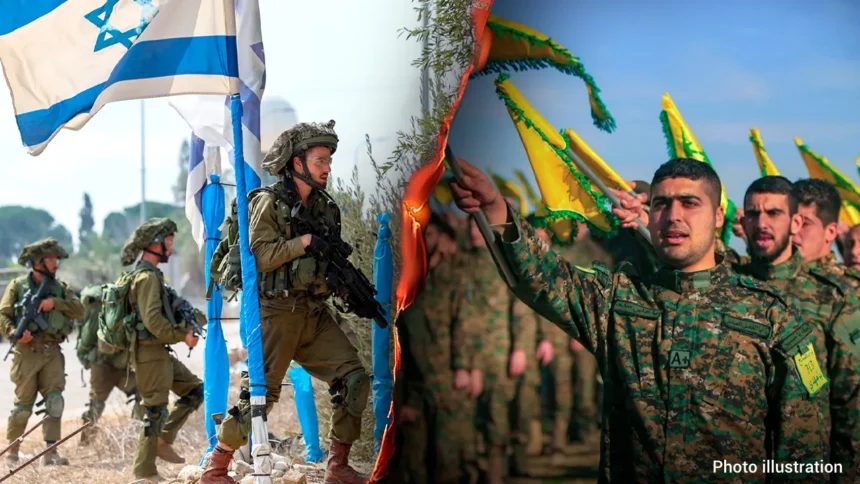
Israel Hezbollah Ceasefire Under Pressure Despite US Mediation
The Israel Hezbollah ceasefire is facing an early challenge after fresh clashes erupted in southern Lebanon despite both sides agreeing to a US-backed plan aimed at reducing hostilities.
The agreement was announced following diplomatic efforts led by the United States, which sought to prevent a wider regional escalation. While the ceasefire appeared to reduce violence temporarily, overnight incidents highlighted the fragile nature of the arrangement.
The renewed fighting has raised concerns about regional stability and the possibility that tensions could once again spiral into a broader conflict.
Key Takeaways
- Israel and Hezbollah accepted a US-backed ceasefire framework.
- Fighting continued in parts of southern Lebanon.
- Rocket and missile attacks were reported overnight.
- Regional tensions remain high despite diplomatic progress.
- Iran warned that violations could affect broader ceasefire efforts.
- International observers continue monitoring developments.
- The situation remains highly unpredictable.
What Is the Israel Hezbollah Ceasefire Agreement?
The Israel Hezbollah ceasefire was designed as a partial arrangement intended to reduce military activity and prevent further escalation.
Under the proposed framework:
- Hezbollah would halt attacks against Israel.
- Israel would reduce military operations linked to Lebanon.
- Both sides would avoid actions that could trigger wider conflict.
- Diplomatic channels would remain open for further discussions.
The agreement emerged during a period of heightened tensions across the Middle East, with several regional actors calling for restraint.
Although the framework was welcomed as a positive step, events on the ground quickly demonstrated the challenges involved in enforcing such arrangements.
Fresh Clashes Raise Questions About the Ceasefire
Despite the agreement, reports indicated that violence continued overnight.
Hezbollah claimed responsibility for attacks targeting Israeli military positions in southern Lebanon. According to statements from the group, missiles and artillery shells were launched at Israeli tanks operating near border areas.
Meanwhile, Israeli authorities reported intercepting projectiles launched from Lebanese territory.
Although no casualties were immediately reported, the incidents underscored how fragile the Israel Hezbollah ceasefire remains.
Military analysts note that even isolated exchanges can increase the risk of broader escalation if not contained quickly.
Southern Lebanon Remains a Flashpoint
Southern Lebanon has long been one of the most sensitive security zones in the region.
The area frequently experiences military activity because of its proximity to the Israeli border and the presence of armed groups.
Recent reports described:
Areas Affected by Violence
- Haddatha
- Bayada
- Debbine
- Border communities in southern Lebanon
Residents in several locations reported explosions and military operations despite hopes that the ceasefire would bring a period of calm.
Local communities continue to face uncertainty as security conditions remain unstable.
Regional Powers Closely Watching Developments
The Israel Hezbollah ceasefire is not only important for Israel and Lebanon but also for broader regional stability.
Several governments have expressed concern that renewed fighting could affect ongoing diplomatic initiatives elsewhere in the Middle East.
Iran has been particularly vocal regarding the situation.
Officials in Tehran argued that military actions in Lebanon could undermine wider efforts aimed at reducing tensions across multiple fronts.
Iranian leaders have repeatedly emphasized the need for all parties to respect ceasefire arrangements and avoid actions that could trigger further instability.
Why the Ceasefire Matters
The importance of the Israel Hezbollah ceasefire extends beyond immediate security concerns.
A sustained reduction in violence could help:
Potential Benefits of the Ceasefire
- Improve regional security.
- Reduce risks to civilian populations.
- Protect critical infrastructure.
- Support diplomatic negotiations.
- Encourage economic stability.
- Lower the likelihood of broader military confrontation.
Many international observers view the ceasefire as an opportunity to create conditions for longer-term discussions aimed at addressing underlying disputes.
However, continued clashes demonstrate that achieving lasting peace remains a difficult challenge.
Diplomatic Efforts Continue Behind the Scenes
Political leaders and diplomats remain engaged in efforts to preserve the ceasefire framework.
Negotiations continue through multiple channels as international mediators attempt to prevent further escalation.
Diplomatic priorities include:
- Maintaining communication between involved parties.
- Reducing military activity.
- Preventing accidental escalation.
- Supporting regional stability initiatives.
Analysts believe ongoing dialogue will be essential if the Israel Hezbollah ceasefire is to survive beyond its initial stages.
Without consistent diplomatic engagement, even minor incidents could derail progress.
Impact on Civilians and Communities
While military and political developments dominate headlines, civilians often bear the greatest burden during periods of conflict.
Communities in southern Lebanon and northern Israel continue to live under uncertainty.
Residents face concerns including:
Civilian Challenges
- Security risks
- Disrupted daily life
- Economic uncertainty
- Travel restrictions
- Infrastructure damage
- Psychological stress
Humanitarian organizations continue monitoring conditions and encouraging all parties to prioritize civilian protection.
The effectiveness of the Israel Hezbollah ceasefire will ultimately be judged not only by military outcomes but also by its ability to improve safety for ordinary people.
What Could Happen Next?
Several possible scenarios could emerge in the coming days and weeks.
Possible Outcomes
- The ceasefire stabilizes and reduces violence.
- Diplomatic talks expand into broader negotiations.
- Limited clashes continue without major escalation.
- A significant incident triggers renewed conflict.
- International mediation efforts intensify.
Much will depend on whether both sides demonstrate restraint and maintain communication channels.
Regional observers remain cautious, noting that ceasefires often face early challenges before becoming fully established.
Final Thoughts
The Israel Hezbollah ceasefire represents an important attempt to reduce tensions in one of the Middle East’s most sensitive conflict zones.
However, recent clashes show that the path toward stability remains uncertain. While diplomatic efforts have produced a framework for de-escalation, events on the ground continue to test its durability.
For now, international attention remains focused on whether political leaders can strengthen the ceasefire and prevent further violence.
A lasting reduction in hostilities would benefit not only Israel and Lebanon but also broader regional stability at a time when tensions remain high.
MORE ON THE NEWS INK CURRENT AFFAIRS.