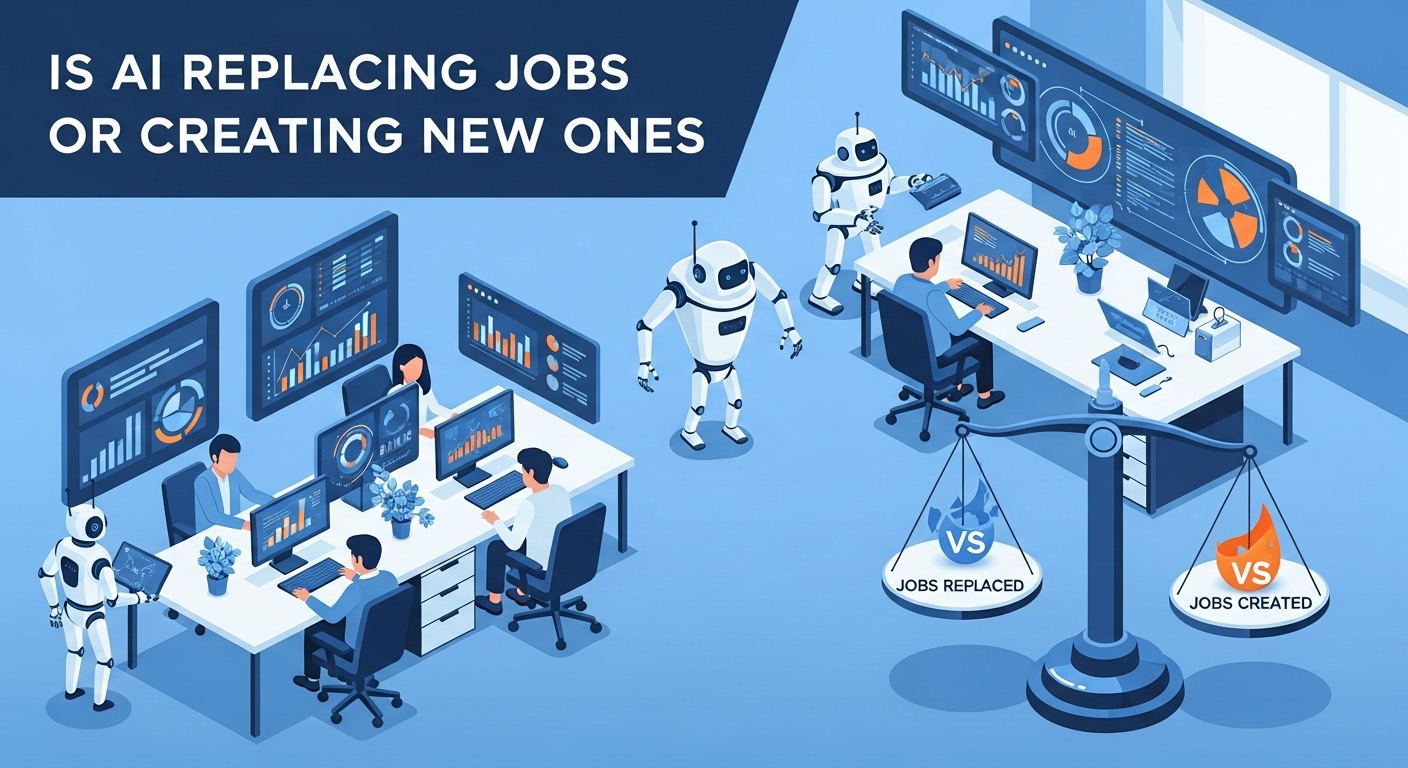
Artificial Intelligence (AI) is no longer a futuristic concept—it is actively reshaping workplaces around the world. In 2026, AI technologies like machine learning, automation, and chatbots are widely used across industries, prompting a key question: Is AI taking away human jobs, or is it creating new career opportunities?
At The News Ink, we break down the impact of AI on employment, highlighting trends, real-world examples, and what the future might hold.
AI and Job Displacement
AI is undeniably automating many tasks that humans used to perform. Some of the most affected areas include:
-
Manufacturing & Warehousing: Robots and automated systems handle assembly lines and inventory management efficiently.
-
Customer Support: AI-powered chatbots can resolve routine customer queries without human intervention.
-
Data Entry & Analysis: Machine learning algorithms can process and analyze vast amounts of data faster than humans.
Table: Jobs Impacted by AI Automation
| Industry | Roles Being Automated | Impact |
|---|---|---|
| Manufacturing | Assembly line workers | Moderate to High |
| Retail | Cashiers & inventory clerks | Moderate |
| IT & Data | Data analysts, report generation | Moderate |
| Customer Service | Call center operators | High |
While AI can replace repetitive and predictable tasks, it rarely replaces jobs that require creativity, empathy, or critical thinking.
AI Creating New Opportunities
AI doesn’t just replace jobs—it creates them. In fact, new AI-driven roles are emerging rapidly:
-
AI Trainers & Supervisors: People teaching AI systems to recognize patterns and make decisions.
-
Data Scientists & Machine Learning Engineers: Professionals analyzing data and building AI models.
-
AI Ethics & Compliance Experts: Specialists ensuring AI is used responsibly and meets legal regulations.
-
Human-Machine Collaboration Specialists: Roles focused on optimizing teamwork between humans and AI systems.
Bullet Points: Key Emerging Careers in AI
-
AI-enhanced healthcare analysts
-
Autonomous vehicle supervisors
-
Robotic process automation specialists
-
AI cybersecurity experts
(World Economic Forum report on AI jobs)
Balancing Automation and Human Skills
Experts agree that the future of work will depend on balancing AI automation with human skills. Businesses are focusing on “reskilling” employees for roles that AI can’t perform, emphasizing:
-
Creativity and problem-solving
-
Emotional intelligence and leadership
-
Complex decision-making
-
Technical skills to manage AI systems
This approach ensures AI becomes a tool to enhance human productivity, rather than a threat to employment.
Global Trends in 2026
-
Companies are increasingly adopting hybrid workforces where AI handles routine tasks and humans focus on high-value activities.
-
Governments are investing in AI education and reskilling programs to reduce unemployment from automation.
-
Startups and tech firms are creating entirely new industries around AI applications, from autonomous drones to AI-driven healthcare solutions.
Table: AI Impact by Region
| Region | AI Job Loss | AI Job Creation | Net Effect |
|---|---|---|---|
| North America | Moderate | High | Positive |
| Europe | Moderate | Moderate | Neutral |
| Asia | High | High | Positive |
| Africa | Low | Moderate | Positive |
Conclusion: AI as a Job Multiplier, Not Just a Replacer
Artificial Intelligence is transforming the job market, but it is not simply replacing humans. While routine jobs are at risk, AI is also creating new roles, industries, and opportunities that require human ingenuity. The key for employees and organizations is adaptability, reskilling, and collaboration with AI.
In 2026, AI should be seen as a job multiplier, augmenting human capabilities while driving innovation across sectors.