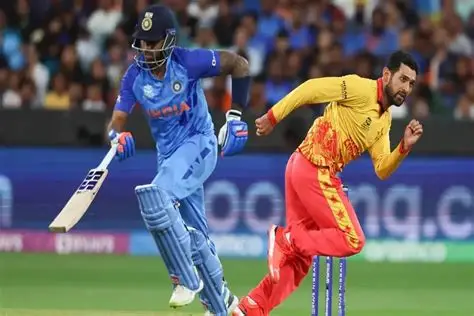
India vs Zimbabwe: Why a Powerful 2026 T20 World Cup Win Became a Title Turning Point
India vs Zimbabwe was first framed as a must-win Super Eight match for the defending champions. By the end of the 2026 T20 World Cup, it looked more like the night India rediscovered their rhythm before marching toward another global title.
India arrived in Chennai under pressure. They had dominated the first group stage, winning all four matches and repeatedly threatening 200-plus totals, but their Super Eight opener against South Africa had exposed a problem. Chasing 187 in Ahmedabad, India were bowled out for 111. A batting unit that had looked fearless suddenly appeared vulnerable. The defeat made India vs Zimbabwe more than a routine fixture against a lower-ranked side. It became a test of response.
India passed that test emphatically. They made 256-4 at the MA Chidambaram Stadium, then restricted Zimbabwe to 184-6 to win by 72 runs. The score was India’s highest T20 World Cup total at the time and one of the biggest totals in tournament history. Abhishek Sharma attacked early, Hardik Pandya finished brutally, Tilak Varma provided the late overs’ acceleration, and India’s bowlers did enough despite Brian Bennett’s magnificent unbeaten 97.
At the time, the win kept India’s semi-final hopes alive. In hindsight, India vs Zimbabwe was a title-turning performance. India went on to beat West Indies in Kolkata, defeat England in a thrilling semi-final in Mumbai, and crush New Zealand by 96 runs in Ahmedabad to defend the trophy. That bigger journey gives this match a new meaning.
The stronger updated story is not simply “India thrash Zimbabwe.” It is how India vs Zimbabwe reset a campaign that had briefly started to wobble.
The pressure before India vs Zimbabwe
Before India vs Zimbabwe, the defending champions were not in crisis, but they were under scrutiny. Their loss to South Africa had changed the group equation. South Africa’s 76-run win over India put the Proteas in control of Group 1 and left India needing to respond quickly. The News Ink covered that setback in detail in our report on South Africa dominating India in the Super Eight opener.
That defeat mattered because India’s identity in the tournament had been built on aggressive batting. They had cleared 190 twice in the opening phase and looked like a side comfortable forcing the pace. South Africa disrupted that image. India’s chase collapsed, and suddenly the semi-final path depended on beating Zimbabwe and then West Indies.
India vs Zimbabwe therefore became a pressure game disguised as a mismatch. India were expected to win, but expected wins can be dangerous in tournament cricket. Lose, and the campaign is almost gone. Win narrowly, and net run-rate questions remain. Win heavily, and confidence returns.
India chose the third option. They did not just beat Zimbabwe. They overwhelmed them with batting depth, tempo and finishing power. That was exactly the statement they needed.
How India built 256-4
The defining feature of India vs Zimbabwe was India’s batting tempo. They did not rely on one batter to carry the innings. Instead, the total was built in phases, with almost every specialist batter adding pressure at the right time.
Abhishek Sharma set the tone with 55 from 30 balls. He struck four fours and four sixes, reaching his half-century from 26 deliveries. That innings was especially important because he had been under pressure after three ducks in his previous four innings. India needed early momentum, but Abhishek also needed personal release. He gave the innings both.
Ishan Kishan supported him with 38, helping create a 72-run platform. Suryakumar Yadav then turned Zimbabwe’s fielding pressure into scoring chances, making 33 from 13 balls. By the time India entered the final overs, they had enough wickets in hand to attack without hesitation.
That is where India vs Zimbabwe became one-sided. Hardik Pandya and Tilak Varma added 84 runs in the final 5.1 overs. Pandya reached 50 not out from 23 balls. Tilak finished unbeaten on 44 from 16. Between them, they turned a strong total into a near-unreachable one.
This was not blind slogging. It was phase-perfect T20 batting. Abhishek attacked the powerplay. Kishan gave stability. Suryakumar raised the rate. Hardik and Tilak destroyed the death overs.
For readers trying to understand why role clarity matters in modern cricket, The News Ink’s cricket guide explains how T20 teams divide batting responsibilities across powerplay, middle overs and death overs.
Hardik Pandya’s finishing role changed the tone
Hardik Pandya was named player of the match in India vs Zimbabwe, and it was easy to see why. His 50 from 23 balls gave India the kind of late burst that changes the emotional state of both teams.
A total around 210 would have kept Zimbabwe interested. A total around 230 would have demanded a special chase. But 256-4 asked Zimbabwe to do something close to historic. Hardik’s acceleration pushed the target into that psychological zone where bowlers can attack more freely because the chasing side has little room to rebuild.
Pandya’s innings also mattered because India’s title defence needed him in this exact role. He was not required to bat for ten overs. He was required to arrive late, clear the rope, and make good death bowling look ordinary. He did that in Chennai.
India vs Zimbabwe showed why finishers are so valuable in T20 cricket. They may face fewer balls than openers, but their impact can be disproportionate. A 23-ball fifty at the end of an innings can be the difference between a competitive total and a crushing one.
Hardik’s form also gave India balance. If he can score quickly at No. 6 and still provide overs when needed, India can pick a more flexible XI. That flexibility became important later in the tournament.
Tilak Varma gave India another left-handed weapon
Tilak Varma’s unbeaten 44 from 16 balls was one of the most important parts of India vs Zimbabwe because it made India’s lower-middle order look deeper and more dangerous. His innings included clean boundary hitting, fast running, and the confidence to match Hardik’s aggression.
The left-handed angle mattered. In T20 cricket, left-right combinations force bowlers to keep changing lines. Captains must adjust fields. Spinners lose easy matchups. Seamers cannot simply target one hitting arc. Tilak gave India that advantage in the most damaging part of the innings.
India’s title run later depended on having several players capable of taking over a phase. India vs Zimbabwe proved Tilak could do that. He did not need a long platform. He needed only 16 balls to make a major contribution.
That is why the match was bigger than a scorecard. India learned something about their own batting order. They did not need every run to come from one superstar. They had enough depth for different players to dominate different moments.
Zimbabwe’s fielding made the task harder
Zimbabwe did not help themselves. The original report noted that they had dropped five catches in 15 attempts during the Super Eight stage, a sharp fall from their strong group-stage catching standards. India vs Zimbabwe continued that pattern of missed chances and sloppy fielding.
Against a side like India, mistakes are punished quickly. A dropped catch in the powerplay can become a 50. A misfield at the death can become a six next ball. A missed run-out can give a finisher three more deliveries to attack.
Zimbabwe’s fielding dip also exposed the mental strain of the Super Eight stage. They had done well to reach that phase, but the quality of opposition and pressure rose sharply. Against India, they needed near-perfect execution. Instead, their pace attack conceded 197 runs in 14 overs, and the fielders could not protect the bowlers.
That is why India vs Zimbabwe became so lopsided despite Bennett’s later brilliance. Zimbabwe allowed India too many second chances. India were ruthless enough to take them.
Brian Bennett’s unbeaten 97 deserved more support
The scoreline says India won by 72 runs, but India vs Zimbabwe was not without Zimbabwean resistance. Brian Bennett produced one of the best individual innings of the match, finishing unbeaten on 97 from 59 balls. He struck eight fours and six sixes, showing courage and quality against a huge target.
Bennett’s innings deserves respect because chasing 257 can make batters reckless. Many players either swing blindly or shut down under scoreboard pressure. Bennett did neither. He attacked when the ball was there, found boundaries, and kept Zimbabwe from collapsing into a much heavier defeat.
The problem was support. Sikandar Raza made 31 from 21 balls, but no one else stayed long enough or scored fast enough to make India uncomfortable. A chase of 257 requires at least two major innings or one extraordinary century with strong cameos around it. Zimbabwe had Bennett, but not enough around him.
In another context, 97 not out would have been the story of the match. In India vs Zimbabwe, it became a brave innings inside a heavy defeat. Bennett kept Zimbabwe’s dignity intact, but India’s batting had already placed the match too far away.
Why the 72-run margin mattered
India vs Zimbabwe was not only about victory. It was about margin. In the Super Eight stage, net run-rate can become decisive. India knew they were level with West Indies in the race for second place behind South Africa. A narrow win would have kept pressure high before the final group game. A big win gave India breathing room and confidence.
The 72-run margin also helped reset the mood after the South Africa defeat. Teams often talk about moving on quickly, but tournament defeats can linger. A heavy loss can create selection doubts, batting doubts, and media pressure. The best response is a performance too strong to overanalyse.
India delivered that. They scored 256. They won by 72. Several batters contributed. The bowlers did not panic when Bennett played well. The fielding energy improved. The dressing room had a result it could build on.
That is why India vs Zimbabwe was a turning point. It did not mathematically send India into the semi-finals, but it changed the direction of the campaign.
What happened next against West Indies
India still had to finish the job. After India vs Zimbabwe, their final Group 1 match against West Indies in Kolkata became a virtual knockout. West Indies made 195-4. India chased it down, scoring 199-5 in 19.2 overs, and won by five wickets with four balls remaining. The ICC match page confirmed that India qualified for the semi-finals with that victory.
Sanju Samson was named player of the match after a brilliant chase. The win showed that India’s batting power was not limited to Chennai or Zimbabwe’s attack. They could chase under pressure against a West Indies side fighting for the same semi-final place.
That result also changed how India vs Zimbabwe should be remembered. The Zimbabwe win did not stand alone. It created momentum for Kolkata. It gave India the confidence to attack West Indies instead of playing nervously. It put them back in control of their own campaign.
The News Ink’s full qualification explainer on the T20 World Cup semi-finals breaks down how India, South Africa, England and New Zealand eventually reached the last four.
The semi-final: India edged England in Mumbai
India’s semi-final against England showed how far the team had travelled since India vs Zimbabwe. England had topped Group 2 with three wins from three. They had looked tactically flexible and confident. India needed a huge performance at Wankhede Stadium.
They got one. India made 253-7 in 20 overs. England replied with 246-7. India won by seven runs in one of the tournament’s highest-scoring knockout matches. The ICC match page lists the result and confirms the narrow margin.
That semi-final proved India could win a shootout against elite opposition. The total was not quite as high as the 256 against Zimbabwe, but the context was tougher. England’s batting depth pushed India to the edge. India held their nerve.
This is where India vs Zimbabwe becomes part of the larger story. The Chennai innings gave India a template for high-scoring pressure cricket. Start fast. Keep wickets. Attack the death overs. Trust depth. Against England, that model helped them reach another massive total.
The comparison is useful. India vs Zimbabwe restored belief. India vs England tested that belief against a top side. India passed both tests.
The final: India completed the title defence
India’s campaign ended with a statement in Ahmedabad. Against New Zealand in the final, India made 255-5 and bowled New Zealand out for 159 in 19 overs. They won by 96 runs and defended the T20 World Cup title. The ICC final page confirms India’s 255-5, New Zealand’s 159, and the 96-run margin.
That final made India vs Zimbabwe look even more important. The pattern was familiar: a huge Indian total, multiple batting contributors, and scoreboard pressure that forced the opposition into mistakes. India had used the same broad formula in Chennai. By the final, they had perfected it.
The final also showed why India’s recovery after the South Africa defeat mattered. Many teams can dominate when things go smoothly. Champions recover when a tournament goes wrong. India were embarrassed by South Africa, responded against Zimbabwe, handled West Indies, survived England, and then overwhelmed New Zealand.
That arc is what makes India vs Zimbabwe a title-turning match. It was not the final. It was not the semi-final. But it was the point where India stopped reacting to defeat and started building toward the trophy.
India’s batting depth became the tournament story
India vs Zimbabwe revealed the batting depth that later carried India through the knockout phase. Abhishek Sharma, Ishan Kishan, Suryakumar Yadav, Hardik Pandya and Tilak Varma all contributed in Chennai. That spread of runs mattered because it reduced dependence on one player.
Modern T20 tournaments are rarely won by one batter alone. Conditions change, bowlers adapt, and knockout pressure can shrink even experienced players. The best teams have several match-winners who can take turns controlling a phase.
India had that. Abhishek’s powerplay hitting gave them pace early. Suryakumar’s middle-over aggression disrupted fields. Hardik and Tilak gave the innings a violent finish. Later, Sanju Samson stepped up in the West Indies match and again became central in the knockout phase.
This is where India’s campaign connects with wider changes in modern cricket. Teams now think in phases rather than fixed batting positions. A player’s value depends on when he scores, how fast he scores, and whether he can solve a specific pressure moment. The News Ink’s sports training and technology guide explains how data, role clarity and physical preparation now shape elite sport.
Zimbabwe’s tournament still had positives
India vs Zimbabwe ended Zimbabwe’s hopes, but their campaign should not be dismissed. Reaching the Super Eight stage was already a sign of progress. Bennett’s 97 not out against India showed they had players capable of competing with elite attacks.
The problem was consistency. Zimbabwe’s bowling could not contain India. Their fielding standards dropped at the worst time. Their batting relied too heavily on Bennett and Raza. Against a champion side, that was not enough.
Still, games like India vs Zimbabwe can help developing teams. They show the level required. They expose the difference between a good group-stage side and a team ready to challenge for semi-finals. They also give young players experience under extreme pressure.
Zimbabwe will regret the margin, but Bennett’s innings and the team’s Super Eight presence gave them something to build on.
Key numbers from India vs Zimbabwe
| Detail | Figure |
|---|---|
| Venue | MA Chidambaram Stadium, Chennai |
| India score | 256-4 |
| Zimbabwe score | 184-6 |
| Result | India won by 72 runs |
| Abhishek Sharma | 55 off 30 balls |
| Hardik Pandya | 50 not out off 23 balls |
| Tilak Varma | 44 not out off 16 balls |
| Brian Bennett | 97 not out off 59 balls |
| India’s next match | Beat West Indies by five wickets |
| India’s tournament finish | Champions, beat New Zealand by 96 runs |
The table shows why the match carried weight. India did not win through one freak innings. They produced a complete batting display and then controlled enough of the chase to protect a huge margin.
The careful takeaway
India vs Zimbabwe began as a Super Eight survival match and ended as one of the key turning points in India’s 2026 T20 World Cup title defence. The 72-run win restored confidence after the South Africa defeat, revived India’s net run-rate position, and proved their batting order still had enough firepower to dominate under pressure.
Abhishek Sharma gave India the start. Suryakumar Yadav added tempo. Hardik Pandya and Tilak Varma destroyed the final overs. Brian Bennett’s unbeaten 97 gave Zimbabwe pride, but India’s 256-4 had already made the chase almost impossible.
What happened afterward made the Chennai result even more significant. India beat West Indies to reach the semi-finals, edged England in Mumbai, and crushed New Zealand in Ahmedabad to win the trophy. In that bigger story, India vs Zimbabwe was not just a big win. It was the night India’s campaign turned back toward the title.
For more cricket analysis, tournament updates and sports features, follow The News Ink on Medium.