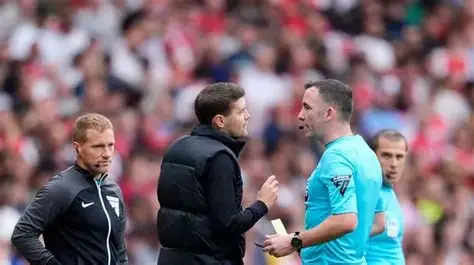
Hurzeler Criticises Arsenal After Controversial Brighton Win That Shaped Title Race
Hurzeler criticises Arsenal was the headline after Brighton’s angry 1-0 defeat at the Amex Stadium, but the bigger story was what the result said about Mikel Arteta’s side and their growing ability to win like champions.
Arsenal did not play beautiful football on 4 March 2026. They did not overwhelm Brighton with attacking patterns, high pressing or free-flowing combinations. They scored early through Bukayo Saka, defended stubbornly, slowed the game whenever possible and left the south coast with three points that looked bigger with every passing week.
Brighton head coach Fabian Hurzeler was furious. He accused Arsenal of time-wasting, questioned David Raya’s repeated treatment delays and said there was “only one team who tried to play football.” Arteta’s response was sharp and unapologetic. “What a surprise,” he said when told about the criticism. He defended his players, praised their competitive edge and made it clear that Arsenal were not chasing popularity.
That night became one of the defining moments of Arsenal’s title season. The Gunners moved seven points clear after Manchester City were held by Nottingham Forest, and the win later looked like one of the gritty results that helped end Arsenal’s 22-year wait for the Premier League title.
Hurzeler criticises Arsenal because he saw gamesmanship. Arsenal supporters saw game management. Title races are often decided in that uncomfortable space between style and survival.
For more title-race context, The News Ink has also covered how Man City dropped points against Nottingham Forest on the same night and why Arteta warned Arsenal players to handle the pressure during a tense run-in.
Why Hurzeler criticises Arsenal after the final whistle
Hurzeler criticises Arsenal because he felt Brighton were trying to play while the visitors were trying to stop the game from flowing. His post-match comments were not mild frustration. They were a direct attack on Arsenal’s approach.
The Brighton manager said he loved his team’s effort and the way they played football. Then came the line that dominated headlines: he believed only one team had tried to play. He also questioned whether Premier League rules were strong enough to punish time-wasting, especially when goalkeepers go down repeatedly.
Raya was central to Brighton’s anger. The Arsenal goalkeeper received treatment more than once, including after a second-half save, and the home crowd grew increasingly furious as the rhythm of the match broke down. Hurzeler asked whether anyone had seen a Premier League goalkeeper go down three times in one game.
His deeper argument was about fairness and entertainment. Supporters pay to watch football, he said, not long delays, slow restarts and tactical stoppages. He claimed Arsenal were “making their own rules” because referees were allowing them to control the tempo in ways Brighton could not prevent.
Hurzeler criticises Arsenal from the position of a coach who believed his side had the better footballing intention. The problem for Brighton was simple: good intention did not bring a goal.
Arteta’s response showed Arsenal’s title mentality
Arteta did not apologise. He did not promise to change. He did not accept the idea that Arsenal had done anything wrong. Instead, he turned the criticism into another sign of how competitive his team had become.
“I love my players,” Arteta said. “We love our players and I love the way we compete.” That was the important line. Arteta was not trying to win an argument about aesthetics. He was defending the mentality that had carried Arsenal into control of the title race.
Hurzeler criticises Arsenal, but Arteta’s view was that his team had gone to a difficult away ground, survived pressure, protected a lead and won. In a title chase, that is the currency that matters most.
Arteta also knew the bigger picture. Arsenal had come through intense matches, carried injuries and needed to keep winning while Manchester City chased them. Away games at Brighton are rarely simple. The Amex can become awkward quickly when Brighton dominate possession and the crowd senses momentum.
Arsenal did not panic. They did what they had to do. It was not romantic. It was effective.
That was the difference between a team trying to be admired and a team trying to be champions.
The match turned on Saka’s early goal
The only goal came in the ninth minute. Bukayo Saka cut inside from the right and shot with his left foot. The effort took a deflection off Carlos Baleba, wrong-footed Bart Verbruggen and slipped through the Brighton goalkeeper.
It was not the cleanest goal of Saka’s career, but it was hugely important. Reuters reported that Saka was making his 300th Arsenal appearance, and he marked it with the decisive moment in a 1-0 win that sent the Gunners seven points clear.
After that, the game changed. Arsenal had the lead. Brighton had the ball. The home side tried to raise the tempo, but Arsenal’s defensive structure tightened. Gabriel Magalhaes became the dominant figure at the back, especially with William Saliba absent through injury.
Hurzeler criticises Arsenal because the match did not develop into the open contest Brighton wanted. But that was exactly why Arsenal succeeded. They scored first, removed rhythm from the game and forced Brighton to solve a deep, aggressive defensive block.
Brighton had moments. Carlos Baleba wasted an early chance after Raya misplaced a pass. Kaoru Mitoma saw a threat blocked. Georginio Rutter caused problems. Mats Wieffer missed a good header. But Brighton never found the finish that would have changed the argument.
Match facts at a glance
| Detail | Brighton | Arsenal |
|---|---|---|
| Final score | 0 | 1 |
| Venue | Amex Stadium | Amex Stadium |
| Date | 4 March 2026 | 4 March 2026 |
| Decisive goal | — | Bukayo Saka, 9th minute |
| Key deflection | Carlos Baleba | — |
| Arsenal shots on target | — | Two, according to Reuters |
| Brighton complaint | Time-wasting and game disruption | — |
| Arteta response | — | Defended Arsenal’s competitive edge |
| Table impact | Brighton frustrated | Arsenal moved seven points clear |
| Bigger season impact | — | Key step in eventual title win |
This was not a statistical attacking masterclass. It was a title-race survival job.
Brighton had the moral argument but not the result
Hurzeler criticises Arsenal because Brighton left feeling they had tried to play more football. That argument had emotional force. Brighton pushed forward, tried to build rhythm and spent long stretches in Arsenal territory, especially after half-time.
But football does not award points for moral superiority. It rewards goals and defensive control. Arsenal had one, then protected it.
Brighton’s problem was that they did not turn pressure into enough clear chances. When they did create moments, their finishing lacked precision. Baleba’s early lob was headed clear by Gabriel. Rutter forced Raya into action but could not beat him. Wieffer’s header was badly misdirected. Minteh’s deliveries caused discomfort but no decisive touch arrived.
This is why Arsenal’s approach worked. It was risky because a single Brighton goal would have changed the mood completely. But the longer the game stayed 1-0, the more Arsenal could shrink the match. Every restart became slower. Every duel mattered more. Every defensive clearance brought them closer.
Hurzeler criticises Arsenal for disrupting the flow. Arsenal would probably argue that disrupting the flow was part of winning.
Gabriel led the defensive performance
Gabriel Magalhaes was one of Arsenal’s most important players at Brighton. With William Saliba unavailable, Arsenal needed leadership, aggression and concentration at centre-back. Gabriel provided all three.
The Guardian described Gabriel as leading an aggressive defensive effort. Sky Sports named him Player of the Match and gave him the highest Arsenal rating. That was no accident. Brighton’s pressure required constant defending of crosses, transitions and second balls. Gabriel attacked those moments with authority.
Hurzeler criticises Arsenal, but the defensive quality should not be ignored. Time-wasting alone does not win a match. Arsenal still had to head balls away, block shots, cover spaces and stay mentally alert for more than 90 minutes.
Gabriel’s performance showed why Arteta trusted the ugly route. If Arsenal could keep their defensive line focused, one Saka goal might be enough. That is exactly what happened.
Title-winning teams often need matches like this. They need forwards to win games 3-0, but they also need defenders to protect 1-0 wins when the attack is blunt.
Raya became the centre of controversy
David Raya’s clean sheet came with heavy controversy. Brighton fans and Hurzeler were annoyed by his repeated treatment delays and slow restarts. For Arsenal, Raya was doing what goalkeepers often do when protecting a narrow away lead: managing the moment.
That is the grey area. Goalkeepers are allowed to receive treatment. Teams are allowed to slow the tempo within the law. But when those pauses become repeated and strategic, opponents feel cheated out of momentum.
Hurzeler criticises Arsenal because he believed the limit had been crossed. His call for clearer Premier League rules was not only about Raya. It was about the wider problem of how officials manage time-wasting, treatment delays, set-piece delays and goalkeeper restarts.
The Premier League has tried to add more stoppage time in recent seasons, but the Brighton-Arsenal match showed that extra minutes alone do not solve the issue. A team can still break rhythm, cool pressure and frustrate opponents even if stoppage time is added later.
That was the core of Hurzeler’s frustration. Brighton did not only lose time. They lost flow.
Why Arsenal fans celebrated the result
Arsenal supporters celebrated wildly because they understood the importance of the night. Their own team had won an awkward away match. Manchester City had dropped points at home. The title race had swung.
Reuters reported that Arsenal had 67 points from 30 games after the Brighton win, while City had 60 from 29. City still had a game in hand and a direct meeting with Arsenal to come, but the psychological shift was obvious.
Hurzeler criticises Arsenal because he was focused on how the match was won. Arsenal fans were focused on what the win meant. That is how football perspective works. A rival sees negative play. A supporter sees resilience.
The result also followed difficult fixtures. Arsenal had beaten Tottenham and Chelsea before going to Brighton. Three wins in a row under pressure changed the title mood. What had looked like a wobble became momentum.
By the time Arsenal supporters heard Forest had equalised against City, the away end understood the wider significance. This was not just another 1-0. It was a night when the title felt closer.
The City result made everything bigger
On the same night, Manchester City drew 2-2 with Nottingham Forest. City led twice, through Antoine Semenyo and Rodri, but Forest came back through Morgan Gibbs-White and Elliot Anderson. Murillo then cleared a late Savinho effort off the line.
That result transformed Arsenal’s win from useful to potentially decisive. Had City won, Arsenal would have simply kept pace. Because City drew, Arsenal opened a seven-point lead, even though City had played one match fewer.
Hurzeler criticises Arsenal after the Brighton game, but the league table did not care about style complaints. It showed Arsenal stretching away. That is why the result later became part of title history.
City’s dropped points also put pressure on Pep Guardiola’s side. From that night, they needed Arsenal to stumble. Arsenal did stumble at times later, but not enough to surrender control completely.
The News Ink’s report on Man City dropping points against Nottingham Forest explains why that parallel result made Brighton feel like a turning point.
Was Arsenal’s approach “anti-football”?
The phrase “anti-football” was heard from frustrated Brighton supporters. It is a strong accusation, but it depends on what football is supposed to be.
If football is only attacking expression, then Arsenal’s performance was ugly. They did not entertain neutral viewers. They did not create many chances. They protected a lead, slowed restarts and made the game uncomfortable.
If football is also control, defending, resilience and title-race intelligence, then Arsenal’s performance was professional. They recognised the match state and managed it ruthlessly.
Hurzeler criticises Arsenal because he believes there should be limits. That is a fair debate. Time-wasting can damage the spectacle. Supporters deserve matches that are not repeatedly interrupted. Officials need clearer ways to punish cynical delay.
But it is also fair to say Brighton had 90 minutes to score and did not. Arsenal’s approach may have been unpopular, but it was not illegal enough to be punished on the day. Until rules change, teams will keep using every allowed advantage.
That is not unique to Arsenal. It is elite football.
The title context changed the judgement
Had Arsenal finished second, this match might have been remembered as a scruffy win in a nearly season. Instead, Arsenal went on to win the Premier League, ending a 22-year wait for the title.
That changes how matches are remembered. Champions do not have every win judged by beauty. They have wins judged by necessity. A difficult 1-0 in March becomes evidence of character. A controversial away victory becomes part of the story of a team learning to suffer.
Hurzeler criticises Arsenal, but his own words almost predicted the future. He said that if Arsenal won the Premier League, nobody would ask how they won it. That was partly wrong. People still did ask. But the trophy answered louder than the criticism.
The Premier League later confirmed Arsenal as 2025/26 champions after Manchester City’s draw at Bournemouth made the Gunners impossible to catch. It was Arsenal’s first league title since the Invincibles season of 2003/04.
In that context, Brighton away became one of those wins supporters revisit. Not because it was pretty, but because it looked like a champion’s result.
Why ugly wins matter in title races
Title races are not won only by statement performances. They are also won by matches when a team is tired, short of rhythm or under pressure from a hostile crowd.
Arsenal’s Brighton win had all the ingredients of an ugly title result:
- an early goal;
- a defensive stand;
- opposition frustration;
- limited attacking output;
- a goalkeeper under scrutiny;
- late pressure;
- wild celebrations after another title rival dropped points.
Hurzeler criticises Arsenal because Brighton felt robbed of rhythm. Arsenal would say title contenders must sometimes take control of rhythm away from opponents.
That tension is not new. Jose Mourinho’s Chelsea, Diego Simeone’s Atletico Madrid, Antonio Conte’s teams and even Guardiola’s best sides have all won matches by controlling tempo rather than dazzling with chances. The methods differ, but the principle is the same: the scoreboard matters most.
Arteta’s Arsenal had spent years being praised for potential. In 2026, they showed they could be disliked and still win. That is often the final stage of a title-winning team.
Brighton’s frustration was still valid
It would be wrong to dismiss Hurzeler completely. His frustration spoke to a genuine Premier League problem.
Fans do not enjoy constant delays. Managers do not enjoy seeing momentum broken. Referees often struggle to distinguish real injury, tactical pause and deliberate time-wasting in the heat of a match. Adding stoppage time helps, but it does not fully restore lost rhythm.
Hurzeler criticises Arsenal, but he was also criticising the system. His argument was that the Premier League must set clearer limits. How many times can a goalkeeper receive treatment before consequences follow? How quickly must a team restart from set pieces? When should referees book players earlier for delaying restarts?
Those are legitimate questions. Football wants intensity, but tactical delay is part of the game because teams are rewarded for using it. Unless punishments become clearer and more consistent, coaches will keep exploiting the grey area.
Brighton lost the match, but Hurzeler’s complaint was not meaningless. It touched a wider issue the league still needs to manage.
Arsenal’s defence of winning mentality
Arteta’s defence was equally valid from Arsenal’s perspective. His job was not to satisfy Brighton. His job was to win the Premier League.
Arsenal had already suffered enough near-misses in previous seasons. They had played attractive football and finished second. They had earned praise but not the trophy. By 2026, the club needed a harder edge.
Hurzeler criticises Arsenal, but Arsenal’s reaction showed a team that had stopped caring about being liked. That can be important. Champions are often accused of being cynical, lucky, ruthless or boring. Those accusations usually arrive because they are winning.
Arteta’s side learned to accept that. They did not respond emotionally to Brighton’s complaints. They took the points and moved on.
That mental shift matters. Earlier versions of Arsenal may have tried to prove a point by playing more open football. This version protected the result. In a title race, maturity can look dull. It can also be decisive.
Key lessons from the Brighton win
| Lesson | Why it mattered |
|---|---|
| Early goals change match control | Saka’s ninth-minute strike allowed Arsenal to manage the game |
| Defensive leadership wins titles | Gabriel’s display helped cover Saliba’s absence |
| Time management remains controversial | Raya’s treatment delays became the centre of Brighton’s anger |
| Arteta prioritised outcome over approval | Arsenal defended their approach instead of apologising |
| City’s draw magnified the result | The win moved Arsenal seven points clear |
| Ugly wins can define champions | The result later looked vital in Arsenal’s title season |
The Brighton match became memorable not because it was thrilling, but because it showed what Arsenal had become.
How the result fits Arsenal’s title story
Arsenal’s title season was not only about one night. It was built through consistency, defensive strength, Saka’s influence, Declan Rice’s authority, Gabriel’s leadership, Raya’s clean sheets and Arteta’s willingness to embrace pragmatism when required.
Hurzeler criticises Arsenal because this match showed the least romantic side of that team. But title stories need those chapters too. The Invincibles are remembered for beauty and dominance, but even great teams have awkward afternoons and difficult nights. Winning the league requires surviving them.
The 2025/26 Arsenal side did not need to copy the Invincibles. They needed to end the wait. They did.
That makes Brighton away an important marker. It showed that Arsenal could win while under pressure, while being jeered, while creating little and while angering the opposition bench. That is not the only way to win a title, but it is often part of the journey.
FAQ: Hurzeler criticises Arsenal
Why did Hurzeler criticise Arsenal?
Hurzeler criticises Arsenal because he believed they wasted time, slowed the match and prevented Brighton from building rhythm during Arsenal’s 1-0 win at the Amex Stadium.
What did Hurzeler say after Brighton lost to Arsenal?
Hurzeler said there was “only one team who tried to play football” and questioned why David Raya was allowed to receive treatment multiple times without stronger punishment.
How did Arteta respond?
Arteta responded with “What a surprise” and defended Arsenal’s players, saying he loved how they competed.
Who scored the winner for Arsenal?
Bukayo Saka scored in the ninth minute with a deflected shot off Carlos Baleba that wrong-footed Brighton goalkeeper Bart Verbruggen.
Why was the win important for Arsenal?
The win moved Arsenal seven points clear at the top after Manchester City drew with Nottingham Forest. Arsenal later went on to win the Premier League title.
The bottom line
Hurzeler criticises Arsenal because Brighton felt the Gunners turned a football match into a controlled, broken, frustrating title-race exercise. He had a point. Arsenal’s approach was not pretty, and Raya’s treatment delays became a major source of anger inside the Amex Stadium.
But Arsenal had their own answer. They scored early, defended superbly and left with the three points. Gabriel led the back line. Saka delivered the decisive moment. Arteta refused to apologise for winning ugly.
That is why this match mattered. Arsenal were no longer only a team capable of playing attractive football. They were a team capable of being unpopular, practical and ruthless. In a title race, that can be the difference between nearly winning and actually winning.
Brighton had the complaints. Arsenal had the points. By the end of the season, Arsenal had the trophy too.
Hurzeler criticises Arsenal became a controversy on the night. In hindsight, it became part of the story of how Arsenal learned to win the Premier League the hard way.
For more Premier League analysis and football coverage, follow The News Ink on Threads.