Set-pieces, especially corners, have caused chaos again this week. Defending players crowd the six-yard box, holding attackers and ignoring the ball. These are clear fouls that should result in penalties or free-kicks.
Referees must act decisively. If they see an offence, they should award the correct decision. But we often see players penalised outside the box for minor incidents while blatant fouls in the six-yard box go unpunished.
Howard Webb, head of Professional Games Match Officials Limited (PGMOL), must clarify his instructions to officials. Why is a foul outside the box punished, but a similar or worse offence in the penalty area ignored?
This inconsistency encourages poor defending. Teams now avoid marking attackers properly during set plays, knowing they can escape punishment. Managers invest hours training defenders to handle crosses, but the art of defending is disappearing under lax officiating.
The solution is simple: common sense. Enforce the rules strictly. Award penalties and red cards for clear fouls. If referees act decisively, players and teams will adjust their behaviour.
The Red Card Controversy
Chaos is not limited to set pieces. Leeds boss Daniel Farke was sent off for questioning the referee’s added time during Leeds’ 1-0 defeat to Manchester City. Smaller clubs often feel top teams receive favourable decisions.
Added time has become increasingly inconsistent. Both teams often dispute the referee’s rationale. A solution used in rugby union could work for football: a time-keeper in sync with the referee, clearly showing stoppages to everyone in the stadium.
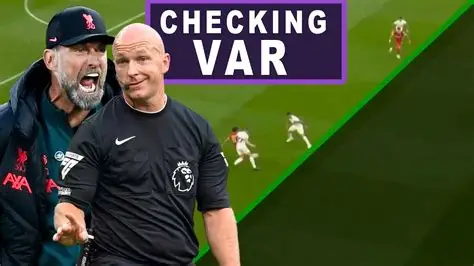
Referees already manage injuries, substitutions, and VAR reviews. Guessing added time on top of that adds unnecessary pressure. VAR has grown into a disruptive force, undermining both the flow and fairness of the game.
Football needs rules enforced consistently, and officials empowered to act decisively. Only then can we stop VAR and poor refereeing from ruining the sport we love.