



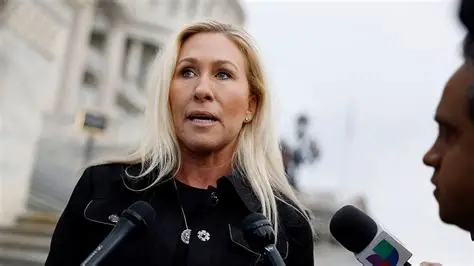
Georgia Voters Choose Clay Fuller to Replace Marjorie Taylor Greene
Georgia voters have chosen Republican Clay Fuller to replace Marjorie Taylor Greene in the US House of Representatives, bringing an end to a special election shaped by Donald Trump’s endorsement, Republican infighting and a surprisingly competitive Democratic challenge.
The original race began with a crowded March ballot after Greene resigned from Congress on 5 January 2026. No candidate secured the majority required to win immediately, sending Fuller and Democrat Shawn Harris into an April runoff.
Georgia voters ultimately gave Fuller 55.9% of the runoff vote, compared with 44.1% for Harris. The result kept one of the country’s most Republican congressional districts in GOP hands, but the margin was much narrower than Greene’s nearly 29-point victory over Harris in 2024.
Fuller was sworn into the House on 14 April and now serves Georgia’s 14th Congressional District. The result did not settle the seat for long, however. He later won the Republican nomination for a full term and is scheduled to face Harris again in the November 2026 general election.
The special election therefore produced two outcomes. It gave Georgia voters a new congressman for the remainder of Greene’s term, and it created an immediate rematch that will test whether Harris’s improved Democratic performance can survive a higher-turnout midterm election.
The Election Has Already Been Decided
The most important update to the original version of this story is that Georgia voters are no longer preparing to choose Greene’s replacement. They have already done so.
Georgia’s secretary of state scheduled the special election for 10 March, covering Catoosa, Chattooga, Dade, Floyd, Murray, Paulding, Polk, Walker and Whitfield counties, along with part of Cobb County. A runoff was set for 7 April if no candidate exceeded 50%.
The crowded first round produced exactly that outcome. Harris finished first with roughly 37% of the vote, while Fuller followed with about 35%. Hard-right Republican Colton Moore finished a distant third with approximately 12%, leaving Harris and Fuller to compete directly in the runoff.
The first-place finish gave Democrats an attention-grabbing headline, but it did not mean Georgia voters had suddenly transformed the district. Republican support had been divided among more than a dozen candidates, while most Democratic voters consolidated behind Harris.
Once the contest became a two-person race, Fuller became the favourite. Georgia voters then returned the district to Republican control by an approximately 12-point margin.
Georgia Voters Produced a Clear but Complicated Result
The final result looked comfortable when measured only by who won. Fuller received 72,338 votes, while Harris collected 57,097. That gave Fuller a margin of 15,241 votes.
| Candidate | Party | Runoff votes | Vote share |
|---|---|---|---|
| Clay Fuller | Republican | 72,338 | 55.89% |
| Shawn Harris | Democratic | 57,097 | 44.11% |
Fuller’s victory confirmed that Georgia voters in the northwest district still lean heavily Republican. Yet Harris’s 44% share was politically significant because Greene had defeated him 64.4% to 35.6% only two years earlier.
That improvement does not prove the district is becoming competitive in ordinary elections. Special elections have unusual turnout patterns, and Republicans entered the first round divided after Greene’s resignation.
Still, Georgia voters forced Republicans to spend time, money and political attention defending a seat that would normally receive little national concern. For Democrats, that alone provided a useful argument heading toward the midterms.
Greene’s Resignation Created the Vacancy
Marjorie Taylor Greene announced in November 2025 that she would leave Congress, with her resignation becoming effective on 5 January 2026.
Her departure followed a dramatic collapse in her relationship with Trump. Greene had once been among his most visible and loyal congressional supporters, regularly defending his political movement and adopting its combative style.
The relationship deteriorated over several issues, including the administration’s handling of the Jeffrey Epstein files, healthcare subsidies, congressional power and US foreign policy. Trump publicly withdrew his support, called Greene a traitor and signalled that he would back a Republican primary challenger against her.
Greene said she did not want Georgia voters to endure what she expected would become a bitter Trump-backed primary campaign. She also criticised what she described as the sidelining of Congress and argued that political leaders had abandoned parts of the “America First” agenda.
The News Ink has followed the wider dispute over the Epstein files mentioning Donald Trump and the political backlash surrounding the files. Those controversies helped turn Greene from one of Trump’s most recognisable defenders into a persistent critic.
Her resignation left Georgia voters choosing not only a new representative but also what kind of conservatism should replace her.
A District Closely Associated With MAGA Politics
Georgia’s 14th Congressional District stretches through a mostly blue-collar corridor from the northern Atlanta suburbs toward the Tennessee border. Trump carried it by approximately 37 points in 2024, while Greene had repeatedly won by comfortable margins.
Since Greene’s first election in 2020, the district had become closely associated with the MAGA movement. Her national visibility often exceeded her legislative influence, and her controversial statements made the district part of political debates far beyond Georgia.
Her departure created a rare opening. Georgia voters could choose another combative political figure, a more conventional Trump loyalist or a candidate promising less confrontation.
The crowded Republican field reflected that uncertainty. Most candidates broadly supported conservative positions, but they differed over style, personality and how closely the district’s next representative should follow Trump.
Some Georgia voters wanted another outspoken fighter. Others said the district needed someone who could focus more heavily on local economic development, infrastructure and constituent services.
Fuller presented himself as loyal to Trump but less interested in reproducing every aspect of Greene’s confrontational public style.
Trump’s Endorsement Helped Fuller Break Through
Trump endorsed Fuller on 4 February, describing him as a candidate capable of carrying forward the MAGA agenda. Fuller was a former district attorney, a White House fellow during Trump’s first administration and a lieutenant colonel in the Georgia Air National Guard.
The endorsement immediately made him a leading candidate, but it did not clear the Republican field. Fourteen other Republicans continued campaigning, and several argued that Georgia voters should choose independently rather than follow a national endorsement.
That resistance was politically revealing. Georgia voters remained strongly supportive of Trump, but some did not believe his endorsement should settle a local congressional contest.
One Republican voter told Reuters that Trump did not live in the district and that residents had a better understanding of who should represent them. Other activists believed Trump had received poor advice when choosing Fuller over more confrontational candidates.
Fuller nevertheless benefited from Trump’s support. It gave him national attention, fundraising strength and a clear identity in a large field where many candidates held similar policy positions.
The endorsement was not powerful enough to deliver a first-round majority, but it helped Fuller reach the runoff and then unite much of the Republican vote.
Colton Moore Tested the Limits of Trump Loyalty
Colton Moore entered the special election as one of the most aggressive conservative candidates. The former state senator had marketed himself as a committed Trump defender and attracted support from figures on the Republican Party’s hard-right wing.
Moore’s campaign used a more confrontational style and appealed to Georgia voters who believed establishment Republicans were not fighting forcefully enough.
His candidacy exposed a difficult contradiction inside the MAGA movement. Both Moore and Fuller claimed loyalty to Trump, but Trump had chosen Fuller. That forced voters to decide whether MAGA meant following Trump’s endorsement or selecting the candidate they believed most closely represented the movement’s grassroots identity.
Georgia voters placed Moore third in the first round, ending his campaign before the runoff. His support was large enough to demonstrate continued demand for hard-edged conservative politics but not large enough to overcome Fuller’s endorsement advantage and broader coalition.
After Moore’s elimination, much of the Republican vote moved toward Fuller. That consolidation made Harris’s first-round lead difficult to repeat.
Shawn Harris Made the Race More Competitive
Shawn Harris entered the race with experience. The cattle farmer and retired Army brigadier general had already challenged Greene in 2024, losing by nearly 29 percentage points.
In 2026, Harris presented himself as a moderate or “dirt-road Democrat” focused on inflation, healthcare, veterans, small farmers and the cost of everyday life. He tried to appeal not only to Democrats but also to independents and Republicans exhausted by political conflict.
Georgia voters responded more positively than they had two years earlier. Harris raised substantial campaign money, built national Democratic interest and finished first in the March special election before losing the runoff.
His campaign argued that the stronger result showed political attitudes were changing. Harris noted that Republicans had been forced to defend a supposedly safe seat and suggested that his coalition could become more competitive by November.
That conclusion needs caution. Special elections often attract smaller and less representative electorates. Georgia voters participating in November will also choose candidates in other federal and state races, producing a much larger turnout.
Nevertheless, moving from 35.6% in 2024 to more than 44% in the runoff gave Harris a credible reason to campaign again.
Local Concerns Existed Beneath the National Drama
National coverage focused on Trump, Greene and the future of MAGA politics. Georgia voters also raised more immediate concerns.
The district includes rural communities, manufacturing areas and expanding suburbs. Residents discussed inflation, healthcare access, farming costs, roads, drinking-water quality, immigration and local economic development.
Fuller emphasised his prosecutorial background, national security experience and commitment to bringing investment into poorer communities in northwest Georgia. Harris focused on kitchen-table costs, support for veterans and farmers, and access to affordable healthcare.
These issues helped explain why the race became more competitive than the district’s presidential voting suggested. A voter could support Trump nationally while remaining dissatisfied with local economic conditions.
Georgia voters were therefore doing more than choosing a MAGA successor. They were evaluating which candidate appeared most capable of connecting national Republican priorities with local needs.
That distinction may become even more important in November, when Fuller must defend an actual congressional record rather than campaign only as Greene’s potential replacement.
The Iran War Entered the Campaign
Foreign policy became an unusual but important feature of the runoff.
Fuller defended Trump’s actions in Iran and argued that the president’s decisions had made the United States safer. Harris opposed the war, calling it a conflict of choice and criticising its effect on fuel, fertiliser and household costs.
The issue was especially relevant because Greene’s break with Trump had included criticism of foreign military involvement. She argued that major overseas commitments contradicted the “America First” message that had helped build the modern MAGA coalition.
The News Ink’s explanation of why the US and Israel attacked Iran provides the wider background to the dispute. Our analysis of how the Iran war could affect fuel prices and household bills also shows why foreign policy became a local economic issue.
Georgia voters in rural communities experienced the debate through fuel, farming and transport costs rather than only through arguments about strategy.
Harris hoped unease over the war would persuade some disillusioned Republicans to cross party lines. Fuller’s victory showed that this concern was not strong enough to overcome the district’s Republican identity, but Harris’s improved share suggested the issue was not irrelevant.
What Trump’s Endorsement Proved
The result offered Trump both reassurance and a warning.
The reassurance was clear: his endorsed candidate won. Georgia voters ultimately supported Fuller, kept the district Republican and strengthened the party’s narrow House position.
The warning was in the margin and the path to victory. Fuller did not dominate the first round, Trump’s endorsement did not remove Republican challengers, and Harris came much closer than Democrats usually do in the district.
Reuters described the race as a test of Trump’s influence inside a district closely tied to the MAGA movement. Fuller’s win showed that the endorsement still mattered, especially once the field narrowed. However, the first-round fragmentation showed that Trump could not simply command every part of the grassroots coalition.
Georgia voters remained loyal enough to support his chosen candidate in a direct Republican-versus-Democrat contest. They were less united when several conservative candidates competed for the same political identity.
That difference will matter in future Republican primaries.
Fuller’s Victory Helped the Republican House Majority
Fuller’s special election victory filled a seat that had been vacant since Greene’s January resignation.
At the time of the runoff, Republicans held only a small advantage in the House. Adding Fuller gave Speaker Mike Johnson slightly more room when managing close votes and absences.
Fuller took the oath of office on 14 April. The House Clerk lists him as the Republican representative for Georgia’s 14th District and records his assignments to the Small Business and Transportation and Infrastructure committees.
In his first address, Fuller promised Georgia voters that he would fight for the district while also saying he looked forward to working with Democratic colleagues.
His early legislative activity has generally followed conservative and Trump-aligned priorities, including border policy, restrictions involving federal benefits, gun rights and constitutional questions surrounding citizenship. His office has also highlighted infrastructure and water-quality concerns in northwest Georgia.
Georgia voters will now judge whether that combination meets the district’s expectations.
Fuller Had to Campaign Again Almost Immediately
Winning the April runoff allowed Fuller to serve only the remainder of Greene’s term, which ends in January 2027.
That meant he had little time to settle into Congress before another campaign began. Fuller entered the regular Republican primary for the next two-year term and won the nomination on 19 May.
Harris became the Democratic nominee, creating a November rematch.
This sequence is unusual for Georgia voters. They participated in the March special election, the April runoff, the May primary and will return for the November general election—all involving the same congressional seat.
The repeated campaigns may benefit Fuller because he now has the visibility and resources of an incumbent. It may also benefit Harris because his name recognition and fundraising operation are already established.
November will be a different test. Turnout will be significantly higher, and Georgia voters will be considering the broader balance of power in Congress.
Why Harris’s Overperformance Must Be Interpreted Carefully
Democrats have reason to be encouraged, but the special election should not be treated as proof that Georgia’s 14th District has become a swing seat.
Several circumstances helped Harris.
Republicans began divided. The seat had been vacant after a damaging Trump-Greene feud. Special-election turnout was lower than presidential-election turnout. Harris had previously run district-wide and faced no equally prominent Democratic rival.
The runoff also occurred during concern about the Iran conflict and rising costs, giving Harris a clear argument aimed at economically frustrated voters. AP and Reuters both noted that the war and fuel prices formed part of the political environment.
Fuller still won by nearly 12 points. In most districts, that would be considered a clear victory.
However, Georgia voters also produced a substantial shift from Greene’s 2024 margin. Democrats can reasonably say the district became less overwhelmingly Republican under the conditions of the special election.
The honest conclusion lies between celebration and dismissal: Harris did not come close enough to win, but he performed well enough to deserve attention.
Greene’s Political Legacy Remains Visible
Marjorie Taylor Greene was not a candidate, but her presence remained throughout the race.
She transformed the district into a national symbol of confrontational conservative politics. Republican candidates had to explain whether they would continue her approach, soften it or redirect it toward local priorities.
Her feud with Trump also forced Georgia voters to think about political loyalty. Greene argued that she remained committed to “America First” principles even while accusing Trump and Republican leaders of abandoning them. Trump argued that she had betrayed the movement.
Fuller’s victory favoured Trump’s side of that argument. Georgia voters chose the president’s endorsed successor rather than a candidate associated with Greene’s independence or a direct continuation of her personal style.
Yet the narrower Republican margin and continued grassroots divisions suggest that Greene’s criticism did not disappear with her resignation.
She left office, but the questions she raised about foreign intervention, government transparency, healthcare costs and the direction of MAGA politics remained part of the campaign.
The November Rematch Will Answer a Different Question
The special election asked Georgia voters who should complete Greene’s unfinished term.
The November election asks whether Fuller deserves a full two-year term of his own.
Fuller enters the race with several advantages. He is the incumbent, has Trump’s support, represents the district’s dominant party and has already defeated Harris once.
Harris enters with proof that he can substantially improve on his 2024 performance. He will again campaign on costs, healthcare, veterans and the argument that northwest Georgia needs a representative less focused on national political conflict.
Georgia voters will also be reacting to events that had not fully developed during the special election. The state of the economy, fuel prices, the Iran conflict, immigration policy and Congress’s performance could all shape the rematch.
The national parties may invest differently as well. Democrats must decide whether Harris’s 44% result justifies spending in a district that remains difficult. Republicans must decide whether a 12-point special-election margin is comfortable or concerning.
The Bottom Line
Georgia voters elected Republican Clay Fuller to replace Marjorie Taylor Greene after a two-stage special election that became a test of Donald Trump’s influence and the changing identity of the MAGA movement.
The March election produced no majority, sending Fuller and Democrat Shawn Harris into an April runoff. Fuller then won 55.9% of the vote to Harris’s 44.1%, keeping the deeply conservative 14th District in Republican hands.
The result was decisive enough to produce a clear winner but close enough to attract national attention. Harris improved sharply on his 2024 performance against Greene, while Fuller showed that Trump’s endorsement could still unite Republican voters once the crowded field disappeared.
Fuller took office on 14 April and later secured the Republican nomination for a full term. Georgia voters will now see the same two candidates again in November.
The rematch will determine whether Harris’s special-election performance represented a temporary effect of low turnout and Republican division or evidence of a more meaningful political shift.
For now, Fuller is Greene’s successor. But Georgia voters have not finished deciding what the district’s post-Greene political future will look like.
For more US politics and election coverage, readers can follow The News Ink on X.